Feeds:
Posts
Comments

Autumn colors at Tower Hill Botanic Garden are the focus of these classes with artist, Helen Byers.

Here is the latest at Classes Near You > Massachusetts:


Helen Byers

www.helenbyers.com
Helen Byers is an artist and educator with a background in literary and educational publishing. Her drawings and paintings have been exhibited in solo and group shows in the West and East and are held in various private collections. Her illustration credits include six children’s books and six literary book covers. She teaches courses and workshops in botanical drawing and painting, as well as field sketching and nature journaling, to students at all levels.

For more information about Helen Byers and her work, including slide shows from her courses, visit www.helenbyers.com.

    Autumn Leaves: Botanical Painting in Watercolor
    Wednesdays, October 9, 2013 and October 16, 2013
    10 AM – 3 PM
    Tower Hill Botanic Garden, Boylston, MA

    In this two-day workshop, Helen will discuss and demonstrate contemporary botanical watercolor techniques. Students will work with single autumn leaves. They will learn how to sketch for accuracy and practice color mixing and painting techniques. All levels welcome.
    Cost: $100 nonmembers, $90 members

    For information and to register, email education@towerhillbg.org,
    or call 508-869-6111.


    Seeds and Gourds: Botanical Art in Colored Pencil

    November 9 – 10, 2013
    11 AM – 4 PM
    Tower Hill Botanic Garden, Boylston, MA

    In this two-day weekend workshop, Helen will demonstrate how to draw and paint late-fall seedpods and colorful gourds using colored pencils. Students will learn how to create detailed drawings in layers, using regular and water-based colored pencils. All levels welcome.
    Cost: $100 nonmembers, $90 members

    For information and to register, email education@towerhillbg.org,
    or call 508-869-6111.

New at Classes Near You > England:


Lewisham Arthouse, London

www.lewishamarthouse.co.uk
The Lewisham Arthouse once served as the central library of Deptford. Designed by architect Sir Alfred Brumwell Thomas (1868-1948) and funded by Andrew Carnegie (1835-1919), this former library is now features a public gallery and studio space for professional artists. Artist studios are open to the public once per year. Exhibitions in the gallery are open to the public year-round, free of charge. Ten-week botanical illustration and photography classes are taught by Alison Day.

    Drawing From Plant Life
    Mondays, September 22 – December 2, 2013
    1:00 – 2:30 PM

    This introductory course aims to provide an opportunity to explore the art and science of botanical Illustration. Students will have the opportunity to explore both drawing and painting plants while learning a range of graphic techniques used to represent plant material. Some basic theory is taught and historical and contemporary practice is referenced. This course is taught by a practicing artist who has a background in botany and fine art.

    Students are asked to bring their own ideas and specimens to the course as well as drawing plants provided. Basic materials are provided, together with reference literature, students must provide their own sketch book pencils and colours.

    All are welcome, no experience needed. This is a small class and provides a supportive and relaxed environment in which to draw.

    Space is limited, early registration required. Cost: £95/90 concessions


    35 mm SLR Photography Skills Course

    Wednesdays, September 25 – December 4, 2013
    6:00 – 7:30 PM

    Taught by photographer Alison Day, this ten-week workshop provides an opportunity to learn about SLR photography at a theoretical and practical level. The course is aimed at beginners and people who would like to update existing knowledge.

    Darkroom chemicals and equipment will be provided. Students must bring their own camera and buy basic materials (e.g 35mm film and photographic paper). All abilities welcome.

    The courses is run in Alison’s studio. Space is limited, early registration required. Cost: £95/90 concessions

For additional information and to register for either course, contact Alison at the Lewisham Arthouse.

Transport to Lewisham Arthouse:

    BR/Overground New Cross/New Cross Gate
    Bus 136, 21, 436, 321
    Disabled access

SciTech Conference Ad C_150x600Contributor, Arizona SciTech Festival

Hundreds of Arizona’s business, science and education leaders will gather in Scottsdale for the Second Annual Arizona SciTech Festival Kickoff Conference on September 4, 2013. The conference will be held 7:30 a.m. – 6 p.m. at the Scottsdale Center for the Performing Arts located at 7380 E. Second Street (map). The free, day-long event is open to those wanting to learn more about integrating STEM education into their communities. STEM education, which focuses on science, technology, engineering and math, is the backbone discipline of Arizona’s new economy.

The Arizona SciTech Festival Kickoff Conference will include 16 thought-provoking panel discussions, a keynote address and roughly 50 interactive stations, where collaborating organizations from the Arizona SciTech Festival will demonstrate STEM activities. The conference offers a unique opportunity to network with some of the state’s top STEM professionals, learn best practices in communicating STEM, as well as strategies to engage communities, local schools and businesses.

“The conference is an intersection point for leaders to form partnerships and build upon STEM activities they can implement in their communities during our annual spring festival,” said Jeremy Babendure, Executive Director of the Arizona SciTech Festival. “It offers a platform to engage new collaborators and links content providers with venues throughout the state, which translates into a stronger network and a more impactful Arizona SciTech Festival.”

“A statewide commitment to STEM education is critical to developing an ongoing pipeline of future talent to build and sustain Arizona’s workforce and strengthen its economy,” said Sandra Watson, President and CEO of the Arizona Commerce Authority, who is a panelist at this year’s conference. “Bringing the private and public sectors together in this forum to collaborate and lead on this issue is vital for our state’s success and global competitiveness.”

Conference sponsors include Cox Communications, Challenger Space Center, the City of Scottsdale and EventInterface.

The Kickoff Conference begins with a 7:30 a.m. breakfast mixer. Programming begins at 8:30 a.m. and continues until 6 p.m. The conference keynote presentation beginning at 3:45 p.m. will feature Geoff Notkin, star of TV’s “Meteorite Men” and Skylab Astronaut Dr. Ed Gibson. Notkin and Gibson will team up to provide unique perspectives on how they’ve worked to make the understanding and appreciation of science part of mainstream living.


Conference Schedule
:

    7:30 – 8:30 a.m.
    Registration and networking breakfast

    8:30 – 11:30 a.m.
    Morning sessions and networking

    11:30 a.m. – 1:00 p.m.
    Lunch break (enjoy one of dozens of restaurants steps from the conference)

    1:00 – 3:45 p.m.
    Afternoon sessions and networking

    3:45 – 4:45 p.m.
    Keynote address

    4:45 – 6:00 p.m.
    Reception (visit 50 interactive tables hosted by collaborators and partners)


Panel discussions scheduled for the Arizona SciTech Festival Kickoff Conference include
:

  • Festival Events & Best Practices
  • Festival Boons, Barriers and Dreams
  • Finding the Teachable Moment in Your STEM Activity
  • The Maker Movement: Connecting Innovation, STEM and Creativity
  • How to Evaluate Your Festival Event
  • In Schools
  • Supporting the Next Generation Science Standards (NGSS) in Arizona
  • How Parents Can Support Their Kids in STEM
  • Student Panel: What Makes Science Exciting for Kids?
  • Bringing Science Festival Events to Your Schools
  • In Society
  • Using TV to Communicate Science
  • Teaching Science through Sports
  • How Do Interdisciplinary Arts Foster Creative Thinking and Discovery?
  • Vision 2020: Sustainability Challenges for Our Future
  • In the Workforce
  • Arizona: Step Up to Meet the Challenges of a Global Economy with STEM
  • Enhancing Business: Educator Relationships with STEM
  • Arizona Cities @ Work: How Cities Can Showcase STEM and Innovation to Their Communities
  • “Balancing Acts: Women Role Models in STEM”


About the Arizona SciTech Festival

The Arizona SciTech Festival is a six-week, statewide celebration of science, technology, engineering and math (STEM) held annually in February and March. Through a series of more than 300 expos, workshops, conversations, exhibitions and tours held in diverse neighborhoods throughout the state, the festival excites and informs Arizonans age 3 to 103 how STEM will drive our state. Spearheaded by its Foundational Partners the Arizona Commerce Authority, Arizona Science Center, Arizona Technology Council, Arizona State University, and The University of Arizona, the Arizona SciTech Festival is a grassroots collaboration of more than 350 organizations in industry, academia, arts, civic, community and K-12. Visit azscitechfest.org for more.

poster_SustainabilityFair The Contra Costa Master Gardeners (CCMG) invite you to the Sustainability Fair celebrating their 30th anniversary of promoting healthy gardening. The Sustainability Fair will be held
September 7, 2013 from 10 AM – 3 PM at the CCMG garden in Walnut Creek, CA on the corner of N. Wiget Lane and Shadelands Drive (map).

“Growing your own vegetables can be a first step in a sustainable, healthy lifestyle that connects you in new ways to the food you eat”, according to Jackie Kennedy, CCMG Association President of the all-volunteer organization.

Visit the Sustainability Fair to learn about canning and preserving, growing winter vegetables, raising chickens, beekeeping, and making compost. You can also learn about sustainable strategies such as recycling, sheet mulching, smart-water usage and how to replace a lawn using the drought-tolerant UC Davis Arboretum All-Stars. Attend lectures, buy plants, go on a self-guided tour of the garden, enjoy healthful food and have fun with the kids in the Children’s Activity Center.

Sounds like a grand celebration and the perfect launch to a new school year!

Master Gardeners are educators trained by the University of California in horticulture, pest management and home gardening. Among the program’s goals is to produce an annual crop of educated volunteers to join the ranks of seasoned Master Gardeners. This year, Contra Costa Master Gardeners (CCMG) celebrates 30 years of providing research-based, sustainable gardening advice to home gardeners.

View Fair Schedule, Get Directions

While plants may not be the most interesting subject to some people, did you know that young children have a genuine interest in plants?

What, then, do children know about plants and where do they learn about them?

Professors Patricia Patrick and Sue Dale Tunnicliffe address these questions in What Plants and Animals Do Early Childhood and Primary Students’ Name? Where Do They See Them?

To address these questions, Patrick and Tunicliffe (2011) used a three-layered interview approach to determine the kind of knowledge children had about plants and animals. They interviewed 108 children. Seventy-two from England and thirty-six from the United States. Their sample population was comprised of children from four age groups — 4, 6, 8 and 10.

Patrick and Tunnicliffe used a three-layer interview format to determine what children think of as a plant or an animal, and to investigate how they see relationships between organisms and habitats. They chose this approach over others such as drawing, concept mapping and pre- and post-testing because, as they explain, “…if knowledge is defined as the ability to evaluate ideas and share them through observation, verbalization, hypothesizing, and conversation then we propose that children’s knowledge of plants and animals may be ascertained through interviews” (Patrick & Tunnicliffe, 2011).

In separate interviews, children were asked about their knowledge of plants and animals. During each interview, children were asked to free-list as many plants/animals as possible within a 1-minute period. They were then asked to explain where they saw each plant/animal in their list. Children were also asked about the plants/animals living at their school and at their homes. Finally, children were asked to link a habitat with a plant or animal.

Data collected during the plant interviews indicate that children from England and the US include similar numbers of plants in their free lists (Patrick & Tunnicliffe, 2011). The authors observed that children from both counties name farm-raised plants more often and state they see these plants in home gardens. Patrick and Tunnicliffe (2011) also observed that children’s prior experiences with eating or planting plants with their families made a difference regarding their knowledge about plants. Because of this, the authors recommend that teachers include hands-on activities using real plants (not plastic) in their classrooms.

How did children’s knowledge about plants compare to their knowledge about animals? Here is a quick summary. Patrick and Tunnicliffe (2011) observed that:

  • Eight year old children listed more animals than the other age groups.
  • English children tended to include more exotic animals in their free lists, while US children included more endemic animals.
  • Children from both countries listed farm animals least often.
  • Children from both countries indicated they see animals in the media, at home in the garden, at zoos and at school.

Patrick and Tunnicliffe’s investigation into children’s encounters with plants and animals and where they see them is very detailed. Their paper contains much more information and would be of interest to classroom teachers and to informal science educators. Data from this study suggest children are more likely to remember the plants and animals introduced to them outside of school and that a formal classroom setting “does not have a considerable influence on how children understand objects in the natural environment, especially at younger ages” (Patrick & Tunnicliffe, 2011).

The authors provide extensive background into where children encounter plants and animals on a daily basis and explain the value of nature-based experiences outside of the classroom. Included in their paper are copies of the plant interview and the animal interview they used, as well as a long list of references about science education, botany education and environmental education.

Patrick and Tunnicliffe’s article can be purchased through SpringerLink for $39.95. You can also look for a copy at your local college library.


Literature Cited

Patrick, Patricia and Sue Dale Tunnicliffe. 2011. What plants and animals do early childhood and primary studens’ name? Where do they see them? Journal of Science Education and Technology. 20:630-642


Also see these studies cited in Patrick and Tunnicliffe (2011)

    Bebbington, Anne. 2005. The ability of A-level students to name plants. Journal of Biological Education. 39(2): 63-67.

    Lindemann-Matthies, Petra. 2005. “Loveable” mammals and “lifeless” plants: how children’s interest in common local organisms can be enhanced through observation of nature. International Journal of Science Education. 27(6): 655-677

    Schneekloth, Lynda H. 1989. Where did you go? The forest. What did you see? Nothing. Children’s Environments Quarterly. 6(1):14-17

    Tunnicliffe, Sue Dale. 2000. Talking About Plants: Comments of Primary School Groups Looking at Plants as Exhibits in a Botanical Garden. Paper presented at the British Educational Research Association Annual Conference, Cardiff University (September 7-10, 2000).

    Uno, Gordon E. 2009. Botanical literacy: What and how should students learn about plants? American Journal of Botany 96(10): 1753-1759

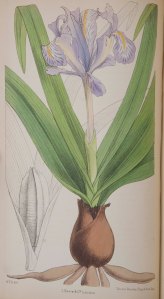
Image courtesy of Lenhardt Library, Chicago Botanic Garden. All rights reserved.

Image courtesy of Lenhardt Library, Chicago Botanic Garden. All rights reserved.

The Feminine Perspective:
Women Artists and Illustrators

Lenhardt Library
Chicago Botanic Garden
August 23 – November 10, 2013

Next week an exhibition of rare and beautiful works by some of the first women to achieve prominence in the field of botanical illustration will go on display at the Lenhardt Library in the
Regenstein Center of the Chicago Botanic Garden.

Coinciding with the 100th anniversary of women’s suffrage in Illinois, this exhibition is the library’s first exhibition exclusively about women. Leora Siegel, Director of the Lenhardt Library, will give a presentation about the lives of these pioneering women and their detailed illustrations. This presentation will occur on Sunday, September 29, 2013 and begin at 2 p.m.

Volumes from the library’s rare book collection provide a published record of the advancement of women as botanical artists and illustrators. The exhibition will include the work of Lady Harriet Ann Thiselton-Dyer, who took over as illustrator for Curtis’s Botanical Magazine in 1878. Also featured will be an earlier British artist, Henrietta Maria Moriarty; Frenchwoman Henriette Antoinette Vincent, who was connected to the royal court of Napoleon; and Americans Ellen Robbins and Helen Sharp.

This exhibition of illustrations is part of the library’s ongoing effort to make digital copies of its collection available to the public through the Illinois Digital Archives. To view the library’s digitized rare books, visit the page for the Chicago Botanic Garden Lenhardt Library.


About the Chicago Botanic Garden

The Chicago Botanic Garden opened to the public in 1972 and is managed by the Chicago Horticultural Society, accredited by the American Association of Museums and a member of the American Public Gardens Association (APGA). It is the 12th largest tourist attraction in Chicago and is the area’s sixth largest cultural institution. The Chicago Botanic Garden is a 385-acre living plant museum featuring 26 distinct gardens and four natural areas. Admission is free; select event fees apply. Parking is $25 per car; free for Garden members.

Follow the Garden on these social media sites:
Twitter, Facebook, Pinterest, Flickr, YouTube.

Attention teachers, naturalists and artists near Dallas Center, Iowa!

The Leaf Lab at the Brenton Arboretum will open on August 20, 2013 and will be open every Wednesday from 1-4 PM through November 13, 2013. Visitors to the lab will learn about leaf morphology and plant identification. They will also be able to compare leaves in their personal collections to leaves in the lab and to leaves on the trees in the Arboretum’s living collection.

Cost: $5 lab contribution per visit

Learn more about the Brenton Arboretum, their classes and other services at www.thebrentonarboretum.org. Follow them on Twitter (@brentontrees) and Facebook.