Feeds:
Posts
Comments

A Reference for Botanical Illustrators

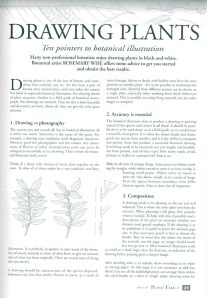
In the April 1999 issue of Plant Talk, Rosemary Wise (botanical artist at the University of Oxford) wrote an article about how to draw plants for documentation. In her article, Wise emphasizes how accuracy is important in a botanical drawing and explains how a botanical illustration can offer more information than a photograph. She also provides instruction on how to compose a botanical plate and discusses pen-and-ink drawing techniques in the process.

Wise also explains how to draw for publication, how to draw from herbarium specimens, how to draw dissections, how to hydrate dried material, and how to use tracing paper to draw dissections of symmetrical flowers.

The back issues of Plant Talk are no longer available. However a copy of this article is available for your use. This copy of Rosemary Wise’s article comes to you courtesy of the Eden Project and Plant-Talk.org.

Download – Drawing Plants: Ten Pointers to Botanical Illustration


Literature Cited

Wise, Rosemary. 1999. Drawing plants: Ten pointers to botanical illustration. Plant Talk. No. 17:29-32.

Write Your Own Story

Have you ever thought about writing a book? How about creating a book about your work as a botanical illustrator?

Many people think about writing a book and publishing it themselves. Today authors have many services available to them to make the bookmaking process easier and faster. But how do you write your own book? How do you get it published? Where do you start?

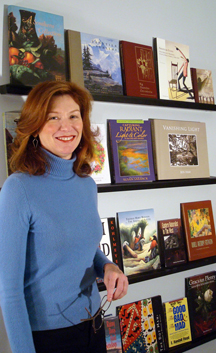
On Tuesday July 13, 2010, Lydia Inglett of Lydia Inglett, Ltd. Publishing, Design & Marketing will teach a one-hour online class in which she will explain the bookmaking process and give you the tools you need to launch your career as a published author. Lydia and her team publish and produce high quality books for authors, artists, and museums in the U.S. and abroad.

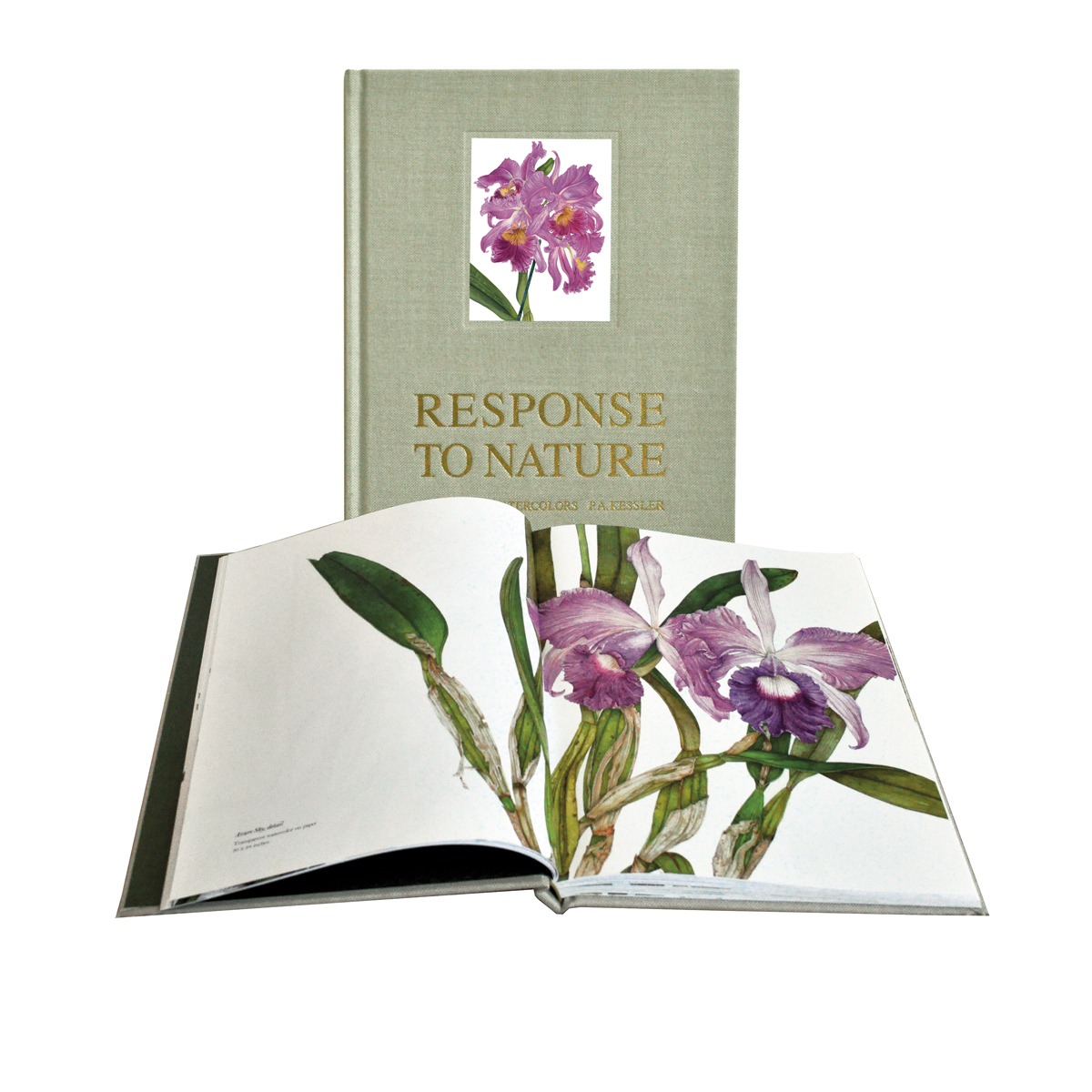
Recently, Lydia Inglett, Ltd. has produced Vanishing Light, a large format book of the fine art photography of Ben Ham, and The Art of a Sporting Life: The Wildlife Art of David Hagerbaumer by John Orrelle. Her latest publication, Response to Nature, is a stunning book featuring the orchid paintings and natural history art of botanical illustrator Pam Kessler.

In this one-hour class, Lydia will discuss:

  • What makes a beautiful, salable book
  • What a book will do for you and how it will further your career
  • How to prepare for the publication of your book
  • What to expect during the bookmaking process
  • How to evaluate the many options presented by providers of consumer and commercial book designers
  • How to market your book
  • How to begin your book project

If you have entertained thoughts about creating a book highlighting your artwork or a special project, join us on July 13th and ask the questions you have always wanted to ask about the bookmaking process.


The Details

    When: Tuesday July 13, 2010
    Time: 10:00 a.m. – 11:00 a.m. (PDT)
    Where: Online
    Cost: $35
    Extras: Registered attendees will have the opportunity to send questions to Lydia before her presentation. Attendees will also receive a task checklist to guide them during their book project.
    Bonus: Worried you cannot attend the live session? Stop worrying! This event will be recorded and will be made available to registered attendees so they can learn from Lydia at a time that is convenient for them.


REGISTER TODAY

(Registration closes Sunday July 11, 2010)
We first learned about the wonderful resources at TheMulch.com during EE Week in April. Since then, this extensive resource for gardeners has established a new home on the Web. The site is now faster and incorporates great social media tools for its gardening community. Mulch members now have the ability to incorporate their Twitter accounts and their RSS feeds into their gardening profiles.

I am excited to share that I received an invitation to participate as a contributor to TheMulch.com. My interview and profile, which reveals my gardening side, has been added to the site. Here at ArtPlantae, I don’t talk much about the botanical treasures in 4″ pots I feel compelled to buy from time-to-time. This isn’t the place for this type of conversation and there isn’t room for it either. But at TheMulch.com, there is room. Lots of room!

Are you an avid gardener? Do you want to learn more about a gardening resource dedicated to you and your plants? Then visit TheMulch.com to soak up all it has to offer. Membership at TheMulch is free and includes access to the monthly plant care guide, plant recommendations by experts, feature articles, and access to many other gardening resources. There is so much to read at TheMulch, be prepared to stay awhile!

The Los Angeles County Arboretum & Botanical Garden will launch its second permaculture design course in October. This is a certificate course and participants will become certified permaculture designers upon completing the 72-hour course. This program provides a practical, project-oriented, hands-on learning experience and goes beyond mere theory. This certificate course is taught by permaculturist and horticulturist, Caitlin Bergman, and special guest lecturers.

    Permaculture Design Certificate (PDC) Course
    Los Angeles County Arboretum & Botanic Garden
    Saturdays (October 2-November 20) and 1 Sunday (November 21)
    Each of the eight meetings will be in session from 8:00 AM – 6:00 PM.
    A $200 non-refundable deposit holds your place and will be deducted from the $1,200 tuition. Sign up early, class size is limited to 30 participants. To register, please call 626.821.4624 or email Jill Berry.

A detailed description of this certificate course is available here.

Friend, Trudy. 2002. Drawing Problems and Solutions. David & Charles. ISBN: 9780715324035 ($22.99)
Feel the need to hide away and draw peacefully off in a corner somewhere? Be sure to take this book with you. You will learn a lot about sketching and drawing in pencil. This book is a must-have for any journaler’s backpack. Friend demonstrates how to use marks to create: trees & woodland, landscapes & skies, water in landscapes, buildings in landscapes, village houses & cottages, gardens, plants & flowers, vegetables, textures, pets, horses & ponies, and portraits.

Friend’s Drawing and Solutions books are very helpful because she takes the time to identify and explain common problems and presents a solution for each problem. When demonstrating how to draw leaves and stems, for example, she identifies the following as common problems:

  • No clear idea about how veins connect to the stem.
  • A lack of understanding of how much (or how little) of a leaf can be seen at certain angles.
  • A lack of understanding about how to place shadows.
  • The creation of shadows that do not follow a leaf’s form.
  • The creation of a stem that widens more dramatically than it does on the live specimen.

Other problems Friend addresses that pertain to botanical illustration include:

  • The placement of petals.
  • How to relate leaves to a stem.
  • Veins drawn as lines with no consideration for form.
  • Stems drawn at wrong angles.
  • The placement of buds and leaves without consideration of structure.
  • The placement of a leaf extending towards the viewer.
  • The placement of lines without regard to the relationship between negative and positive shapes.
  • Not using directional strokes to one’s advantage.
  • The hasty placement of lines to represent the gills of a mushroom.
  • The creation of line drawings in which tone was added without any consideration of form.

Drawing Problems and Solutions is available primarily as a used book.

Watch Trudy Friend at work!


Related

Investigating the Drawing Process

Eight new classes for summer and fall announced at Classes Near You > International > England:


Elaine Searle

http://paintbotanical.com
Elaine’s plant portraits have been exhibited in the UK and the US, and can be found in the permanent collection of the Hunt Institute for Botanical Documentation at Carnegie Mellon University and in Prince Charles’ Highgrove Florilegium. Elaine publishes a beautiful and informative newsletter that is available for download on her website. View detailed information about the courses below and download the current brochure and order form (Botanical Art Courses, July – November 2010) here.

  • Beginners – Stanford Bridge, Worcestershire; July 27-29, 2010
  • Roses – Blakeney, Norfolk; Aug 3-5, 2010
  • Beginners – Blakeney, Norfolk; August 18-20, 2010
  • Autumn Harvest – Blakeney, Norfolk; Sept 15-17, 2010
  • Pumpkins & Gourds – Blakeney, Norfolk; Oct 18-20, 2010
  • Fascinating Fungi – Blakeney, Norfolk; Oct 21-23, 2010
  • Next Steps in Botanical Painting – London; Oct 25-28, 2010
  • Seasons Greeting Card – Blakeney, Norfolk; Nov 18-20, 2010

In the class, What’s Your Flower?, participants will research a plant’s meaning and its history. They will then blend this history into their final composition. The workshop will be taught at the Lewis Ginter Botanical Garden in Virginia. Here what’s new at Classes Near You > Virginia:


Lewis Ginter Botanical Garden

www.lewisginter.org
In 1884, Lewis Ginter purchased some property and built a gathering place for Richmond bicyclists. One hundred years later, the Lewis Ginter Botanical Garden is established on this same piece of property and soon becomes one of the top five destinations in Virginia. It is also home to Artbase a searchable database containing 2,500 botanical watercolor paintings by Alexandre Descubes. The Adult Education program at the garden includes workshops in botanical drawing and painting. Complete course descriptions and registration information are available here. Courses include:

  • Botanical Illustration Workshop with Juliet Kirby (Hydrangeas) – July 20, 22, 27, 29, 2010
  • How to Draw (More) Stuff in the Garden – July 15, 17, 22, 24, 29, 31, 2010
  • What’s Your Flower? – August 17, 19, 24, 2010
  • Plants and Pollinators for Botanical Artists – September 8, 15, 22, 29, 2010