Feeds:
Posts
Comments

In Herbarium Amoris, Swedish photographer Edvard Koinberg photographs plants named by Carl von Linné (Linnaeus). Inspired by Linnaeus’s poetic descriptions of plant sexuality, Koinberg designed a project to bring attention to plants and their reproductive features.

Swedish crime writer, Henning Mankell, and Swedish science professor, Tore Frangsmyr, contribute to Herbarium Amoris. In their respective essays, Mankell and Frangsmyr explain how Linnaeus recruited help from scouts and students who traveled throughout the world to send him plants. They explain that, before Linnaeus created a new way of classifying plants, plants were organized by color, size, flower type, and fruit. However during a time when plant exploration was booming, new discoveries did not fit into existing categories. This prompted Linnaeus to create a new way of organizing plants.

Frangsmyr explains how Linnaeus spent time thinking about the sexuality of plants and how his thoughts lead to his publication about classification systems in nature (Systema Naturae). In Systema Naturae, Linnaeus describes a classification system dividing plants into 24 groups according to the number and arrangement of their reproductive parts. His system was well-received and this new way of organizing plants, along with binary nomenclature (a naming convention assigning plants a 2-part name) established botany as a legitimate discipline.

In 1756, Linnaeus created a floral calendar (Calendarium Florae) in which he used flowers to reflect different time periods of a calendar year. Koinberg’s Herbarium Amoris was inspired by this calendar. Koinberg’s moving photographs are presented as one- and two-page spreads. His revealing images and enlightening plant descriptions encourage readers to reflect upon the seasons of the year and the plants with which we share our planet.

Koinberg’s photographs are arranged as follows:

  • Glacialis – Reviving Winter Month (December 13)
  • Regelations – Thawing Month (March 19)
  • Germinations – Budding Month (April 12)
  • Frondescentiae – Leafing Month (May 9)
  • Florescentiae – Flowering Month (May 25)
  • Grossificationis – Fruiting Month (June 20)
  • Maturationis – Ripening Month (July 16)
  • Messis – Reaping Month (August 4)
  • Exsolationis – Sowing Month (August 28)
  • Defoliationis – Shedding Month (September 22)
  • Congelationis – Freezing Month (October 28)
  • Brumalis – Declining Winter Months (November 5)

To view publisher’s images, click here.

Herbarium Amoris (Floral Romance) is available at ArtPlantae Books for $39.95. This title ships for free through October 31, 2010!


You may also enjoy…

Order From Chaos: Linnaeus Disposes
Lessons for a Young Botanist

Watch a Scientific Illustrator at Work
Linda Ann Vorobik shares how she creates her drawings and paintings of native plants in Botanical Illustration, A Living Art, an exhibition highlighting her 25-year career as a botanist and scientific illustrator. Linda’s solo exhibition will be on view at the Elisabeth C. Miller Library at the University of Washington Botanic Garden (October 4 – November 29, 2010).


BREAKING NEWS – Botanical Art on the Downtown Los Angeles Art Walk!

The Botanical Artists Guild of Southern California (BAGSC) was invited to exhibit at the Fine Arts Building in downtown Los Angeles. Please join BAGSC artists at the opening reception on Thursday October 14 (5:00 PM – 8:00 PM). Meet BAGSC artists, discuss botanical art, and participate in the excitement of LA’s Downtown Art Walk! For complete details, please see the BAGSC Blog.


At NYBG in 2011!

Green Currency: Plants in the Economy
The New York Botanical Garden Triennial
April–June 2011
This upcoming exhibition is dedicated to the subject of economic botany. It will highlight plants used for food, medicine, clothing and other plants with economic value. Gold, silver, and bronze medals will be awarded by Dr. Shirley Sherwood.

FROM THE GROUND UP

Artist’s Reception:
Saturday, Nov. 6, 5:00 PM – 8:00 PM

Artist’s Q & A Panel:
Saturday, Nov. 13 at 3:00 PM

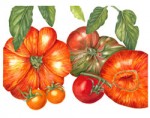
In her latest exhibition, From the Ground Up (Nov. 2-27, 2010), botanical artist Sally Jacobs inspires us to find the extraordinary in the ordinary with her hyper-real depictions of the everyday fruit, vegetables, and flowers we find at the local Santa Monica or Hollywood Farmers’ Markets. While staying true to the botanical art tradition of accurate portrayals of plants, Jacobs brings a modern edge to her subjects through her eye-popping displays of color and detail that she captures with her watercolor layering techniques. Jacobs explains, “Several paintings in the exhibit adhere to the traditions of botanical art, but with others I’ve strayed a bit, adding background color or composing the picture in a playful way. I wouldn’t enter these non-traditional pieces into juried botanical shows, but in my own show, I decided to ‘take liberties.’ Almost all of the subjects come from local outdoor markets. I love to cook and paint and I choose subjects that cater to both of my passions.”


TAG Gallery

Bergamot Station
2525 Michigan Avenue, D3
Santa Monica, CA 90404

Gallery Hours: Tuesday-Saturday, 11:00 AM – 5:00 PM
Directions


You may also like the Sally Jacobs Collection at ArtPlantae Books.

Natural science illustrator, Mindy Lighthipe, describes the symbiotic relationship butterflies and moths have with plants in Symbiosis: Butterflies & Plants, a new exhibition at the Florida Museum of Natural History. Mindy’s artwork will be on view October 19, 2010 through March 13, 2011.

Mindy will host a pre-exhibition viewing of her paintings before they go to Florida. This event will occur on October 10th at Studio 16. Check Mindy’s Facebook page for details.

Can’t make it to Florida? Don’t worry. You can enjoy Mindy’s paintings online in her Symbiosis gallery!


Directions to Florida Museum of Natural History

© Elinor Nissley. All rights reserved

Nature in Relief: Letterpress Graphics
October – December 2010

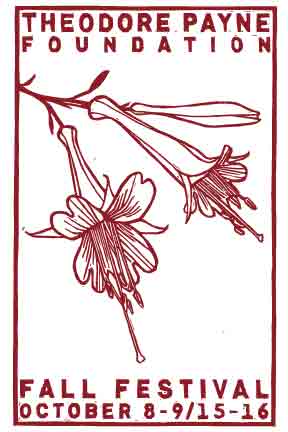
Elinor Nissley is the current Artist-in-Residence at The Theodore Payne Foundation (TPF). An architectural designer and the creative force behind Krank Press, Elinor will spend her residency transforming the organic shapes of California natives into graphic forms. To do this, Elinor is carving printing blocks based on her drawings of plants from the TPF nursery. Elinor prints all of her work on a 1956 Chandler & Price Craftsman letterpress.

Elinor has a Bachelor of Arts in printmaking from Rice University in Texas and a Master of Architecture from UC Berkeley.

You are invited to visit The Theodore Payne Foundation to view Elinor’s prints. Meet Elinor in-person and learn about printmaking during the annual Fall Festival & Plant Sale. Elinor will be on-site Saturday October 8 and Saturday October 15.

The exhibition Nature in Relief: Letterpress Graphics will be on view through December 2010. Gallery hours are Tuesday – Saturday, 8:30 AM to 4:30 PM.


More About the Fall Festival at TPF
:
The Foundation’s biggest sale of the year is a popular event, complete with vendors, music, and discounts on plants and seeds.

The nursery is located at 10459 Tuxford Street, Sun Valley, CA 91352. (map)

  • Event Dates: Friday & Saturday, October 8-9
  • Hours: 8:30 AM – 4:30 PM
  • Members’ Days: 15% off plants (1 gal. & up) and 10% off seed
  • Non-members: Get in on the savings! Memberships available at the door.
  • Event Dates: Friday & Saturday, October 15-16
  • Hours: 8:30 AM – 4:30 PM
  • Weekend Special: Discounts to all! 10% off plants (1 gal. & up) and seed

© Pamela Burgess. All rights reserved

Radiant Light: Shadow Sculpture of California Native Plants

October 1 – December 31, 2010

Rancho Santa Ana Botanic Garden
1500 North College Avenue
Claremont, CA 91711

This exhibition features 12 translucent sculptures and gossamer textiles by Pamela Burgess, the artist behind thought-provoking shadow drawings of California native plants. Pamela combines her interest in life cycles with textures and color to create sculptures and textile designs that bring attention to the natural world. Pamela will lead a guided tour of her exhibition on Saturday October 2, 1010 at 3:00 PM during the opening reception.

NEW! Visit the RSABG website to learn how this sculptural exhibition was created.

Wet and washy watercolor techniques can cause a lot of grief for some, but for artist Michele Banks, it sparked a passion with watercolor and an interest in the biology of life. Banks doesn’t paint plants, humans, and other animals. She paints what happens inside plants, humans, and other animals. On Friday September 24, 2010, TheScientist.com published an interview with Banks. Learn more about Michele Banks and her website at TheScientist.com.

Here is a glimpse of what you’ll find…