Feeds:
Posts
Comments

© Angie Girling. All rights reserved

New at Classes Near You > International > Wales:

Angie Girling
Aberystwyth, Ceredigion
Angie Girling has received bronze, silver, silver gilt, and joint gold medals from the Royal Horticultural Society for her botanical art. She is a Fellow of the Chelsea Physic Garden Florilegium Society, Honoree President of the Bath Society of Botanical Artists, and a member of the Society of Floral Painters. Angie’s artwork appears on stationary products by Ling Design and Robert Frederick.

Beginner’s Watercolor – Wednesdays, November 10 – December 15, 2010;
12:30 p.m. – 3:30 p.m. An introductory six-week course in botanical painting. The exercises in this class will build upon Angie’s Beginner’s Pencil course. Assignments are due weekly. The course schedule is as follows:

November 10 – Equipment and washes
November 17 – Color mixing and tone
November 24 – Leaf study and greens
December 1 – Bulbs
December 8 – Holly
December 15 – Cyclamen flowers

Contact Angie Girling for more details and to register.

Artist and author James Mullen is currently writing a series about drawing for The New York Times. I first learned about this special collection of articles six weeks ago from a member of the San Diego Sketchcrawl Group. This weekly quick-share item has been posted to ArtPlantae’s Facebook page and Twitter stream ever since, but has not been shared here. So to correct this oversight, here are links to the first six installments of this wonderful 12-part series. Each new installment is published on Friday in the Opinionator section of The New York Times blog.

Bookmark the Line By Line page to read the rest of the series.

When you are in need of information about topics related to botanical art, plants or teaching, what type of information do you wish you had at your disposal?

Here is a chance to create your own personal resource!

On any given day, what type of information do you want to find when you enter keywords into the search box at ArtPlantae Today?


Responses are recorded anonymously.


NOTE: Sometimes Constant Contact misfires with Chrome or Safari. Constant Contact suggests using Internet Explorer 7 or Firefox 3 as your browser.

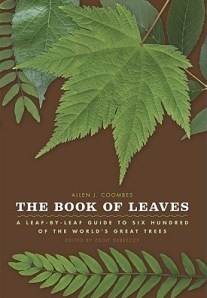
The Book of Leaves: A Leaf-by-Leaf Guide to Six Hundred of the World’s Great Trees
Coombes, Allen J. 2010. University of Chicago Press. ISBN: 9780226139739

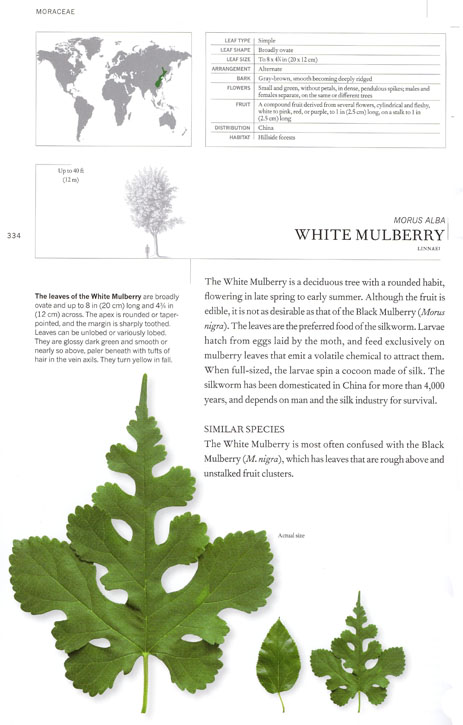
If you have a recurring daydream about having a labeled leaf collection composed of perfect leaves that never wilt, dry, and get crunchy, stop dreaming. You can now take one step closer to making your dream a reality. Author Allen J. Coombes (Coordinator of Scientific Collections at the Herbarium and Botanic Garden of the University of Puebla, Mexico) and editor Zsolt Debreczy (Research Director of the International Dendrological Research Institute in Boston) have created a glorious collection of leaves.

Each leaf is actual size. Leaves are arranged by family, genus, and then species. Coombes and Debreezy provide an overview of leaf morphology and teach readers how to look at leaves and how to arrange them systematically. Each entry is accompanied by a description of a leaf’s type, shape, size, and arrangement along a stem. A summary about each tree’s bark, flowers, fruit, distribution, and habitat is also included. Information about each tree’s growth pattern, observable changes in leaf appearance, ethnobotanical use, and similarity to other trees is provided as well. Of interest to plant enthusiasts and botanical illustrators in particular, is the section in which the authors arrange leaves by their position along a stem, their overall shape, the type of margin they have, and the status about their evergreen or deciduous nature. Categories in this section are labeled as “Alternate, Simple, Lobed, Deciduous” and “Opposite, Pinnately Compound, Entire Leaflets, Deciduous” and contain corresponding photographs of leaves.

Not only is this book an informative reference, it is a great way for botanical illustrators to study venation patterns and leaf margins. One look at this book and you’ll be reaching for your 0.2 mm mechanical pencil!


The Book of Leaves
is available at your local independent bookstore ($55).


Images used with permission from The University of Chicago Press

Updates at Classes Near > York:


Hollengold Farm / WH Art & Design

Wendy Hollender is an illustrator, author, and teacher. She teaches at the New York Botanical Garden, Hollengold Farm, and the National Tropical Botanical Garden. View Wendy’s prints, cards, scarves, and books at DrawingInColor.com. See what’s new at Wendy’s Hollengold Farm.

One-day Drawing Workshops at Hollengold Farm – Saturday, October 30, 2010. Spend a day drawing the growing harvest at Hollengold Farm. Select a subject from the farm’s large organic garden. A farm-fresh lunch is include with each workshop. Draw in colored pencil and watercolor pencil. Workshops are held 10 am – 4 pm. Cost per workshop: $90, includes lunch. Register with Wendy at wendy@whartdesign.com or register online at DrawingInColor.com.

Botanical Illustration Workshop on Kaua’i with Alice Tangerini and Wendy Hollender – February 24 – March 6, 2011, The National Tropical Botanical Garden. Learn botanical illustration techniques while using graphite pencil, colored pencil, and pen-and-brush with ink. Alice Tangerini is the illustrator at the Smithsonian Museum of Natural History and Wendy Hollender is an artist, author, and teacher. Workshop fee: $860 (includes lunch). Airfare and lodging extra. To register or to obtain more information, contact Judy Roberts at NTBG, 3530 Papalina Road, Kalaheo, HI, 96741. (808) 332-7324, ext. 207.

  • Feb. 24 – Class begins with Wendy Hollender; tour of the botanical garden
  • Feb. 25 – Classroom instruction with Wendy Hollender and Alice Tangerini
  • Feb. 26 – Classroom instruction with Wendy Hollender and Alice Tangerini
  • Feb. 27 – Classroom instruction with Alice Tangerini
  • Feb. 28 – Free Day
  • Mar. 1 – Field trip to Limahuli Garden
  • Mar. 2 – Classroom instruction with Wendy Hollender and Alice Tangerini
  • Mar. 3 – Classroom instruction with Wendy Hollender and Alice Tangerini
  • Mar. 4 – Classroom instruction; group exhibition of student work
  • Mar. 5 – Classroom instruction with Wendy Hollender and Alice Tangerini
  • Mar. 6 – Field trip and picnic at Makauwahi Cave
  • Itinerary subject to change.

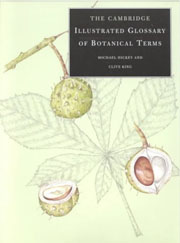
The Cambridge Illustrated Glossary of Botanical Terms
Hickey, Michael and Clive King. 2002. Cambridge University Press. ISBN: 9780521794015

We know that being able to draw plant subjects as accurately as possible is critical. Most of us have at least one glossary of plant terminology in our libraries (e.g., Plant Identification Terminology – An Illustrated Glossary by James G. Harris & Melinda Woolf Harris). Harris & Harris’ book is invaluable when trying to decipher detailed information about a plant specimen. When we reach for this book, it is because we are presented with terminology we do not understand. The illustrations accompanying each term in Harris & Harris help us see what we have never before noticed. But what do you do if you have only your plant specimen in front of you, lack the words to describe what you see, and therefore cannot look anything up?

You turn to Hickey & King’s illustrated glossary. Descriptive illustrations get top billing in this book. Most of this book is dedicated to labeled illustrations. A glossary of botanical terminology is provided for you to decipher unfamiliar terms. The illustrations in this book are very helpful, as is the way they are organized. Illustrations are organized in the following way: Roots, Storage Organs and Vegetative Reproduction; Seeds and Seedlings; Growth and Life Forms; General Features of Flowering Plants; Plant Features and Responses; Leaf-like Structures & Other Vegetative Features; Leaves; Hairs and Scales; Floral Features; Flower Structures; Features of Certain Plant Families; Fruits; Conifers and Conifer Allies; Ferns and Fern Allies.

The authors of this book express their hope “that readers at all levels of understanding, both amateur and professional, will find (this book) helpful in their chosen area of study, especially plant science, horticulture, field studies and botanical illustration.”
Plant Identification Terminology
Buy this book and Harris & Harris (2001) from your local independent bookstore.

Now at Classes Near You > California:

Around the World in 127 Acres: Meet the Arboretum’s Plant Collections
Saturday Walking Tours
10 – 11:30 am

The Arboretum’s collection of over 18,000 accessioned plants is roughly divided into five geographic sections, two greenhouses, and several other specialty collections and exhibits. Botanical information consultant Frank McDonough will take you out onto the grounds to learn more about these fascinating & extensive collections. Be sure to wear comfortable, rugged shoes, a hat and clothes you don’t mind getting dirty – and bring drinking water.


October 23
– World Wide Weavers: An introduction to the uses, history and anthropology of the fabric producing plants that grow at the Arboretum.

November 13
– Pyromaniac Plants: A look at fire ecology and what plants do to survive and thrive in areas that are prone to frequent conflagrations.

November 20
– World Wide Wood: Discover the many timber-producing trees from around the world that are in the Arboretum’s collection.

December 4
– How low can they go? A look at plants at the Arboretum that use the least amount of water.

December 18
– ‘Frankenplants’: Manipulating the genetics of plants hasn’t always been as sophisticated as it is today, but the consequences of making a mistake have always been great. We’ll look at the history and consequences of mankind’s genetic manipulation of the plants around him as represented by specimens at the Arboretum, and examine the history of agriculture as it relates to you, the food you eat, and the plants you put in your garden.

To register, call (626) 821-4623 to register or you may pay at the class.
Cost: $5 member/$7 non-member per class

These classes are held in the garden and require some walking throughout the collections. Classes meet rain or shine. Meet in the Arboretum Library.

Visit the L.A. Arboretum website to learn more about this wonderful resource.