Feeds:
Posts
Comments

The Los Angeles County Arboretum & Botanic Garden is having a HUGE plant sale on Memorial Day weekend. They are selling off a HUGE amount of overstock at 30-50% off. Sale plants include cacti, succulents, flowering shrubs & trees, plants from the nursery and the greenhouses, specialty plants, and plants donated by Monrovia Nursery for the recent L.A. Garden Show.

This HUGE overstock will be available at the Garden & Gift Shop and surrounding patios from Friday May 28 through Monday May 31, 2010 (9:00 am – 4:30 pm, daily). Checks, cash, and credit cards accepted (they do not take American Express). Admission to the arboretum is free for members. Non-member admission is: $8 adults; $6 seniors & students with IDs; $4 children from 5-12; Ages 4 and under are free. Parking is also free.

Here’s your treasure map. Don’t forget your wagon.

It’s that time of year where the class schedules distributed in January are replaced by schedules for Summer and Fall. Some of you have joined since National Environmental Education Week and since I do not have your contact information, I am going to post my announcement to all instructors here.

Instructors, if you know your schedule through the rest of the year, please submit your course listings to education@artplantae.com. If you already have a listing in the Classes Near You section, please check your listing and let me know what needs to be updated. If you are new to ArtPlantae and would like to submit course information for the first time, here are some things you’ll want to know:

  • You can list your courses for free. This is how we learn about each other and how we contribute to each others lifelong learning.
  • Courses in the following subjects are accepted: botanical art, botanical illustration, plant identification, botany, nature journals (& related book art workshops), natural science illustration
  • If you teach a course related to natural history or the environment that may be of interest to ArtPlantae readers, please submit your information. I am interested in learning more about what you do.

It is absolutely wonderful that people have begun to submit information on their own. Thank you for your trust and confidence. I appreciate it. I know there must be more learning opportunities out there, so please share your exhibitions and news with me. And while you are off enjoying your summer with family and friends, keep an eye out for individuals doing things we’d all like to learn about. Collect a business card, encourage them to contact me or suggest that they at least visit this website. Thank you in advance for your contribution to our growing community.

Introduction to Paleobotanical Art (botanical fossil art)
Derwent Pencil Museum
July 6 & 7, 2010
10 a.m. – 4 p.m.

Stephen Caine trained as a museum natural history conservator. His duties included drawing illustrations of specimens, diorama building and the painting of backgrounds. While working for museums and universities, Stephen had the opportunity to study plant fossils, as well as 18th and 19th century botanical art. This led to Stephen specializing in paleobotanical art.

Stephen’s subjects are obtained at fossil sites and from museum storerooms. Working as the main artist for the Rhynie research group at Aberdeen University, he created illustrations and models of this unique group of Devonian plants.

Now living in northeast Scotland, he maintains strong ties with Aberdeen University and has been commissioned to design a new diorama about the extinct plants found as fossils in this area. As part of this project, Stephen will work for various museums and universities and will reconstruct extinct flora. He will also teach botanical painting and drawing to researchers and students.

During his demonstration at the Derwent Pencil Museum, Stephen will use graphite and watercolor pencils to introduce museum visitors to paleobotanical art. To learn from Stephen as he demonstrates his techniques, please obtain a ticket at the museum entrance. This ticket entitles you to one hour of free instruction.

The New Mexico Museum of Natural History and Science will host Drawing on Nature, an exhibition of nature journals (June 11 – September 12, 2010). Thirty creative women will share their sketches, paintings, and observations with the public. In addition to being avid naturalists and artists, the women in this exhibition are scientists, writers, photographers, designers, teachers, and wilderness guides.

The New Mexico Museum of Natural History and Science is located in Albuquerque. Admission is $7 (adult), $6 (seniors), $4 (children). Hours: 9 a.m. – 5 p.m., daily. View map

Visit the Drawing on Nature website for more information and to view a list of participating artists.

The title of this post isn’t as over-the-top as you might think. There is a widespread lack of interest in plants and it is a real problem. Declining interest in botany leads to fewer botanists being hired and fewer course offerings in botany (Uno, 2009). This leads to less funding for research, less funding for conservation efforts and even more indifference towards plants. Botanists and science educators have spent many years studying why people know more about furry animals with big brown eyes than they know about plants. Some claim instructor bias or the predominant use of animal examples to teach biological concepts (Allen, 2003). James Wandersee at Louisiana State University and his research team at 15° Lab believe people are not as tuned-in to plants because plants do not fall into their field of view. Wandersee and Elizabeth Schussler coined the phrase “plant blindness” which refers to one’s inability to notice the plants in one’s environment and therefore not recognize their value (Allen, 2003; Wandersee & Schussler, 2001). Simply put, plants are background noise.

How do educators rise above the noise and bring plants to the forefront? Gordon E. Uno (2009) tackled this very question. In his article, Uno provides a thorough explanation of factors contributing to botanical illiteracy. The challenges facing botanists are:

  • Students do not find plants interesting.
  • Students are unaware of the plants around them (plant blindness).
  • Plant biology is taught less often in school. Uno reports that of the six best-selling biology textbooks, only 14% of these texts address plant biology.

So what are botanists to do? Uno recommends that instructors introduce students to plants through popular literature, that they try to influence the content of standardized exams (if the plant sciences were represented on exams, teachers would teach more about plants), and that they incorporate into their classrooms problem-solving activities related to the plant sciences. Uno also encourages botanists to help students and pre-college teachers “think botanically” by using plant examples to teach biological concepts like cellular respiration instead of associating this process with only animals.

But is everyone suffering from plant blindness? What about all those avid gardeners lining up with their wagons chomping at the bit waiting for the gate to open at their favorite plant sale? Uno points out that the widespread problem of indifference towards plants is not consistent with the current popularity of gardening. He sees gardening’s popularity as an opportunity for botanists to place more emphasis on the applied plant sciences and to tap into the public’s interest in topics such as human nutrition, economic botany, and the environment — all topics related in one way or another to botany.

To read more about Uno’s research and his suggestions to enhance student learning in the plant sciences, read a copy of his article online or visit your local college library to obtain Volume 96 of the American Journal of Botany.


Literature Cited

Allen, William. 2003. Plant Blindness [online]. Website http://www.aibs.org/eye-on-education/eye_on_education_2003_10.html [accessed 13 May 2010].

Uno, Gordon E. 2009. Botanical literacy: What and how should students learn about plants? American Journal of Botany 96(10): 1753-1759

Wandersee, James H., and Elisabeth Schussler. 2001. Toward a Theory of Plant Blindness. Plant Science Bulletin 47 (1): 2-9.


Also See…

Eradicating Plant Blindness in the 21st Century

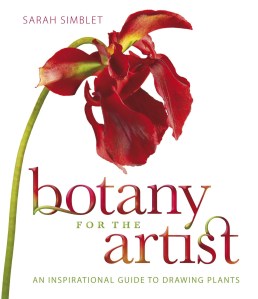
Many of you are gardeners and are probably familiar with Botany for Gardeners by Brian Capon. In his book, Capon turns a lot of the concepts and terminology from botany into easily digestible bits of information. What Capon did for gardeners, Sarah Simblet has done for artists. Botany for the Artist is a wonderful blend of general botany, botanical art history, and Art 101.

Imagine opening a book and immediately going back to the 5th century, a time when text was valued more than illustrations and when it was common for artists to work without ever looking at live plant specimens. Then journey ahead to the 14th century to learn when artists began to draw from nature. Continue on to learn about over-zealous plant collectors, personal drawing books, plant exploration, and the use of plants as a visual metaphor for life.

Now imagine entering a conversation with Sarah herself, a respected author and instructor at the National Gallery in London and the Ruskin School of Drawing at the University of Oxford. Simblet transitions readers from merely reading about botanical art to doing botanical art in her section about drawing plants. Here Simblet presents a range of materials artists may want to keep in their field bag and provides information about watercolor paper, pencils, erasers, dip pens, ink, paint, and brushes. She then demonstrates how to make lines and marks and how to mix colors using red, yellow, and blue paint. Simblet’s comments about how she creates preparatory drawings and finished drawings provides great insight into what readers will discover beyond this section — a lavishly illustrated introduction to botany. Elegant and graceful, Simblet’s illustrations depict movement, energy, and life. So much so, they really can’t be called “plant portraits.” Simblet’s plants are living and breathing and so full of form, they should make crunching sounds when the book is closed.

In her illustrated guide to plants, Simblet discusses plant diversity and the morphology and function of roots, stems, leaves, flowers, fruit, cones, and seeds. Dispersed among text about how roots work, leaf structure, pollination, and seed dispersal, are lessons in art history and botanical illustration.

Simblet’s Masterclass feature is like touring a museum with your own personal tour guide. In each section, Simblet selects one painting and provides information about the feature artist and their work. Featured artists include: Nikolaus Von Jacquin, Albrech Durer, Girolamo Pini, Kano Yukinobu, John Miller, Leonardo da Vinci, John Ruskin, Ferdinand Bauer, Arthur Harry Church, Mali Moir, Giovanna Garzoni, Mark Catesby, and Maria Sibylla Merian.

In her Drawing Class and Study sections, Simblet teaches artists how to observe and capture the morphological features of plants and how to relate each feature to each other. There are sixteen Drawing Class sections in the book and these sections address too many topics to list here.

Would you like to experience a little bit of what there is to learn in this wonderful new book? If so, read about the special event below.


Ask The Artist Goes Live!

ArtPlantae is very excited to announce a special session with Sarah Simblet.

On Thursday May 27, 2010 at 12:00 p.m. PST, ArtPlantae will host a one-hour webinar with the very gracious Sarah Simblet. Sarah is preparing a special presentation for you and will answer your questions live from the UK. All participants will receive a copy of Botany for the Artist upon registering. The cost of this special author event is $40 (the cost of the book), plus shipping.
Registration closes Monday May 24, 2010.


UPDATE
: Sarah Simblet Takes Artists Behind the Scenes


Other Titles by Sarah Simblet

  • Sketchbook for the Artist
  • Anatomy for the Artist

© Laura Gould. All rights reserved

Botanical Art Show & Sale
The students of the botanical art program at Lasdon Park & Arboretum in Somers, NY will be exhibiting their work this weekend, May 15-16, 2010. The artwork of twelve participating artists will be on view in the main house above the garden.

Also occurring this weekend is the Annual Friends of Lasdon Plant Sale. On Saturday May 15, a large selection of annuals, perennials, and shrubs will be on sale from
9:30 a.m. – 3:30 p.m. The Friends’ plant sale will be held rain or shine.