Feeds:
Posts
Comments

National Pollinator Week does more than bring attention to the transfer of pollen between flowers. It reminds us of the complex interactions between flora and fauna. By “fauna”, I don’t just mean non-human animals. Humans are part of the equation too, as I pointed out when sharing an article about dairy-farming during the Ask The Artist event with Mindy Lighthipe.

Children begin learning about organisms and their life cycles in kindergarten. One way to help children build an understanding of ecosystems is through drawing. The creation of a learning environment centered around drawing activities is the focus of Methods and Strategies: Using Drawing Strategically, an article by Shawn Glynn, a professor of educational psychology and science education, and K. Denise Muth, a professor of middle school education.

The drawing activities discussed in Glynn & Muth (2008) were developed during inservice teacher workshops. Each activity meets the National Science Education Standards required to understand organisms, their life cycles and their environment.

Glynn & Muth (2008) recommend implementing drawing activities in the life sciences (as well as other disciplines) because they are “hands-on and minds-on” and enable students to synthesize several layers of information.

Drawings also help teachers evaluate student understanding of content (Glynn & Muth, 2008). What students think they know about a topic becomes visible in a drawing. This enables teachers to assess what has been learned and to correct student misconceptions (Glynn & Muth, 2008).

For teachers utilizing drawing as a learning tool, Glynn & Muth (2008) recommend using a drawing activity as a pre-assessment tool because it will show a student’s prior knowledge about a subject. The same drawing activity should also be used as a post-assessment tool to check what has been learned (Glynn & Muth, 2008). The authors explain that teachers can assess what has been learned by evaluating the level of detail between pre- and post-drawings and the accuracy and depth of student notes accompanying each drawing.

Glynn & Muth (2008) bring attention to the following issues teachers should keep in mind when creating a drawing-centered program in the life sciences:

  1. Students will take to drawing better if their teacher draws too.
  2. When drawing for students, also refer to actual specimens, photos or videos.
  3. Think aloud while drawing. Let students hear you think about an organism’s characteristics.
  4. Remind students they are using drawing as a learning tool and that they will create several draft drawings, drawings that will change as their knowledge grows. Steer them clear of the notion that each drawing must be a final product.
  5. Give students the option of choosing their own subjects. Glynn & Muth (2008) state students will choose their subjects based on their experiences with a subject. By choosing their own subjects, students will relate their prior knowledge to their current learning experiences.
  6. Tell students their drawings will be used to teach other people. Glynn & Muth (2008) have observed that students tend to include more details if their drawings will be used to help other people learn.
  7. Do not interrupt students while they are drawing, thinking and articulating their knowledge in a visual way. The errors you may feel compelled to point out can wait until later.
  8. Colored pencils are better drawing tools than crayons.


Celebrate the Work of Young Natural Science Illustrators

Glynn & Muth (2008) believe that an “art-conducive classroom” is critical to the success of art-based programs. They recommend establishing a portfolio for each student, praising students about their artwork and new knowledge, and creating a gallery space for student exhibitions.

This article is available for purchase online for 99¢ from the National Science Teachers Association’s Learning Center.


Literature Cited

Glynn, Shawn and K. Denise Muth. 2008. Methods and strategies: using drawing strategically. Science and Children. Summer 2008. Pages: 48-51. [accessed 21 June 2011] <http://learningcenter.nsta.org/product_detail.aspx?id=10.2505/4/sc08_045_09_48>


Also See

Does she use the Butterfly Collection app for iPhone?

How about the electronic field guide by LeafSnap?

What are oracle cards?

Find out here!

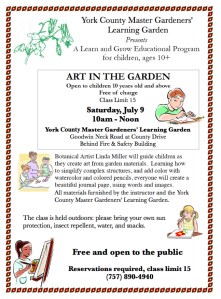
Linda C. Miller, Artist in Residence at The Elizabethan Gardens in Manteo, NC will teach a journaling class for children for the York County Master Gardeners’ Learning Garden. This class is FREE and open to the public.

The following information is now available at Classes Near You > Virginia:

Art in the Garden – Saturday July 9, 2011; 10 AM to Noon. Children will study nature’s forms and learn how to create pages for their nature journal by combining drawings, written entries and paintings in watercolor and colored pencil. Materials will be provided. This free workshop for children will be held at Goodwin Neck Road at County Drive behind the fire and safety station. Limit: 15 children. Age: 10 & older. To register, contact the York County Master Gardeners’ Learning Garden at (757) 890-4940. Click on the image to download the flyer. To learn how the Art in the Garden program began and to view photos, click here.

CALL FOR INSTRUCTORS

Calling all botanical artists and botanists!

Especially those in Washington, DC. A reader is currently searching for botanical art classes in the Washington, DC area. Add you classes to the Classes Near You section so students can find you on this site and through our posts on Twitter, Facebook, Yahoo!, and LinkedIn.

If your classes are already listed in the Classes Near You section, feel free to send information about new classes at any time. Your help in keeping this section of the website current is appreciated.

Tell us about your classes!

National Pollinator Week begins today.

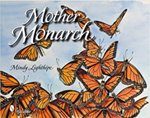
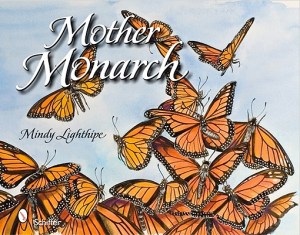
So does our Ask the Artist with Mindy Lighthipe!

Later today, I will make Mindy’s interview the top story on this page. All new posts will appear below her interview. This will make it easier for you to follow the Q&A throughout the week and to post your question.

Have you planted a garden for pollinators? If so, tell us about it!

Would you like to create a garden for pollinators? The Pollinator Partnership has created planting guides for each region of the U.S. Visit their website to download a free Pollinator Friendly Planting Guide for your area.

Now is your chance to ask questions about botanical illustration, insect illustration and more. Let’s get the conversation started!

Helen Shafer Garcia, Vista
http://www.helenshafergarcia.com
A garden illustrator for San Diego Home and Garden Magazine for 7 years, Helen is an avid gardener who manages a ½-acre garden filled with succulents and perennials. Helen teaches at the San Diego Botanic Garden, at artist retreats, and at conferences. Visit Helen’s website to view the many ways you can combine plants and art using watercolor, pastels, and mixed media.

  • Watercolor Journaling in the Garden – Sunday, July 17, 2011; 9:30 AM – 4:00 PM. Spend a day exploring plants and learn how to capture their details with watercolor and ink journaling. Participants will combine the drawing and painting of botanical elements with words. Discover form and color while developing a plant study. Cost: Members $65/ Non-members $75. Please register by July 13, 2011. Materials list provided upon registration. Register.
  • Watercolor Basics – Mondays, September 12 – November 7, 2011;
    1-4 PM. A class for first-time artists. Experience watercolor in a relaxed atmosphere. This class is more about process than the creation of a final project. Practice watercolor techniques, learn color theory and learn how to mix colors. Discover how to create surface textures too! Cost: $175. View details
  • Pastels: In the Studio and Plein Air – Wednesdays, September 14 – November 9,
    2011; 1-4 PM. Investigate nature-inspired subjects, explore techniques, and learn drawing skills in a relaxed atmosphere. This weekly class combines studio time with painting outdoors at locations such as the Santa Rosa Plateau and Elfin Forest Reserve. Cost: $175. View details
  • Contemporary Book Arts: Embellished and Stitched – Thursdays, September 15 to November 10, 2011; 1-4 PM. Discover the art of bookmaking using contemporary mixed media techniques. Explore endless possibilities. A great way to re-purpose art papers, unresolved paintings, ephemera and other assorted nature-found objects. Cost: $175. View details

This information has been added to Classes Near You > California.

Now at Classes Near You > England:


Lewisham Art House, London

www.lewishamarthouse.co.uk
The Lewisham Art House once served as the central library of Deptford. Designed by architect Sir Alfred Brumwell Thomas (1868-1948) and funded by Andrew Carnegie (1835-1919), this former library is now features a public gallery and studio space for professional artists. Artist studios are open to the public once per year. Exhibitions in the gallery are open to the public year-round, free of charge.

  • Botanical Bonanza – Saturday, August 13, 2011; 11 AM – 4:00 PM. Explore a variety of mark making and painting techniques. Learn to render quick sketches and how to create completed pieces. Historical examples of botanical art will be shown to enrich student appreciation for this discipline. Basic materials are provided along with identification books. Students are encouraged to bring their own sketchbook and pencils. All are welcome, no preview experience needed. For more information and to register, contact instructor Alison Day. Cost £40/35 concessions. Disabled access.