Feeds:
Posts
Comments

The following tours and lectures will be offered during The Hunt’s 50th anniversary celebration. Learn more about this special event by reading, Botany and History Entwined: Rachel Hunt’s Legacy.


Hunt Institute for Botanical Documentation

http://huntbot.andrew.cmu.edu
The Hunt Institute for Botanical Documentation, a research division of Carnegie Mellon University, specializes in the history of botany and all aspects of plant science and serves the international scientific community through research and documentation. To this end, the Institute acquires and maintains authoritative collections of books, plant images, manuscripts, portraits and data files, and provides publications and other modes of information service. The Institute meets the reference needs of botanists, biologists, historians, conservationists, librarians, bibliographers and the public at large, especially those concerned with any aspect of the North American flora.

  • USDA Botanist B.Y. Morrison and His Forward-thinking Secretary, May Blaine – Sunday, September 18, 2011; 2:00 PM. Archivist Angela Todd will present Morrison’s sketches and ink drawings of private and public gardens in Asia dating back to 1915 when he received a travel fellowship from Harvard. His lively drawings exist today because of the encouragement of his secretary, May Blaine. As women entered colleges and universities but did not rise to the ranks of scientists, those degreed women taught high school botany and worked as secretaries, lab assistants and wives. The women in the USDA secretarial pool all had post-secondary schooling, including Blaine. She was secretary to the head of the Department of Plant Exploration and Introduction from 1918 to 1955, serving eight different heads, including Morrison. Blaine not only sent her private correspondence with and short biographies of USDA explorers and botanists to Hunt Botanical Library but also convinced Morrison, who saw no need to preserve his legacy, to send his drawings, too.
  • Gallery Tour of the Reading Room’s Antique Furniture – During Carnegie Mellon’s Cèilidh Weekend, Curatorial Assistant Catherine Hammond will give a gallery tour on Saturday, October 29, 2011 (2:00 PM), and Publication and Marketing Manager Scarlett Townsend will give a tour on Sunday, October 30, 2011 (2:00 PM), of the antique furniture in the reading room which was designed to capture the essence of Rachel Hunt’s personal library. The herbals, the autograph letters and the Redouté paintings were important elements of her original collection, but equally important to her was the setting in which these items were enjoyed. She did not want her new library to look common or commercial. With the help of Harold LeBaron, her longtime interior decorator, and George H. M. Lawrence, our founding director, she chose items reflecting her tastes and personality.
  • Pierre-Joseph Redouté and His Collaboration with Botanists – Sunday, November 6, 2011; 2:00 PM. Curator of Art Lugene Bruno will discuss the work of Pierre-Joseph Redouté (1759–1840) who is considered to be the most famous flower painter of the 19th century. Redouté exhibited his floral bouquets in the Paris Salon and illustrated some of the most beautiful color-plate folios ever produced. What is less known is the work that Redouté created for many important botanists of his era. This talk will include his work for Charles Louis L’Heritier (1746–1800), who was the first to recognize that Redouté’s talent could be channeled into creating scientific illustrations that would compliment botanical texts, which helped to launch Redouté’s multi-faceted career. Prints by Redouté from a selection of publications will be on temporary display during the talk.
  • At the Center of the Network: Dutch Botanist Carolus Clusius (1526-1609) – Sunday, December 4, 2011; 2:00 PM. Librarian Charlotte Tancin will lead a discussion about botanist, traveler, writer, correspondent and exotic plant and animal enthusiast, Clusius, who used his vast personal network to gain and spread information, exchange seeds and plants, and advance knowledge of the natural world. His career touched all four subject areas of our 50th anniversary exhibition: herbals, gardens, botany and travel and exploration. His stature and legacy made him a major figure in the history of botany and plant introduction and thus a natural subject of interest for Rachel Hunt.

This information has been added to Classes Near You > Pennsylvania.
The Department of Horticulture at Cornell University is expanding their schedule of online courses to include an advanced techniques course in botanical illustration. Cornell’s objective is to offer a certificate program comprised of Botanical Illustration I: Basic Drawing Techniques, Botanical Illustration II: Working with Watercolor and the third course in advanced techniques.

Botanical Illustration I & II will be taught again in January 2012. If you are interested in taking these classes and would like to be notified when registration opens in December 2011, please notify the distance learning program or watch for announcements on this site.


Cornell University Department of Horticulture

http://hort.cals.cornell.edu/
Two six-week botanical illustration classes are taught online through this department. A course syllabus for each class is available online. Click on the links below for complete details.

  • Botanical Illustration I: Basic Drawing Techniques
    Coming January 2012. Students will work in pencil and pen-and-ink. Topics include: observing nature, drawing, composition, perspective, shading. Cost: $500. Limit: 15 students. View the syllabus for this course. Register
  • Botanical Illustration II: Working with Watercolor
    Coming January 2012. In this introductory course about color, students are encouraged to continue their discovery of plants. Emphasis will be on simpler subjects such as a single-stem flower, fruit, and vegetables. Limit: 15 students. View syllabus & register

View Cornell University’s horticulture distance learning courses

This information has been posted to Classes Near You > New York.

The last student to enroll into a degree program in botany enrolled at the University of Bristol in 2010. In the current directory of the Universities and Colleges Admissions Service (UCAS) (the organization that manages student applications to college courses in the UK), the listing for “Botany Degree” has disappeared. This prompted biologist, Dr. Sinéad Drea of the University of Leicester to write the essay, The End of the Botany Degree in the UK.

Dr. Drea explains that in recent years, the University of Reading and the University of Bristol were the only universities offering a degree in botany. The University of Reading, however, dropped their degree program three years ago and the last group of botany students graduated from the University of Reading this summer (Drea, 2011).

Why is this happening?

Dr. Drea reports that enrollment in plant science courses has decreased. She shares 2009 UCAS data showing that, out of a pool of 37,000 students, only 19 enrolled in botany courses, compared to the 15,000 who enrolled in psychology courses and the 1,400 who enrolled in zoology courses. Research suggests that course titles containing the words agriculture and plant may be part of the problem as they appear to have negative effects on enrollment (Stagg, et al. (2009), as cited in Drea, 2011). It has come to the point where Dr. Drea has contemplated baiting students using the words “genes”, “mutants” and “developmental mechanisms” in course titles instead of using “the ‘p’ word” (Drea, 2011). Low enrollment figures leads to fewer students taking Ph.D. positions in botany (Drea, 2011).

Another contributing factor may be the way botanists are labeled. Dr. Drea makes the excellent point that the label “taxonomist” does not provide any indication of the many disciplines to which botanists can contribute. Botanists do more than study ecology and conserve species, even though their job description usually makes reference only to these two fields (Stagg, et al. (2009), as cited in Drea, 2011).

Vocation or lucrative career? It could be that careers in conservation are seen more as vocations than money-making careers (Drea, 2011). The preoccupation college students have with employability may cause students to assume that a “botany degree is more risky” (Drea, 2011). Becoming a medical doctor has more appeal than becoming a doctor of plants and this line of thinking has data to support it. Drea (2011) cites the ROSE study (Jenkins and Pell, 2006), a science education study completed in the UK. ROSE researchers inquired about popular biology topics and found that 15 year-old girls rated curing cancer as a top topic, while placing plant-related subjects in their list of the Top 3 Least Popular Topics (Jenkins and Pell (2006) as cited in Drea, 2011). Boys placed plant-related subjects in their Top 10 list of least popular topics (Jenkins and Pell (2006) as cited in Drea, 2011).

Then, of course, there is the issue that people do not seem to be interested in plants. More can be read about this issue in previous articles about plant blindness and the long-term impacts of this condition.

To address the growing issue surrounding the decline of courses in plant science, Drea (2011) cites the need to incorporate plants as often as possible in units about general biology, to use more plant examples in class, and to emphasize the impact plants have on human survival.

Dr. Drea’s paper is available online for free. Click on the link below.


Literature Cited

  • Drea, Sinéad. 2011. The end of the botany degree in the UK. Bioscience Education. Volume 17 (June 2011). Web. http://www.bioscience.heacademy.ac.uk/journal/vol17/beej-17-2.pdf. [accessed 15 July 2011]
  • Stagg, P., M. Wahlberg, A. Laczik and P. Huddleston. 2009. The Uptake of Plant Sciences in the UK> A Research Project for the Gatsby Charitable Foundation. The Centre for Education and Industry, University of Warwick.
  • Jenkins, E.W. and R.G. Pell. 2006. The Relevance of Science Education Project (ROSE) in England: A Summary of Key Findings. Centre for Studies in Science and Mathematics Education, University of Leeds.


You May Also Like:

Why People Need Plants by Carlton Wood and Nicolette Habgood (2010).

    .

Bouquet of flowers, watercolor on vellum by Pierre-Joseph Redouté (1759–1840). This bouquet was painted by Pierre-Joseph Redouté in his final year and was acquired by Rachel Hunt in the last year of her life, capping a history of collecting Redouté items one at a time over decades, including portraits and handwritten letters. © Hunt Institute

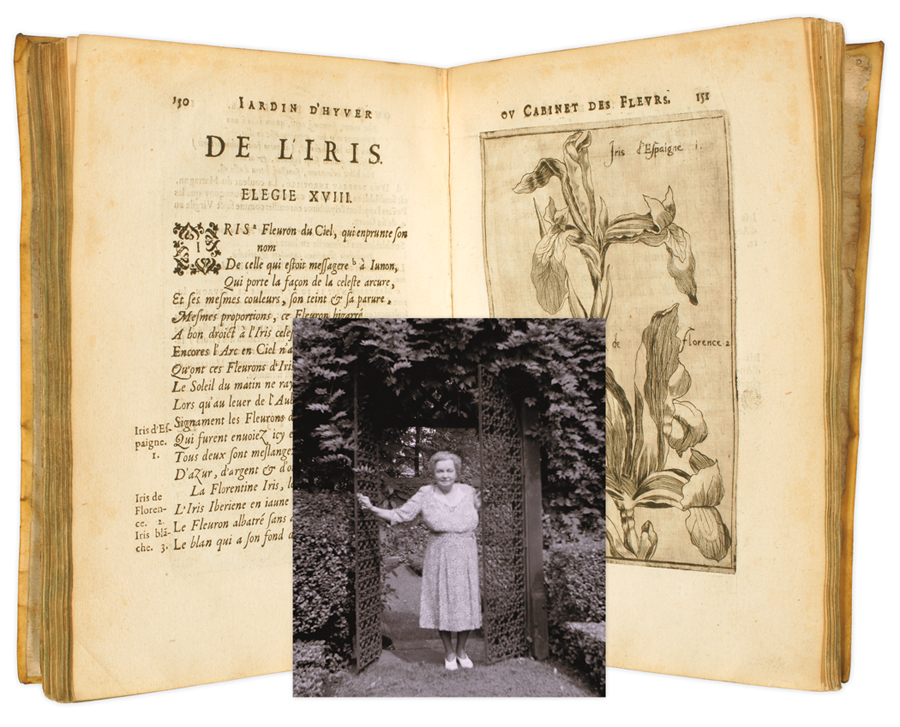
In celebration of their 50th anniversary, the Hunt Institute for Botanical Documentation will present rare gems from the original collection of founder, Rachel McMasters Miller Hunt (1882–1963). Hunt’s early love of nature and books grew into a lifelong pursuit of rare or historical works about plants, gardens and botany. She became fascinated by the people associated with these books and also collected their portraits, letters, manuscripts and original artworks.

Dedicated in 1961, the Rachel McMasters Miller Hunt Botanical Library was envisioned as a research center focusing on the history of botany and the history of botanical publication and as a repository where her collections would be preserved, curated, augmented and made accessible to researchers. By 1971 the organization had so diversified that it was renamed Hunt Institute for Botanical Documentation with four programmatic departments of Archives, Art, Bibliography and the Library. In the last fifty years Rachel Hunt’s original collection has been substantially augmented in all four departments. In accordance with the Hunts’ original vision of a living collection with public availability, the Institute maintains a regular exhibition and publication program and accessibility for research on a variety of scientific and cultural subjects related to the plant sciences.

Beginning with Rachel Hunt’s early interest in books, bookbinding and collecting, the materials on display in this exhibition are divided by subject and reflect her interests in the history of the herbal, the development of gardens and garden plants, the foundation of botany as a science and the botanical discoveries made through travel and exploration. The exhibition concludes with the foundation of the Hunt Botanical Library, its evolution to Hunt Institute for Botanical Documentation and descriptions of key aspects of the four departments. A color-illustrated catalogue will accompany the exhibition.

Inset, Rachel Hunt standing at her garden gate at Elmhurt. Rachel Hunt purchased this early gardening manual at the first book sale that she attended. © Hunt Institute


Botany and History Entwined
Rachel Hunt’s Legacy

September 16 – December 15, 2011
Hunt Library,Carnegie Mellon University (5th floor)

Hours: Monday–Friday, 9 a.m.–noon and 1–5 p.m.; Sunday, 1–4 p.m. (except 20 and 24–27 November).

Admission: Free

(Note: Hours of operation are occasionally subject to change, please call or email before your visit to confirm their hours. For further information, contact the Hunt Institute at 412-268-2434.)

Today I write to you from the annual meeting of the Guild of Natural Science Illustrators (GNSI). Illustrators and biologists have gathered in Olympia, Washington to learn about new techniques, new research and to catch-up with old friends. I have had the wonderful opportunity to meet people with whom I have an established email history. How nice it has been to finally meet them in person!

While only 24 hours have transpired on this very quick visit, I have been inspired several times over and have learned so much. My conference experience began with the Portfolio Sharing session. During this type of a session, illustrators open up their portfolios and discuss their work with others. On view are items such as educational posters, botanical illustrations, medical illustrations, textbook illustrations, instructions about how to use medical equipment, and other images representing the many ways scientific information is presented visually to the public. This session reminds you of how much of what we know and understand about the world is because a scientific illustrator helped us see it and understand it. Look around you. What did you learn from a scientific illustrator today?

As with any conference, there are so many learning opportunities and not nearly enough time. I have learned about the art, science and cultural connections between people and crows from Dr. David P. Craig, humpback whales from Dr. Fred Sharpe, aquatic insects from Dr. Carri J. LeRoy and the art of papercutting from artist, Nikki McClure. At the Techniques Showcase I saw demonstrations about lettering in pen & ink by Trudy Nicholson, how to work with Denril vellum by Alice Tangerini, pen & ink techniques by Marjorie Leggitt, and the art of scrimshaw by Captain Suzan Wallace. I also saw examples of colored pencil illustrations on coquille paper by Scott Rawlins, spoke with Kristie Bruzenak the conference chair of the 2012 GNSI Conference and created a card with a linoleum stamp created by printmaker, Sylvia Portillo.

All of this was followed by yet another heavy dose of inspiration at the opening reception of the annual GNSI exhibition.

Today, I go back for more.

The Royal Botanic Garden at Kew has created a travelling workshop that transports participants to the 1800s so they can learn about artist and explorer, Marianne North. This travelling trunk show enables participants to try botanical painting, eat tropical fruit and spices, read Marianne’s diary and view items from Victorian times.

This unique opportunity will be available through September 15, 2011. Readers in UK will find information about how to schedule this workshop at Marianne’s Travelling Trunk Workshop.

What do botanical paintings make you do?

What is your first reaction?

Do you think about the information in the image or do you tilt your head and think, “I wonder how long that took them!”

I suppose it depends on where you’re coming from and your disposition at the time. Let’s pick another example. Let’s pretend the image before you comes from an area of science that has nothing to do with plants.

When you see an image relaying information about a topic you know nothing about, what is your first reaction?

The role images play in science communication is the subject of Eye on Biology by Maura Flannery (1988). In her article, Flannery (1988) discusses the visual aspects of biology and makes a case for incorporating visual experiences in biology to enhance student learning. She cites the work of biologists, psychologists and other scholars who believe that learning in biology requires time for both visual and mental reflection.

When I read Flannery’s article, what resonated with me the most is the notion of “thought styles”. Flannery (1988) writes that biologist Ludwig Fleck, who coined this phrase, agreed with the other scholars that images “influence thought”, but he then went on to say that images also reflect “the ‘thought style’ of the science at that time” (Flannery, 1988).

“Thought style” is a discipline’s way of presenting itself based on the “intellectual mood” (Flannery, 1988) of its members. This notion of “thought styles” made me think of Niki Simpson’s composite illustrations. Could her images be a new “mood” in botanical art?

Flannery (1988) quotes artist, Gyorgy Kepes who, when discussing the latest in imaging technology (c.1956) stated:

This new range of perception will bring us more than factual information, it will bring us new sensory experiences, enriching our vision… helping us to dissipate old ways of seeing by lifting the visual barrier between inside and outside.

Couldn’t the same be said about the “new range of perception” generated by Niki Simpson’s digitally created botanical illustrations?

Many of you read Niki’s interview during this past holiday week, so I thought it a great opportunity to ask…

  • What type of sensory experiences do Niki’s images provoke?
  • Do they enrich your vision of plants?
  • Do they help you understand plants?
  • Could the work of Niki Simpson be a new “thought style” in botanical art or is it just photography?

Tell us what you’re thinking.


Literature Cited

    Flannery, Maura. 1988. Eye on biology. The American Biology Teacher. 50(5): 300-303.

To obtain a copy of Eye on Biology, locate a library near you or purchase this article online for $14.