Feeds:
Posts
Comments

Dear All,

I appreciate the feedback you have provided through the Reader Satisfaction Survey. Because of your feedback, the Classes Near You section has been reorganized. The listings for California have been separated into two sections — one for northern California and the other for southern California. Also, each section only contains information for classes currently in session or classes scheduled for the future. Completed classes have been deleted.

Please note the request for 2012 schedules listed in each section. If you have classes you would like to post, please send your information to education@artplantae.com. And if you know of an organization or garden that will offer classes in 2012, please let me know or suggest to the organization/garden that they list their classes here.

A comment was posted about listing classes by state. Although I link directly to a state’s page when announcing new classes, please know the Classes Near You section has always been organized by state or country. This index is always available to you by clicking on the Classes Near You tab at the top of this page.

Again, I appreciate your feedback. The survey is still open, so if you would like to share your thoughts anonymously, please do.

With much appreciation,

Tania


Go to Reader Satisfaction Survey

Cylburn Arboretum and the Natural History Society of Maryland will offer natural science illustration workshops this Fall.

See what’s new at Classes Near You > Maryland:


Cylburn Arboretum

http://cylburnassociation.org
The Cylburn Arboretum is the home of a post-Civil War estate built as a summer home for the President of Baltimore Chrome Works and his mother. Now a center for environmental education and horticulture, the Cylburn Arboretum hosts tours, events and activities for children and adults. The botanical art classes at Cylburn are taught by botanical artist, Molly O. Hoopes. Learn more about Molly in the ASBA Members’ Gallery.

  • Botanical Illustration Series – Thursdays, November 3, 10, 17, 2011; 6-9 PM. Traditional watercolor techniques, color theory, composition and plant morphology are the focus of this class. Participants will draw and paint berries, seeds and flowers. Greenhouse Classroom. Cost: $90 members, $120 non-members. To register, contact the Cylburn office at (410) 367-2217.


The Natural History Society of Maryland (NHSM)

http://www.marylandnature.org
Two classes about the plants and pollinators of Maryland will be offered. Classes will be taught at St. James Evangelical Lutheran Church, 8 West Overlea Ave, Baltimore, MD, 21206. Contact Linda Davis at (410) 252-4154.

    Botanical Illustration: Native Bees, Butterflies, and Wildflowers of Maryland
    Learn about Maryland’s important pollinators and how to identify them, while practicing traditional watercolor techniques. Participants will learn the traditional techniques of dry brush, wet-in-wet, wet-on-wet, and graded wash, while enhancing their skills of observation. Color theory and composition theory will be discussed. Honeybee morphology will be discussed using specimens from the Natural History Society of Maryland. Learn about pollinators and how they have been affected by climate change, pollution, and habitat loss. Participants have the option to contribute to a collection of watercolor illustrations—a ‘bee-ilegum’—to educate the public about native bees. Some drawing experience is helpful. Everyone is welcome.

    Workshop A (3-hr. classes) – Sundays, November 6, 13, 20 and December 4, 11, 18, 2011; 1-4 PM. Cost: $150, NHSM members; $180 non-members. Drop-in students: $30 per class meeting. Limit: 10 participants.

    Workshop B (4-hr. classes) – Thursdays, November 3, 10, 17 and December 1, 8, 15, 2011; 10 AM – 2 PM. No meeting on Thanksgiving. Cost: $200, NHSM members; $240 non-members. Drop-in students: $40 per class meeting. Limit: 10 participants.

    A reduced rate is available for college students and low-income attendees with a portfolio to show and proof of income. Contact Linda Davis for more information.

    To pay for the class, send a check or money order to:

    The Natural History Society of Maryland
    P.O. Box 18750
    6908 Belair Road
    Baltimore, MD 21206

    Please indicate if you are registering for Workshop A or Workshop B.

Materials List:

  • Kolinsky Sable or Windsor-Newton series 7 brush (or any natural sable brush that can be shaped into a sharp point when wet), size 0 or 00 and size 3 or 4. The larger one is for mixing paints and could be a less expensive style.
  • Palette paper (or paper palette), white plastic or ceramic palette with wells and a lid, if possible
  • Tracing paper or tracing vellum
  • Tubes of lightfast transparent artist-grade watercolors – suggested colors: Ultramarine blue, Cerulean blue, cobalt blue deep, Winsor blue (green shade), lemon yellow, yellow ochre, burnt umber, neutral, cadmium red, alizarin crimson, scarlet lake red
  • Syringe for squirting water
  • Mechanical pencil .005 with F or H leads
  • White eraser
  • Kneaded eraser
  • Any size block of Arches or Fabriano hot press watercolor paper
  • Desk lamp with full-spectrum bulb

Judging by the questions received from readers, there is a lot of interest in creating botanical note cards. This month’s group Q&A with the Birmingham Society of Botanical Artists (BSBA) focuses primarily on this topic. Today we’ll learn how BSBA members select an image for their cards, how they create a digital image of their artwork, how they create a layout for note cards and how they print their cards.

The conversation presented today is open to everyone, so please feel free to send in your comments or additional questions. Let’s keep the conversation going!

Thank you to readers who submitted questions. And many thanks to BSBA members who responded and to all BSBA members who are following this conversation ready to join in as the conversation develops.


Your Questions for the Birmingham Society of Botanical Artists
:

When teacher and textile artist, Rebecca Burgess was 19, she was asked to teach a textile arts class to children. Having received some training in art and education before entering the UC Davis Research Arts Center, she confidently lead group activities in the textile arts — activities that happened to require a lot of synthetic dyes. At this time, Rebecca knew nothing about natural dyes. She did, though, think it was unfortunate that an Art History major with a minor in Art Studio had not been told where paint or color came from. She took it upon herself to investigate where color came from and posed the occasional question to Jeeves of Ask Jeeves. She collected color recipes and learned how to make color using turmeric, berries, beets and cabbage. When she brought her new knowledge into the classroom, her students devoured all she taught them. They loved learning about natural dyes! She continued to explore color on her own and continued to fuel her students’ passion for nature’s palette.

Back then (as now), Rebecca felt that art is about “moving culture in a new direction” and felt that art missed the boat when it came to ecological awareness. She began vocalizing her concerns while she was an undergraduate student at UC Davis in the late 1990s. Unfortunately, the work she created within an ecological arts model was not well-received. She found herself pushing her professor’s buttons without intending to do so.

Today, Rebecca’s work and viewpoints about art and ecology are more appreciated. After graduating with a major in Art History, a major in Nature & Culture and minors in Art Studio and Design, she left the art world for a while and focused on earning her Masters in place-based education. During this time, she studied how human brains work and how they retain information. She also trained with an ethnobotanist and studied native plant restoration. When she realigned herself with the art world around 2005, she formed a bridge between the arts, education, and native plant restoration using her knowledge of these subjects. She began building restoration gardens at the school where she taught. Students learned the common names and Latin names of plants and witnessed the return of frogs, reptiles and birds to the restored habitat they created. All the while, students harvested art materials, natural dyes and natural inks. Rebecca’s curriculum took off.

The ecological literacy program Rebecca created provides many opportunities for children to experience plants in new and practical ways. Throughout the program, students document and reinforce what they have learned through drawing activities. Rebecca created her program by responding to what she thought was the “most instructive and holistic way” to introduce kids to plants. Rebecca explains:

With the curriculum, I aim for relevance, authenticity and honesty. Merging personal history and experience. Merging place-based history and experience. Merging the collective histories of students to create a single woven piece.

When asked what she feels people need to know about plants, Rebecca replies:

(People need to know) they are carbon. They can make food from sunlight and have a remarkable advantage over humans. They are constantly keeping the planet in balance. They manage the health of the planet through photosynthesis. They have a functional foundational place in our world and we need to appreciate their service.

When designing her curriculum, Rebecca created several activities and taught each of them over a three-year period. The eight lessons she includes in her free packet for educators, were chosen because they are the lessons that best embody the message Rebecca wants to deliver.

Second-grade teachers, textile artists and mothers have taught Rebecca’s lessons. While she knows of people as far away as Mississippi who have taught her curriculum, she receives the most feedback from teachers who have incorporated her lessons into their California classrooms.

Of the eight lessons Rebecca includes in her packet, seven can be adapted to any location. Only one lesson needs to be customized and tied-in directly with a school’s local ecology. To prepare for this lesson, Rebecca recommends teachers speak with professors at local colleges, botanists at a local herbarium, or ecologists familiar with an area’s ecological history. She also suggests teachers contact the native tribes in their region. Native tribes are often involved in restoring the traditional ecology of an area and are a rich source of information. The names of federally-recognized tribes in any region can be obtained online from the Bureau of Indian Affairs.

Today Rebecca no longer builds restoration gardens herself. She consults with schools and works closely with them on their projects. The Fibershed Project she launched with the publication of her book, Harvesting Color, demands a lot of her time. What began as a project to see if she could live off the natural resources within a 150-mile radius of her northern California home (this includes materials for clothing), has become a movement that will soon benefit the local economy of her area. The focus of the Fibershed Project has moved away from how to keep Rebecca clothed, to how to create a sustainable system that will give artisans and cottage industries access to local farmers for linen, cotton, hemp and more. The health of this system will be monitored by the Fibershed Marketplace, an online store that brings with it a no-nonsense analysis of what artisans, local industry and farmers can and cannot do using local resources. When it launches, the Fibershed Marketplace will launch with an assortment of raw materials. Items available for purchase will include yarn, raw fleece, knitting patterns created for Rebecca’s 1-year wardrobe, jewelry made from scraps of fabric created for Rebecca’s 1-year wardrobe, and small hand knit pieces. A percentage of each sale will go back into the Project’s fund to buy equipment for farmers and to improve the supply chain of goods for the online marketplace.

Finished garments will not be available at launch because fabric will not be ready. Currently the Fibershed Project, now a 501(c)(3), is working on issues related to the milling process that will utilize natural instead of synthetic dyes.

The Fibershed Marketplace will open on November 1, 2011.

To receive updates about the Fibershed Project and the grand opening of the Fibershed Marketplace, add your name to the Fibershed mailing list today.


Teaching Ecological Literacy

The curriculum Rebecca developed around native plants, habitat restoration, and plant dyes is available to educators for free. Download Teaching Ecological Literacy to Grades 1-5: Restoration Dye Gardens in the Restoration Education section on her website. If you use Rebecca’s curriculum, please let her know how you used it, how students responded, and tell her your thoughts about the experience. She would love to hear from you!

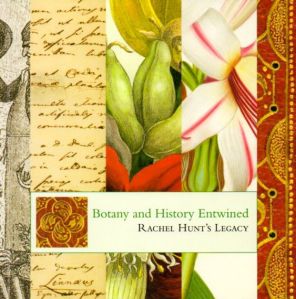
Rachel McMasters Miller Hunt (1882-1963) was passionate about plants, gardens, botany, books, the book arts and botanical art. In 1961, her personal collection of books, prints, drawings, watercolors, portraits, letters and manuscripts were donated to the Rachel McMasters Miller Hunt Botanical Library. This library would eventually become the Hunt Institute for Botanical Documentation at Carnegie Mellon University in Pittsburgh, Pennsylvania.

The book, Botany and History Entwined: Rachel Hunt’s Legacy is the exhibition catalog of the Institute’s current exhibition featuring items from Rachel Hunt’s original collection. The exhibition documents Rachel Hunt’s interests in books, the book arts and botany.

Authors Charlotte A. Tancin, Lugene B. Bruno, Angela L. Todd and Donald W. Brown tell the story of how a young Rachel McMasters Miller grew up to become a collector of herbals, botany books, botanical manuscripts and botanical art, and how her collecting was motivated by her interest in the role illustration played in communicating information about plants.

Through Hunt’s amazing collection, one can trace the history of botany and observe changes in how plant scholars made meaning. When explorers began to travel the world, they collected plants wherever they went and brought specimens back to Europe. This challenged scholars to reevaluate what they thought they knew about plants. Classification became a huge issue. Tancin et al. (2011) describe how scholars documented their new way of thinking in books and how the invention of the printing press and the increased availability of books led to increased networking among scholars. They also explain how the quality of book illustrations changed over time, changes that can be observed first-hand by anyone reading this wonderfully detailed exhibition catalog.

Included in the catalog is an image of the earliest printed book in Hunt’s original collection, Macer Floridus De Viribus Herbarum (1477), a medieval Latin poem about herbs. This image is joined by several images of herbals, floras and other books about plants. There is even a photograph of Rachel Hunt’s passport. This is a significant entry because Hunt did not only collect books, she retraced the footsteps of botanists and explorers and traveled to locations significant to botany’s history.

The significance of each botanical event documented in this book is made richer by the authors who provide interesting historical facts with each image. This catalog is highly recommend for anyone with an interest in botany, its history and how illustrations have been used to convey information about plants.

Botany and History Entwined: Rachel Hunt’s Legacy is available for purchase from the Hunt Institute for Botanical Documentation ($22). Visit the Hunt’s Publication page to download an order form.


Related

Launch a new year of learning and learn the history of botanical art.

New for 2012 at Classes Near You > South Carolina:


Charleston Horticultural Society

Founded in 1999, the Charleston Horticultural Society was created to serve as a horticultural resource center promoting Lowcountry horticulture.

    Botanical Art: A Continuing Tradition with Fran Phaneuf. February 16, 2012; 5:30-6:30 PM. Learn about the history of botanical art and how the traditions of this art form continue by viewing the work of contemporary botanical artists in this special presentation. This event is free to CHS members and those registered in Introduction to Botanical Illustration with Watercolor (see below). Space is limited.

    Introduction to Botanical Illustration with Watercolor – February 17-19, 2012. Meeting times are as follows: February 17, 5-7 PM; February 18, 10 AM – 4 PM; February 19; 1-4 PM. Learn about the drawing and painting techniques used by botanical artists, then practice them yourself! No experience necessary. Workshop participants will also learn about the flower preservation techniques used by botanist William Bartram. Instructor: Fran Phaneuf. Limit: 15. Cost: $125 members, $165 non-members.

It is once again time to re-evaluate the content and services provided by ArtPlantae. Your feedback is invaluable and will help streamline content and services as ArtPlantae looks ahead to 2012.

To participate in the survey addressing reader satisfaction, please click here.
All replies are anonymous.

Thank you for your participation.