Feeds:
Posts
Comments

Archive for the ‘Special Articles & Interviews’ Category

According to reader response to news about distance learning courses in botanical art and direct inquiries I receive from readers, it is clear that there is a lot of interest in distance learning classes. This month, you have the opportunity to voice an opinion about distance learning classes and to participate in a conversation with an instructor who wants to know what you think about this style of learning.

    What is your impression of distance learning courses?
    What do you want a distance learning course to do for you?
    What type of format would be ideal for your style of learning?


Join the Conversation

You have until this Friday to send questions/comments about this topic to Anna Knights. All questions to Anna will be submitted and posted anonymously. Anna’s replies to your questions will be posted on August 22, 2011. To participate in Ask The Artist with Anna Knights, send your question(s) to education@artplantae.com.

Read Full Post »

Does she use the Butterfly Collection app for iPhone?

How about the electronic field guide by LeafSnap?

What are oracle cards?

Find out here!

Read Full Post »

National Pollinator Week begins today.

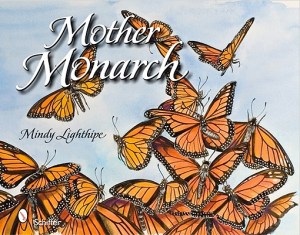
So does our Ask the Artist with Mindy Lighthipe!

Later today, I will make Mindy’s interview the top story on this page. All new posts will appear below her interview. This will make it easier for you to follow the Q&A throughout the week and to post your question.

Have you planted a garden for pollinators? If so, tell us about it!

Would you like to create a garden for pollinators? The Pollinator Partnership has created planting guides for each region of the U.S. Visit their website to download a free Pollinator Friendly Planting Guide for your area.

Now is your chance to ask questions about botanical illustration, insect illustration and more. Let’s get the conversation started!

Read Full Post »

In April, Wendy Hollender was interviewed by a radio station serving the community near her organic farm. In her interview, Wendy talks about her recent exhibition, her New York Times article about endangered plants, and her career as a botanical artist.

Wendy’s interview with “Dennis in the Morning” is now available for all of us to hear. This interview was conducted by WELV, the only local radio station in Ellenville, NY. Radio station WELV is operated by students and faculty from the Ellenville Central School District.

Listen to Wendy’s interview on WELV 107.9!


Also See:

Read Full Post »

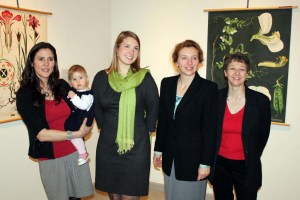
Lydia Kirchner at opening reception. (Courtesy: Randolph College. Photo by Brenda Edson)

Last year when Lydia Kirchner was taking courses in botany and museum studies, members of the Biology Department at Randolph College in Lynchburg, VA discovered botanical wall charts in the attic of the life science building. The wall charts were in very good condition, so the Biology Department contacted Randolph’s Maier Museum of Art to inform them of their discovery. One thing led to another and Kirchner was chosen to research the history of the wall charts and to curate an exhibition about the charts at the Maier Museum.

The exhibition Nature Perfected: The Art of Botanical Illustration, opened on January 23, 2011. Twelve of the wall charts are on view, along with pressed plant specimens, a 1920s microscope and microscope slides from the late 1800s emphasizing the significance of the wall charts and how they enhance our understanding of plants at a microscopic level.

Many of the charts discovered in the attic were created by Jung, Koch, Quentell in the 1950’s. Their trademark black background and colorful illustrations are still vibrant in spite of lying in an attic for many years.

Botanical wall charts have a history dating back to the 1800s. They were created during a time of educational reform in Germany. The first wall charts were created in the 1820’s, mostly for use in primary schools. In the 1840s, the student population increased 108% while the number of teachers increased only 40%. Wall charts made it possible for teachers to show supporting visuals in large classrooms filled with students.

From 1850 to 1890, botanical wall charts became very popular with the advent of color lithography. Contributing to the popularity of wall charts by Jung, Koch, Quentell specifically, is their absence of text. Because they do not contain text, the charts do not have to be translated. This makes the charts by Jung, Koch, Quentell very versatile.

Included in the exhibition are an original print by John James Audubon from the Maier Museum’s permanent collection, a 14th-century illuminated manuscript and four books from the College’s Lipscomb Library rare books collection. The books on display include:

    Beautiful Ferns
    Daniel Cady Eaton, Charles Edward Faxon, and J. H. Emerton
    S.F. Cassino, Boston (1882)
    Lipscomb Library, Randolph College

    This book features original watercolor drawings after nature accompanied with descriptive text. Although not intended for the classroom, the illustrations have captured scientific detail with artistic quality.


    The Birds of America, Vol. 1

    John James Audubon
    Roe Lockwood and Son (1859)
    Lipscomb Library, Randolph College

    The Birds of America is a collection of drawings by Audubon of birds from nature, accompanied by descriptive text. Published in seven volumes in 1840, the scientific illustrations capture idealized forms of nature with outstanding artistic expression. Audubon was recognized as both an artist and scientist for his drawings, and is still greatly celebrated and influential today.


    Conversations on Vegetable Physiology: Comprehending the Elements of Botany, with their Application to Agriculture

    Mrs. Janet Marcet, adapted for use of school by Rev. John L. Blake, 7th Edition
    E.L. Carey and A. Hart, Philadelphia (1837)
    Lipscomb Library, Randolph College

    Originally written by a woman, this classroom text was commonly called Blake’s Botany. The book features colored engravings that resemble the wall charts but include labels identifying specific structures.


    Manuscript Leaf of a Vulgate Bible

    ca. mid- to late- 14th century
    Lipscomb Library, Randolph College

    Illuminated manuscripts have a long tradition of botanical illustration used as a decorative border. The long and difficult process of hand painting each illustration limited the number of manuscripts available until early printing technology was developed in the 15th century using woodcut blocks and engravings.


    The Georgics of Virgil

    Translated by John Dryden
    Jacob Tonson, London (1697); reprint Cheshire House, New York (1931)

    A reproduction of Virgil’s poetic Georgics written in 29 B.C.E. accompanied with detailed engravings serving as a farmer’s manual teaching man about nature and the hardships of agriculture and field labor.


Nature Perfected: The Art of Botanical Illustration
will be at the Maier Museum of Art through July 31, 2011. Summer viewing hours from May through August are 1-4 PM, Wednesday through Sunday.


Exhibition Preview

Thank you to Lydia Kirchner and the Maier Museum of Art for sharing their wonderful exhibition with us. The gallery images below are provided courtesy of Lydia Kirchner.

L to R: Interim Museum Director Martha Johnson, curator Lydia Kirchner, advisor Dr. Andrea Campbell, and supervisor Deborah Spanich.


Related Topics

Read Full Post »

Saturday’s wonderful Facebook author event with Glynis Ridley has been posted below. This version has been reformatted so that the links appear in the appropriate places. I have omitted our encounter with technical difficulty. You can read the original version online.

Looking for an adventure with which to kick-off your summer reading? Look no further than Jeanne Baret’s journey on the Bougainville expedition! The Discovery of Jeanne Baret can be purchased online from independent bookstores at IndieBound.


AP
: Welcome to our conversation with author Glynis Ridley! 
Allow me to introduce to you Glynis…

Glynis Ridley is an Associate Professor at the University of Louisville in Kentucky. Her research interests are in 18th-century studies, the history of rhetoric, and animal studies.

Glynis was awarded the Institute of Historical Research Prize (University of London) for her book, Clara’s Grand Tour: Travels with a Rhinoceros in Eighteenth-Century Europe. Please welcome Glynis Ridley!

GR: Thanks for the kind introduction. I’m delighted to be here.


AP
: Glynis, I have thoroughly enjoyed your book and am excited to have the opportunity to discuss it with you. Here is my first question…

You first learned of Jeanne Baret from your husband who was preparing a paper about French explorers Louis-Antoine Bougainville and Jean-Francois de Galaup, comte de La Perouse. You mentioned you found almost nothing documented about Baret. Where did you begin your research? How long before you had enough information to articulate this biography of Baret’s life?

GP: My husband introduced me to Baret back in 2001, showing me the single paragraph in Bougainville’s journal that mentions her. When I realized the implications of Bougainville’s journal entry – that a woman disguised as a man had apparently remained undetected on board an sailing ship for a year and a half until frightened into revealing herself by the natives of Tahiti – I was just suspicious. It seemed improbable that a woman could successfully maintain her disguise in the close quarters of a sailing ship – a view only reinforced when I found out the dimensions of the ship she sailed on. The Étoile was 102 feet long and 33 feet wide with a compliment of 116 men. So when I was thinking about a new book project back in 2008, I kept coming back to Baret’s story as something that intrigued me. I began by reading everything I could find published about her (which is not much). Then I read the published accounts of the expedition – these have been collected and reprinted by various French publishers in the last two decades. They made me realize that Baret’s story was also the story of the first French circumnavigation of the globe, and I began to think that a book might be possible. The book was contracted at the end of 2008, on the basis of a 40-page synopsis (so the contours of Baret’s story had already emerged for me during that year). I completed research – and writing the first draft – across 2009. Then the first half of 2010 was devoted to editing – at which stage I had to take out any speculations I didn’t have good evidence for. You’ve just made me realize that’s 3 years of trying to find solutions to puzzles about Baret’s life and about the expedition.


AP
: Only eight written accounts of Bougainville’s expedition exist. One account belongs to expedition volunteer, Charles-Felix-Pierre Fesche. The journal of Charles-Felix-Pierre Fesche contains a lot of flowery, period-specific language. I am assuming all the journals were written in this way. How did you decipher the language of the 1700’s?

GR: Some of Fesche’s style is distinctively his – some is period convention. For example, this was an age when men and women with literary aspirations often peppered their writing with classical allusions in an attempt to show they knew their stuff. Travel narratives (both fiction and non-fiction) were very popular in the 18th century and Fesche undoubtedly toyed with the idea of publication. This may help to explain some of his literary flourishes. I’ve been specializing in study of the 18th century since I was an undergraduate and, since I read 18th century writers for work and pleasure, their language probably sounds less strange to me than to someone reading such writing for the first time. I promise you that if you were immersed in it for even a few weeks, it would start to seem perfectly normal!


AP
: Have you had the opportunity to view each handwritten account of Bougainville’s expedition?

GP: Yes. But I couldn’t have done this without my husband. Let me explain. He is a professor of French and, like me, he is also an 18th century scholar. When I realized that there was more material I needed from particular archives, I could always split the work with him: armed with a digital camera, he has spent many hours on my behalf taking pictures of some of the handwritten accounts. (I should stress that this was always with the agreement of the relevant museum or library.) The result is that, sitting at my laptop right now, I’m a couple of clicks away from images of the manuscript pages of Bougainville’s notebook and Commerson’s herbarium, among other texts. Between the two of us, we’ve seen and/or taken digital photos of all the main texts referred to in the book.


AP
: Pierre Duclos-Guyot was the son of the captain of the Boudeuse, one of Bougainville’s ships. Pierre traveled on the other ship (the Étoile) with Commerson and kept a joint journal with him. You mention this joint journal is now known for the watercolor paintings it contains. Are Commerson’s paintings of newly discovered plants and animals available for viewing, either in-person or online? (pg. 7)

GR: Let me address that previous question from before I lost the feed. Commerson’s papers are housed at the Muséum national d’histoire naturelle in Paris. Let me make a distinction between his manuscript notebooks, the herbarium he complied as a teenager, and illustrations and paintings he made in his expedition notebooks (or instructed Paul de Jossigny to make on Mauritius). All of these can be viewed in person at the Muséum though, as is common in all institutions that care for such unique historical artifacts, Muséum curators will want to know your reasons for needing to see the collection, and will want to satisfy themselves that you can handle them appropriately. Only a handful of images from Commerson’s expedition notebooks have been reproduced in books; even fewer have been digitized. That’s a great pity because it would be wonderful to be able to access this material online. When I was thinking about illustrations for the book, I found that only two pages from his teenage herbarium were circulating on the web, and only a single image he instructed Jossigny to make on Mauritius was available. The Muséum national d’histoire naturelle made three images from Commerson’s herbarium available to me but only one (showing pressings of hyssop and marshmallow) was finally used in the book. Unfortunately, color plates increase the cost of a book so the images in the book are reproduced in black and white. I’d love to see more images from the expedition available on the web in their full color glory.


AP
: The Wikipedia entry for Commerson states he was clueless about Baret’s sex. How often is it written that he was as shocked as everyone else that Baret was a woman?

GR: This story is everywhere. If you put ‘Jeanne Baret’ into your search engine of choice, you’ll end up finding a very short list of all the books that discuss her, in addition to my own. I’m the only person who has written on Baret to suggest that it is simply preposterous to believe that she concealed her identity for eighteen months before she revealed herself on Tahiti. Of course, when Commerson says that he was as shocked as everyone else, this could be – strictly speaking – true. If everyone suspected that Baret was a woman within a few days of the store ship leaving port, then Commerson was as shocked as everyone else because no one was shocked at all! But I digress. Let me illustrate the prevalence of the Wikipedia information in a different way. A couple of years ago, my husband was at a conference on French maritime history. In one of the coffee breaks, he found himself talking to a retired French naval officer who was familiar with details of the Bougainville expedition. My husband explained to the group that had gathered around them that I was working on a biography of Baret, and that I thought Commerson and Bougainville should not be believed when they claimed not to have known that Baret was a woman before the expedition landed on Tahiti in April 1768. The naval officer was not impressed and insisted upon the truth of the standard version of events i.e. the Wikipedia version. I was astonished to hear about this exchange – but an alternative version of events is clearly still too awkward to contemplate for many people. And there’s a lot of recycled and inaccurate information on the web.


AP
: While reading your book, I kept cross-referencing the people and events in your book to people and events related to botanical art. Your references to Jean-Jacques Rousseau prompted me to pull Rousseau’s Pure Curiosity: Botanical Letters off the shelf. The more history I read, the more I am surprised by who knew whom and how intertwined the lives of the big names in history seem to be. When researching a subject, how do you decide which cross-reference to explore? When do you know when to stop?

GR: I wanted to be able to give the reader enough context to be able to understand the importance of a particular character or to appreciate the relevance of certain information. Since you’ve mentioned Rousseau, and his interest in botany, let’s take him as one example in this discussion. He is an intriguing character – not to mention a major figure in 18th century France. Personally, I’m fascinated by his interest in projecting botanical images on magic lantern slides – the magic lantern was a sort of primitive projector. What it projected onto a big screen was typically an image painted on a glass slide. Rousseau enjoyed this as a solitary pleasure, but magic lantern shows were generally popular entertainments for groups in both public and private gatherings. But, you see, I’m already in danger of wandering off topic – I could spend a couple of pages describing magic lantern shows and Rousseau’s interest in them. I could talk about his well-documented interest in botany. But the aspect of Rousseau’s life story that best helps illuminate aspects of Jeanne Baret’s life and experience is the fact that Rousseau had a long term relationship with a woman considered his social inferior, and he persuaded her to give up their five children to the Paris Founding Hospital. Readers need to be able to see the relevance of information to the central character or central storyline. I might want to share my interest in Rousseau and botany, but I have to be aware that readers might be thinking, ‘why is Rousseau important to Baret’s story?’ Fortunately, writers don’t have to make these judgment calls on their own. The first draft of a manuscript might contain a lot of cross-references and apparent tangents. Editors bring a fresh perspective to a text and suggest where information can be cut – and also where it needs to be added. For me, it was helpful to keep reminding myself that I needed to put Baret’s experience at the center of things – in so far as this was possible.


AP
: If taxonomy was an obscene topic for women in 1768 (per William Smellie’s comments on page 9), when or how did it become fashionable?

GR: A lot of academics have asked the same question fairly recently and there’s an excellent book on the subject by Ann B. Shteir called Cultivating Women, Cultivating Science: Flora’s Daughters and Botany in England, 1760 to 1860 (1996). We need to distinguish between the ability to talk about the beauty of nature – which was always a fashionable accomplishment for middle and upper class women in the 18th and 19th centuries, and the pursuit of botanical knowledge, including an understanding of the principles of the Linnaean classificatory system. It was only at the end of the 18th century that books aimed at women readers started to take their potential interest in taxonomy seriously. Before this time, it’s possible to find women such as Lady Margaret Cavendish Bentinck, Duchess of Portland (1715-1785) corresponding with Rousseau about Linnaean taxonomy but she was an exception rather than the rule.


AP
: I have a book called The Little Botanist (1835) that celebrates a conversation between a mother and her young daughter. In this conversation, the mother teaches her daughter botany. This book was published 69 years after Bougainville began his expedition. When did female botanists stop being “a breach in the natural order of things”?

GR: When The Little Botanist was published, a woman called Marianne North was only five years old. In the course of her life, she would spend fifteen years crossing five continents to illustrate the world’s flora. Anyone who visits Kew Gardens in London – or who checks out their website – will find the North Gallery displays a selection of her watercolors. So the 19th century was a period of greater acceptance of women’s ability to engage with botany. And women’s interest in botany was undoubtedly stimulated by books on the subject aimed at young female readers. From the end of the 18th century, there are Charlotte Smith’s Rural Walks (1795) and Rambles Farther (1796). When the women who read these became mothers and grandmothers, they were better placed to provide instruction in botany than previous generations of women had ever been.


AP
: In your teacher’s guide to The Discovery of Jeanne Baret, you include a question about female botanical illustrators and 19th-century women travelers. The question you ask is, “Why do you think these women are not better known?” 


At the risk of oversimplifying things, I think there are two reasons why they are not better known — 1) During their lifetime, they challenged people’s assumptions about who they should be, and 2) I suspect they evoked a “Who does she think she is?” response from their peers. As a result, people were not motivated to learn more about these adventure-seeking women or to tell others about them. Is the explanation really this simple? How might a historian begin to answer your question?

GR: Your answers are really good ones in terms of thinking about responses to these women during their own lifetimes. But in suggesting this question in the teacher’s guide, I suppose I was thinking that a teacher might ask a class to consider not only the reception of these women by their contemporaries, but their treatment by successive generations of historians. Today, scholars who would define themselves as working from a feminist perspective might say that women like Baret have languished in historical obscurity because of both their gender and their humble social origins. It’s not just Baret’s contemporaries who showed a stunning lack of interest in her story – no 19th or early 20th century writers tried to investigate her achievement. A teacher might ask a class to consider the rise of women’s suffrage movement and the resistance it encountered, with women being told they lacked certain capacities and were somehow inferior. It’s harder than it should be to challenge such views if there are few histories of remarkable women around. Now there are women’s studies departments in colleges that ask students to think about how and why women’s histories have become an accepted part of publishing and teaching. A lot of students who take courses in women’s writing or women’s history today don’t realize how relatively recently these subjects have gained academic respectability.


AP
: Glynis, thank you for telling Jeanne Baret’s story and for speaking with us today. 

While I was reading your book and thinking about cross-references to this and to that, it made my yearning for a floor-to-ceiling whiteboard on a really, really long wall that much stronger. I enjoyed reading your book and I find I am relating other events to the year 1766.

To all of you who have followed our conversation, thank you for joining us. 

I would also like to thank everyone who has followed ArtPlantae during National Environmental Education Week.

Glynis, thank you for your time today and for teaching us so much.

GR: Thank you so much, Tania. Apologies for the glitch in the middle of the interview but I’m pleased we got it going again. Thanks for inviting me to discuss Jeanne Baret’s story and share it with more people. She deserves to be better known and celebrated and events like this will hopefully help with that.


You May Also Enjoy…

Read Full Post »
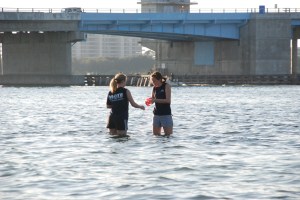
"Mommy & Me" students meet a tunicate for the first time while exploring the bay. (© Mote Marine Laboratory)

Mote Marine Laboratory is an independent, non-profit organization founded in 1955 by Dr. Eugenie Clark, a marine biologist known as the “Shark Lady” for her lifelong fascination with sharks and other fishes. The one-woman enterprise outgrew the tiny shed that once served as the main laboratory. Today Mote has seven centers for marine science, education programs for all ages, and the public Mote Aquarium. Mote has a 10.5-acre campus in Sarasota, Florida and three additional scientific facilities in the state. Concentrating on nearshore marine research, Mote’s scientific centers include:

    Aquaculture – Sustainably growing fresh and saltwater fish for food production and for supporting fish populations in the wild.

    Coastal Ecology – Research on Florida’s coastal ecosystems, including rivers, bays and estuaries, to inform the conservation and management of these environments.

    Coral Reef Research – Research, conservation and restoration of coral reef ecosystems.

    Ecotoxicology – The study of natural and man-made environmental toxins, their movement through marine environments and their impact on humans and marine animals.

    Fisheries Enhancement – The preservation and enhancement of economically-important coastal fish and invertebrate populations.

    Marine Mammal and Sea Turtle Research – Research on the biology and environmental needs of marine mammals and sea turtles to inform conservation and management of these species in the wild.

    Shark Research – This center studies sharks, skates and rays from many different angles ranging from molecular biology to ecology and conservation.

Our guest today is Natalie Fisher. Natalie is a volunteer marine science educator at Mote who is on sabbatical from Brecons Beacons National Park in Great Britain where she helps to run its busiest attraction – the National Park Visitor Centre.

Natalie has stopped by today to discuss how she creates intellectual and emotional connections between her students and the ocean.


ARTPLANTAE
: Thank you, Natalie, for speaking with us. Tell us what you do at Mote Marine Laboratory in Florida.

NATALIE FISHER: Thanks for inviting me. My job is to get involved in almost every aspect of the work of Mote’s Education Division. I develop new curriculae, teach visiting school, scout, and home-school groups, do outreach work, help out with public programs and events, set up and breakdown classes, the works! I also align our school programs to state standards and, am excited to take the lead in writing a new interpretive plan for the Aquarium.


AP
: Mote’s specialty is “nearshore marine research.” What does the phrase “nearshore” mean? Are there set boundaries that come with this area of study?

NF: A great deal of Mote’s research takes place in the shallow coastal waters of southwest Florida’s continental shelf, often near or within sight of the shoreline. For instance, Mote scientists have long-running research projects on the sharks, manatees, fishes, sea turtles and overall ecology of the waters along Florida’s Gulf coast. However, we don’t restrict our studies to that – several of our projects around the world have focused on species that travel far from shore. For example, Mote scientists have tracked whale sharks that migrate thousands of miles and spend much of their time in deep offshore waters.

Mote summer campers learn about the importance of Turtle Exclusion Devices in fishing nets. (Courtesty Mote Marine Laboratory)


AP
: Mote offers a range of learning opportunities. They offer classes for children as young as two-years old, conduct summer day camps, lead field trips satisfying Florida’s state standards, create overnight adventures for young children and teens, create custom programs for organizations, visit classrooms to deliver interactive marine science programs, and even offer live multimedia programs utilizing current technology. When working with preschool-age children, what do you want them to know about the ocean after exploring Sarasota Bay?

NF: First and foremost that being in the water is a positive experience. Secondly, that it’s fun to learn with other children. At this age, our classes are as much about learning and practicing social, motor and language skills as they are about learning about the ocean.

Thirdly, all our programs each teach one broad concept (or theme, to borrow from interpretation) which we’d like our students to remember – for example that an estuary is the ocean’s nursery. In the preschool classes we’ll reinforce that message through songs, stories, crafts and role-plays, but the experiential part of the lesson is often the most important in terms of making a connection.

Whatever the theme of the individual class or series of classes, the goal of the education division is to foster stewardship of the ocean, so all our programs have this at their heart.

Mote High School interns work on their research projects. (© Mote Marine Laboratory)


AP
: How does Mote make the ocean a “cool” topic for teenagers?

NF: By making it relevant. We use technology where it’s appropriate and we emphasize that the work they’re doing in class involves many of the tools and techniques that Mote scientists use for their research.

We’re currently developing an iPod Touch app for students to use during their visits. Students will be able to use the app during their program to add data they collect to an existing database, then use that information at school to compare their results to real data collected by students from earlier Mote programs, other schools or other sites.

We draw from current scientific studies in our classes — a cutting-edge approach that goes far beyond textbooks. The science we’re talking about is happening right now, right here at Mote. We simulate real research techniques as closely as we can, making our classes interactive and realistic for our students.

We also run an internship for high-schoolers, through which they get to experience working in different areas of the Laboratory and Aquarium (and earn community service hours towards college scholarships). Our interns learn how their school science lessons have real-world applications by conducting their own research projects.


AP
: Mote’s area of focus is nearshore marine science. Explain how you connect children and adults to the ocean existing beyond the bay and the exhibits in the Aquarium.

NF: Many of the animals we study and interpret (describe and discuss with students) help us to make that connection. For example, loggerhead sea turtles may nest on our beaches here in Sarasota, but they migrate throughout the Gulf of Mexico and beyond. We can tell their story by introducing students to Mote’s resident loggerheads. Students can learn about the human hazards faced by ocean animals through learning about our sea turtle, dolphin and whale hospital patients. All visitors to Mote Aquarium can meet our resident sea turtles, dolphins and manatees (our resident animals were deemed non-releasable by government officials). Summer-campers can also experience Mote’s science through our Center for Tropical Research in the Florida Keys, and the public can discover Mote’s coral reef research in the Florida Keys Eco-Discovery Center.


We emphasize the connectivity of the ocean, its currents and the migratory patterns of many of its animals to figuratively carry our visitors beyond the shallow waters of Sarasota Bay, into the Gulf of Mexico and beyond.


AP
: The amount of time you spend with children and adults is very brief. What is the primary message Mote aims to deliver to students, regardless of their age?

NF: That marine life has inherent value which makes it worth studying and conserving.


AP
: Many classrooms are miles away from the nearest ocean. If a teacher cannot take students to Mote on a field trip, how might a teacher engage students in a conversation about an environment they will never see, hear, smell, or feel?

NF: We run a series of interactive programs which aim to do just that. It’s important that our young people learn that their science studies have a practical application, and that they develop a sense of global citizenship, and there’s no better way to do both than by studying the ocean that connects us all. We use video-conferencing technology to engage with schools all over the USA and beyond through our award-winning SeaTrek programs.

SeaTrek, which was created by Mote’s Center for Digital Learning, offers students of all grade levels the opportunity to connect to the ocean through us here at Mote. The students learn scientific principles and processes through exciting and engaging programming delivered “live from inside the shark tank” (thanks to a little digital “magic”) directly into their classroom.

In addition to these structured means of outreach, we make education-focused materials and resources available through our YouTube channel (www.youtube.com/seatrek), where educators can watch samples of our programming and our new “Science Minutes” slots – short video clips (also available for purchase on DVD) teaching a range of science topics that can be integrated into their own lessons.

We also have traveling exhibits that tour schools and community centers across the country. Sanctuary Reef, Discovery Reef and Sea Monsters allow students to interact with and learn about marine ecosystems in a hands-on way without leaving school.


AP
: All fantastic learning opportunities! Thank you, Natalie, for sharing Mote’s programs and online resources with us.


Did you know?

A class enjoys an award-winning SeaTrek program. (© Mote Marine Laboratory)

  • You can download Mote’s education schedule for 2011? Visit their Marine Science Education page.
  • Information about SeaTrek programs and Mote’s traveling exhibits can be viewed at www.mote.org/seatrek?
  • SeaTrek received the 2009-2010 Pinnacle Award from the nonprofit Center for Interactive Learning and Collaboration. The award honors videoconferencing programs rated highest by teachers. This is the third consecutive year SeaTrek has won the prestigious award for outstanding performance by a content provider.

Read Full Post »

« Newer Posts - Older Posts »