Feeds:
Posts
Comments

Archive for the ‘Education’ Category

The current renaissance of botanical art began in the 1980s. Dr. Shirley Sherwood is credited with reviving the public’s awareness of botanical art. Since the first certificate program in botanical art was established at the New York Botanical Garden, programs have been established in Arizona, California, Colorado, Florida, Illinois, Maryland, Massachusetts, Minnesota, North Carolina, Pittsburgh, and Washington DC. Public workshops in botanical art are offered in almost every state across the country at botanical gardens, community centers, and even online. Regular readers of this website are treated to news of new workshops almost weekly and are not surprised by the rich offering of learning opportunities across the country.

Newcomers to botanical art and illustration, on the other hand, are surprised to learn there are certificate programs for this centuries old discipline considered by some to be merely a hobby of weekend art enthusiasts. Because ArtPlantae has the attention of such a large audience this week, I thought it would be a good time to address a question I’ve heard more than once which is:

So what is a certificate program in botanical art, anyway?

Answering this question for us today are Lee McCaffree and Catherine Watters, founders of the certificate program at the Filoli Estate in Woodside, CA. Lee and Catherine serve as the primary instructors and curriculum designers for this program. Here is what they have to say about Filoli’s certificate program and the value of botanical art education:

Botanical art emphasizes the connection between nature and art. Botanical artists develop the skill of observing nature in detail so they can create an accurate image of plants. This art form is a way to document the plants in our environment. Artists have an awareness and understanding of plants because they spend many hours observing and painting them. When these paintings are displayed in an exhibition, audience awareness of plants increases.

The Filoli Botanical Art Certificate Program gives students a way to learn this art form by offering a unique, in-depth study of botanical art through challenging, integrated and comprehensive courses. The curriculum includes the systematic study of artistic skills and concepts, basic botany and botanical art history. A certificate is presented upon successful completion of coursework (180 classroom hours plus homework) and presentation of a portfolio and final project. This program is for the serious student who wishes to develop knowledge and skills in botanical art. The minimum time for completion of the program is generally 2 years; there is no limit on how long a student may take to finish.

What makes the Botanical Art Program at Filoli unique is that it is taught in the beautiful Georgian country house surrounded by a spectacular 16-acre English Renaissance garden and 600 acres of open space. The certificate program has long been an essential part of Filoli’s mission to interpret and preserve the history of this country estate and its surroundings in the San Francisco area. Plants from the garden are used regularly as subjects in the classroom.

The program at Filoli teaches individuals how to “interpret and observe” in the same way explorers, botanists, and artists recorded their discoveries so many years ago. In addition to the integrated coursework designed by Lee and Catherine, the Filoli program invites highly acclaimed national and international interpreters/observers to teach at Filoli. Programs with visiting instructors are usually intensive multiple day courses and provide students with truly unique learning opportunities.

Filoli is participating in National Environmental Education Week through its nature education program which, like the botanical art program, encourages environmental awareness. View Filoli’s EE Week activities on their website. Be sure to also read about their Teachers and School Programs and the workshops for families and children, including a botanical art workshop for kids scheduled for April 24, 2010.


Related Information
:


Question for EE Week Readers
:

Read Full Post »

© Kari Malen. All rights reserved

© Lori Makarick. All rights reserved

Botanical illustrators at the Desert Botanical Garden are living a dream. They are continuing the centuries old tradition of documenting plants to create both a scientific record for biologists and educational material for the public. The botanical illustrators who have endured five years of study and many hours in the studio are about to make their work public.

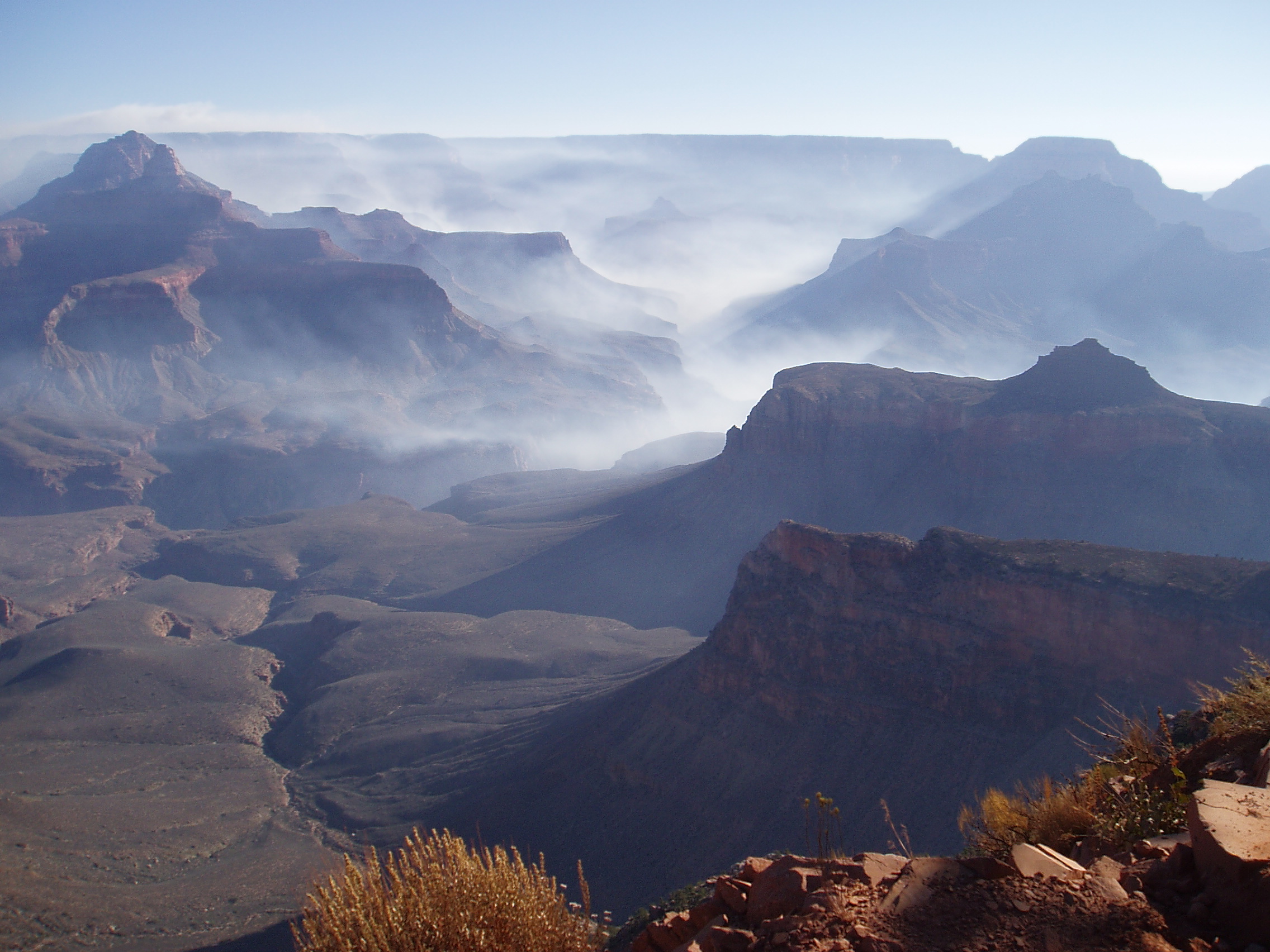
Eighteen illustrators will present 40-50 pieces of work in the Celebration of Plants exhibition to be held at Kolb Studio on the south rim of the Grand Canyon (July 2 – August 31, 2010). This exhibition is a cooperative effort between the Grand Canyon Association, Grand Canyon National Park and the Desert Botanical Garden in Phoenix, AZ.

Many lectures and activities will be presented during this exhibit. Artists and botanists will draw visitors into the world of art and science by sharing stories about early explorers and the botanists/artists who accompanied them. There will be explanations about how new species are described and discussions about why people should care about plants. Learning activities will include guided plant walks, plant identification workshops, guided plant walks into the canyon, and illustration workshops for all levels.


A Practical Idea Grows

Six years ago Wendy Hodgson, Herbarium Curator at the Desert Botanical Garden, met Lori Makarick, the Vegetation Manager at the Grand Canyon who oversees the management of rare plants, invasive species and habitat restoration. At the time, Makarick was reading a field guide about the special status plants in the Grand Canyon by former botanist, Nancy Brian. Makarick noticed the guide did not contain enough key characteristics in the plant descriptions and that some plant descriptions were not accompanied by illustrations. Hodgson and Makarick discussed updating the field guide. They thought it would be good idea to include an illustration for each plant described in the guide. When they discussed this, Wendy’s thoughts went immediately to the new botanical art and illustration certificate program at the Desert Botanical Garden. Wendy asked students if they were interested in illustrating the rare plants needed for the guide. The idea was met with enthusiastic response.

Makarick asked the Grand Canyon Association to help assemble an exhibit at Kolb Studio. The small group exhibit quickly metamorphosed into a much larger project. Makarick and Hodgson are now using this event as a launchpad to bring attention to the diversity of plants in the Grand Canyon and to bring attention to plants overall. Hodgson explains that, “Nearly fifty percent of all plants growing in Arizona occur in the Grand Canyon.”

Amazing information from someone who knows the Grand Canyon very, very well. Hodgson has studied and documented the plants of the Grand Canyon for 17 years and has described two new species of plants within the canyon. Throughout the process of research and discovery, Hodgson says her research has generated more questions than answers. Her work would be much more difficult if it were not for the plant researchers who came before her. Hodgson says she feels very fortunate to be able to learn from them through their field notebooks, specimens, and publications, with hopes that her own notes, specimens and artists’ illustrations will help future botanists with their studies.


About Wendy Hodgson

Many years ago botanist and illustrator, Wendy Hodgson, landed her first job at the Desert Botanical Garden in Phoenix, AZ. Agave expert Howard Scott Gentry needed illustrations for his book, so Wendy created them. A series of Garden jobs ensued until Hodgson, whose true calling is field work and plant documentation, became Herbarium Curator in 1984. The hours Wendy dedicates to her work in the Grand Canyon, are but one part of her career as the botanist for the Desert Botanical Garden in Phoenix, AZ., where she has worked for 36 years.


About Lori Makarick

Lori Makarick is the Vegetation Program Manager at the Grand Canyon. Her work is at the heart of the everything that has to do with plants at the Grand Canyon. Lori and her 40 staff members manage rare and invasive plants, manage a native plant nursery, and oversee the collection of seeds from native plants. Lori began her career as an intern with the Student Conservation Association and now helps to manage the Grand Canyon’s 1.2 million acres.

Watch the video below as Lori takes leads a virtual tour of the plant communities in the Grand Canyon.


Artists Participating in the Celebration of Plants Exhibition

    Susan Ashton
    Marsha Bennett
    Sally Boyle
    Katherine Rink Callingham
    Lynne Davis
    Karen Gengle
    Molly Gill
    Gabriele Henn
    Wendy Hodgson
    Elaine Hultgren
    Joan LaMoure
    Jo Ann Loza
    Deborah Ravin
    Lynn Reves
    Gillian Rice
    Daniela Siroky
    Sandy Turico
    Marceline VandeWater
    GiGi Wilson


Questions for EE Week Readers
:
Have you ever studied the plants of a specific area and documented or illustrated your observations? If so, where did your project take place? If you studied the plants in your own backyard, that’s great! We’d love to hear about this too!

Read Full Post »

Updated at Classes Near You > California:


Virginia Robinson Gardens, Beverly Hills

www.robinsongardens.org
Read about the Friends of Robinson Garden Botanical Art Group and the Robinson Garden Florilegium here. Download the 2010 schedule here.

  • Watercolor Brush Techniques for Botanical Art – June 8, 9, 10, 2010.
    Basic plant elements such as petals and simple fruits will be selected for understanding the application of washes, glazes, color blending, color layering for increasing intensity. How to build form and shadow while avoiding making muddy colors and overworking the paper surface will be covered as well as wet brush, dry brush and lifting techniques. The class will also focus on brushes and papers best suited to the various techniques required in creating botanical art. Extended topic study and exercises will be provided as homework.
  • Botanical Art Composition I – August 4, 5, 6, 2010.
    How to inject strong eye appeal into a botanical art painting is often challenging from subject to subject, no matter how skilled the artist. Margaret will lead the students through exercises designed to train the eye on how to plan and create visually appealing and natural compositions. Traditional compositions and contemporary works will be studied to expand the students awareness of how to influence the viewer. The impact of color placement, areas of dark and light, positive and negative spaces will all be covered.
  • How and When to Add Details – September 2010 (Dates TBA).
    How to build washes to get the right intensity and give value to the subject. How “not to” achieve a muddy color and destroy your paper by overworking and when to add the details that give final painting its personality and more.
  • Full Flower Painting – November 2010 (Dates TBA)
    Students should have prepared a final detailed drawing for review by Margaret. This will be used for a full and detailed water color study, utilizing all technical elements learned throughout the 2010 program. A special emphasis will be placed on innovative composition and accurate use of color.

Read Full Post »

By Irene Brady

I love giving workshops. It is a real high to help people discover that they’re unimaginably good artists, or share with them “aha!” tricks and tips that I’ve been using throughout my 40-year art career. But when the economy tanked, I had to stop giving workshops due to low enrollment in this non-urban area.

An important part of my workshops were the heavily illustrated workbooks I designed for my students to take home, filled with advice to keep them going once the workshop was over. So I’ve spent the last few months writing, re-writing, and illustrating tutorials and step-by-step exercises to make those workbooks into stand-alone lessons – then putting them up on my Workshop Workbook web page for download. I’m not done yet, but here’s what I have so far:

    Nature Sketching Basics (Special! $9.95) – A right-brain guide to teach you how to sketch what you actually see. This is the foundation book, and since all the others build upon the right-brain skill of transferring what you see to the paper, I recommend it to anyone wanting to draw realistically. There’s a lot in its 26 pages, from an introduction to right-brain techniques, to exercises in free-hand drawing of leaves, shells and pinecones, ways to create left-brain templates to allow the two sides of your brain to work together, then shading, blending, and 3-dimensional effects. The book includes a tutorial on drawing a turkey feather, with step-by-step instructions, and it ends with advice on how to critique your own work.

    Nature Sketching Details (Special! $9.95) – Advanced techniques for 3-D shading, ways to tackle difficult subjects, and shortcuts to great effects. This workbook starts where the Basics workbook leaves off, with ways to draw textures, symmetrical subjects, and shade white objects. There are several tutorials: drawing a cattail (with life-size cattail photos), tricky ways to create fine white lines against a in dark background (think “cat’s whiskers” or “leaf veins”), lizard and snake scales, and my own invention of “drawing” white on black (and not with white pencils, either).

    Sketching Wildlife Basics (Special! $9.95) – Wildlife sketching techniques and time-tested tips for every situation. In this workbook, I show you ways to develop left and right-brain templates to help you draw moving animals, how to use several models to draw a single sketch, or one model to draw several concurrent sketches. You’ll learn to develop your “visual snapshot” skills, then apply your pencil to get the tonal values you need to create fur and feathers. You’ll learn how to draw an eye with speed and skill, and the principles of drawing and shading fur, nestling down, and hair. There is a tutorial on sketching moving birds in the field, and techniques for drawing and shading realistic feathers. Find out what to do with birds that hit your window (sketch them, of course!), and ways to use your camera as a backup when sketching. Making useful labels and notes is discussed, as well as paper weight, electric erasers, and using a ballpoint pen when sketching. There’s even a tutorial on how to attach a pencil loop to your sketchbook!

    Nature Sketching With Watercolor Pencils (Special! $9.95) – Fill your sketchbook with beautiful, satisfying color. Adding color to your sketches is incredibly satisfying (and a bit scary to some). This workbook takes all the fear out of it, introducing the waterbrush and its care and watering, and the skills you need to work like a pro. There’s a lovely color wheel exercise, instructions for making color charts if you want to, EIGHT ways to get the color onto the paper, a tutorial on applying a mask, and a tutorial on how to hold and use the paintbrush effectively for different results. This is not a sketching book – it concentrates on using color. So there are lots of sketches on which you to try out step-by-step instructions: a bobcat kitten, a mountain scene, trees and shrubbery, hemlock cones, a fawn, a skull, and a conch shell. There is a full-blown tutorial for painting an orchid, from delicate shading and bold spots on the petals to a striking background that you could use anywhere. I’ve also included a tutorial by Susie Short on how to paint raindrops or dewdrops, because she says it perfectly. This workbook will have you applying color in no time at all.

    Observing Nature ($24.95) – A journal sketching guide to discovering your natural environment. If you would like to encourage your kids to go out and sketch/journal, you can jump-start the process with this curriculum developed in conjunction with three nature centers to use with students from middle school through high school. If you go out with them to sketch, you’ll get as much enjoyment as they do. Purchasing this download gives you permission to print out as many as you want for your students. The course emphasizes quiet observation, developing curiosity, improving drawing skills, honing interpretive skills, practicing writing and descriptive skills, and developing self-confidence, self-reliance and independence. Kids absolutely love this course. See also the Teacher’s Manual.

    Observing Nature Teacher’s Manual ($24.95) – Teaching children to develop observational, writing and drawing skills as they discover the natural environment through sketching and journaling. This is extremely useful tool to help you implement the course for children, even if it’s only your own kids. It features creating Observation Boxes filled with natural items to examine, draw, and journal about: acorns, leaves, seedpods, and whatever natural curiosities you find in your area. This manual also has a class plan and everything you need if you decide to try your hand at teaching a group of children these skills in a more formal setting. This goes with the Observing Nature book described above. Buy Now

    Workbooks In-Preparation: Drawing Raptors (almost ready), Basic Landscape Sketching, Travel and Nature Journaling. Additional titles to be announced.


Question for EE Week Readers
:
Do you use drawing as a learning tool? If so, how do you incorporate drawing into your activities?


Related
:

Read Full Post »

If your school has a schoolyard garden, you need to know about TheMulch.com.

TheMulch.com is more than a website with a list of links to other websites. It is an online community of horticulturists, landscape architects, garden writers, radio talk show hosts, garden-related businesses, and gardeners who willingly share years of gardening experience with each other. You barely have to lift a finger to find information you need and if you become a member (it’s free) you will receive monthly Plant Care Reminders.

The community at TheMulch.com is centered around member profiles through which members share garden-related activities and interests. Before you start thinking Facebook, MySpace, and all the rest…..stop. Member profiles are not comprised of streams of rambling comments. Profiles at TheMulch.com are maintained by dedicated gardeners. A member’s profile is a comprehensive platform through which a member can share interesting articles, pose plant care questions, research plant care topics, list the plants they grow and even list plants in a Plant Cemetery so others can learn from their mistakes. When a Mulch member uploads a plant list, they are able to connect with other members who grow the same types of plants. Through the large discussion platform, members can discuss a wide range of gardening topics. Do you have questions about growing fruits, nuts and vegetables? There is a forum just for you. Do you need help with planning your waterwise landscape? Direct your questions to the Waterwise forum. Need help identifying a plant? Just say, hey what’s this? Is horticultural travel your passion? There’s a forum for this too. The horticulture professionals and avid gardeners at The Mulch are a wealth of information.


The Mulch Team Needs Your Help

As you harvest invaluable information from TheMulch.com, consider giving back to this knowledgeable gardening community. The Mulch needs your help with a very special project.

The Mulch Team would like to connect with a schoolyard garden in each region of the U.S. so it can enter plant care information relevant to each region. The Mulch team would like to apply the tools and information already in place to support learning activities in schoolyard gardens across the country. The only way they can accomplish this is by communicating with garden teachers directly. The Mulch Team would like to invite garden teachers to contact them with information about what they grow in their schoolyard garden. The founder of TheMulch.com, Mitch Shirts, has promised to work alongside garden teachers to implement a resource that will benefit garden-based learning programs.


Question for EE Week Readers

Are you involved in a garden-based program at your school or in your homeschool program? If so, tell us about your current project.


Fun Gardening Project
:

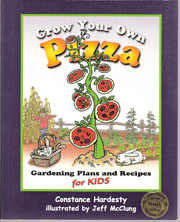
GrowYourOwnPizza_sm Contains plans to grow 26 themed gardens. Grow yourself “Your Personal Pizza Garden” or a “Stir Fry Garden.” Garden plans range from easy to advanced. Recipes included.
Buy

Read Full Post »

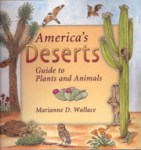
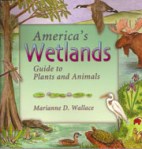
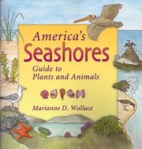
Marianne Wallace is a natural science educator, illustrator, and author. Her illustrations have been published in over thirty books. She is the author and illustrator of a series of guides to North America’s deserts, forests, mountains, seashores, wetlands, prairies, and grasslands. Marianne has taught science to elementary school children and nature drawing to science teachers, librarians, and children’s book writers. She taught botanical illustration classes at the L.A. County Arboretum & Botanic Garden in the 1970s, taught illustration classes for kids at the Los Angeles County Museum of Art, and taught a workshop about teaching botanical art to children at the annual meeting of the American Society of Botanical Artists held in Pasadena, CA in 2008.

This conversation is a continuation of a conversation I had with Marianne in 2004 when I interviewed her for The Southern California Botanical Artist. This time we begin with the question, How did you come to write the America’s books? Marianne explains:

On family trips I noticed there were few books about birds and butterflies west of the Mississippi. I thought, how could a book about North American birds not include common western birds like the Scrub Jay? Of the books that were in print at the time, I did not care for their cartoon-like illustrations. So I decided to write a book to fill this void.

My initial idea was to focus on desert habitats. However deserts are found in only certain states and I did not want to focus on specific states. I soon realized it would be better to take a broader approach and to create a book that also served as a learning tool. Since plants and animals know no boundaries, I decided to focus on specific habitats in North America.

It was important to me that the books show nature is cool, vibrant and still present. I wanted to get kids excited and thought if I created a fun book for kids, they would share it with their parents. I emphasize the “nature outside your door” and do not include humans in my books intentionally. I may mention human impacts as they pertain to native plants, but you will not see humans in my books.

The most common plants and animals of each habitat are what I focus on in my books. The specific attention given to common plants and animals came about because I observed that kids were not even aware of the most common species. I also observed that kids had no sense of geography. This made me determined to present the distribution of plants and animals in an understandable way.

The America’s books I wrote were written specifically for readers between 8 to 12 years old because I noticed there were natural history books for younger kids, nothing for 8-12 year olds, and then a jump to adult field guides.

The Search for a Publisher

Armed with an idea and a solid concept, Marianne needed a publisher. She researched her options and created a shortlist of ten publishers who would allow authors to illustrate books and who generally had good nature books. She wanted a publisher who valued information as much as she did. She knew that those who only do fiction may not be into information as much as they are into the story.

Marianne approached the Sierra Club first, then Harcourt Publishing. Upon contacting Harcourt, Marianne learned they only published nature books with photographs, so she scratched them off the list. She then contacted Fulcrum Books after reading information about what Fulcrum looks for in non-fiction books. At the time, Fulcrum was in the process of launching a natural science category and a children’s book division. Marianne was signed by Fulcrum and her Deserts book was one of the first books to be published in the new natural science category. Marianne says the great thing about small publishers is that authors receive more personal attention than they would at one of the big publishing houses.

When her Deserts book was published in 1996, creative non-fiction was not as prevalent as it is now. Marianne says the problem with this category today is that these books are often not written by biologists and, unfortunately, this makes the dissemination of misinformation more of a possibility. Marianne checks all of her scientific names and checks her facts very carefully to ensure the information in her books is as accurate as possible. In spite of one’s best efforts, though, mistakes are part of the business and when a mistake is found, both Fulcrum and Marianne take note. Reader feedback is filed and becomes part of the editing process each time a book is reissued.

These days, Marianne shops for publishers on Amazon.com. She looks for books she likes and jots down the names of publishers.


Including The Necessities

The books in the America’s series are as comprehensive as they are because they equip the reader will all he/she needs. We’re not talking just content here, we’re talking tools to enhance understanding. Simple tools too. Think rulers and maps. Marianne felt strongly that rulers and maps be included in her books. Rulers are important to Marianne because they enable readers to make comparisons between species and record accurate information. Maps are important to Marianne because she wants kids to understand how species are distributed and where habitat is located.

Another necessity was the inclusion of scientific names. Marianne felt it was important to passively educate people about the use of common names and scientific names. She wants people to understand the difference between common names and scientific names. The example she provides addresses how “puma”, “cougar”, and “mountain lion” are three common names for the same animal. These animals share one common name and this is Puma concolor. The same situation occurs with “peccary” and “javelina” – two common names, one animal (Pecari tajacu).


The Big Picture on Two Pages

The landmark features in every book in the series are the two-page spreads featuring the common plants and animals within a given habitat. To create the spreads in each book, Marianne asked people what to include. She asked educators and nature guides what people ask about the most. She researched the primary literature and spoke to experts. She also traveled a lot because she felt it was important to visit the places she wrote about. If a not-so-common species made it onto a two-page spread, it was included specifically to engage kids (e.g., an animal with warning colors accompanied by a cautionary tale). And Marianne admits, if she became really excited about a species, this served as a clue she may need to include it in the book.


Creating The Big Picture

When you’re the author and illustrator of a book, which comes first, the words or the illustrations? For Marianne, neither the words or the illustrations came first. Both were created simultaneously. The spreads in the America’s books were the most difficult illustrations to plan and create. Each two-page spread contains anywhere from 35 to 50 species of plants and animals. To create each two-page spread, Marianne completed the line art first in pen-and-ink. She then photographed the line art and added color (gouache). The plants and animals that were going to be on each spread for sure, were placed on the spread first. They served as place holders. Other sketches were added as necessary. Rocks and other features were added last. Imagine the time it took to repeat this process for each of the six spreads in a book!

As for the illustrations to be placed in other areas of each book, they came with their own set of instructions. Because the publisher prints 4-over-1 (full color on the front and B&W on the back) and alternates color pages with black & white pages, not every plant and animal was printed in color. In fact, certain rules were in place about which illustrations are created in color and which illustrations are not. The lizards, amphibians, trees, and mammals in Marianne’s books did not get color. Flowers and insects always received color.

When the illustrations for a book were completed, Marianne gave them to the publisher. At this point, how her artwork was recreated was beyond her control. If the publisher wants to punch up a color, then this is what they do even if it makes a plant or an animal a different hue than originally intended. Over time, Marianne learned to accept how her work is printed. She says authors and illustrators have to learn they can’t be in control of everything.


An Author’s Dream Realized

Amidst the busy planning of each book’s content, creating the detailed two-page spreads, talking with experts, and writing, Marianne never lost sight of what she wanted most. She wanted people to use her books. She made the conscious decision to publish the America’s series only as a paperback. The drawback to having her books published only in softcover is that they are not considered for awards. Also libraries, as a rule, do not buy paperback books. Even so, the America’s books are widely read and each title in the series has been reissued. The Deserts book is the most popular among readers. Marianne found out her books are also used in social studies classrooms because they cover all of North America and address regional topics discussed in social studies class.

Marianne’s books resonate with adult naturalists, homeschoolers, adults who aren’t naturalists, and grandparents who buy books for family members living in other areas of the country.


Current Projects…

Marianne is currently taking a break from writing nonfiction. She wants to create a story grandparents can read to their grandchildren. She also wants to take a break from doing research. She is working on several ideas for picture books, including:

  • A counting book written from the viewpoint of a tarantula. This story will take place in the Mojave Desert.
  • A fictional story about a barn owl. The backdrop of the story is based on accurate natural history facts about birds.
  • Regional books for specific areas.
Read Full Post »
By Christine Elder

I feel blessed to combine my life-long loves of nature and art with children. For over twenty years, I’ve put my training as a biologist, experience as an educator, and right brain as an artist in the service of turning kids on to nature through art, and conversely, to art through nature. I believe that the arts and sciences can be gateways to each other, as one discipline can entice students to become fascinated (or at least comfortable!) with the other.

Through the years, I’ve worked as an environmental educator with both children and adults for organizations including the U.S. Forest Service, The Nature Conservancy, and The Monterey Bay Aquarium, and led nature drawing workshops & field trips for natural history museums, conservation organizations, biological research labs, art centers and schools-from kindergarten to college!

During the school year, I’m often asked to collaborate with middle schools, where I develop and teach custom programs that integrate arts and sciences curricula. I enjoy the challenge of creating educational and fun programs that incorporate the State educational standards. In the summer, I teach my popular workshop series Drawing From Nature at my studio.

When I’m not teaching, I run a biological illustration and graphic design business – SciLuminArt – that I founded and operate from my downtown studio in the Sierra foothills hamlet of Grass Valley, California. My most recent project was designing and illustrating Joshua Tree National Park’s new Junior Ranger book, that I found to be my most rewarding project to date.

During Environmental Education week, I look forward to hearing from you – educators, artists and scientists alike – to chat about ways to best integrate the disciplines of arts & sciences in the service of not only educating our children about nature’s processes, but becoming inspired by its beauty and thus working to preserve it for future generations. As the saying goes “We only save what we love, and love what we know.”

I invite you to visit my website at www.ChristineElder.com where you’ll find free educational materials I’ve developed and information about my upcoming classes.

© Christine Elder. All rights reserved

Question for EE Week Readers:
Do you have questions for Christine? Please click on the Ask Christine Elder tab above to post your question.

Read Full Post »

« Newer Posts - Older Posts »