Feeds:
Posts
Comments

Archive for the ‘Education’ Category

The UC Botanical Garden at Berkeley has added new events to their Fall schedule. You are all invited to attend!

See what’s new here and at Classes Near You > California.


University of California Botanical Garden at Berkeley

http://botanicalgarden.berkeley.edu
This 34-acre garden was established in 1890 and is now a non-profit research garden and museum. The botanical art classes below are taught by Lee McCaffree and Catherine Watters. View a detailed schedule and register on the Garden’s website.

  • Sick Plant Clinic – First Saturday of Each Month, 9 AM – 12 PM. Free. No reservations required.
  • Monthly Butterfly Walks – Fourth Tuesday of each month (March – October); 3 – 4 PM. Garden volunteer, docent, and caterpillar lady, Sally Levinson, will lead walks through the garden in search of butterflies. Space is limited. Children welcome. Free with admission.
  • Garden Strollers – Second Wednesday of Each Month,
    11 AM – 11:45 PM. A 45-minute tour of the garden for adults with young children (3 and under). Tour will end on the lawn for play and snacks (bring your own). Children must be in a stroller or carrier during the tour. FREE with garden admission. Meet in front of the Garden Ship. For more information, call (510) 642-7082 or email garden@berkeley.edu.
  • Native Bees with Dr. Gordon Frankie – Sunday, October 2, 2011;
    11 AM – 1 PM. Dr. Frankie is a UC Berkeley professor, research entomologist and a native bee expert. His specialty is the behavioral ecology of solitary bees in wild lands and urban environments of California and Costa Rica. Dr. Frankie will discuss some of the more common species of native bees, as well as, the plants and gardening practices, that will encourage them to take up residence in your garden. He will talk about current projects and share stories from the field. Pre-registration required; $25, $20 members.
  • Foods of the Americas Exhibit Docent-led Tours – October 6 – 20, 2011, 9:30 AM & 11:30 AM. Pre-pre-registration required by September 15. Feast your eyes on the vibrant textures and colors of the fall harvest in our Foods of the Americas exhibit. Visit our marketplace filled with produce from ancient Indian cultures, from the well-known corn, tomatoes, potatoes, and chocolate to the less familiar amaranth, quinoa and oca. See them growing in our Crops of the World Garden, Tropical House, and the Mexico/ Central American and South American collections. Free with Garden admission. Schools may schedule a special 75 minute program for their classes.
  • Bamboo Workshop with Stalk Bicycles – Saturday, October 8, 2011;
    11:00 AM – 1:30 PM. Stalk Bicycles of Oakland will be on-site to show you how they hand-craft custom bicycle frames from bamboo and other sustainable materials. They will demonstrate how bamboo is a sustainable, versatile and sculptural material – perfect for bike construction and many other design projects. Join us as we learn about bamboo, sustainable manufacturing, bamboo construction, and see their one-of-a-kind, custom artisanal bikes. $15, $10 members; registration required.
  • Film Screening: Queen of the Sun – Wednesday, October 12, 2011;
    6:00 – 8:00 PM. Queen Of The Sun: What Are The Bees Telling Us? is a profound, alternative look at the global bee crisis from Taggart Siegel, director of The Real Dirt On Farmer John. Taking us on a journey through the catastrophic disappearance of bees and the mysterious world of the beehive, this engaging and ultimately uplifting film weaves an unusual and dramatic story of the heartfelt struggles of beekeepers, scientists and philosophers from around the world including Michael Pollan, Gunther Hauk and Vandana Shiva. Together they reveal both the problems and the solutions in renewing a culture in balance with nature. Pre-registration required; $12, $10 members.
  • Foods of the Americas Family Day! – Sunday, October 16, 2011;
    10:00 AM & 1:00 PM. Spanish and English Docent Led Tours of the Exhibit; 2 PM Native Food Tastings & Crafts. Free with Garden Admission.
  • NEW! Stalk It! with Karen Soloman – Sunday, October 16, 2011;
    11 AM. In celebration of Food of the Americas Family Day, Karen Soloman (Jam It, Pickle It, Cure It) will discuss how to prepare your favorite food of the Americas as she teaches from her new book, Can It, Bottle It, Smoke It. Soloman’s books will be available for purchase. Cost: $20 members, $25 nonmembers.

    Live hundreds of miles from UC Berkeley? Take a look inside Jam It, Pickle It, Cure It and Can It, Bottle It, Smoke It.

  • Fall Bird Walk – Saturday, October 29, 2011; 9:00 – 10:30 AM. Observe resident, migrant and vagrant birds in the Garden’s many bird-friendly microhabitats with birding expert Phila Rogers and Associate Director of Collections & Horticulture Chris Carmichael. Pre-registration required; $20, $17 members.
  • NEW! 5th Annual Spooky Tales in the Redwood Grove – Sunday, October 30, 2011; 2-3 PM. Join the Stagebridge storytellers in the Redwood Grove as they tell bewitching and playful stories in celebration of Halloween. Join in the costume parade through the redwoods. Cost: $12 for one adult and child; $8 members; $3 each additional person.
  • Botanical Art: Autumn Leaves with Lee McCaffree – Sunday, November 13, 2011; 10 AM – 4 PM. Fall foliage offers a brilliant color palette to catch our eye, but a graphite drawing or green leaf can be just as fascinating. Expert Lee McCaffree will instruct students on the structure of leaves as students to draw and paint them. The class will consider many types of leaves from the Garden before drawing them and closely examine structure and detail. Students may use pencils or watercolor to create an original work using the colors and/or patterns of fall leaves. All levels are welcome. Pre-registration required; $80, $75 members
  • California Natives: Plants and People Tour for Kids – Saturday, November 19, 2011; 1:00 – 2:30 PM. How could people get everything they need from the natural environment without stores? Learn about the plants used by California Indians for food, shelter, clothing, tools, medicine, games, and music. Explore the varied customs and skills of California’s earliest inhabitants. Create your very own take-home project inspired by early Californian crafts. Pre-registration recommended; $15 for each adult and child, $12 members; $5 each additional person.

Read Full Post »

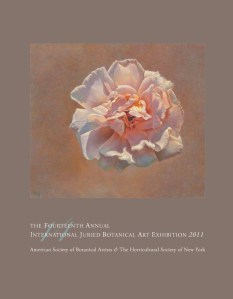
The 14th Annual International Juried Botanical Art Exhibition opens this week at The Horticultural Society of New York. This exhibition is a collaborative effort between The Horticultural Society of New York and the American Society of Botanical Artists.

This exhibition featuring paintings and drawings of trees, fungi, vines, fruit, vegetables, and flowers will be on view September 21 – November 23, 2011. The Gallery at The Hort is free and open to the public Monday through Friday from 12 – 6 PM.

Botanical art workshops will be taught by botanical artists Dr. Dick Rauh, John Pastoriza-Piñol, and Wendy Hollender during the exhibition. Information about these workshops is available below. Workshop information has also been posted to Classes Near You > New York.


Horticultural Society of New York

www.hsny.org
These workshops will be offered during the 14th Annual International Juried Exhibition of Botanical Art that will be on view from September 21 – November 23, 2011 in The Gallery at The Hort.

  • Exploring the Science of Botanical Art – Monday, October 17, 2011. Explore the botany and the art of plants with botanical artist and botanist, Dr. Dick Rauh. Learn about the life cycles of flowering plants and use a magnifying glass to study their unique characteristics. Choose from two sessions: morning session (10 AM – 1 PM), afternoon session (2-5 PM). HSNY Hort Members $115, nonmembers $150.
    Register online/Get materials list
  • Prickly Subjects – Thursday, November 3, 2011. Have you always wanted to capture the complex details of plants? Do stick-me-outs leave you baffled? Learn how to capture the most intricate details of the plant world with Australian botanical artist, John Pastoriza-Piñol. Choose from two sessions: morning session (10 AM – 1 PM), afternoon session (2-5 PM). HSNY Hort Members $115, nonmembers $150.
    Register online/Get materials list
  • Grisaille Technique in Botanical Painting – Monday, November 21, 2011. Artist and author, Wendy Hollender, will teach students how to create three-dimensional botanical forms using the grisaille technique to create tonal values. She will then show students how to apply color over these tones to create finished colored pencil paintings of botanical subjects. Choose from two sessions: morning session (10 AM – 1 PM), afternoon session (2-5 PM). HSNY Hort Members $115, nonmembers $150. Register online/Get materials list

The American Society of Botanical Artists has a membership of over 1,100 from the United States and 25 other countries. Its mission is to promote public awareness of botanical art, honoring its traditions and furthering its development.

The Horticultural Society of New York provides programs that sustain the vital connection between people and plants, growing a community of New Yorkers that values horticulture and giving even those with limited resources the knowledge and opportunity to cultivate plants, benefiting the environment, their neighborhoods, and their own lives.

The catalog for this exhibition can be purchased at the show and can also be purchased at ArtPlantae Books.

Read Full Post »

Marianne McPhie of Botanical Painting Today, has launched a new website and has announced her class schedule through January 2012. Here is what’s new at Classes Near You > England:


Marianne McPhie, Nottinghamshire

www.botanicalpaintingtoday.com
A full-time botanical artist and instructor, Marianne teaches throughout the UK and abroad. Both current and past issues of her newsletter are now available online.

  • An Introduction to Botanical Painting – October 4-6, 2011. Learn the skills of observation, drawing, and painting. This class is for beginners or those who need a refresher course.
  • NEW! October Painting Days – October 10-14, 2011. Looking for the opportunity to immerse yourself in painting while having the luxury of asking for one-on-one instruction and feedback from your peers? Are you curious about botanical art and want try it for yourself? This week of special painting days are for you! Cost: £65 per day.
  • Drawing & Composition – November 1-3, 2011. Learn how to measure, how to create perspective using scale and tone, and how to compose a plant portrait.
  • NEW! Botanical Painting – January 17-19, 2012. Students choose their own subjects and what they would like to learn. Students have the option of completing this course as a 2-day or 3-day course.

Read Full Post »

Animals are fun.

They engage us with their movements, have big round eyes, have cuddly fur and come in intriguing shapes, sizes and colors.

Plants, however, just sit there.

These truths, plus other interesting facts about how people perceive organisms are discussed by Petra Lindemann-Matthies in “Loveable” Mammals and “Lifeless” Plants: How Children’s Interest in Common Local Organisms Can Be Enhanced Through Observation of Nature.

Lindemann-Matthies evaluated a program created to enhance children’s knowledge of biodiversity. The program, Nature on the Way to School, was administered at 525 Swiss primary schools from March – June 1995 to celebrate the “European Year of Nature Conservation.” In her paper, Lindemann-Matthies makes the point that environmental education studies investigating student knowledge of the environment are different than educational studies in biodiversity focusing on “children’s direct observation and investigation of local wild plants and animals” (Lindemann-Matthies, 2005). Lindemann-Matthies states that the outcomes of biodiversity education have not been studied extensively and it is this topic that is the focus of her research.

Lindemann-Matthies (2005) says dedicated efforts to teach biodiversity to children must be taken to take advantage of young children’s interest in learning about living organisms. In her paper, she refers to biodiversity studies completed in Austria and Germany. In these studies, it was determined that incorporating outdoor experiences with classroom instruction was more effective at enhancing student awareness of local plant and animal species, than simply talking about local plants and animals in the classroom (Lindemann-Matthies, 2005).

The Nature on the Way to School program was created by the Swiss conservation organization Pro Natura. Classroom material and instruction was provided to teachers. Teachers ordering these materials were invited to take part in Lindemann-Matthies’ study. The program’s hands-on activities called upon students to engage in activities such as drawing plants and animals, caring for invertebrates like snails and earthworms in the classroom, and recording what was observed while walking to school (Lindemann-Matthies, 2005). Of the many classrooms in which this program was administered, Lindemann-Matthies evaluated the program’s effectiveness in classrooms where the teacher completed and returned the pre- and post-test questionnaire required for Lindemann-Matthies’ research. Her final study group was composed of 248 classrooms and over 4,000 students ages 8-16.

Research questions addressed by Lindemann-Matthies (2005) were:

  • Which plants and animals do children like best, and which organisms are especially valued on their way to school?
  • Did the educational program Nature on the Way to School change children’s preferences for species?
  • Did the age and sex of the children influence their preferences for species and did age and sex influence the effect of the program?


Results

When students were asked which plants and animals they liked best before participating in the Nature on the Way to School program, students listed garden plants or decorative plants such as roses, tulips and daffodils and few made reference to the local plants of Switzerland (Lindemann-Matthies, 2005). After the program, the number of students listing local plants (especially wildflowers) increased. The increase observed in the experimental group was significantly higher (11.4%) than in the control group (2.6%) (Lindemann-Matthies, 2005). When students were asked to name their favorite animals, students listed pets (especially cats, dogs and horses) more often than local Swiss animals prior to the study. After the study, students still listed pets more often than local animals (Lindemann-Matthies, 2005). When it came to plants, children’s preferences for plants were not influenced by sex or age (Lindemann-Matthies, 2005). This was in contrast to Lindemann-Matthies’ findings about preferences for animals where it seems more girls like pet animals and more boys like exotic animals (e.g., lions and tigers) and wild animals (e.g., squirrels and deer).

Lindenmann-Matthies (2005) observed that the plants and animals students claimed to appreciate the most were directly related to the plants and animals to which they were exposed. So if children were exposed mostly to garden variety plants, they referred to these plants more often when asked which plants they liked (or appreciated) the most.

Lindenmann-Matthies (2005) also observed a positive relationship between the number of program instruction hours received by students and their appreciation for the wild plants and animals of Switzerland. The more instruction students received, the more they demonstrated an appreciation for local flora and fauna. On average, teachers from the 248 participating classrooms spent 17 hours teaching the Nature on the Way to School program, with the actual hours of program instruction ranging from one hour to sixty hours across all classrooms (Lindemann-Matthies, 2005).

Teachers in 144 of the 248 classrooms incorporated the program’s Nature Gallery activity into their curriculum. This clever activity called upon students to serve as interpreters for their favorite local plant or animal. In this activity, students were asked to frame the plant or animal they liked best during their walk to school. More than 50% of the items framed by students were wild plants, followed by plants whose identification were unknown (16.2%), which was then followed by garden variety plants (15.5%) (Lindemann-Matthies, 2005). The wild animals framed by students were represented by anthills, spider webs and birds nests (13.7%) (Lindemann-Matthies, 2005). After framing their subject, students were encouraged to spend one week providing information about their subject to fellow students, to parents, to anyone walking by and in some cases, the media. Students had to explain why they chose their subject and while students cited many reasons for selecting their subject, most students chose to frame a subject because of its beauty (22.5%), “likeability” (20.2%) or some specific feature students found interesting (Lindemann-Matthies, 2005). The plant framed most often was a dandelion and Lindemann-Matthies (2005) reports that the students framing this plant tended to do so because it was “growing in unusual places.” Lindemann-Matthies states the Nature Gallery activity was the “highlight” of the Nature on the Way to School program.

Citing the observations above and many other observations described in her 22-page paper, Lindemann-Matthies (2005) concludes:

  • The Nature on the Way to School program was successful at making students more aware of the diverse number of plant and animals species in their local area.
  • There appears to be a strong association between awareness and preference. In this program, as students became more aware of local plants, their preference for local plants increased.
  • While student preference for pets did not change, their preference for pet animals decreased with the number of program instruction hours received. Lindemann-Matthies (2005) proposes that the average number of instruction hours received (17 hours) is not enough to increase student appreciation for local wild animals.
  • Even successful programs have sobering limitations. When students were asked what they would have liked to frame in a Nature Gallery if given a choice, students “still preferred ‘loveable’ animals, in particular mammals from countries other than Switzerland.”

To learn more about Lindemann-Matthies’ research, visit your local college library to pick-up a copy of this paper or purchase it online for $34.


Literature Cited

Lindemann-Matthies, Petra. 2005. “Loveable” mammals and “lifeless” plants: how children’s interest in common local organisms can be enhanced through observation of nature. International Journal of Science Education. 27(6): 655-677

Read Full Post »
Don’t worry. You won’t get in trouble.

Personally, I write in the margins of many things. I write all over the research papers I read and in the books from my personal library too. Some books are so full of information (like Karin Nickelsen’s book about 18th-century botanical illustrations), notes are a necessity because they are the only way I can keep up with the author and relate new information to other things I’ve read. Writing in the margins is how I make meaning. What I do not do, is highlight and underline pages and pages of text. Highlighting and excessive underlining never worked for me. While studying teaching and learning techniques and student learning in grad school, I read a comment by someone making the point that the act of highlighting text is simply proclaiming, I’ll get to this later. Now isn’t that the truth? I apologize for not being able to give credit to this individual.

What about doodling? Do you create doodles to help you process information in the text?

Then you might be interested in an exhibition at the University of North Carolina exploring why images are paired with text and how information is conveyed through pictures. The exhibition, Meaningful Marks: Image and Text and the History of the Book, is on view at the Melba Remig Saltarelli Exhibit Room in the Wilson Special Collection Library until September 28, 2011. One of the books featured in the exhibit is Mark Catesby’s Natural History of Carolina, Florida and the Bahama Islands (1731-1743).

Getting back to scribbling in book margins…

Do you find this practice offensive or are you okay with people who do this? Here is a link to a short video featuring interviews with people on both sides of this issue. This video was created by multimedia journalist, Jonathan Michaels, and takes a look at why we write in books.


Related
:


This post marks the beginning of a new feature about books and literature pertaining to plants, nature, natural history art and related topics.


Read Full Post »

A careful photographic study of plants at Winterbourne Botanical Garden lead to the creation of unique color palettes by artist and designer, Chris Eckersley. Nature’s colors were matched using oil color after Eckersley selected six colors from each photograph to create his color charts.

See examples of Eckersley’s work in the press release on the exhibition page for The Colours of Winterbourne.

A link to this exhibition has been added to the Exhibits to Visit section.

The Colours of Winterbourne
Winterbourne House and Garden
The Coach House Gallery
Sept. 1 – Oct. 13, 2011

Read Full Post »

New ten-week programs announced at Classes Near You > Illinois:


Lillstreet Art Center

http://lillstreet.com

    Introduction to Botanical Art & Illustration I
    Mondays, September 19 – November 15, 2011; 10 AM – 1 PM. This class is designed for beginners/advanced beginners. Observation and research skills, basic drawing skills with black & white medium (graphite pencil and pen-and-ink) will be introduced along with brief botanical art history. In this ten-week class, students will also learn basic botany, which is essential for botanical artists to make their work botanically accurate. Precise reviews and critiques will follow every class and two independent projects will be completed by each student. Colored medium, watercolor and colored pencil will be introduced in Introduction to Botanical Art and Illustration II.

    For more information, contact instructor and botanical artist Heeyoung Kim at info@PrairiePlantArt.com. Learn more about Heeyoung and view her online gallery at www.PrairiePlantArt.com. To register for this class, contact the Lillstreet Art Center at (773) 769-4226 or register online. Cost: $320 members, $330 nonmembers

Read Full Post »

« Newer Posts - Older Posts »