Feeds:
Posts
Comments

Archive for the ‘botany’ Category

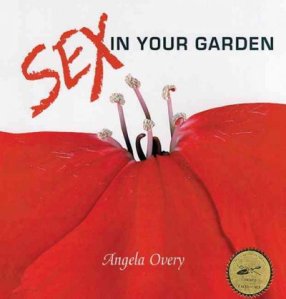
SexInYourGarden Plant reproduction can be as sensitive a topic as human reproduction.

This was made clear to me years ago at the, then, L.A. Garden Show when a gentleman disapproved of me displaying the book, Sex in Your Garden. He shook his head, made the “tisk, tisk, tisk” sounds and told me I shouldn’t have this book out on display. It was the word “sex” in the title that prompted his reaction. If you are unfamiliar with this book, it is a light-hearted and very anthropomorphic look at how plants attract pollinators. It contains text and images drawing similarities between how plants and humans call attention to themselves.

Even though it has been years, I always think of this gentleman when talking about flowers, fruit and reproduction. It is easy to talk about sperm, eggs, ovules and seeds when speaking with adults (although I usually have to give them a few moments to digest the fact that there are ovaries in their fruit bowl).

It is talking about plant reproduction with young audiences that always gets me thinking. What is saying too much?

If you’ve ever felt compelled to launch into an explanation of double fertilization while dissecting flowers with kids (even though you know you shouldn’t), here are some resources that may stop you from going over the cliff.

In How Do Apples Grow?, author Betsy Maestro and illustrator Guilio Maestro provide a comprehensive look at how buds on an apple tree develop, how the buds bloom and how flowers attract bees. They discuss flower anatomy, fruit development and explain what we’re eating when we eat an apple. They explain how apple trees make their own food and close their story where they began it — with flower buds on a bare apple tree. This life cycle book for botanists ages 5-9 addresses some big topics. Here is a list of vocabulary terms and concepts explained in this book:

  • leaf buds
  • flower buds
  • sepals
  • petals
  • stamen
  • pollen grains with male cells
  • pistil
  • ovary with female cells
  • pollination
  • fertilization
  • pollen tube germination
  • fruit development
  • seeds as fertilized female cells
  • photosynthesis
  • apple varieties

Maestro also touches upon seed dispersal and decomposition. The supporting watercolor illustrations by Guilio Maestro are colorful, labeled clearly and are easy to understand. Together Maestro and Maestro do a nice job of making flower development, pollination and fruit development very observable processes.

Just as Maestro makes fruit development observable, Helene J. Jordan brings seed germination and development out into the open in How a Seed Grows. The seed growing activity in her book enables students to see how seeds change beneath the soil and how seedlings grow above ground without investing in those growing chambers with the glass sides. Jordan’s clear instructions are supported by the informative gouache and colored pencil paintings by illustrator Loretta Krupinski. While Jordan’s book was written for children ages 4-8, the seed-growing exercise is appropriate for older children. It helps explain how seeds become plants and brings the life cycle of plants full circle. Plus it really lends itself to exercises related to botanical illustration.

Here is a list of vocabulary terms and concepts introduced in
How a Seed Grows:

  • seed
  • plant
  • tree
  • soil
  • watering for growth
  • writing numbers for identification
  • seed germination
  • roots
  • counting
  • leaves
  • soil
  • water
  • sun
  • photosynthesis

Jordan also includes directions to an experiment children can do to investigate the resources plants need to grow.

We can’t talk about seeds, flowers, pollinators and fruit development without showing how all these things are related. A great book that ties up all the loose ends is The Reason for a Flower by Ruth Heller. She introduces young readers to pollinators they might not normally consider and introduces them to wind pollination too. In her colorful 48-page book, she also introduces readers to seed pods, seed dispersal, herbivores, carnivorous plants, parasitic plants, angiosperms and familiar products derived from plants.

If you ever find yourself wondering “how much is too much?” when preparing an activity for young audiences, browse through children’s books about plants to get ideas about how to teach less, better.


Resources Cited

    • Heller, Ruth. 1999.

The Reason for a Flower

    • . New York: Penguin Putnam.

Jordan, Helen J. 1992. How a Seed Grows. New York: HarperCollins.

Maestro, Betsy. 1992. How Do Apples Grow?. New York: HarperCollins.


Also See

Botanical Illustration & Plant Morphology for Preschoolers
Read Full Post »

Please welcome Mt.Cuba Center to the Classes Near You section!

You can view their classes here and at Classes Near You > Delaware.


Mt. Cuba Center

www.mtcubacenter.org
Mt. Cuba Center is a botanical garden in Hockessin, DE dedicated to the conservation, display, and research of native plants. Their woodland wildflower gardens are recognized as the area’s finest. The Center hosts many interesting classes related to plants, gardening and the arts. View their full schedule of on-site classes and distance learning classes on their website.

    Fall Photography Free Stroll
    Saturday, October 26, 2013
    7:30 am – 11:30 am

    Enjoy this early morning opportunity to photograph the gardens of
    Mt. Cuba Center!

    Chris Starr will offer advice, tips, and ideas as well as answer your photography questions. Photographers of all experience levels, from novices to experts, will receive personal guidance. Stroll the gardens while capturing the visual glory of autumn. Be sure to bring your lenses, camera manual, and dress for the weather. Tripods are welcome. Garden admission is included with registration. Chris Starr is an experienced photographer who has played many roles at Mt. Cuba Center since 1984. Currently he is a member of the grounds team. View Details/Register


    Hidden Treasures

    November 5-7, 2013
    10:00 am to 3:00 pm

    Create botanical art from a new perspective!

    Primarily using graphite pencil, but including watercolor and colored pencil, create a drawing with a range of texture and tone. Our focus will be more on the sculptural and textural qualities of our plant source than on color. Learn how to capture nature from a different vantage point and see the art you can create from spent flowers, dried up leaves or spindly stalks. John will augment his group instruction with individual coaching. Basic drawing ability needed and a materials list is provided upon class registration. Please bring your lunch.

    John Gist is an acclaimed artist who worked as an illustrator after graduating from the Philadelphia College of Art (now the University of the Arts) with a degree in Illustration. He has taught art for over 15 years including at Bartram’s Garden and the Philadelphia Society of Botanical Illustrators. His work has been displayed in several exhibitions, including the exclusive International Exhibition of Botanical Art and Illustration at the Hunt Institute, the Philadelphia Society of Botanical Illustrators Exhibition at the Philadelphia International Flower Show, the Woodmere Art Museum, and with the American Society of Botanical Artists annual shows. View Details/Register


    Multiply Your Natives from Seed

    Saturday, November 9
    9:00 am – 2:00 pm

    Learn how to identify, collect, and sow native seeds. Join Bill McAvoy, Delaware’s state botanist, and Phil Oyerly, Mt. Cuba Center’s greenhouse manager, as they share their joint expertise in growing native plants from seed. Bill will teach you how to correctly identify seeds, explain the ethics of collecting seed from the wild, and demonstrate sustainable seed collecting practices. Clean the seed you harvest, learn seed scarification and stratification techniques, and find out the best ways to store seed. This is a hands-on workshop so be dressed for the weather and able to walk the rugged terrain of our Natural Lands. Students will take home wildflower seeds. Please bring a bagged lunch.

    William McAvoy has been the Delaware state botanist for the last 23 years, while serving in the Delaware Division of Fish and Wildlife. He is the primary author of the 2001 publication The Flora of Delaware, an annotated checklist, which has been revised as an online database. Phil Oyerly is the greenhouse manager at Mt. Cuba Center and has worked in the plant propagation area for many years. Phil and his staff grow native plants in support of the landscape and research activities of
    Mt. Cuba Center. View Details/Register


    Winter Tree Identification

    Saturday, January 18, 2014
    (Snow date: February 1, 2014)
    9:00 am – 12 Noon

    Learn the basics for identifying woody plants in winter. Don’t let the leafless trees of winter scare you! Eileen Boyle, Director of Education and Research at Mt. Cuba Center, will teach you distinguishing characteristics for identifying native trees and shrubs during the austerity of winter. Examine bark, study habit, inspect buds, and collect twigs then put them through a dichotomous key. Dress for winter conditions since this class will be held both outdoors and in the lab. Eileen Boyle is the Director of Education and Research at Mt. Cuba Center. Previously she was the director of horticulture at the Philadelphia Zoo and the New York Botanical Garden. She has also worked as a horticulture professor, an administrator for the New York City’s parks, and for the USDA. View Details/Register


    Why We Need More Natives in Our Gardens

    Tuesday, January 28, 2014
    (Snow Date: Feb. 4, 2014)
    7:00 pm – 9:00 pm

    Garden for life – ours and theirs!

    Specialized relationships between animals and plants is the norm in nature, rather than the exception. Plants that evolved in concert with local animals provide for their needs better than plants that evolved elsewhere. Doug will explain why this is so, why it is important to restore biodiversity to our residential properties, what we need to do to turn our landscapes into functioning ecosystems once again, and what we will gain by doing so. Doug will sign copies of his book, Bringing Nature Home. Doug Tallamy is Professor and Chair of the Department of Entomology and Wildlife Ecology and Director of the Center for Managed Ecosystems at the University of Delaware in Newark, DE. He has authored 73 research articles and taught Insect Taxonomy, Behavioral Ecology, and other courses for 30 years. Chief among his research goals is to better understand the many ways insects interact with plants and how such interactions determine the diversity of animal communities. His book, Bringing Nature Home: How Native Plants Sustain Wildlife in Our Gardens, received the 2008 Silver Medal by the Garden Writers Association.
    View Details/Register


Read Full Post »

The Lloyd Library & Museum invites you!

You are invited to the dedication of the Lloyd Medicinal and Johnny Appleseed Memorial Garden at The Ohio Governor’s Residence on October 23, 2013.

The Friends of the Ohio Governor’s Residence and Heritage Garden is pleased to announce its latest addition to the Heritage Garden — the Lloyd Medicinal and Johnny Appleseed Memorial Garden. This new medicinal garden, named after early 20th-century pharmacist John Uri Lloyd, of Cincinnati, Ohio, surrounds a descendant of one of Johnny Appleseed’s famed late 18th century apple trees planted in Ohio and the surrounding area. These highlight the multiplicity of uses of plants, and those that were especially important to the early families and individuals residing in the state.

The dedication ceremony begins at 1:30 p.m., with special appearances by First Lady Karen W. Kasich, and John Uri Lloyd and Johnny Appleseed impersonators. Light refreshments will be provided. The dedication will be held in the
Heritage Garden at the Ohio Governor’s Residence.

Attendees MUST register in advance by October 16, 2013.
Please go to the Lloyd Library website to RSVP and to get more information.

The Heritage Garden was established in 2000, under the guidance of Former First Lady Hope Taft. The garden was designed to showcase the variety of Ohio’s natural history and environment to the thousands of yearly visitors to the Ohio Governor’s Residence. It has continued to grow and flourish since that time. The idea for the Lloyd Medicinal and Johnny Appleseed Garden was first conceived in 2009. The garden was completed this year.

The Lloyd Medicinal and Johnny Appleseed Garden was made possible through support of the following: Friends of the Lloyd Library and Museum,
Ohio Pharmacists Association, Meisner & Associates Land Vision, Friends of the Ohio Governor’s Residence and Heritage Garden, Greenscapes: Excellence by Design, and Larry Owen.


About The Friends of the Ohio Governor’s Residence and Heritage Garden

The Friends of the Ohio Governor’s Residence and Heritage Garden was established in 2006 as a non-partisan, non-profit 501(c)3 organization to help preserve, enhance and promote the Ohio Governor’s Residence and Heritage Garden. Our Board of Directors consists of business and cultural leaders from across the state who value the significance of this historic landmark and are committed to ensuring its legacy for generations to come. For more information, visit the Friends’ website.

Read Full Post »

    What thoughts cross your mind when preparing to teach students about plants?

    How do you prepare yourself?

    What type of student reactions do you prepare for?

    What would you do if you had the money, space and time to teach botany any way you wanted?

In their very interesting paper, Elementary Botany: How Teachers in One School District Teach About Plants, Melanie A. Link-Perez and Elisabeth E. Schussler address the questions above as they begin their investigation into how K-12 teachers teach botany.

In 2006, Link-Perez and Schussler (2013) interviewed 13 elementary school teachers about their experiences teaching plant biology. The teachers interviewed were all female and were a mix of both new and experienced teachers. Interviews were recorded, transcribed and then evaluated for recurring themes (Link-Perez and Schussler, 2013). Data collected were teachers’ “self-reported experiences in teaching about plants, in order to assess their comfort level and experiences in botanical instruction” (Link-Perez and Schussler, 2013).

The research questions Link-Perez and Schussler (2013) wanted to investigate were:

  • How do teachers feel about teaching plant content?
  • What types of activities are used to teach about plants?
  • How do students react to lessons about plants?
  • Is there anything teachers need to help them teach about plants?

After evaluating teacher interviews, Link-Perez and Schussler (2013) categorized themes according to their research questions above. Here is a quick summary of their findings:

    How did teachers feel about teaching plant biology?
    Teachers stated they were comfortable leading lessons about plants, even though most of the teachers claimed to have no (or very little) training in botany.


    How did teachers teach about plants in their classrooms?

    Teachers reported using their own activities to supplement the textbook given to them by their school district. Teachers also mentioned they do the same activities repeatedly and that some students complain about having to repeat a plant lesson they completed in an earlier grade.


    What did teachers have to say about how students react to learning about plants?

    Teachers stated that, while students like to grow plants, their enthusiasm and attention span for learning about plants dies quickly.


    What did teachers say they need to teach about plants in their classroom?

    Teachers expressed a need to find a better way of managing light, temperature and water in their classrooms. They also stated the need for more space.

Using teacher feedback and these themes as a guide, Link-Perez and Schussler (2013) offer two recommendations to anyone interested in enhancing botany instruction within their school district: 1) Provide teacher training in the plant sciences and 2) Help teachers develop curriculum so they can stop teaching the same lessons over and over again.

Learn more about the research conducted by Link-Perez and Schussler and the history of botany education by obtaining a copy of this article online. This article is available for free from the Botanical Society of America.


Literature Cited

Link-Perez, Melanie A. and Elisabeth E. Schussler. 2013. Elementary botany: How teachers in one school district teach about plants. Plant Science Bulletin. 59(3): 99-110. Web. http://www.botany.org/plantsciencebulletin/PSB-2013-59-3.pdf [accessed 2 October 2013]


Also See

WhatAPlantKnows What a Plant Knows
A free seven-week online course taught by Daniel Chamovitz, author of What a Plant Knows (2012) and the Director of the Manna Center for Plant Sciences at TelAviv University. This class started October 1. It involves video instruction, reading assignments, quizzes, a final exam and discussion forums. Sign Up Today


More About ArtPlantae’s Teaching & Learning Column

ArtPlantae is participating in Connected Educator Month. As a participant in this wonderful event, I would like to welcome readers who are reading this column for the first time. This weekly column is published on Friday. Through this column we explore the links between drawing and knowing (knowing plants, specifically). To read past columns by myself and guest contributors, please see the “Teaching & Learning” section in the right margin of this page. Thank you for joining us online.

Read Full Post »

Click for speaker information

Click for speaker information

Bridging the Gap Between Alternative and Conventional Medicine
Lloyd Library and Museum
Cincinnati, OH
October 12, 2013

The Lloyd Library and Museum invites you to attend Bridging the Gap between Alternative and Conventional Medicine, its first major scientific symposium. Speakers and participants will explore the complicated issue of using herbal and other natural remedies in a society that has long relied on conventional medical practices.

Alternative, sometimes referred to as Traditional, medicine tends to approach health from an entirely different perspective, looking to prevent rather than having to cure. However, the two medical practices can and do work together, and there is a way to integrate the two methods to obtain optimum health.

The Lloyd is bringing to Cincinnati some of the biggest advocates for herbal and natural medicine, including:

  • Mark Blumenthal, Founder and Executive Director of the American Botanical Council
  • Roy Upton, Executive Director of the American Herbal Pharmacopoeia ®
  • Sheila Kingsbury, professor of Medical Botany at Bastyr University
  • Lisa Gallagher, local naturopathic physician from the Alliance Institue for Integrative Medicine (Cincinnati)

Jan Scaglione, Clinical Toxicologist at Cincinnati Children’s Hospital Medical Center and Cincinnati Drug and Poison Control Center, will serve as moderator in an open afternoon session, facilitating interaction between the speakers and audience. Attendees can expect to come away with a better understanding of the alternative therapies available and how to integrate natural medicines with their routine medical care to achieve a healthier lifestyle.

The symposium begins at 8:00 AM and ends at 3:00 PM. Registration for the event is $50 and includes light continental breakfast and afternoon snacks. Registration deadline is October 1, 2013.

On October 13, 2013, a Lloyd representative along with local herbalist/botanist, Abby Artemisia, will lead a medicinal botany hike at the Curtis Gates Lloyd Wildlife Management Area (CGLWMA) in Crittenden, Kentucky. The walk begins at 10:30 AM at the CGLWMA and ends at 12:30 PM. The cost for this educational and fun event is $25.00. Registration deadline is October 1, 2013.

Space is limited for both dates so please register soon if you would like to attend. Combined registration for both events is $65.00. Details and a registration form can be found on the Lloyd Library and Museum website.


About the Lloyd Library and Museum

The Lloyd Library and Museum, a 501(c)3 not-for-profit organization, is a local and regional cultural treasure, which began in the 19th century as a research library for Lloyd Brothers Pharmacists, Inc., one of the leading pharmaceutical companies of the period. Our mission is to collect and maintain a library of botanical, medical, pharmaceutical, and scientific books and periodicals, and works of allied sciences that serve the scientific research community, as well as constituents of the general public, through library services and programming that bring science, art, and history to life. It is open Monday-Friday, 8:30 AM – 4:00 PM, and on the 1st and 3rd Saturdays of the month from 9:00 AM – 4:00 PM.

Read Full Post »

There is a new learning opportunity at Classes Near You > England.

Spend a weekend at the Eden Project!


Eden Project

www.edenproject.com
Located in Cornwall, England, the Eden Project is a non-profit whose focus is connecting people to the natural world through educational programs, social programs, music and art. See how the Eden Project was transformed from a clay pit to an international institute for learning.

    Introduction to Botanical Illustration
    October 11-13, 2013
    10 AM – 4 PM
    In this course for beginners, participants will learn from horticulturists and artists at the Eden Project in Cornwall, England. On the first day, horticulturists will help participants learn about plants. Participants will then spend the remaining two days with some of the artists working on the Eden Florilegium. Included in the cost of this three-day workshop are lunch, refreshments and entry to the Eden Project. Hotel accommodations are not included. Cost: £180 per person

    View Details/Register

Read Full Post »

Today our guide is Mary Lightbody, a professor who teachers preservice teachers. In What’s So Special About Plants? Inquiry in the Classroom, Lightbody describes how she teaches an introductory unit about plants using the 5E Learning Model we learned about earlier this year.

Lightbody (2011) explains how she plans for each phase of the model and how she guides students through each exercise. Her examples, support materials and references are excellent. If you get her article, here is what you’ll be adding to your Teaching Toolbox:

  • Instruction about how to use concept maps to understand what students already know about plants.
  • Instruction about how to identify students’ misconceptions about plants.
  • Insight into how to lead students through an observation activity that engages students through drawing.
  • Insight into how to help students explore differences and similarities between plants through writing.
  • An activity to help you verify the existence of cells that convert sunlight into food for growth.
  • Insight into how to evaluate student understanding and how to create opportunities for continued learning.

What I like best about Lightbody (2011) is that it provides a structured and easy-to-replicate approach to learning a biological process (photosynthesis) that is not easy to observe, much less understand. The introductory lesson Lightbody (2011) so clearly describes complements Max Axiom’s explanation of photosynthesis very well.

What’s So Special About Plants? can be purchased online from the National Science Teachers Association for 99¢.


Literature Cited

Lightbody, Mary. 2011. What’s so special about plants? Inquiry in the classroom. Science Scope. 34(8): 50-55


Also See

Read Full Post »

« Newer Posts - Older Posts »