Feeds:
Posts
Comments

Archive for the ‘book review’ Category

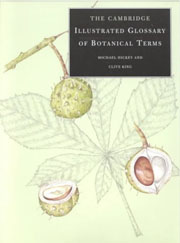
The Cambridge Illustrated Glossary of Botanical Terms
Hickey, Michael and Clive King. 2002. Cambridge University Press. ISBN: 9780521794015

We know that being able to draw plant subjects as accurately as possible is critical. Most of us have at least one glossary of plant terminology in our libraries (e.g., Plant Identification Terminology – An Illustrated Glossary by James G. Harris & Melinda Woolf Harris). Harris & Harris’ book is invaluable when trying to decipher detailed information about a plant specimen. When we reach for this book, it is because we are presented with terminology we do not understand. The illustrations accompanying each term in Harris & Harris help us see what we have never before noticed. But what do you do if you have only your plant specimen in front of you, lack the words to describe what you see, and therefore cannot look anything up?

You turn to Hickey & King’s illustrated glossary. Descriptive illustrations get top billing in this book. Most of this book is dedicated to labeled illustrations. A glossary of botanical terminology is provided for you to decipher unfamiliar terms. The illustrations in this book are very helpful, as is the way they are organized. Illustrations are organized in the following way: Roots, Storage Organs and Vegetative Reproduction; Seeds and Seedlings; Growth and Life Forms; General Features of Flowering Plants; Plant Features and Responses; Leaf-like Structures & Other Vegetative Features; Leaves; Hairs and Scales; Floral Features; Flower Structures; Features of Certain Plant Families; Fruits; Conifers and Conifer Allies; Ferns and Fern Allies.

The authors of this book express their hope “that readers at all levels of understanding, both amateur and professional, will find (this book) helpful in their chosen area of study, especially plant science, horticulture, field studies and botanical illustration.”
Plant Identification Terminology
Buy this book and Harris & Harris (2001) from your local independent bookstore.

Read Full Post »

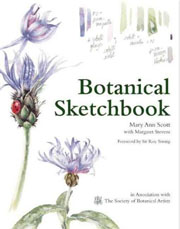
Mary Ann Scott’s Botanical Sketchbook is an open journal in which she describes her experiences as a student in the Distance Learning Diploma Course administered by the Society of Botanical Artists in the UK. Scott presents actual assignments, as well as the marks she earned for each assignment. Readers are given a front row seat to Scott’s insecurities, decisions, mistakes and successes. This book’s format is unique and provides a level of insight into the SBA diploma program that is not available anywhere else.

Botanical Sketchbook is a rich resource of information for artists at all levels. Mary Ann’s experiences will teach artists a lot about:

  • Line drawings and pencil studies
  • Drawing and painting leaves, color mixing
  • Drawing and painting flowers, composition
  • Single flower studies
  • Fruit studies
  • Vegetable studies
  • Creating a classic botanical illustration
  • Turning field notes into a formal sketchbook pages
  • Working with photographs to create commercial work
  • Composing a painting of mixed flowers
  • Creating a diploma-worthy portfolio addressing all techniques

Botanical Sketchbook is available at your independent bookstore.
(Paperback, 2015; $17.95)


Related

Drawing as a Learning Tool in Biology

Read Full Post »

The Plant Parts series by Vijaya Khisty Bodach is a collection of six books addressing plant morphology. Each book is dedicated to a single topic. The topics Bodach writes about are roots, stems, leaves, flowers, fruit, and seeds. Each book in the series follows the same format, so a pattern emerges that unites the books and builds on the theme. Young readers learn why roots, stems, leaves, flowers, fruit, and seeds are required by plants. They also learn about the parts of plants we eat as food.

Large color photographs are paired with descriptive text that is easy to read. Word count for the books in this series ranges from 114 to 130. Each book ends with a glossary of terms and suggestions for further reading. On the last page of each book, a unique identification code is provided giving young learners access to FactHound.com, a portal to 1,600 pre-selected, age-appropriate websites about many different subjects.

The books in the Plant Parts series are available at your local independent bookstore or from the publisher ($6.95).

Read Full Post »

Colored pencil isn’t just a medium to use, it is also a learning tool. It allows you to teach drawing skills and teach about color at the same time.
— Wendy Hollender
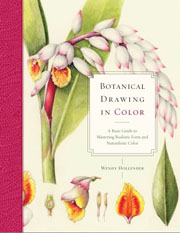
Just as her first book is an inspiring guide for botanical illustrators, Wendy Hollender’s Botanical Drawing in Color: A Basic Guide to Mastering Realistic Form and Naturalistic Color is equally inspiring, if not more.

In her new book, Wendy reveals the mystery behind botanical illustration by breaking each step of the process down to minute detail. No detail is too small. Even the seemingly obvious detail of sharpening a pencil is addressed. Experience has taught Hollender that something as innocent as a blunt pencil can become an obstacle if not monitored properly. The step-by-step instructions Hollender provides in Botanical Drawing do more than carefully guide artists through new exercises. Through carefully written text and supporting illustrations, Hollender instills confidence in novice illustrators bravely embarking on their first attempt in botanical art and instills confidence in artists who may be exploring colored pencil techniques for the first time.

What makes Botanical Drawing in Color a comprehensive guide to botanical illustration is Hollender’s careful arrangement of exercises, each exercise building upon the one before. This book is not a reading book. It’s a book that requires readers to take action. If the exercises are completed faithfully and in sequence, novice illustrators will find they are no longer beginners and colored pencil enthusiasts will be charged with their enhanced understanding of color theory and color harmony.

Here is a quick overview of the contents of this new book and how artists can benefit from Hollender’s thorough introduction to botanical illustration:

Chapter 1 – Overview

Chapter 2 – Art Supplies & Materials: Hollender introduces the materials she uses and explains the reasons behind her choice of graphite pencils, colored pencils, paper, and other supplies.

Chapter 3 – Tone and Form: Artists will learn how to look for changes in value on any surface, learn how to create many values in order to achieve 3-dimensional form, how to work with a light source, and how to create the natural forms found in nature.

Chapter 4 – Adding Color to a Toned Form: The essential skills of toning and burnishing in colored pencil are discussed. These skills are required if artists are to convincingly render form in color. Hollender demonstrates how to hang onto form while applying color.

Chapter 5 – Establishing Perspective: Creating a 3-dimensional form on a flat piece of paper is simply not possible without being able to see and draw in perspective. Artists will learn how to do both in this chapter.

Chapter 6 – Putting Value and Perspective Together: Applying the techniques learned in Chapter 5, Hollender demonstrates how line, tone, and perspective work together to create natural forms.

Chapter 7 – Understanding Color: Color theory, color mixing, and color harmony are the focus of this chapter. Carefully planned exercises enable artists to experience these concepts, not just read about them.

Chapter 8 – Depicting Overlapping Elements & Different Planes: Drawing an individual flower or leaf is fine, but plants don’t produce free-standing leaves and flowers. Plants have branches, clusters of flowers, and leaves of all shapes and sizes overlapping each other. How do you get all of this down on a piece of paper? This is what this chapter is about.

Chapter 9 – Understanding the Form & Function of Plants: Plant morphology, growth patterns, and working with a microscope are the focus of this chapter. Artists will learn how to design an herbarium page and a sketchbook page when studying plant specimens.

Chapter 10 – Mastering Advanced Drawing Techniques: In this chapter, artists will apply what they’ve learned about form, perspective, overlapping elements, and color to create a finished drawing.

Chapter 11 – Mastering Advanced Compositions & Techniques: Hollender describes how to plan and evaluate eye-pleasing compositions and how to use alternative backgrounds. She also demonstrates how to work with watercolor pencils, how to create a colored pencil painting of a white flower, and how to capture the intricate details of a flower’s reproductive parts so that the centers of your flowers are as alive as the rest of your drawing.

Botanical Drawing in Color: A Basic Guide to Mastering Realistic Form and Naturalistic Color is far from basic. This all-inclusive guide is sure to enhance the work of botanical artists and jump-start the career of beginners who have been wanting to explore botanical illustration, but were too intimidated by the process. Hollender’s approach to botanical drawing is doable and no-fuss. All one needs is paper, pencil, and colored pencils.


LEARN MORE


DID YOU KNOW…

  • Our April 2008 “Ask The Artist” with Wendy Hollender is the most read article to date at ArtPlantae Today?
  • Botanical Drawing in Color sky-rocketed to the #2 position on the Nielsen Bookscan Ratings during its first week?
  • Botanical Drawing in Color is already in its second printing?


Buy this book online from your local independent bookstore.

Read Full Post »
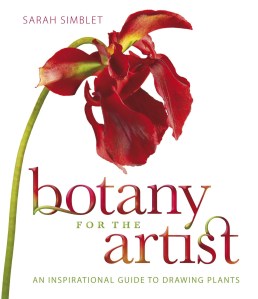
Many of you are gardeners and are probably familiar with Botany for Gardeners by Brian Capon. In his book, Capon turns a lot of the concepts and terminology from botany into easily digestible bits of information. What Capon did for gardeners, Sarah Simblet has done for artists. Botany for the Artist is a wonderful blend of general botany, botanical art history, and Art 101.
Imagine opening a book and immediately going back to the 5th century, a time when text was valued more than illustrations and when it was common for artists to work without ever looking at live plant specimens. Then journey ahead to the 14th century to learn when artists began to draw from nature. Continue on to learn about over-zealous plant collectors, personal drawing books, plant exploration, and the use of plants as a visual metaphor for life.

Now imagine entering a conversation with Sarah herself, a respected author and instructor at the National Gallery in London and the Ruskin School of Drawing at the University of Oxford. Simblet transitions readers from merely reading about botanical art to doing botanical art in her section about drawing plants. Here Simblet presents a range of materials artists may want to keep in their field bag and provides information about watercolor paper, pencils, erasers, dip pens, ink, paint, and brushes. She then demonstrates how to make lines and marks and how to mix colors using red, yellow, and blue paint. Simblet’s comments about how she creates preparatory drawings and finished drawings provides great insight into what readers will discover beyond this section — a lavishly illustrated introduction to botany. Elegant and graceful, Simblet’s illustrations depict movement, energy, and life. So much so, they really can’t be called “plant portraits.” Simblet’s plants are living and breathing and so full of form, they should make crunching sounds when the book is closed.

In her illustrated guide to plants, Simblet discusses plant diversity and the morphology and function of roots, stems, leaves, flowers, fruit, cones, and seeds. Dispersed among text about how roots work, leaf structure, pollination, and seed dispersal, are lessons in art history and botanical illustration.

Simblet’s Masterclass feature is like touring a museum with your own personal tour guide. In each section, Simblet selects one painting and provides information about the feature artist and their work. Featured artists include: Nikolaus Von Jacquin, Albrech Durer, Girolamo Pini, Kano Yukinobu, John Miller, Leonardo da Vinci, John Ruskin, Ferdinand Bauer, Arthur Harry Church, Mali Moir, Giovanna Garzoni, Mark Catesby, and Maria Sibylla Merian.

In her Drawing Class and Study sections, Simblet teaches artists how to observe and capture the morphological features of plants and how to relate each feature to each other. There are sixteen Drawing Class sections in the book and these sections address too many topics to list here.

Would you like to experience a little bit of what there is to learn in this wonderful new book? If so, read about the special event below.


Ask The Artist Goes Live!

ArtPlantae is very excited to announce a special session with Sarah Simblet.

On Thursday May 27, 2010 at 12:00 p.m. PST, ArtPlantae will host a one-hour webinar with the very gracious Sarah Simblet. Sarah is preparing a special presentation for you and will answer your questions live from the UK. All participants will receive a copy of Botany for the Artist upon registering. The cost of this special author event is $40 (the cost of the book), plus shipping.
Registration closes Monday May 24, 2010.


UPDATE
: Sarah Simblet Takes Artists Behind the Scenes


Other Titles by Sarah Simblet

  • Sketchbook for the Artist
  • Anatomy for the Artist

Read Full Post »

This book is magnificent. It’s California history. It’s botanical art history. It’s botany. It’s one person’s efforts to connect people to plants and fifty-six public gardens in California. It’s the only time I’ve ever said “Wow!” about an oleander.

The serigraphs featured in this book were created in the 1970s by Gene Bauer, who then served as the native flora chairman and the chairman of arboretums and botanical gardens of California Garden Clubs, Incorporated. From 1972-1974, Bauer created The Golden Native series comprised of 27 booklets. The Golden Botanical Gardens series followed, and was comprised of 29 booklets printed from 1976-1978. Each booklet was printed by hand and mailed to officers of the her garden club. Bauer printed about 80 copies of each booklet and used knotted yarn to attach the pages of each booklet. In the book’s introduction, Bauer describes how she makes a serigraph, which is a hand-printed silkscreen image.

Original serigraphs by Gene Bauer are in the permanent collections of The Hunt Institute for Botanical Documentation, The Missouri Botanical Garden, The Frelinghuysen Arboretum, Strybing Arboretum, and The Sherman Library and Gardens.

Botanical Serigraphs: The Gene Bauer Collection is available at your local bookstore.


Related Info
:

ESRI Press provides excerpts from Botanical Serigraphs

Read Full Post »

Lessons For A Young Botanist

This article was published in the December 2006 issue of Artists’ Botany.

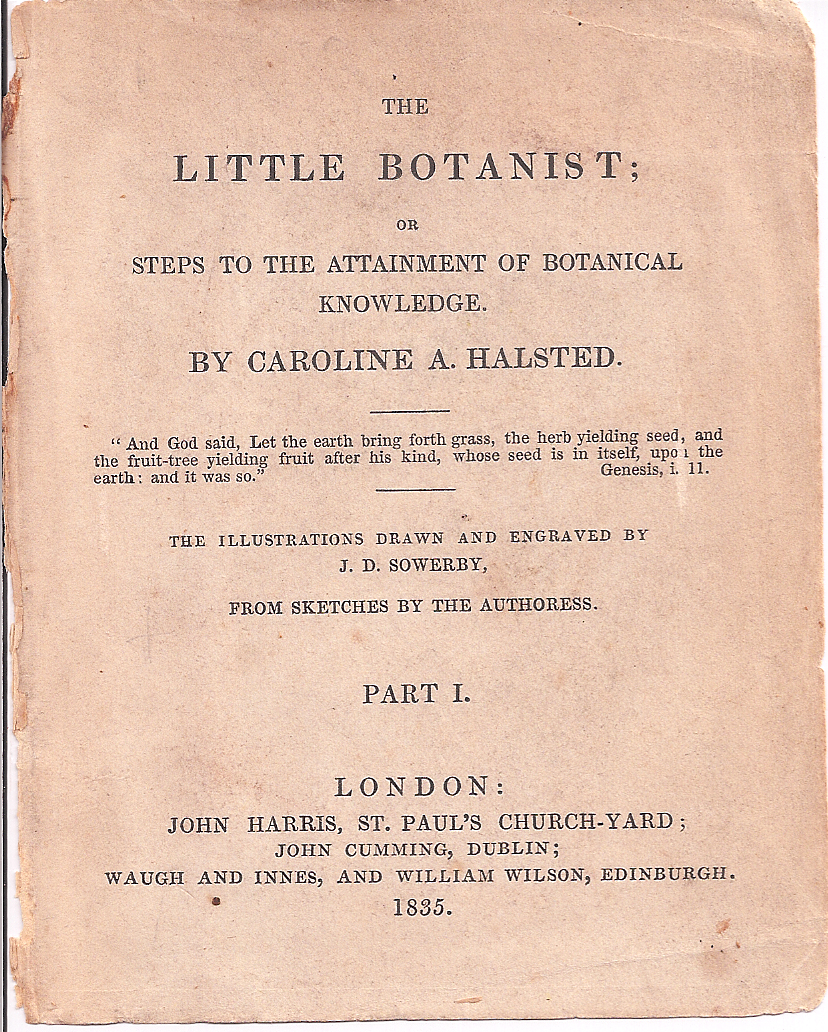
coverTheLittleBotanistOne of the true treasures in our collection is an introductory botany book that was published in 1835. This book is not a college text, but instead an introductory botany book for children. The botany lessons in this book are presented as a conversation between a mother and a young child. These conversations are modeled after actual conversations the author had with a nine-year old family friend.

This book is titled, The Little Botanist or Steps to the Attainment of Botanical Knowledge. The title alone makes us giddy. The fourteen illustrations included in this book were drawn and engraved by J.D. Sowerby and were based on sketches created by the author, Caroline A. Halsted.

The conversations between mother and child are so sweet and so engaging, it is not possible to describe them well enough in this little space. Throughout the book, the young girl’s mother patiently and lovingly discusses the following
topics with her daughter: the definition of botany, flower structure, artificial and natural classification systems, Greek and Latin terms, and the morphological features of several types of plants. During a conversation about flower parts, the young mother teaches her daughter how to remember the arrangement of parts in a flower. She asks her daughter to stretch out her hand and to lift her fingers so as to form a cup. She then explains:

…call the thumb the calyx, the first finger the corolla, the second the stamens, the third the pistil, the fourth the pericarp, and the entire of the hand the receptacle…..for the calyx, like the thumb, stands apart from the next four parts of a flower, which, like the fingers, are more immediately connected with each other; and they all spring from the receptacle, which is the bottom part of a flower, and on which, generally speaking, all the other parts rest.

The conversations recorded in this book are precious. The botany lessons in this 171-year old book are as well because they offer a glimpse into how botanists made meaning so many years ago.


Updated 9/26/09

This book can be viewed online and is available as a PDF at Google Book Search.

Read Full Post »

« Newer Posts - Older Posts »