Feeds:
Posts
Comments
Rumex obtusifolius leaf [Rumex obtusifolius Linnaeus, Polygonaceae], watercolor on paper by Julia Trickey, 2006, 55 × 36.5 cm, HI Art accession no. 7755, © 2006 Julia Trickey, All Rights Reserved.

Rumex obtusifolius leaf [Rumex obtusifolius Linnaeus, Polygonaceae], watercolor on paper by Julia Trickey, 2006, 55 × 36.5 cm, HI Art accession no. 7755, © 2006 Julia Trickey, All Rights Reserved.

What We Collect:
Recent Art Acquisitions, 2007-2012

Hunt Institute for Botanical Documentation
Carnegie Mellon University
Pittsburgh, PA
March 22 – June 30, 2013

A selection of recent acquisitions to the Art Department of the Hunt Institute, from the early 19th century through the present, will be placed in the context of the Institute’s collection practices and the history of botanical illustration. Whether working alongside botanists for scientific and horticultural publications or preparing artworks for collectors, galleries or commercial use, artists throughout the centuries have added their individual perspectives to portraying plants and have made lasting contributions to the botanical record and the history of art.

Included will be original illustrations for an early-19th-century botanical handbook and its contemporary, the field guide; a 19th-century classroom wall chart and the modern text book; a 20th-century seed packet and a booklet on seedling identification; a 20th-century monograph on the mistletoe genus and a journal article on marine fungi; drawings and watercolors illustrated by research botany professors; independent projects on floras of a region, native and medicinal plants and plants and their pollinators; and recent botanical artworks by artists previously represented in Hunt Institute’s International Exhibition of Art & Illustration. Mediums represented are watercolor on paper and vellum; ink, graphite and charcoal drawing; printmaking techniques: copper etching, wood engraving, vitreography and nature printing; and gelatin silver photography.

The artists working before 1900 include Pancrace Bessa (1772–1846), Sydenham Edwards (1769?–1819), Will Kilburn (1745–1818), James Sowerby (1757–1822), William Jackson Hooker (1785–1865), W. A. Meyn (19th-century), Powe (18th-century) and Christian Schkuhr (1741–1811). The contemporary artists featured include Bobbie Angell, Wendy Brockman, John Cody, Felicity Rose Cole, Carolyn Crawford, Paul Dobe (1880–1965), John Doughty, Beverly Duncan, Josephine Elwes Ewes, Alison Gianangeli, Janice Glimn-Lacy, Audrey Hardcastle, Lizzie Harper, Christina Hart-Davies, Lyn Hayden, Richard Homala (1934–2009), Brigette Kohlmeyer, Job Kuijt, Donelda LaBrake, Peter Loewer, Rogers McVaugh (1912–2009), Susan G. Monden, Cindy Nelson-Nold (1957–2009), Susan Ogilvy, Kandis Phillips, Alfred Putz (1892–1966), Mary Rankin, Thomas Reaume, Eugeni Sierra-Ràfols (1919–1999), Eva Stockhaus, Jessica Tcherepnine, Julia Trickey, Denise Walser Kolar, John Wilkinson and Sun Yingbao.

The Hunt’s annual Open House will be held in conjunction with this exhibition. Curators, librarians and staff will lead exhibition tours and discuss the history of botanical wall charts and botanical publications during this event. View the library’s Open House schedule.


Visitor Information

The exhibition will be on display on the 5th floor of the Hunt Library building at Carnegie Mellon University and will be open to the public free of charge.

Hours: Monday–Friday, 9 a.m.–Noon and 1–5 p.m.; Sunday, 1–4 p.m. (except March 29-31, May 5 and May 26-27). Hours subject to change, please call or email before your visit to confirm the library will be open.


About the Hunt Institute

The Hunt Institute for Botanical Documentation, a research division of Carnegie Mellon University, specializes in the history of botany and all aspects of plant science and serves the international scientific community through research and documentation.

The Hunt Institute of Botanical Documentation will host its annual open house in June. This year the library will host lectures and tours related to the exhibition What We Collect: Recent Art Acquisitions, 2007-2012.

Here is the schedule of events:


Sunday, June 23, 2013

    1:00
    Registration (continues all afternoon)

    1:15–1:30
    Welcome and Introduction in Reading Room by Publication and Marketing Manager Scarlett Townsend

    1:30–2:15
    Exhibition Tour of What We Collect: Recent Art Acquisitions, 2007–2012 by Curatorial Assistant Carrie Roy

    2:15–3:00
    Walking tour of Reading Room furniture by Publication and Marketing Manager Scarlett Townsend

    3:15–4:00
    Botanical Wall Charts
    Lugene Bruno, Curator of Art
    Bruno will present an overview of the Hunt Institute’s collection of instructional wall charts that were produced in Europe and circulated around the world from the late 19th to the early 20th centuries. Using the less expensive printing process of lithography, these large-scale charts featured the characteristics of important plant families (often in magnified detail) and were used in introductory to advanced botany courses. As information became accessible in different formats, this important record of educational presentation fell into disuse. In recent decades these charts have often been retrieved from neglected storage areas and dumpsters and donated to institutions for preservation.

    4:00–4:30
    Enjoy exhibition and displays; talk with curators and staff


Monday, June 24, 2013

    1:00
    Registration (continues all afternoon)

    1:15–1:30
    Welcome and Introduction in Reading Room by Curator of Art Lugene Bruno

    1:30–2:15
    Exhibition Tour of What We Collect: Recent Art Acquisitions, 2007–2012 by Curatorial Assistant Carrie Roy

    2:15–3:00 W
    Walking tour of Reading Room furniture by Publication and Marketing Manager Scarlett Townsend

    3:15–3:45
    From Field to Folio: Stories Behind Botanical Publications
    Jeannette McDevitt, Assistant Librarian
    Long before our modern conveniences, such as overnight shipments and photocopies, passionate botanists and botanical artists were pouring blood, sweat and tears into their work. Ever at the mercy of the natural elements, each other and tight budgets, they traveled near and far to document the world’s flora. McDevitt will display some of Hunt Institute’s special items and speak about the dramas, disasters and absurdities that went on behind the scenes before these beautiful books could come to fruition.

    3:45–4:30
    Enjoy exhibition and displays; talk with curators and staff


Related

StickneyClass2

StickneyClass1 Made At Theodore Payne Foundation
Books and monoprints created by adults and children during workshops conducted by Laura Stickney, TPF 2012 Artist-in-Residence”

January 11-March 2, 2013

Theodore Payne Gallery is pleased to present an exhibition of mixed media art inspired by the colors, shapes and textures of the environment at the Theodore Payne Foundation (TPF).

On view are works created by adult and youth artists completed in workshops conducted by Laura Stickney, 2012 Artist-in-Residence. Visitors will enjoy monotypes printed under the shelter of western sycamore trees, leaf-presses and herbaria documenting native plant specimens, and fanciful folded books with engaging patterns and stampings of native blossoms and stems.

About Laura Stickney
A graduate of the University of Southern California with a major in printmaking, Laura is a multi-talented artist who has taught art to all ages for 25 years at the well-known Barnsdall Art Park in Hollywood.

As TPF’s 2012 Artist-in-Residence, Laura created a body of work that included oil paintings, watercolors, etchings, poems and artist’s books inspired by the TPF site, the nursery and gardens, dried seed pods, and detritus found on the ground. Her work was shown in a one-person exhibition October thru December 2012.

In a review of the environmental education literature, professors Donald J. Burgess and Jolie Mayer-Smith found that research about childhood experiences in wilderness settings was lacking, as were data describing what an active love of nature looks like in young children. In response to this, they created a study in which they documented the reactions and comments of urban students in a wilderness setting. They discuss their findings in Listening to Children: Perceptions of Nature and address how children perceive nature and identify the types of experiences that encourage a love of the natural world.

Burgess and Mayer-Smith (2011) used the framework of environmental values created by Stephen R. Kellert to evaluate children’s reactions to nature. Kellert is the first person to methodically assess and classify how people view nature (Burgess and Mayer-Smith, 2011).

The categories of environmental values created by Kellert are very interesting and they need to be explained in order to discuss Burgess and Mayer-Smith’s findings. Kellert describes values as “the convergence of emotion and cognition” (Burgess and Mayer-Smith, 2011). Through his categories of nature values, he explains the different ways individuals value and perceive nature. Here is a summary of Kellert’s value categories as described by Burgess and Mayer-Smith (2011):

    Scientific-Ecological Valuing – Interests focus on looking for knowledge or information

    Naturalistic Valuing – Interests focus on exploring and discovery

    Symbolic Valuing – When nature is viewed as a source for language or imagination

    Aesthetic Valuing – Formation of emotional connections to nature

    Humanistic Valuing – Similar to Aesthetic

    Utilitarian Valuing – Viewing nature as a source for materials or reward

    Moralistic Valuing – When ethical and spiritual connections are formed with nature

    Dominionistic Valuing – Viewing nature as something to master or control

To conduct their study of how children perceive nature, Burgess and Mayer-Smith (2011) observed two classes of 5th grade students (n=35, age 10-11) while they attended Mountain School, a three-day environmental education class held in the wilderness of North Cascades National Park in Washington. Burgess and Mayer-Smith (2011) worked closely with graduate students, parents, rangers and classroom teachers during their study. They conducted pre-interviews one week before the Mountain School program began, conducted post-interviews one month after the program ended, documented children’s reactions in the field during hikes, and reviewed student journals containing students’ field notes, checklists, worksheets, creative writing entries and drawings.

While using Kellert’s framework, Burgess and Mayer-Smith (2011) found that the framework wasn’t broad enough for their study so they added their own themes and sub themes to each category. In the end, they added 33 themes and sub themes to the framework (Burgess and Mayer-Smith, 2011).

A thorough analysis of the data revealed that the Mountain School program changed children’s perspectives and how they viewed nature. Burgess and Mayer-Smith (2011) saw changes in students’ scientific-ecologocial, naturalistic and symbolic valuing of nature. Students began the program making general observations about nature. During the program they demonstrated an understanding of ecological relationships and ended the program being able to reflect about nature in a creative way (Burgess and Mayer-Smith, 2011).

The authors also observed changes in how students connected with nature on an emotional level. While they began the program having objective and indifferent thoughts about nature, they ended the program talking passionately about their first-hand experiences and the students who at first had some level of fear about nature had their fear reduced by the end of the program (Burgess and Mayer-Smith, 2011).

Burgess and Mayer-Smith (2011) also observed students gaining a new respect for nature and the ability to communicate this new respect to others.


Learning Experiences Encouraging Change

What type of experiences encourage the type of change described above?

Burgess and Mayer-Smith (2011) claim that direct experiences with nature encourage emotional connections and change how children view the natural world. They also state that physically challenging experiences and reflective experiences reinforce children’s emotional connections with nature (Burgess and Mayer-Smith, 2011).

Burgess and Mayer-Smith (2011) provide a thorough explanation about these experiences in their paper and also include student quotes as examples of how student perceptions were changed by the Mountain School program.

Listening to Children: Perceptions in Nature can be viewed online and is available for download as a 17-page PDF. Included with the article are the pre- and post-interview questions used by the authors.


Literature Cited

Burgess, Donald J. and Jolie Mayer-Smith. 2011. Listening to children: perceptions of nature. Journal of Natural History Education and Experience.
5: 27-43. Web. <http://naturalhistorynetwork.org/journal/articles/listening-to-children-perceptions-of-nature> [accessed 17 January 2013]


Related

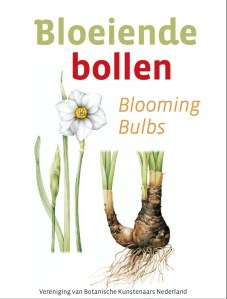
Visit the Dutch Society of Botanical Artists Published in conjunction with the 5th anniversary of the Dutch Society of Botanical Artists. This collectors edition brings into focus bulb and tuber crops available in the Netherlands. Drawing and painting the bulbs required studious and patient documentation over several growing seasons. This book contains a selection of the collection created by the Dutch Society of Botanical Artists. Twenty-seven species of bulb and tuber crops are presented in twenty-five watercolor paintings and two graphite drawings.

Blooming Bulbs can be purchased for $20 (incl. shipping) directly from the Dutch Society of Botanical Artists. Contact Anita Walsmit Sachs for more information.

Visit the website of the Dutch Society of Botanical Artists. Here you will find information about classes, be able to view members’ artwork, browse an archive of past newsletters and browse links to interesting websites.


Citation

Dutch Society of Botanical Artists. 2012. Bloeiende bollen (Blooming Bulbs). Foreward by Gert-Pieter Nijssen. Introduction by Anita Walsmit Sachs.

Anita Walsmit Sachs, her students and a colleague formed the Dutch Society of Botanical Artists. Why was this organization formed? Anita explains…

I became aware of the societies in England and America and was really shocked that in a country like mine, the Netherlands with its long history of flower painting and where there are so many breeders and flowers and where plants cost almost nothing, there was not such a society…

Learn more about the Society’s publications and their exhibition in a castle!

The 2013 Santa Barbara International Orchid Show invites artists and photographers to submit original works related to this year’s theme, “Orchids in Focus”. The Santa Barbara Art Association is managing the juried art show, which is open to all artists, photographers and fine quality artisans. All original works must feature orchids as their primary subject matter.

Those interested in participating must fill out a Request to Exhibit Form and mail the form and payment ($10 per entry) to orchid show management before February 15, 2013. Artists are limited to three (3) entries each.

For complete details and a list of eligible artwork, download the exhibitor packet.

The 68th Annual Santa Barbara International Orchid Show will be held March 8-10, 2013 at the Earl Warren Fairgrounds in Santa Barbara, CA.

Hours: 9 AM – 5 PM, daily

Admission: $12 adults, $10 seniors & students w/ID, Children 12 & Under FREE, 3-Day Pass $20 adults / $17 seniors & students.