Feeds:
Posts
Comments

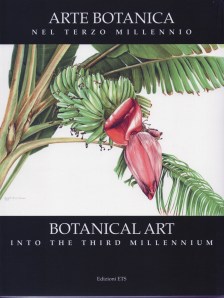
BotanicalArtIntoThirdMillenium Sales of the wildly popular Italian catalog, Botanical Art into the Third Millenium, are winding down. Unsold catalogs need to be returned to Italy at the end of the month. Only eleven copies remain. After these copies are sold (or returned to the publisher), this catalog must be ordered from the publisher in Pisa, Italy.

The eleven remaining copies are the “hurts” — catalogs that received bumped corners during their trip to California (see example). The pages of these catalogs are in new condition, clean and secure in the book.

Bumped corners, interior pages clean and tight. 15% off, plus free US shipping.

Bumped corners, interior pages clean and tight. 15% off, plus free US shipping.


To move these copies out, we’re having a hurts sale. These eleven copies are priced at 15% off and will ship free to any US address.

The catalog is paperback, has 244 pages and illustrations. The exhibition features over 150 pieces of art, including work by Margaret Stones, Rory McEwen and Margaret Mee, as well as art from the Shirley Sherwood Collection.

Pages 1-69 present the collection and the exhibition. They contain about 12 illustrated pages. Pages 70-235 are the catalogue. The catalogue is divided in 5 sections. Each section has a 2 page presentation (1 page in Italian, 1 page in English). So out of 165 pages, 10 of them are text only, 155 are full-page illustrations. Pages 236-243 are index pages. The book is 7.9″ x 10.5″.

To add this catalog to your library while it is still being shipped from California, go to ArtPlantae Books.

Today we stay within the realm of comic books and storytelling and combine drawing and storyboards with digital photography and movie-making tools.

While all this may sound complicated, educators Patricia Holloway and
Carol Mahan from the Missouri Department of Conservation make digital storytelling less intimidating in their article, Enhance Nature Exploration with Technology, in which they provide clear instruction and many excellent resources for teachers.

Sketchbooks, nature journals and good old-fashioned paper-and-pencil thinking is featured often in this space. I like paper-and-pencil thinking and do exactly this when I write this weekly column. A recent teaching experience with a group of energetic teenagers, however, encouraged me to think that paper and pencil aren’t necessarily the best tools to use with all audiences. If you’ve wanted to incorporate digital storytelling into your lesson plans, but haven’t taken on the task because the learning curve appears too steep, I would like to direct you to Holloway and Mahan’s informative paper. I bet you’ll find just the right kind of guidance, insight and structure that will help you take that first step.

Here is what you’ll be able to do after reading Holloway and Mahan (2012):

  • Connect students with nature and prepare them to become storytellers.
  • Lead a successful nature walk.
  • Create a sample storyboard so you can model the process for your students.
  • Guide students successfully through the digital-storytelling process.
  • Provide photography tips to students.
  • Walk students through the digital editing process (Holloway and Mahan provide step-by-step instructions for teachers).
  • Evaluate the storyboards students create (Holloway and Mahan provide a rubric for your consideration).
  • Learn how to present student projects to parents and the public.

You will also be able to explore the list of Web-based resources Holloway and Mahan provide for teachers.

Are you ready to take the leap?

Get a copy of Enhance Nature Exploration with Technology at the online store of the National Science Teachers Association. Right now it’s FREE!


Literature Cited

Holloway, Patricia and Carol Mahan. 2012. Enhance nature exploration with technology. Science Scope. 35(9): 23-28.


Don’t Miss This

The activity described by Holloway and Mahan (2012) requires students to use images and audio sounds when creating storyboards. As you research this process for your own classroom or program, keep these resources in mind:

Rent textbooks from ArtPlantae Books

Rent textbooks from ArtPlantae Books

Think textbooks are too expensive? So do I.

So, new for this year, students can rent their textbooks through ArtPlantae’s new, state-of-the-art online textbook rental store found at http://artplantaebooks.bookrenterstore.com powered by BookRenter. Renting textbooks typically saves students an average of 75% off the price of the book, which can mean thousands of dollars over a college career, and renting from ArtPlantae Books helps to support ArtPlantae.

The store has access to more than 5,000,000 high-quality U.S. edition titles. It’s easy to use – once you search for and select your books, you simply choose a shipping option and enter your payment information, and your books will arrive at your door within a few days. Standard shipping is free both ways, and almost any book is available in 2 days using the Express Plus shipping option.

You can rent textbooks for any of 5 different time periods, and can always extend rentals or buy books outright at any time, and rental fees apply towards the purchase price of the book. This means you never pay more to rent than the purchase price of a book. You can also write or highlight in your rentals just as with purchased books (just don’t turn it into a work of art), and, like Netflix, returns are always easy and free.

ArtPlantae’s new bookstore powered by BookRenter also offers a 5-Star Satisfaction Guarantee. You can return books for any reason within 21 days, no questions asked. Every order is available for express shipping, and return shipping is always free. You are guaranteed that you will be happy with the quality of your books (or you’ll be shipped another at no cost). You can extend a rental at any time – at the same cheap daily rate. And, keeping a book will never cost more than the purchase price.

Over 500 college bookstores at schools like the University of Texas-Austin, University of Kansas, Arizona State University have also chosen BookRenter to power their textbook rental stores. Did I mention you can search for books by school and course?

To start saving on textbook rentals while also supporting ArtPlantae’s efforts to encourage an interest in plants, visit http://artplantaebooks.bookrenterstore.com.

Please share this exciting news with friends, students, and colleagues. Thank you!


About BookRenter

BookRenter launched in 2008 and is dedicated to making education more affordable by allowing students to rent textbooks for up to 75% off the retail price. BookRenter’s innovative pricing and operating systems provide students with the best price, highest quality books, and most flexible rental experience available today. Currently carrying over 5 million titles and serving thousands of students on over 5,000 U.S. campuses, BookRenter is one of the fastest growing startups in Silicon Valley, growing at over 400% each year. BookRenter, with offices in San Mateo, California, is a private company that is funded by prominent Silicon Valley venture capital firms.


About ArtPlantae Books

ArtPlantae Books complements the educational resource ArtPlantae.com. It serves a community of artists, naturalists, and educators pursuing interests in plant-based education, botanical art, environmental education, and STEM / STEAM education. ArtPlantae Books is a member of the American Booksellers Association.
There is still time to see the exhibition, Blooming Marvellous, an exhibition showcasing 400 years of botanical art. This exhibition is now on view at the Natural History Museum at Tring in Hertfordshire, England. This show will close on August 18, 2013.

Visit the museum to learn how botanists and artists interpreted nature and plants in the 16th and 17th centuries.

Featured in this exhibition is the work of the following artists:

  • Sydney Parkinson
  • Georg Dionysius Ehret
  • Franz Bauer
  • Arthur Harry Church

Tomorrow, August 8, museum guests will have the opportunity to create their own Blooming Marvellous creation. Guests are invited to create their own tissue-paper flower from 10:15 – 11:45 AM and 2:00 – 3:45 PM.
Tickets are £1.50.

Learn more about Blooming Marvellous

New updates for the Classes Near You pages for California, Hawaii and Washington.


Vorobik Botanical Art

www.vorobikbotanicalart.com
Linda Ann Vorobik, Ph.D. is a botanical illustrator and botanist who teaches at the Jepson Herbarium at UC Berkeley, conducts field research in the Siskiyou Mountains in Oregon and teaches botanical illustration in California, Oregon, Washington and Hawaii. Visit Linda’s website to view her current teaching schedule, online gallery, blog, and to sign-up for her newsletter.

    An Introduction to Botanical Art
    Burke Museum
    University of Washington Herbarium
    September 20, 2013
    Pre-registration required by September 13, 2013


    Painting Orchids on the Big Island of Hawaii
    – October 20-26, 2013


    Plan Ahead for 2014!

    An Introduction to Botanical Art
    Santa Barbara Botanical Garden
    Santa Barbara, CA
    March 22-23, 2014


    An Introduction to Botanical Art

    Center for Urban Horticulture
    University of Washington Botanic Gardens
    Seattle, WA
    October 4-5, 2014


    Painting Orchids on the Big Island of Hawaii

    October 19-25, 2014


Also See

An interview with Linda Ann Vorobik

The exhibition WILDLIFE: Visual Explorations of Biological Forms in Nature opens today at the Godine Family Gallery at the Massachusetts College of Art & Design.

WILDLIFE is an exhibition of biological art by 12 artists who spent 12 days in nature exploring and studying plants and animals in Natural History and Biological Art, a four-week summer course taught by biology professor Dr. Saúl S. Nava. An opening reception will be held today, August 5, from 4:30 – 6:30 PM. This exhibition of student work will be on view through Friday, August 9, 2013.

Visit the Godine Family Gallery


About Dr. Saúl Nava

Professor Saúl Nava teaches the life sciences and biology at the Massachusetts College of Art and Design (MassArt) and is a faculty research associate in the Department of Molecular and Cellular Biology at Harvard University. He also teaches summer programs about art and biology. One program is called
Field BIO+ART: Collaborative R.N.A. (Research in Nature and Art). The other program is about natural history and biological art and is an introduction to visualizing plants, animals and natural forms.

TheAlphabetOfTheTrees9780915924639 The problem most students seem to have is that they see nature as “Other.” Nature is a tourist destination, a place on a map, something saved by buying and selling crunchy candy. They rarely understand that they themselves might actually be part of it.

— Christian McEwen & Mark Statman


The Alphabet of the Trees: A Guide to Nature Writing
is a collection of twenty-nine essays by nature writers, poets, fiction writers and educators. More than simply a collection of essays about nature, The Alphabet of the Trees is a wonderful collection of ideas for the classroom and the field.

In their respective essays, contributors share their experiences teaching students how to write about nature. Contributors provide clear instruction, examples of student work and plenty of inspiration to last an entire school year.

McEwen & Statman (2000) published this book for teachers because they wanted to change how the subject of nature is approached in the classroom. They explain that they want nature to be more than a collection of facts. Their book has so many wonderful ideas and so many different ideas, it is impossible to summarize them. Instead of attempting a blanket summary, I would like to offer a glimpse into the type of nature writing activities contributors share with teachers. Listed below is the name of each contributor and the lessons and inspiration they invite teachers to bring into their classrooms.


Nature Writing Activities
:

  • Gary Snyder – The power of language and observation.
  • Matthew Sharpe – Ideas about how to lead a conversation about nature in an urban classroom.
  • Susan Karwoska – Using children’s literature to explore nature in the city.
  • Joseph Bruchac – Teaching the value of listening to connect with, and write about, nature.
  • Sam Swope – How to write about common objects in many different ways.
  • Eleanor J. Bader – How to write an advocacy essay.
  • Kim Stafford – Recording the thoughts and words of children.
  • John Tallmadge – Looking for wildness in the city.
  • Mary Oliver – How to keep a notebook of felt experiences.
  • Barbara Bash – Field sketchbooks in the city.
  • Sarah Juniper Rabkin – Seeing through the eyes of a scientific illustrator.
  • Clare Walker Leslie and Charles E. Roth – Nature journaling with school groups.
  • Christian McEwen – Using the five senses to write about nature. Also, how to set up an ode to nature or any topic.
  • Suzanne Rogier Marshall – How to transition from looking to writing.
  • Holly Masturzo – How to encourage observation through discovery.
  • Ann H. Zwinger – How to write a natural history essay.
  • Carolyn Duckworth – Tools for exploring an animal and an issue.
  • Mary Edwards Wertsch – How to write nature poems (specifically question poems).
  • Michael Morse – Writing about nature using the senses and observing transformations in nature.
  • Penny Harter – Lessons that address how to write about animals (grades 4-12).
  • William J. Higginson – How to write haiku and linked poems (includes renku topics and guidelines for teachers)
  • Cynde Gregory – A garden writing exercise that is a good lead-in to a unit about plants.
  • Jordan Clary – Using nature imagery in poetry.
  • Jack Collom – A wonderful collection of writing ideas for poetry.
  • Terry Hermsen – An exercise in creative memory (poems to help humans recall what they have forgotten about Earth, Wind, Air and Fire.
  • Margot Fortunator Galt – Nature as teacher and guide (circle poems, writing about landscapes, seasons).
  • Janine Pommy Vega – How to help students speak for something in nature (persona poems).
  • Barry Gilmore – Exercises in naming things, observing and describing.
  • Carol F. Peck – An idea to incorporate writing with social studies curricula.

Contributors each include a list of resources at the close of their essays. Editors McEwen & Statman reorganize these resources and provide teachers with a rich bibliography of nonfiction books, fiction books, books about poetry and books for children. They also provide a list of resource organizations and a short biography of each contributor.

The ideas in this collection can be used in many ways beyond the traditional classroom. Outdoor educators, naturalists and interpreters will also enjoy this book.

The Alphabet of the Trees: A Guide to Nature Writing is available at www.christianmcewen.com.


Reminder