Feeds:
Posts
Comments
Druivenblossem [De Europische insecten] , Merian, Maria Sibylla, 1647-1717 , Engraving, hand-colored ,1730. Digital image courtesy of the Getty’s Open Content Program.

Druivenblossem [De Europische insecten] , Merian, Maria Sibylla, 1647-1717 , Engraving, hand-colored ,1730. Digital image courtesy of the Getty’s Open Content Program.

In 1699 after conducting many studies of European moths and butterflies, artist-naturalist Maria Sibylla Merian (1647-1717) traveled to Surinam to study insect metamorphosis. You may already be familiar with her paintings of insects and plants. Merian was more than an adventurous artist and divorcée. She was a dedicated independent scholar who made significant contributions to biology and the not-yet-established field of ecology.  

The complete extent of Merian’s contributions are not obvious by looking at her images. One can only begin to fully appreciate the value of her work by reading the text accompanying these images or by learning from someone who has read Merian’s descriptions, such as biology professor Kay Etheridge. According to Dr. Etheridge, Merian is known more for her art than for her scholarly achievements in part because her texts were written in German or Dutch and her written observations are not readily available in English (Etheridge, 2010). The only full English translation of her famous Metamorphosis insectorum surinamensium is a facsimile edition that is viewable in only about 20 libraries worldwide (Etheridge, 2011).

Today we have the opportunity to learn from Dr. Etheridge who is currently preparing for a two-day symposium about Maria Sibylla Merian at the University of Amsterdam (May 26-27, 2014). The symposium, Exploring Maria Sibylla Merian, will feature panels of invited scholars who will discuss their research about Merian’s life and her contributions to art and science.

Please join me in welcoming Dr. Kay Etheridge!


ArtPlantae
: The symposium about Maria Sibylla Merian sounds absolutely wonderful. How did this event come together?

Kay Etheridge: I co-authored a paper book chapter with a Dutch colleague, Florence Pieters, and we were giving a presentation about Merian’s influence on Mark Catesby (1683-1749) at a symposium about Catesby’s work. While at lunch we talked about what a similar symposium about Merian might look like. We discussed the idea with people at the University of Amsterdam, one thing led to another and this is where the symposium will be held. It is a perfect venue because Merian spent much of her life in Amsterdam, and the University has several of her books in their special collections.

There is a lot of misinformation out there about Merian. The one goal of the symposium is to have scholars gather to discuss what we really know about her.


AP
: How many Merian scholars are there?

KE: There aren’t that many. Probably less than one dozen who focus primarily on Merian, although many scholars do study her work to varying degrees. Then there are others who work on Merian, just not exclusively. There will be 10 scholars speaking at the symposium. They include an entomology historian, various science and art historians including a printing expert who discovered a letter by Merian, and a couple who is making a film about Merian. Dutch artist Joos van de Plas will also be at the symposium. Joos is fascinated by metamorphosis and became captivated by Merian’s work. She went to the insect collection in the Wiesbaden Museum, Germany, to study what may very well contain some of Merian’s insects. She matched a number of insect specimens to the engraved images in Merian’s book on Surinam insects and then printed a book of museum overlays.

My own work is an examination of the biology behind Merian’s work, something that I feel has been overlooked. For example, she conducted many of the earliest insect food-choice studies and was the first to look at plant-insect relationships in any detail.


AP
: I have seen one exhibition about Merian’s life and the focus was on her interesting life story, her art and her trip to Surinam. In your articles, you write about her many contributions to biology — such as being the first to “elucidate through word and art what we now think of as food chains and interactions within ecological communities” (Etheridge 2010, p. 21). You also mention that some historians tend to deny her the title of “scholar” and refer to her more often as “artist”, “housewife” and “mother”. Why do you think this type of labeling persists given our current understanding about her contributions to science? 

KE: I think that those who do not call Merian a scholar may define a “scholar” as someone who has university training. Many historians, however, do think of Merian as being a scholar. I believe that as people learn more about her work, her prominence in the history of science will increase.


AP
: In the essay Maria Sibylla Merian: The First Ecologist? you mention that Merian was influenced by Hoefnagel and that many artists and naturalists who came after her were influenced by her art and observations. Tracing the influence of Merian’s work sounds like it would be very difficult. How do you conduct such an investigation?

KE: Other scholars have posed various influences on Merian, but my interest is in who she influenced, that is, those who came after her. If you know who had access to her work and then you see how their compositions mirror hers, the connections are obvious. Before Merian’s books, plants and animals were usually depicted separated; she was absolutely the first to put together related organisms in an “ecological” composition. We now think of this as standard, but Merian set that standard in 1679 with her first book on European insects and their plant hosts.


AP
: You’ve completed extensive research about Merian’s life and work. What would you like the public to understand about Merian? How can the artists, naturalists and educators reading this interview contribute to this effort?

KE: By recognizing that people do not fully understand the scientific context behind Merian’s images and that people need to read the text. 

I am currently on sabbatical and working on the English translation of Merian’s butterfly books, completed by my colleague, Michael Ritterson. My book will include the first English translation of Merian’s initial work on European insects
(Der Raupen wunderbare Verwandelung und sonderbare Blumen–Nahrung, 1679), her accompanying images, and commentary on her numerous formative contributions to natural history.

Her most imitated invention was an “ecological” composition in which the life cycle of an insect was arrayed around a plant that served as food for the caterpillar. As mentioned above, prior to Merian’s Raupen books animal and plant images were segregated, usually in separate volumes. To date most scholarship on Merian has emphasized her fascinating life story or her artwork, and the science content of her books has not been examined in depth; her caterpillar books have been particularly neglected. Reasons for this omission will be addressed in my book, but one factor may be that no English translation of the Raupen books has been published. 

The title of my book will be Wonderous Transformation: Maria Sibylla Merian’s Catepillar Book.


Readers, do you have a question for Kay about her research or the upcoming symposium? Write your comments and questions below.


Literature Cited

Etheridge, Kay. 2010. Maria Sibylla Merian and the metamorphosis of natural history. Endeavour. 35(1): 15-21

Etheridge, Kay. 2011. In V. Molinari and D. Andreolle, Editors. Women and Science, 17th Century to Present: Pioneers, Activists, and Protagonists. Cambridge Scholars Publishing, Newcastle upon Tyne.


Related

(Links updated 27 June 2024)

By Bianca Ana Chavez

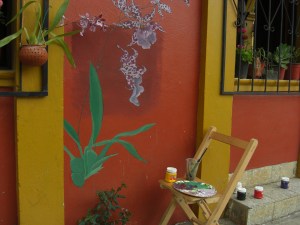
Orquideafilia Mural. @ Bianaca Ana Chavez, all rights reserved

Orquideafilia Mural. @ Bianaca Ana Chavez, all rights reserved

March will find me back in the magical highland town of San Cristobal de las Casas, Chiapas, Mexico. Chiapas has the highest diversity of orchids in Mexico, many of which can be seen in the botanical garden El Jardin de Epifitas. The garden is directed by biologist Juan Castillo Hernandez, an incredible lover of art and nature. In addition to the botanical garden, Juan or ‘profe’ as everyone calls him, has a corner plant shop in the center of town. It is to these walls that stretch above cobblestone streets that I will return to complete the Orquidefilia mural and resume a life dedicated to the perpetuation of art, nature and culture.

Through some bit of wisdom or fluke, I first found myself working with Juan at the Orquideafilia plant store a few years ago. In my downtime I would sketch and paint the plants in the shop. Somehow these drawings eventually ended up wrapping around the block. But I left the mural unfinished. While drawing, the old haunting idea of studying botanical illustration would come back to me. I had played with the idea of studying botany in college but shied away from it for a fear of math and the hard sciences. I had long since discovered botanical art, and wanted to explore it more deeply.

So I moved to Seattle to pursue a certificate in Natural Science Illustration (NSI) at the University of Washington. With a lifelong love of plants and the arts, taking the NSI program was a stubborn declaration of my commitment. Through the NSI program I had the chance to work with many inspiring illustrators, botanists, and plant lovers. The program solidified my desire to pursue the arts and that I wanted to do this in a way that brought attention to the earth and our connection to it.

Returning to work again at Orquideafilia, we want to expand the plant store to include a tea shop and space for art and nature-related events and workshops. Juan approaches the work he does with a strong sense of collaboration. It is largely through his encouragement of my crazy ideas that I will offer weekly workshops in botanical illustration at the shop.

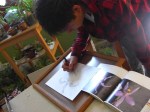
Student drawing orchid using a reference photo. @ Bianaca Ana Chavez

Biology student draws orchid using a reference photo. @ Bianaca Ana Chavez, all rights reserved

The workshops will be offered by donation to the community and no one will be turned away for lack of funds. The idea is to create a space where plants and art supplies are provided so that all people have to do is come with an open mind ready to explore and share their techniques with each other. Really, I am still pretty green to all of this — I am learning along with everyone else. The beauty is that we can grow together.

The name Orquideafilia came from combining the two words orchid (orquidea) and the Greek -philia, or filia. A love for orchids. This is what we have.

To support both the mural project and the development of a space for art, nature and culture, I created a one-month only pop-up online art store and donation page on my website. My goal is to raise $3,000 to cover the cost of travel, the art supplies to complete a large-scale mural, and the administrative cost of programming community events and workshops for one year.

To buy original artwork or donate to the project, please click on the following link – http://www.biancaanachavez.com/shop.

For more information about workshops and events, you can contact me directly through my website at www.biancaanachavez.com.


Also See

Bianca and fellow graduates of the Natural Science Illustration program at the University of Washington participate in Endless Forms Most Beautiful at the
Burke Museum in Seattle, WA.

Click to download

Click to download


Jeanne Debons Studio, Bend
www.jeannedebons.com
Botanist and botanical illustrator, Jeanne Debons, teaches small student-focused painting workshops at her Oregon studio. Dr. Debons received her Ph.D. in the Department of Botany and Plant Pathology at Oregon State University. She graduated from the diploma course in Botanical Painting at the English Gardening School in 2005. Dr. Debons invites you to join her painting workshops this Fall.

    Botanical Painting
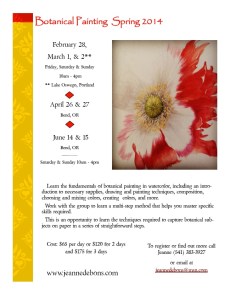
    Learn the fundamentals of botanical painting in watercolor, including an introduction to necessary supplies, drawing and painting techniques, composition, choosing and mixing colors, creating colors, and more. This is an opportunity to learn the techniques required to capture botanical subjects on paper in a series of straightforward steps. Work with the group to learn a multi-step method that helps you master specific skills required.

    Cost: $65 per day OR $120 for 2 days and $175 for 3 days
    For information and to register, contact Jeanne Debons.

    Botanical Painting at Lake Oswego, Portland
    February 28, March 1-2, 2014
    10 AM – 4 PM

    Botanical Painting in Bend
    April 26-27, 2014
    10 AM – 4 PM

    Botanical Painting in Bend
    June 14-15, 2014
    10 AM – 4 PM

This information has been added to Classes Near You > Oregon.

This year the theme of the Philadelphia Flower Show is ARTiculture: Where Art Meets Horticulture. Event organizers promise to give the comfortable centuries-old union between art and horticulture a new twist when the show opens on Saturday, March 1, 2014.

Contributing to this refreshing look at art and horticulture are artists of the Philadelphia Society of Botanical Illustrators (PSBI). Society members will conduct demonstrations of botanical art techniques March 1-9, 2014 in the Grand Hall. Visitors will have the opportunity to learn from artists 10:00 AM – 8:00 PM daily.

Complementing members’ demonstrations will be an exhibition of nearly 50 botanical paintings. As the banner in the Society’s booth states, the exhibition of “Dynamic Botanics” created by members clearly demonstrates “The Art of Botany.” Featured subjects range from delicate hellebores to the monster cones of the sugar pine tree. Each subject is lovingly depicted, usually in watercolor but sometimes in colored pencil and oil. The paintings selected for this year’s flower show were selected by three judges — a biologist, an artist and a horticulturist.

The Philadelphia Society of Botanical Illustrators is comprised of more than 75 botanical artists from the Philadelphia area. Many of them teach other aspiring artists and teach in a joint art program with Arcadia University benefiting teenagers in Philadelphia public schools.

The Society has participated in outreach programs such as the Arcadia program for more than ten years. The Society pays instructors, purchases art supplies and gives art materials to young people who come from areas of the city where there is limited, if any, art instruction. The intent is to encourage students to learn the fundamentals of scientific and botanical illustration for possible careers and for their own enjoyment.

Learn more about the Philadelphia Society of Botanical Illustrators on their website at PSBI-art.org.

See the new page for Classes Near You > New Zealand!


Rebecca Brown-Thompson

www.rbrown-designs.com
Rebecca Brown-Thompson is a botanical artist from Oregon and New Zealand who works with paper, paint, felt and beads.

    Field Sketching and Drawing Workshop
    Saturday and Sunday, March 22 – 23, 2014
    9 AM – 5 PM

    Participants will learn introductory drawing techniques and will apply these techniques to field sketching. They will also learn how to accurately record what they see whether is it for journalling, a science study, or just for fun. This workshop at the Lake Hawea Community Centre at Lake Hawea, Central Otago in New Zealand.

    For more information and to register, contact Rebecca
    Brown-Thompson
    by March 1, 2014.

    Visit Rebecca’s website to learn more about her and to view her online gallery, including sample pages of her book Rebellious Beads in which she demonstrates how to create natural history-themed beadwork.

Last week’s column about Jeanne Baret’s dedication was popular with many people. I thought I would follow-up and share an idea about how to integrate the field work of Jeanne Baret and other explorers into the classroom by using the field journal lesson plans written by Devon Hamner. Hamner presents the framework for four 50-minute journaling sessions in How Does My Garden Grow? Writing in Science Field Journals.

Throughout these four sessions, students are prompted to write about their observations, pay attention to detail, ask questions and are expected to investigate topics with which they are unfamiliar. They are also expected to act like researchers and are required to discuss their work with their peers. Hamner’s approach to learning about plants is very flexible and does not require an established schoolyard garden. Her activity can be applied to windowsill gardens and to container gardens. She even has a plan teachers can use in the event there is a mass die-off of students’ seedlings.

Hamner explains how to implement each journaling session and addresses everything from how to introduce students to gardening topics, to how to how lead collaborative inquiry-based activities.

If you’re looking for a way to merge botany, history, ​and art using exploration as a theme, consider adding Hamner’s article to your toolkit​. It is available for free online. Included are links to additional Web-based resources.

Also consider adding Paula Panich’s book about garden writing and Christian McEwen’s guide to nature writing to your teaching library.


Literature Cited

Hamner, Devon. How does my garden grow? Writing in science field journals. Retrieved from http://www.readwritethink.org/classroom-resources/lesson-plans/does-garden-grow-writing-846.html


Related

Watercolours_With_WOW_Tutorials

Anna Mason’s Online School is LIVE!

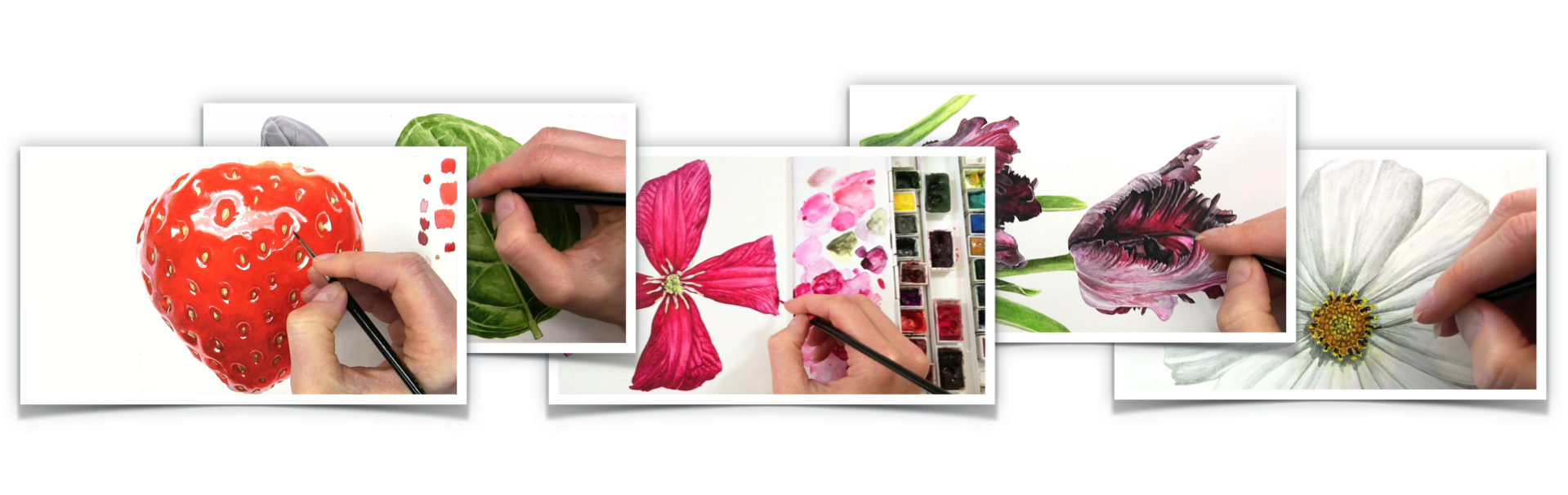
Last week Anna Mason launched her online learning program. Since it launched, botanical art enthusiasts have been quick to sign-up for this new service.

Anna’s school is based on her tested step-by-step tutorials. Each tutorial comes with a reference photo and 4-6 videos that offer at least one hour of video instruction. New tutorials will be added every month. The next tutorial will be available on February 7, 2014.

Subscribers to this new service also have access to the Knowledge Base. The Knowledge Base features 18 videos in which Anna breaks down painting techniques and presents her practical approach to color mixing. Linked to these videos are sketchbook exercises subscribers can follow on those days when they only have 30 minutes to dedicate to painting.

This new learning opportunity costs £10 per month (convert currency). Payments are processed through PayPal. There is no minimum subscription term and you can unsubscribe at any time.

Sign-up today to take advantage of Anna’s special introductory offer. Receive 6 months of convenient online learning for £50 and receive one month free! After the six-month introduction, subscribers will be charged £10 per month.

Learn more about this program at www.watercolourswithwow.com.

This information can also be viewed at Classes Near You > England.


Related

Anna (Knights) Mason Creates Botanical Paintings with Captivating Detail