Feeds:
Posts
Comments

Pomegranate, watercolor, 16.25" x 20" © Sally Jacobs, All rights reserved

Pomegranate, watercolor, 16.25″ x 20″, © Sally Jacobs, All rights reserved

Up Close: Plant Portraits
Sally Jacobs

TAG Gallery
Santa Monica, CA
April 22 – May 17, 2014

In a new exhibition opening next month, watercolor artist Sally Jacobs brings attention to the subtle and unique features of plants by introducing drama to traditional botanical art. Using vibrant colors, striking black backgrounds and layered watercolor techniques, Jacobs makes viewers question what they have truly observed in plants.

Jacobs’ work has been shown in many juried shows in New York and San Francisco; and at museums in Minneapolis and Phoenix. She was an award winner at the Brand 37 Works on Paper exhibition and was featured on the CNN show, “Your Money.” Her work is featured in Today’s Botanical Artists, a book about North American contemporary botanical artists.

flyer_Gilman_EarthDay2014
Earth Day at Gilman Historic Ranch and Wagon Museum

The Earth Day celebration at Gilman Ranch is less than two weeks away. You are invited to come out to the ranch on April 12, 2014 to participate in fun family activities, learn about the Gilman family, visit the wagon museum, learn about the environment and listen to presentations by guest speakers. Click on the image to download the new color flyer.

Share the flyer with friends, family and your favorite teachers and librarians.

Who will be at the ranch? Take a look!


Educational Exhibitors

  • View a hybrid vehicle from the South Coast Air Quality
    Management District.
  • Learn about fire fighting history with the Fire Memories Museum.
  • Discover local wildlife with Hidden Valley Nature Center.
  • Learn about composting with Riverside County Waste Management.
  • “Leave No Trace” Outdoor Ethics with the Bureau of Land Management.
  • Discuss local conservation efforts with the Inland Empire Resource Conservation District.
  • Discover eco-friendly pest control solutions by ECOSKAN Pest Solutions.
  • Find out how the Western Riverside Council of Governments strengthens communities in western Riverside county.
  • Get to know the Banning Community Advisory Committee


Family Fun Activities

  • Newspaper Pots (seeds and soil donated by Cherry Valley Nursery)
  • Accidental Foods & Potato Sack Race
  • Go on a tour of the Gilman ranch house
  • Enjoy a short walk on the nature trail (~ 1 mile)


Marketplace

  • Inland Solar
  • My Tickle Bee Beauty (soaps, oil, bath and body)
  • SunnysideLOCAL Produce and Nursery (jams and prepared foods)
  • Sew Hot Mommies (crocheted, sewn, and hand-crafted items)
  • ArtPlantae (books and supplies about plants, environment, art)


Dining

  • Big Dev’s BBQ

  • Community Survey

    Would you like to see a community garden in Banning? Come to the ranch and let your voice be heard.


    Guest Speakers

    • Dr. Mark Hoddle, Center for Invasive Species, UC Riverside
    • Jan Kielmann, 123 Farm, Cherry Valley (medicinal plants)
    • Tania Marien, ArtPlantae, Riverside (The Ambonese Herbal)


    Schedule subject to change


    Earth Day at Gilman Historic Ranch and Wagon Museum

    Saturday, April 12, 2014
    9 AM – 3 PM

    Adults (walk-in) $3
    Children $2
    Dogs $1

    Directions to Gilman Historic Ranch and Wagon Museum


    Every new generation will have a more impoverished image of nature than the former one.

    — Abraham A. Mabelis

    Can the need to conserve biodiversity be understood by those who have hardly experienced nature?

    Abraham A. Mabelis of the Netherlands wondered this very thing. To answer this question, he knew he had to find out what kind of preconceived ideas and beliefs people had about nature. Interested in what children thought about biodiversity and extinction, he surveyed Dutch school children ages 8-16. The results of his survey are the subject of the paper, Children’s Opinions about the Loss of Nature.

    Mabelis (2005) surveyed 400 students — 200 elementary school students
    (age 8-12) and 200 secondary school students (age 12-16). These children attended schools that did not have an environmental education program.
    Mabelis surveyed students using a questionnaire. Students responded to three groups of questions. The first group inquired about how often students thought about pollution, dying forests, species extinction and accidents at nuclear power plants.

    The second group of questions polled students about how seriously they viewed water pollution, air pollution, soil pollution, dying forests, the disappearance of natural forests, species extinction, nuclear power plant accidents, illness and death.

    The third group of questions polled students about thoughts of their own future and thoughts about the future of their country.

    Students were also asked to share their ideas about how to improve the environment.

    Mabelis (2005) observed most of the students surveyed (71%) thought about pollution at least some of the time and that students considered air pollution to be more serious than water and soil pollution. More than half of those surveyed also thought about dying forests and species extinction. Mabelis (2005) observed that elementary school children think about extinction more often than secondary students and that, in general, indifference towards extinction varies by species.
    It appears children, regardless of age, view the extinction of “large and attractive” species to be more serious than the extinction of “small and less attractive” species (Mabelis, 2005). He also observed that students viewed the extinction of rare species (he used an orchid as an example) as being more serious than the extinction of a common species such as a dandelion (Mabelis, 2005).

    Could children’s views of species extinction be changed through education?

    Mabelis (2005) investigated this too and surveyed students again after they received four months of instruction about the environment. He discovered that student indifference towards the extinction of some species can change after receiving visual information and in-class instruction. He observed statistically significant changes in student opinions about the death of forests and dandelion extinction.

    When asked to offer suggestions about how to improve the quality of the environment, 70% of elementary school students responded, while 50% of secondary school students responded (Mabelis, 2005). Student suggestions addressed things people can do at home (e.g., recycle, use less packaging, etc.) and included the need to increase the number of natural areas and the need to provide better information about the environment at school (Mabelis, 2005).

    Mabelis (2005) elaborates on his findings and student feedback in his paper.
    He also compares his study to other European studies and provides insight into what European children think about biodiversity and the loss of nature. Mabelis also categorizes the responses he received from students and offers suggestions about how environmental education programs should be taught.

    The core message of Mabelis (2005) is this — to help children understand biodiversity, conservation and nature-friendly behavior, adults need to explain the relationships between society and nature and provide examples of alternative ways of doing things.

    How might change be encouraged in a classroom or on an even more personal level such as during spring break or summer vacation? Visit the “Teaching & Learning” column in the margin at right for ideas. Here some examples of what you’ll find:

    Mabelis (2005) is available online for free, compliments of the
    Environmental Education Association of Southern Africa (see link below).


    Literature Cited

    Mabelis, Abraham A. 2005. Children’s opinions about the loss of nature. Southern African Journal of Environmental Education. 22: 123-136.
    Retrieved from http://eeasa.org.za/images/publications/eeasa_journal_22_2005/11-EEASA-Vo_22.pdf.


    Related

    Urban Conservation

    Plants, Life, Riverside is an ongoing interpretive project about plants in an urban setting. How are natural areas managed around the 12th largest city in California? Let’s find out.


    Martha Mclean Anza Narrows Park and the Santa Ana River Trail

    Martha Mclean Anza Narrows Park and the Santa Ana River Trail

    The City of Riverside is home to more than 311,000 residents and is divided into twenty-six distinct neighborhoods covering 81 square miles (Riverside Office of Economic Development, 2014). There is a lot of concrete, asphalt and stucco out here and commutes during rush hour can be absolutely horrible. 

    Riverside is located on the western edge of Riverside County, a county covering over 7,200 square miles of southern California (County of Riverside, 2014). While heavily populated, it does have natural areas where plants and animals are protected. These areas, and other open space areas in western Riverside county, are protected by the Multiple Species Habitat Conservation Plan.

    The Multiple Species Habitat Conservation Plan (MSHCP) was created to establish a balance between land development, the protection of plants and animals, and the establishment of a sustainable economy while complying with state and federal Endangered Species Acts. Implemented in 2003, the MSHCP is a component of a larger project called the Riverside County Integrated Project (RCIP).

    The MSHCP addresses many issues. To learn more about the Plan, I contacted Patricia Lock-Dawson, former grant writer for the County who was involved with the creation of the MSHCP. She is also one of the authors of the MSHCP Implementation Guidance Manual used to train city planners working in the fourteen cities covered by the Plan.

    According to the MSHCP, the population of Riverside county will increase 400% by the year 2040 to 4.5 million people, with most of this growth occurring in the Inland Empire (MSHCP, Section 1.2.1). To prevent fragmenting open space and creating small islands of habitat unable to sustain local species, the Plan establishes a protocol guiding land use decisions. The Plan covers 1.26 million acres and 146 listed and unlisted species (MSHCP, ES.6 Goals of the MSHCP).

    The Habitat Conservation Plan took about 8 years to complete. The specific function of the Plan, according to Lock-Dawson, is to streamline the economic development of the region by offering a “one-stop shop” where developers can satisfy permitting requirements with the County, the state and the federal government without running around pulling permits from every agency. The Plan enables developers to satisfy permit requirements by working with one entity — the County’s Habitat Conservation Authority.

    A search of published newspaper articles revealed that the Plan has both supporters and opponents. The Plan has always had its ups and downs when it comes to public perception and Lock-Dawson says the biggest challenge the Plan faced was getting cities and developers to sign-on. Everyone was suspicious of the Plan. Cities and developers thought the Habitat Conservation Plan would interfere with development and natural resource agencies were concerned the County would not be a good steward of local natural resources and let development go wild. The County had to work diligently to earn the confidence of all parties. 

    The MSHCP is a document with good intentions and is designed to benefit both people and nature. However I think it’s safe to say that only a small number of people have browsed through it. This is unfortunate because this document is not only for county officials, biologists and land owners. Anyone can read the Plan. Residents of western Riverside county can even see how the MSHCP applies to their area by entering their Assessors Parcel Number into the Conservation Summary Report Generator

    In addition to being a comprehensive and thorough conservation plan, the MSHCP is a great interdisciplinary educational tool. I asked Lock-Dawson how she would explain the MSHCP to kids to teach them about local natural resources. She said she would begin by not using the acronym and would refer to it as something other than a “conservation plan” because the concept might be too much for young children to comprehend. She says she would present it first as a big map and say, “Here’s where plants and animals live” and then show how habitat has changed over time. She would then explain to kids that many people worked together to make sure the natural areas in our region would be preserved for them and for their children. 

    I asked Lock-Dawson what she would like people to know about this often misunderstood document. She said she would like them to understand that these types of efforts keep Riverside from becoming a place where no one wants to live. She adds, “It is what keeps our world beautiful. Natural resources need to be managed and controlled. We are not the only ones here. We have a responsibility towards the future.”


    The MSHCP in the Classroom

    The Multiple Species Habitat Conservation Plan is much more than a heavy government document. It is a treasure chest of ideas for the classroom. I quickly made note of some topics in the MSHCP and then spent time on the website of the Next Generation Science Standards browsing topics and core ideas. What a way to make a school-home-nature connection!


    Literature Cited

    City of Riverside, Office of Economic Development. Retrieved March 24, 2014 from http://www.riversideca.gov/econdev/data-and-demographics.

    County of Riverside, California. Riverside County History. Retrieved, March 24, 2014, from http://www.countyofriverside.us/Visitors/CountyofRiversideInformation/RiversideCountyHistory.aspx.

    Manzanita anthers. © Stephen Buchmann, All rights reserved

    Manzanita anthers © Stephen Buchmann, All rights reserved

    The Theodore Payne Arts Council invites you to
    Buzz Pollinate: Slits, Pores, and Valves!

    Contemporary artist
    Jessica Rath is fascinated with buzz pollination, a co-adaptation between certain bees and specific angiosperms which require sonication, or vibratory resonance to release pollen from their anthers.

    Over evolutionary time, the shape of these anthers has become a closed tube-like vessel with a limited opening pore or slit. These incredible shapes and the vibrations that open them are the subject of Rath’s show in the Theodore Payne Gallery.

    Consulting with bee specialist Dr. Anne Leonard from University of Nevada, Reno, and buzz pollination specialist Dr. Stephen Buchmann from University of Arizona, Tucson, Rath has immersed herself in the scientific resonances around this fascinating phenomenon.

    Purple Nightshade © Jessica Rath, All rights reserved

    Purple Nightshade © Jessica Rath, All rights reserved

    Some 5% to 6% of all the world’s angiosperms require buzz pollination, including commercial greenhouse tomatoes and some native manzanitas.

    Jessica’s exhibition will include wax sculptures for cast bronze based on bee anthers, a series of watercolors, and a “buzz” sound work alluding to buzz pollination tonal values created in collaboration with experimental music composer Robert Hoehn.

    Buzz Pollinate: Slits, Pores, and Valves opens on Saturday, March 29, 2014 and will be on view through June 14, 2014. You are invited to attend the opening reception from 2:00 – 4:30 pm. An artist talk will be begin at 3 PM.

    Directions to Theodore Payne Foundation, Sun Valley, CA


    Related

    pwlogoFINALsmalEducators!

    Celebrate Pollinator Week early with a visit to Buzz Pollinate: Slits, Pores, and Valves.

    Pollinator Week 2014 is scheduled for June 16-22, 2014. Get resources for the classroom or your summer program on the Education page at Pollinator Partnership.

    Go to ArtCenter Manatee

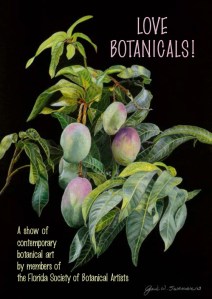
    Mangoes, colored pencil © Gail Swanson, All rights reserved


    LOVE BOTANICALS!

    ArtCenter Manatee
    Bradenton, FL
    April 1 – May 3, 2014

    A show of contemporary botanical art by members of the Florida Society of Botanical Artists (FSBA). Established by botanical art students in 2005, the FSBA is a chapter of the American Society of Botanical Artists.

    You are invited to attend the opening reception of their new exhibition.
    The reception will be held on Friday, April 4, 2014 from 5-7 PM at ArtCenter Manatee in Bradenton, Florida.

    The gallery at ArtCenter Manatee is open Monday, Friday, Saturday (9-5) and Tuesday, Wednesday, Thursday (9-6). Learn more about ArtCenter Manatee.


    Related

    Learn all summer long in Massachusetts or go on week-long retreats in New Mexico. Here is what’s new in the Classes Near You sections for Massachusetts and New Mexico.


    Helen Byers

    www.helenbyers.com
    Helen Byers is an artist and illustrator who is active in several genres and mediums. She was born in Brazil, grew up in northern California and Mexico, and now lives in Massachusetts. She qualified for the PhD in English at the University of California, Santa Barbara and taught literature and writing at the college level before moving to the Pacific Northwest to work as a freelance literary editor. After moving to Boston in 1988, she embarked on a career as an author, illustrator, and editor for educational publishers.

    Since 2013, Helen has turned full-time to her lifelong love of art, teaching botanical drawing and painting in Massachusetts at Tower Hill Botanic Garden (Boylston), the Concord Art Association, and Fruitlands Museum (Harvard). She is also a regular instructor in New Mexico, at Ghost Ranch (Abiquiu), where her courses include a field-sketching workshop focused on high-desert fauna and flora, co-taught with biologist Janet Darrow.

      Workshops in Massachusetts

      Daffodils: Botanical Painting in Watercolor
      Tower Hill Botanic Garden
      Boylston, Massachusetts
      April 16, 2014
      10 AM–4 PM
      View Details/Register

      Spring Blooms: Botanical Painting in Watercolor
      Tower Hill Botanic Garden
      Boylston, Massachusetts
      May 10 & 17, 2014
      10 AM – 4 PM
      View Details/Register

      Observational Drawing in Colored Pencil
      Fruitlands Museum
      Harvard, Massachusetts
      May 31–June 2, 2014
      10 AM–3 PM
      For information and to register, email mkershaw@fruitlands.org 
or call 978-456-3924 ext. 291.

      Field Sketching & Journaling
      Fruitlands Museum
      Harvard, Massachusetts
      July 12 & 13, 2014
      10 AM–3 PM
      For information and to register, email mkershaw@fruitlands.org 
or call 978-456-3924 ext. 291.

      Daylilies: Botanical Drawing in Colored Pencil
      Tower Hill Botanic Garden
      Boylston, Massachusetts
      July 19 & 20, 2014
      10 AM–4 PM
      For information and to register call 508-869-6111.

      Harvest Home: Botanical Drawing in Colored Pencil
      Fruitlands Museum
      Harvard, Massachusetts
      August 16 & 17, 2014
      10 AM–3 PM
      For information and to register, email mkershaw@fruitlands.org 
or call 978-456-3924 ext. 291.

      Vegetables: Botanical Art in the Summer Garden
      Tower Hill Botanic Garden
      Boylston, Massachusetts
      August 23 & 24, 2014
      10 AM–4 PM
      For information and to register call 508-869-6111.


      Workshops in New Mexico
      :

      Field Sketching Ghost Ranch Fauna & Flora
      (co-taught with biologist Janet Darrow, PhD)
      Ghost Ranch Education & Retreat Center
      Abiquiu, New Mexico
      June 23–29, 2014
      View Details/Register

      Celebrations for Days of the Dead (Días de los Muertos)
      Ghost Ranch Education & Retreat Center
      Abiquiu, New Mexico
      October 27–November 2, 2014
      View Details/Register