Feeds:
Posts
Comments
View your invitation

Download your invitation here

Less than two weeks from now, weird, wild and wonderful festivities begin at The Huntington Library, Art Collections and Botanical Gardens.

The Botanical Artists Guild of Southern California, The Huntington and the American Society of Botanical Artists cordially invite you to the Weird, Wild & Wonderful Symposium to be held
July 23-26, 2015.

The fun actually begins a few days earlier with your choice of two pre-Symposium workshops taught by award-winning artists Elaine Searle from England and Mieko Ishikawa from Japan. Elaine will demonstrate how to create “liquid shine” and form using light and color. Mieko will introduce her students to Nepenthes, the wonder plant of the southeast asian rainforest. She will discuss her visit to the rainforest and show students how to draw and paint this popular carnivorous plant.

The Weird, Wild & Wonderful Symposium begins officially on Thursday, July 23 with a private dinner in the Chinese Garden and a special presentation about using art and technology to teach science. This special keynote address will be given by Dr. Jodie Holt, Professor of Plant Physiology and Divisional Dean, Agriculture and Natural Resources, University of California, Riverside who served as the botanical consultant to the movie “Avatar”.

This wonderful summer evening will be followed by three days of workshops, tours, and unique opportunities to learn from artists (and each other) during portfolio-sharing sessions and technique showcases. There will also be mid-day and evening keynote presentations. The focus of these presentations will be painting the plants of Borneo, the art of orchids, ancient plant representations, and how botanical art and photography are being used to document the conifers of the world. Download your invitation to learn how you can attend the keynotes for as little as $10!

Symposium workshops and tours are filling up quickly and wait lists have been activated. Do not miss this opportunity to learn from botanists, artists and historians whose work celebrates the intersection of botany and art.

If you cannot attend the Symposium, do try to visit The Huntington soon to view Weird, Wild & Wonderful: The New York Botanical Garden Second Triennial Exhibition, Botanical Illustrations of Remarkable Plants. This is the traveling exhibition curated by the American Society of Botanical Artists now on view in the Brody Botanical Center through August 23, 2015 (weekends only).


More about the Weird, Wild & Wonderful Symposium

TheFruitsWeEat It’s summertime!

Cherries, nectarines, peaches and apricots are in season and now available at local supermarkets and farmers markets.

Celebrate the fresh fruits of the season with the new book by author and illustrator Gail Gibbons. In this book, Gibbons introduces readers to fruit, how it grows, how fruit is harvested and how fruit arrives at the grocery store. Gibbons also touches upon the nutritious qualities of fruit and includes USDA recommendations for healthful eating.

Written for children ages 4-8, The Fruits We Eat is a balanced blend of themes related to botany, horticulture, gardening, and urban agriculture. Gibbons’ colorful illustrations and landscape scenes introduce readers to:

  • Trees
  • Plants, bushes and vines
  • The morphology of strawberries, raspberries, blueberries, pineapples, watermelon, grapes, apples, pears, cherries, peaches, lemons, and oranges
  • How pineapple plants, banana plants, and grapes grow
  • How fruit is harvested
  • How fruit travels from industrial farms to the grocery store

Gibbons also introduces readers to botanical terminology, as well as nutritional resources in the United States and Canada and includes Web addresses for further study.

If you are a long-time subscriber to ArtPlantae, you may remember reading about other books by Gail Gibbons at the former ArtPlantae Books, namely From Seed to Plant and Apples.

The Fruits We Eat is a colorful and informative introduction to the trees, bushes and vines producing some of our favorite fruit. It is also a nice introduction to the farm-to-store journey our food takes to the local grocer.


You May Also Like

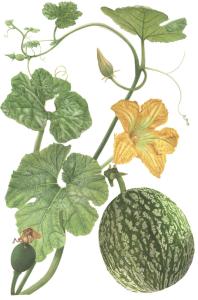
Curcubita ficifolia © Kimiko Kambe-Gang. All rights reserved.

Curcubita ficifolia © Kimiko Kambe-Gang. All rights reserved.

The Chelsea Physic Garden will celebrate the 20th anniversary of their Florilegium Society with a special exhibition.

London’s Secret Garden: Plant Portraits from Chelsea Physic Garden Florilegium Society will be on view August 4-26, 2015 and will feature works from some of today’s finest botanical artists. Open each day from 11 a.m. – 4 p.m., entrance to the exhibition is free with paid admission to the Garden.

The Florilegium Society was formed in 1995 with the explicit purpose of documenting the plant collections in the Chelsea Physic Garden. Founded in 1673, the Chelsea Physic Garden is the oldest garden in London.

Many of the works of art in the exhibition are included in the Society’s new book, Botanical Illustration from Chelsea Physic Garden, written by Andrew Brown with contributions from Christopher Bailes, Phillip Cribb and Anne-Marie Evans.

This new book can be purchased online from independent bookstores ($75 US) and from the publisher directly.


Related Articles

PlantsWhyYouCantLiveWithoutThemIn the urban landscape, we are surrounded by plants.
When talking about plants in this environment, we tend to use very general labels (e.g., street tree and patio tree). In today’s Plants, Life, Riverside column we focus on another group of plants with a vague name — houseplants.

Houseplants may be the least exciting plants we encounter in everyday life. Unfortunately that expression “seen one, seen them all” kind of fits in their case. But did you know houseplants contribute much to your well-being?

Houseplants are fascinating in their own right because of the role they play in improving indoor air quality. This information comes to us from the National Aeronautics Space Administration’s (NASA) research into creating livable environments in space. Thanks to NASA and the work of international research teams, we have a better understanding of how plants in built environments improve indoor air quality.

According to B.C. Wolverton and Kozaburo Takenaka, authors of Plants: Why You Can’t Live Without Them, plants not only improve indoor air quality but also have:

  • A positive effect on the physiological and psychological well-being of people occupying built spaces.
  • A positive effect on recovering patients.
  • A positive effect on worker productivity.

Wolverton and Takenaka discuss indoor and outdoor air quality, volatile organic chemicals in built environments, and the purification abilities of plants in the first half of their book. Wolverton and Takenaka (2010) have many years’ experience studying indoor and outdoor environments. Dr. B.C. “Bill” Wolverton is a retired NASA scientist and has received patents and awards for his research into environmental pollution. He is the author of How to Grow Fresh Air (1997) and Growing Clean Water – Nature’s Solution to Water Pollution (out of print). Kozaburo Takenaka is the founder of Takenaka Garden Afforestation, the top plant leasing company in Japan. Takenaka has created green environments in indoor and outdoor spaces and has researched green plant-related technologies.

In their book, Wolverton and Takenaka also discuss rooftop gardening, vegetable gardening, commercial crop production, medicinal plants, aromatherapy, and phytoremediation (the use of plants in waste filtration). To guide the reader through these topics, the authors include a glossary of terms and a bibliography of interesting articles and resources in the back of their book.

Plants: Why You Can’t Live Without Them can be purchased online from your local independent bookstore.


Literature Cited

Wolverton, B.C. 1997. How to Grow Fresh Air: 50 House Plants That Purify Your Home or Office. New York, NY: Penguin Books

Wolverton, B.C. and Kozaburo Takenaka. 2010. Plants: Why You Can’t Live Without Them. New Delhi, India: Lustre Press

Wolverton, B.C. and John D. Wolverton. 2001. Growing Clean Water: Nature’s Solution to Water Pollution. Picayune, MS: WES, Inc.


Related
Bring plants into your classroom


New at Classes Near You > Southern California!


Gilly Shaeffer

www.gillyshaeffer.com

Gilly Shaeffer is an award-winning artist and a graduate of Anne-Marie Evans’ certificate program in botanical art. A member of the American Society of Botanical Artists (ASBA), Gilly served as president of the Botanical Artists Guild of Southern California, a chapter of the ASBA, from 1999-2005. Her work has been in juried exhibitions across the United States and is in the permanent collection at the Hunt Institute for Botanical Documentation at Carnegie Mellon University.

    Drawing Basics
    Thursdays, July 2-23, 2015
    Four meetings
    10:00 AM – 1:00 PM

    Learn the fundamentals of botanical illustration with Gilly at her Los Angeles studio. Students will practice exercises and techniques that will improve observational skills. This is a great opportunity for beginning and intermediate artists to perfect their drawing skills. Students will also learn how to prepare watercolor paintings of botanical subjects.

    Cost: $160

To register, please contact Gilly.

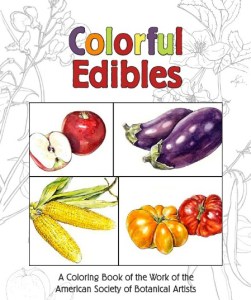
ColorfulEdibles_450Encourage an interest in plants and locally-grown food with this one-of-a-kind coloring book.

The coloring book, Colorful Edibles, was the brainstorm idea of botanical artist and organic farm owner, Wendy Hollender. Grounded in a desire to promote the work of the American Society of Botanical Artists (ASBA), a small committee formed to raise awareness about the ASBA through the development and sale of products created by its members. It took about one year for the first idea, a coloring book, to take shape. Botanical illustrator Bobbi Angell signed on as Co-Project Coordinator and Editor. Graphic artist and book designer, Charlotte Staub Thomas, also joined the project. Together they created a coloring book highlighting the contemporary botanical art of 26 ASBA members.

Editor, Bobbi Angell, says it was easy to get artists involved in this project. The project team made a specific request for pen-and-ink illustrations so that they could include as many ASBA artists as possible. They received 85 submissions from 38 artists. Because they wanted to keep the book inexpensive, only 36 illustrations were selected. The illustrations in Colorful Edibles showcase the strong and diverse line work of ASBA members, and includes work from new artists alongside​ work by more established artists, things Angell said the project team was hoping to do.

Most pages of the coloring book feature a full-page illustration. Informative passages about each fruit and vegetable are included on each page. Angell wrote the passages with young readers in mind. Through her writing, Angell makes reference to the origin and domestication of each fruit and vegetable so that readers learn about the history of their food. She also includes comments from contributing artists.

Colorful Edibles is truly a coloring book for all ages. Garden teachers will find this activity book to be a helpful teaching tool because it not only explains where familiar fruit and vegetables come from, it touches upon the subjects of botany, history, agriculture and nutrition.

The project team hopes to expand the coloring book format to other books about native plants and wildflowers.

Colorful Edibles is sold by the American Society of Botanical Artists.

View Symposium schedule

View Symposium schedule

Interested in learning more about the history of botany and botanical art?

A fantastic learning opportunity is coming to Southern California this summer that you don’t want to miss.

The eccentric beauty of the plant kingdom will be celebrated in a traveling exhibition of contemporary botanical illustrations and will be on view
June 13–Aug. 23, 2015 (Saturdays and Sundays only), at The Huntington Library, Art Collections, and Botanical Gardens. “Weird, Wild & Wonderful: The New York Botanical Garden Second Triennial Exhibition” is curated by the American Society of Botanical Artists (ASBA). The juried show includes 47 works, selected from a field of nearly 240 submissions, created by ASBA artists from Australia, Canada, India, Japan, the United Kingdom, and the United States. The show will be on view in the Flora-Legium of the Brody Botanical Center and is included with general admission to The Huntington.

“Botanical artists have traditionally depicted conventionally beautiful flora,” said Robert Hori, gardens cultural curator and program director at The Huntington. “This exhibition is meant to showcase nature’s oddities—plants of charismatic quirkiness that have a bizarre beauty all their own.”

In conjunction with the exhibition, The Huntington will co-host a symposium
July 23–26, 2015, offering a broad view of all that is weird, wild, and wonderful in the plant kingdom. The symposium is presented in partnership with the ASBA and the Botanical Artists Guild of Southern California (BAGSC, the local ASBA chapter). Learn about plants, explore the history of botany, take a botanical art class and learn about photography too. You can view the complete schedule on the Symposium website.

In addition to an exciting selection of classes, there will be special keynote presentations by botanists, artists and historians. The schedule of Symposium keynote lectures is as follows:

    Thursday, July 23, 7 p.m. (Opening night dinner)
    Do You ‘See’ Plants? Using Art and Technology to Teach Science
    Jodie Holt, professor of plant physiology at the University of California, Riverside, and botanical consultant for James Cameron’s science fiction film, “Avatar.”

    Friday, July 24, 12:30 p.m.
    Painting the Wonder Plants of Borneo
    Mieko Ishikawa, botanical artist.

    Friday, July 24, 7 p.m.
    The Art of Orchids
    Phillip Cribb, deputy keeper of the Herbarium and curator of the Orchid Herbarium at the Royal Botanic Garden, Kew. This keynote is generously underwritten by Orchid Digest.

    Saturday, July 25, 12:30 p.m.
    The Beauty of Ancient Plant Representations:
    Weird or Wonderful?

    Alain Touwaide of the Institute for the Preservation of Medical Traditions.

    Saturday, July 25, 7 p.m.
    From Field to Print: Botanical Art and Photography for Conifers Around the World and the Dendrological Atlas
    Zsolt Debreczy and István Rácz of the International Dendrological Research Institute, co-authors.

An adjunct exhibition of approximately 60 works by local BAGSC members will be on view in the Brody Botanical Center Aug. 1–9. This supplemental show will extend the theme of weird and wonderful plants through educational outreach activities for children and families, demonstrations in different media, informal workshops, displays of botanical curiosities, and “Find Me in the Garden” links between the exhibitions and the botanical collections. During the week of this display, both exhibitions will be open to visitors daily (Wednesday through Monday) during public hours.

Summer school has never ever been this exciting!

Register Today