Feeds:
Posts
Comments

The March 2016 issue of Arts and Activities magazine has an article about shading, ribbons and proportions that made me think of the ribbon and basket weave exercise many of us learned from Anne-Marie Evans.

In “Ribbons and Spheres: An Introduction to Still Life”, art teacher Rebecca Tarman writes about an exercise she uses with high school students. Tarman says the purpose of her lesson is to help students:

  • Draw from life
  • Draw only what they see
  • Learn how to sight proportion
  • Learn how to shade

Tarman describes how she accomplishes these goals by using a still-life model made of ribbon, ornaments and a piece of foam board. She explains how she attaches ribbon to foam boards using T-pins and how she uses ornaments of different sizes to teach students how to sight proportion. Her clever and very portable idea made me think that this would be a good exercise for anyone teaching botanical illustration at multiple venues. It is a good way to introduce first-time botanists and first-time artists to how to look at the growth patterns of tendrils, strap-shaped leaves, lianas, and twisting seed pods.

It also made me think:

  • What if the round ornaments on students’ boards were replaced with fruit, leaves, flowers or inflorescences?
  • How many ways could this lesson be used in a botanical drawing workshop?

Take a look at Tarman’s article and share your thoughts. Her article Ribbons and Spheres is available online for free on the Arts and Activities website.


Literature Cited

Tarman, Rebecca. 2016. Ribbons and spheres: An introduction to still life. Arts and Activities. March. Retrieved from http://artsandactivities.com/ribbons-and-spheres.


Related

Award-winning botanical artist Barbara Oozeerally will teach botanical art workshops this spring and summer in Poland. Three painting meetings are planned. They are:

  • Painting Delicate Spring Flowers & How to Achieve an Interesting Composition (May 8-15, 2016)
  • Summer Greens: Smooth, Shiny, Hairy and Wrinkled and How to Paint Them (August 7-14, 2016)
  • The Brilliant Autumn Colors of Leaves, Fruit and Seedpods (September 4-11, 2016)

All painting meetings will be organized by Welcome Tourist and will be held at a 4-star luxury resort near Krakow, Poland.

For more information, go to Painting Meetings.

By Sarah Maxwell, PSBI

PBSI_nativePlants2016

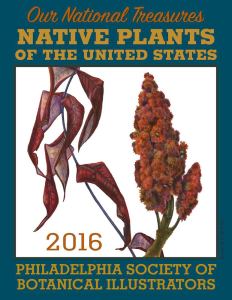
The beautiful and precise botanical paintings of the Philadelphia Society of Botanical Illustrators (PSBI) are on display at the Philadelphia Flower Show from Saturday, March 5th through Sunday, March 13th. The artists will be giving live demonstrations of their illustration techniques each day between 11:30 am and 1:30 pm, as well as between 5:00 pm and 7:00 pm.

In keeping with the Flower Show’s theme of “Explore America: 100 Years of the National Park Service,” the 2016 theme of the botanical artists is “Our National Treasures: Native Plants of the United States.” All the artwork had to be of plants that are native to our country — like oak trees, red buds, and dogwoods as well as trilliums, sunflowers, and black-eyed Susans. A large poster shows the location of these native plants along the Scenic Trail System of the National Parks.

Both the exhibition and the demonstrations are by the 75 members of PSBI. All the botanical art works are originals. PSBI artists spend many hours, weeks, even months to produce each one. They take great care to make certain that the depiction of the specimen is faithful to nature as well as a thing of beauty, something to be passed down with pride to coming generations.

The PSBI artists have been demonstrating the techniques of botanical art at the Philadelphia Flower Show since 1998, one year after PSBI was formed. Their demonstrations are part of the PSBI mission to educate the public on the intricacies of botanical art. It is an art form that is a tradition particularly in the Philadelphia area: in the 18th Century John and William Bartram founded and illustrated North America’s first botanical garden.

For more information, check the PSBI website, follow PSBI on Twitter (@PSBI_artists) or contact Sarah Maxwell.


Carol Woodin

www.carolwoodin.com
Carol is an award-winning freelance artist whose specialties include orchids, rare wildflowers, heirloom fruits and garden plants.

    Painting Glowing Orchids in Watercolor
    April 16-17, 9am – 4:30pm
    US Botanic Garden, Washington, DC

    After an overview of the special botanical characteristics of orchids, and a primer on the unique qualities of vellum, students will learn to combine the two. Creating rich color through multiple layers of watercolor dry brush, artists will capture shaded form and surface qualities such as gloss, veining, and warts so characteristic of orchids. Using vellum’s special surface to its greatest advantage, artists will gain comfort in working with this beautiful and translucent material.

    For more information, contact Carol Woodin.

    This information has also been posted to the Classes Near You sections for New York and Washington, DC.


    Did you know?

    George Washington thought that U.S. capital should have a botanic garden promoting the importance of plants to our young nation?

    Established in 1820, the United States Botanic Garden is one of the oldest gardens in North America.

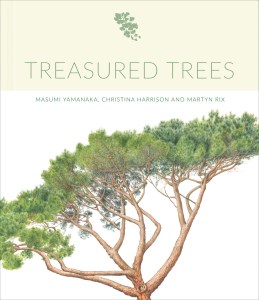
TreasuredTrees Botanical artist Masumi Yamanaka, horticulturist Christina Harrison and botanist Martyn Rix collaborate to write Treasured Trees, an introduction to the tree collection at Royal Botanic Gardens, Kew.
The book begins with Christina Harrison’s interesting story about the history of Kew, a topic she knows well. Harrison wrote a dissertation about the history of Kew’s trees and holds a MA in Garden History. Currently she writes educational material for the Garden and serves as the editor of Kew magazine. In the book’s introduction Harrison writes about the popularity of botany in 16th-century Europe, talks about the tree collectors of this era, and explains how Kew evolved to become the public garden it is today.

Following the introduction is a survey of twenty-two of Kew’s finest trees. Masumi Yamanaka’s illustrations and Martyn Rix’s historical accounts of each tree will prompt you to add a visit to Kew to your bucket list, if it isn’t on this list already.

Below is a list of trees featured in this book, plus small hints of fascinating history as shared by Rix. To learn much more about the history of each tree, pick up a copy of this book at your local independent bookstore.


Kew’s Treasured Trees
:

  • Sweet chestnut (Castanea sativa), a tree once valued for charcoal production.
  • Cedar of Lebanon (Cedrus libani), a tree celebrated for its strength and age.
  • Japanese pagoda tree (Styphnolobium japonicum), one of Kew’s original trees, planted in 1762.
  • Maidenhair tree (Ginkgo biloba), a tree species dating back to the early Jurassic.
  • Black locust tree (Robinia pseudoacacia), a tree grown in England as early as 1634 by John Tradescant.
  • Oriental plane (Platanus orientalis), a tree often depicted in Indian paintings.
  • Lucombe oak (Quercus x hispanica ‘Lucombeana’), a hybrid between the cork oak and the Turkey oak planted in the late 1700s.
  • Tulip tree (Liriodendron tulipifera), a tree once widespread in Europe before the last ice ages.
  • Turner’s oak (Quercus x turneri), the result of a rare cross between a holm oak and an English oak.
  • Corsican pine (Pinus nigra sups. laricio), the source of the rosin applied to bows used by violinists and cellists and the source of turpentine too!
  • Stone pine (Pinus pinea), a tree planted at Kew just as Sir William Hooker began to develop the garden as a scientific collection.
  • Chestnut-leaved oak (Quercus castaneifolia), a rare oak collected in Azerbaijan.
  • Giant sequoia and coast redwood (Sequoiadendron giganteum and Sequoia sempervirens), large impressive temperate trees introduced to England.
  • Armand’s pine (Chinese white pine) (Pinus armandii), a tree discovered by a plant hunter and introduced in cultivation in 1895.
  • Handkerchief tree (dove tree) (Davidia involucrata), a tree whose inflorescences feature large white bracts.
  • Indian horse chestnut (Aesculus indica), a tree Masumi Yamanaka painted in all stages of its life cycle; don’t miss this 9-page spread.
  • Bhutan pine (Pinus wallichiana), native to the Himalayas.
  • Nikko maple (Acer maximowiczianum), named after a Russian botanist who discovered the tree in 1860.
  • Indian bean tree (southern catalpa) (Catalpa bignonioides), native to Alabama and Mississippi, also present in Florida, Georgia and Louisiana.
  • Goat horn tree (Carrierea calycina), produces horn-like fruit.
  • Bogong gum (Eucalyptus chapmaniana), native to New South Wales and Victoria in Australia.
  • Sapphire dragon tree (Paulownia kawakamii), named after the daughter of Czar Paul I of Russia.

Treasured Trees features 40 paintings by Masumi Yamanaka. To view a selection of these paintings, visit the Kew Gallery.


You May Also Like

Click image to download announcement.

Click image to download announcement.


Hortus botanicus Leiden

www.hortusleiden.nl
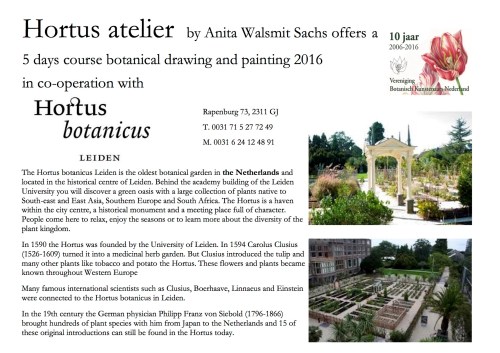
Founded in 1590, the Hortus botanics Leiden is the oldest botanic garden in the Netherlands. Included in its historic collection are plants from Asia, Europe and South Africa. Research on plant species continues to this day and the Garden plays an important role in the cultivation and preservation of endangered species.

    Summer Botanical Art Workshop with Anita Walsmit Sachs
    April 11-15, 2016
    Create accurate sketches and record the development of plants or individual structures in black & white or color. The course itinerary follows:

    • Day 1 – Introductions, garden tour, afternoon focus on pencil drawing
    • Day 2 – Learn about materials used by botanical illustrators, receive instruction about paint, color mixing and composition.
    • Day 3 – Transfer drawings to watercolor paper, begin painting
    • Day 4 & 5 – Continue painting, daily discussion, individual attention.

    Cost: €395,00
    Includes morning coffee, brasserie lunch and afternoon drinks. Information about payment and lodging will be provided upon registration. A small optional assignment will be assigned before the workshop begins.

    To register, contact Anita.


About Anita Walsmit Sachs

www.anitawalsmitsachs.nl
Anita Walsmit Sachs is the former director of the art department and former scientific illustrator at the National Herbarium in the Netherlands at the University of Leiden. She is an award-winning artist who has received two gold medals from the Royal Horticultural Society and whose work is included in the Highgrove Florilegium, a historic collection featuring selected plants growing at HRH The Prince of Wales’ home at Highgrove in Gloucestershire. In 2006, Anita and some of her students formed the Dutch Society of Botanical Artists.

Anita was the featured guest in January 2013. Read an interview with Anita and her conversation with ArtPlantae readers here.


This month the Center for Medieval and Renaissance Studies at UCLA will host a weekend conference focusing on the traditional knowledge of the therapeutic uses of plants. Co-organized by Alain Touwaide, this conference will bring together specialists from various disciplines involved in the study of medical traditions and will foster cross-disciplinary studies between medicine and the humanities.

The weekend conference will begin on Saturday, February 27 with a keynote lecture by Alain Touwaide titled, “Medical Traditions: Knowledge in the Making”. This will be followed by sessions about medicinal plants, herbals, culture and medicine. The conference concludes on Sunday, February 28.

A summary of planned presentations follows.


Conference Highlights
:

  • Aspirin in Antiquity? Or Principles and Practices of Retrospective Pharmacognosy
  • Medicine Box and Dining Table: Uses of Exotic Plants in Ancient Greece and Rome
  • Medicinal Plants from Monastery Medicine for the 21st Century
  • Tracing Drug Trajectories in the Early Modern Netherlands: Evidence from Newspaper Advertisements
  • The De la Cruz-Badiano Manuscript of 1552: America’s First Herbal in the 21st Century
  • More than Chemistry: Cultural Contexts for Healing and Well-being for First Peoples of Northwestern North America
  • Ayurveda Pharmacology: An ancient paradigm, modern relevance
  • The Chinese Botanico-Medical Tradition
  • Imperialism, Modern Pharmacology and Traditional Medicine: Rudolf Kobert (1854-1918) and the Pharmakologisches Institut in Dorpat
  • Traditional Chinese Medicine: An Ancient Treasure for the World Beyond Artemisinin
  • Future application of Traditional Medical Knowledge intrinsically linked to Conservation of Culture and Biodiversity in Geographical Origins of Wild Medicinal Plants: The case of Nanwuweizi from the Giant Panda Habitat

For conference details and to register, go to Medical Traditions for the 21st Century.

This event if free and open to the public. Registration is required.
Seating is limited.

Reserve Your Seat Today