Feeds:
Posts
Comments

The past two weeks, we’ve looked at the critical role families play in reinforcing the value of the arts and at how the arts can be used to take advantage of how we learn and make meaning. This week, we take a look at tools and techniques demonstrated to improve observation skills and enhance learning.

Earlier this Spring we learned of the work by professor Joe Dirnberger and his colleagues when they wrote about reviving the use of naturalist journals in the classroom. In a follow-up paper, Dirnberger (2006) brings attention to the similar approach scientists and artists take when observing the world and suggests seven ways learners can be encouraged to keep a naturalist’s journal. Citing examples of how his students have benefited from documenting their experiences in the field and the lab, Dirnberger (2006) provides insight into how journals can be used effectively, how to encourage students to record and synthesize information, and how to grade student journals. Dirnberger’s recommendations can be viewed in Drawing on Nature.

In Journals of Discovery, Cathy Livingston cites the power of visual thinking. Livingston (2005) openly shares what she and her students have experienced about how students learn while recording observations and thoughts in a journal. Livingston’s students did more than just draw plants, animals and things. They drew what they read. Students visualized their vocabulary words to enhance their understanding of these new words. When reading Livingston (2005), you may also want to read about the six fundamentals of visual note taking to help you visualize the types of learning that could take place if pictures were used to describe words. Translating vocabulary words into pictures is extremely helpful, especially in disciplines drowning in terminology like botany. If you have a copy of Plant Identification Terminology by Harris & Harris (2001), just think about how much you rely on this extremely helpful book that pairs each botanical term with a descriptive illustration. It doesn’t get any better than this.

Are you bored with spiral-bound sketchbooks? Try scrolls!

Educator Jessica Levine will help you think beyond 9″ x 12″ pieces of paper in Scrolls as Science Journals. Levine (2004) explains how scrolls allow observers to record changes over time and how the format of the standard sketchbook can interfere with learning. She suggests topics lending themselves to documentation in a scrolling format and provides examples of a scroll created with photographic images and a scroll created with original drawings and written entries. Imagine if Maria Sibylla Merian recorded her observations about metamorphosis on scrolls. Would she have noticed patterns never before recorded?

Levine (2004) also provides examples of how she has used scrolls with students and includes instructions on how to make three types of scrolling journals. Her instructions can be adapted to use the papers, paints, pencils and other supplies favored by botanical illustrators and sketchbook artists.

How do you help learners see plants through drawing?
Do you have a favorite sketchbook?
A unique approach to journaling?

Share your experiences in the comment box below.


The articles by Dirnberger, Levine and Livingston are available at college libraries and available for purchase from the National Science Teachers Association (99¢).

Literature Cited

REMINDER

California Native Plant Society
Conservation Conference

Conserving and restoring the roots of California’s richness
January 12-14, 2012

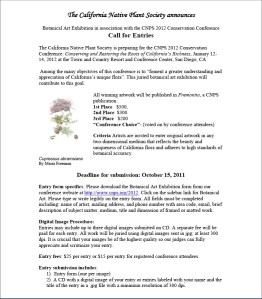
The California Native Plant Society will host an exhibition of botanical art at its January conference. All artists are invited to submit two-dimensional artwork in any medium for consideration. Artwork must be botanically accurate and must feature plants originating in and characteristic of the California landscape. Only indigenous plants will be considered. Click image to download call for entries.

Entry Deadline: October 15, 2011

Mindy Lighthipe’s 30 Days, 30 Leaves Challenge

On October 1, natural science illustrator and author, Mindy Lighthipe launched a 30-day challenge. Her primary objective is to learn about the plants of Florida by drawing one leaf from a different plant each day. Joining Mindy on her 30-day adventure are members of the Botanical Artists Group on Facebook.

On Day 1 Mindy outlined her objectives for the month. On Day 2, she wrote about her visit to Kanapaha Botanical Garden and discussed leaf anatomy. On Day 3, she painted a leaf from her datura plant. Then yesterday, she shared her experiences using the Icarus Drawing Board, a tool she learned about at the 2008 conference of the American Society of Botanical Artists.

What is she doing today?

Go to www.botanicalpainting.com to find out!

The leaves Mindy creates for her 30-day challenge are available for purchase at her Bugs, Beasts & Botanicals store on Etsy.


Related

Save 25% until October 7, 2011

Roses
Pierre-Joseph Redouté
James Sowerby
$22.99

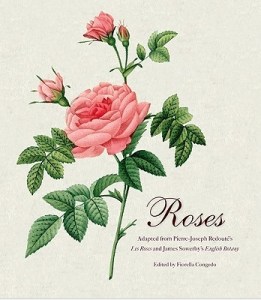
The paintings and drawings of botanical artist Pierre-Joseph Redouté (1759-1840) and naturalist/illustrator, James Sowerby (1757-1822), fill the pages of Roses, a collection of botanical art packaged neatly in a softcover book. One hundred fifty-nine of Redouté’s rose paintings and eighty-eight of Sowerby’s paintings/line drawings of plants in the Rosaceae (Rose Family) are featured. The plates are shown exactly as they were created. Descriptions of each rose can be found in the book’s index.

A DVD containing images from the book is included. Image files are in .jpg and .png format and can be viewed directly from the disc and in programs such as Adobe FreeHand, Photoshop, and Illustrator.

This new title is available at ArtPlantae Books for $17.24, 25% off the list price of $22.99. This special offer expires Friday, October 7, 2011.

Go to ArtPlantae Books to read more about this title.

ART IN THE GARDEN
A Learn and Grow Educational Program

Saturday, Oct. 8, 2011
10 AM – 12 PM
For children 7 – 18 years old

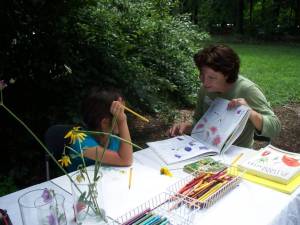
During this special workshop, botanical artist Linda Miller will teach children how to draw in the garden. Artists will learn how to simplify complex structures and how to add color using watercolor paints and colored pencils while creating a beautiful journal page using words and images. All materials furnished by the instructor and the York County Master Gardeners’ Learning Garden committee.

The class is held outdoors in the garden. Please bring your own insect repellent, drink and snacks. Admission is free and open to the public. Pre-registration required by October 7, 2011. Contact the York County Cooperative Extension Office to register at (757) 890-4940.

If you register and discover you cannot attend for some reason, please notify the York County Cooperative Extension Office so someone on the waiting listing may attend in your place. Thank you for your cooperation.

Sponsored by the York County Master Gardeners of Virginia.

This workshop will be taught at the Public Learning Gardens at 301 Goodwin Neck Rd. at County Dr. in front of the Fire & Safety Building and next to York County Parks & Rec Building.

New at Classes Near You > North Carolina:


Daniel Stowe Botanical Garden, Belmont

www.dsbg.org
The Daniel Stowe Botanical Garden offers many learning opportunities for both children and adults. The garden’s classes about photography and Adobe Photoshop may be of special interest to ArtPlantae readers. View a complete list of current classes on the garden’s website.

    Organic Lines & Nature’s Treasures – Saturday, October 8, 15, 22, 29, 2011; 10 AM – 12:30 PM. Learn the fundamentals of drawing while observing Nature’s forms. Beginning and intermediate students encouraged. Cost: $80 members, $100 non-members. A materials list will be sent with confirmation of your registration.
    View all details & register online

A new resource for botanical art education has been added to the class page for Maryland. View the schedule of current classes and watch for announcements of future classes at Classes Near You > Maryland.


Cylburn Arboretum

http://cylburnassociation.org
The Cylburn Arboretum is the home of a post-Civil War estate built as a summer home for the President of Baltimore Chrome Works and his mother. Now a center for environmental education and horticulture, the Cylburn Arboretum hosts tours, events and activities for children and adults. The botanical art classes at Cylburn are taught by botanical artist, Molly O. Hoopes. Learn more about Molly in the ASBA Members’ Gallery.

  • Introduction to Botanical Art – Saturday, September 10, 2011; 2-4 PM. Botanical artist, Molly O. Hoopes, discusses the history of botanical art during this free lecture in the Greenhouse Classroom.
  • Botanical Illustration Series – Wednesdays, September 14, 21, 28 and October 5, 12, 2011; 6-9 PM. Traditional watercolor techniques, color theory, composition and plant morphology are the focus of this class.
  • Botanical Illustration: Autumn Foliage – Wednesdays, September 21, 28, October 5, 12, 2011. Learn traditional watercolor techniques as you draw and paint berries, seeds and flowers.