Feeds:
Posts
Comments

Spend the afternoon at the Mobile Museum of Art!

Learn about ornithological art and visit the exhibition about John James Audubon , on view now through January 8, 2012.

Mobile Museum of Art
www.MobileMuseumOfArt.com
The Mobile Museum of Art is the largest museum along the Gulf Coast from New Orleans to Tampa. The museum offers classes for children and adults. They are currently accepting proposals for educational programs for adults.

    Audubon-Inspired: Birds in Art, from the Photograph to the Easel – Sunday, November 20, 2011; 2 PM. Ornithological artists, William C. Morris and Terry Hartley, will share their experiences drawing, painting and photographing birds. Attendees are invited to bring a sketchbook and follow along as Morris and Hartley discuss how to capture the anatomical features and colors of birds. For more information, click here.

This information has also been added to Classes Near You > Alabama.

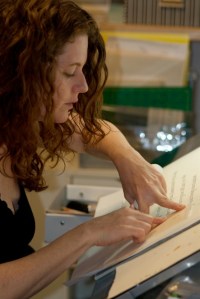
Kelly Houle at work in her studio.

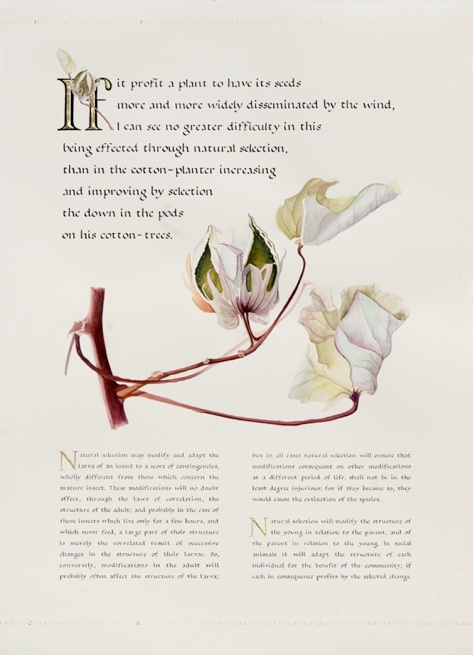
Natural history artist, calligrapher and science educator, Kelly Houle, is creating a large-scale illuminated manuscript based on Charles Darwin’s The Origin of Species. Each page will be designed as a work of art. All text will be written by hand and natural history illustrations will be illuminated with iridescent watercolors and 23-karat gold. The completed manuscript will be 22 x 30 inches and is expected to have 300 pages and over 500 illuminations.

Kelly has established working relationships with biologists and evolution experts from all over the world who will advise her during this project (see timeline). Kelly’s goal is to enhance public understanding of Darwin’s text. She explains:

I believe that the main barrier to understanding The Origin of Species is the perceived difficulty of the writing. The concepts themselves are simple, yet profound. I hope to improve understanding of The Origin by integrating poetic arrangements of Darwin’s words with visually striking presentations of the evidence. I will use elements of poetry, traditional realism, lettering art, graphic design, and fine art illustration in the service of communicating one of the most important ideas in science. 

Kelly has been raising funds on the funding website Kickstarter. Donors donating $10 or more will receive gifts of art related to The Illuminated Origin of Species. All donors will have their names written in a special section of the illuminated manuscript. In addition to individual donations, Kelly is looking for an institutional donor to fund the entire Illuminated Origin of Species project in exchange for the completed manuscript.

To read more about this project, watch a short video and to make a donation, visit the The Illuminated Origin of Species.


Related


Botanical artist, Heeyoung Kim, will begin teaching a 10-week class in botanical painting in January 2012. Do you live in the Chicago area?

Don’t miss this class by Heeyoung Kim!


Lillstreet Art Center

http://lillstreet.com
The Lillstreet Art Center offers adult classes in painting and drawing, ceramics, metalsmithing and jewelry, printmaking, textiles, glass, photography and the digital arts. View a schedule of their classes for first-time artists and for children ages 2 and up here.

    Introduction to Botanical Art & Illustration I
    Mondays, January 9 – March 12, 2012; 10 AM – 1 PM. This class is designed for beginners/advanced beginners. Fundamental watercolor techniques will be introduced, along with an introduction to botanical art history. In this ten-week class, students will also learn basic botany, which is essential for botanical artists to make their work botanically accurate. Two independent projects will be completed by each student.

    For more information, contact instructor and botanical artist Heeyoung Kim at info@PrairiePlantArt.com. Learn more about Heeyoung and view her online gallery at www.PrairiePlantArt.com. To register for this class, contact the Lillstreet Art Center at (773) 769-4226 or register online. Cost: $320 members, $330 nonmembers

This information has also been posted to Classes Near You > Chicago.

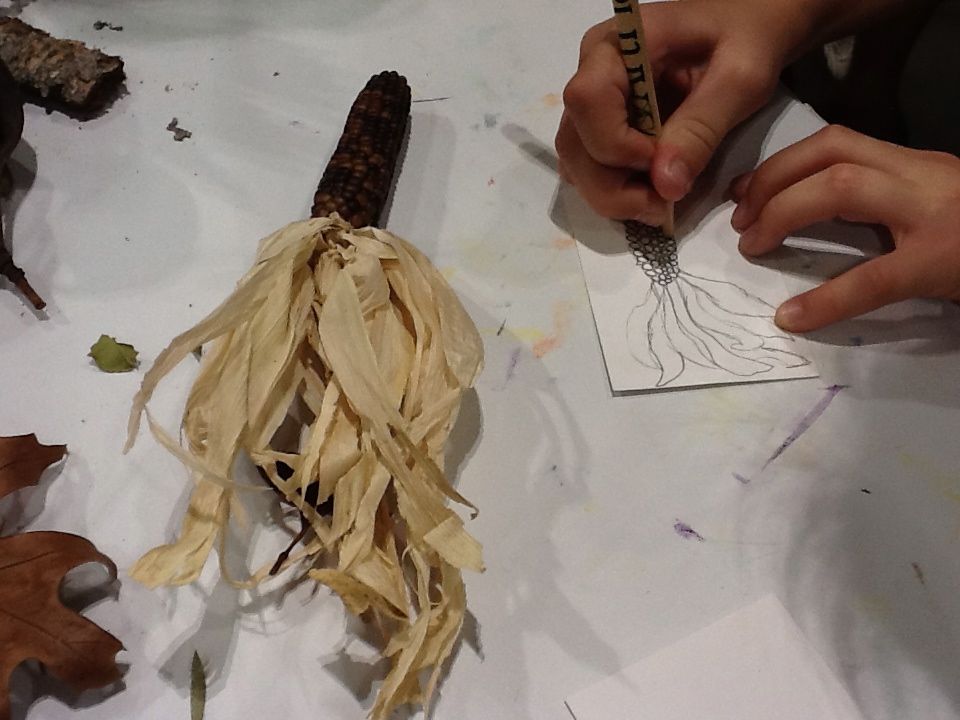
We have seen how hands-on activities and drawing activities can enhance student awareness and understanding about plants. Today we look at the effectiveness of an outdoor education program in Plants Have a Chance: Outdoor Educational Programmes Alter Students’ Knowledge and Attitudes Towards Plants.

Biologist Jana Fancovicova and ecologist, Pavol Prokop, wanted to know if plant-centered activities conducted in a nonformal environment would influence Slovakian students’ attitudes toward plants, as well as their knowledge of plants. The program they evaluated is a program that might be found at any nature preserve or nature center. Program participants were taken to a meadow where they learned about the meadow’s ecosystem and its plants. Program participants recorded their observations in a journal and discussed their observations with their instructors at the end of each session.

The participants in this study were 5th grade students, ages 10-11. The students were divided into two groups, each with 17 children. One group served as the control group and the other as the experimental group. When taken to the meadow, members of the control group did not receive any instruction and were allowed to play sports (Fancovicova & Prokop, 2011). Members of the experimental group, however, learned about the meadow’s ecology, its plants and its animals through activities lead by forest experts and a graduate student (Fancovicova & Prokop, 2011).

Students’ attitudes and knowledge towards plants was measured using the authors’ questionnaire composed of Likert-type questions. Students also completed open-ended questions, multiple-choice questions and even a drawing task requiring students to draw the meadow’s ecosystem. Students were asked to include plants, animals, soil and the sun in their drawing and Fancovicova and Prokop (2011) graded each child’s drawing by assigning 1 point for each component included in the meadow scene.

The research questions Fancovicova and Prokop (2011) wanted to investigate were:

  • Can an outdoor education program positively influence participants’ attitudes towards plants?
  • Can an outdoor education program positively influence participants’ knowledge about plants?
  • Does having a garden lead to having more positive attitudes about plants?
  • Will female participants acquire more knowledge of plants than male participants?
  • Will female participants have more positive attitudes towards plants than male participants?

A brief summary of Fancovicova and Prokop’s findings follows:

  • Outdoor education programs can positively influence participants’ attitudes towards plants. This appears to be the case even if the outdoor program is located on campus. Fancovicova and Prokop (2011) determined that expensive long-distance field trips are not necessary. They also found that their outdoor program not only changed students’ attitudes towards plants, but changed students’ appreciation for the subject of biology.
  • Outdoor education programs focused specifically on plants can positively influence participants’ knowledge of plants.
  • Having a garden is not necessarily linked to having more positive attitudes about plants. Fancovicova and Prokop (2011) suggest that a study of “active gardening” be conducted to evaluate possible links between garden ownership and one’s attitudes towards plants.
  • Female participants acquired more knowledge of plants than male participants, as was determined by their test scores.
  • Female participants’ attitudes towards plants were no different than the attitudes towards male participants.

Fancovicova and Prokop (2011) feel that to improve attitudes towards plants and to teach the value of plants, it is important to engage students in the active caring for plants, naming of plants and identification of plants. They encourage teachers to consider creating outdoor experiences on campus, as they found that travel to distant sites is not necessary. Fancovicova and Prokop (2011) recommend bringing live plants into the classroom and recommend teaching about plants using non-lecture techniques.

Fancovicova and Prokop’s detailed statistical analysis can be viewed in their article.


Literature Cited

Fancovicova, Jana & Pavol Prokop. 2011. Plants have a chance: outdoor educational programs alter students’ knowledge and attitudes towards plants. Environmental Education Research. 17(4): 537-551.

This article can be purchased online for $34 or obtained at your local library.
While this is a busy time of year, there is always time to enjoy botanical art. Below are a few opportunities to view drawings and paintings by contemporary botanical artists.

This information has also been added to the Exhibits to Visit section in the column to your right.


Put Yourself on the Map

Results from the ongoing Reader Satisfaction Survey show the Exhibits to Visit section is popular with readers. Help fellow artists, naturalists, educators and collectors find you. Send your announcements to education@artplantae.com.

Recently ArtPlantae brought its “Know Plants” message to 12,000 Girl Scouts at the Girltopia: The World of Girl event at the Los Angeles Convention Center.

There really were 12,000 Girl Scouts there. The aisles were filled with people all day and there were only two moments where there was no one at the booth. Both moments lasted less than 60 seconds. I am not exaggerating.

There were many things to do at Girltopia — from seeing plants at ArtPlantae, to attending Cookie University, to taking leadership workshops, to interacting with technology, to taking one’s photo with Justin Timberlake and Johnny Depp (thanks to Madame Tussauds Wax Museum in Hollywood).

Here are a few photos I managed to take at this incredible event.


The Reader Satisfaction Survey continues to cultivate great feedback from you. Thank you so much for your comments. I would like to address the interest some of you have about sharing books you have written &/or illustrated with ArtPlantae readers. All I can say is, don’t be shy. Send information about your book project!

Your information is always welcome. I thought I should make it obvious that the welcome mat is always out for you, so I have created a quick form for authors and/or illustrators to complete. The link to this form is now posted on this site in the column to your right, right below this sentence, and at ArtPlantae Books.

Also, please continue sending information about the classes you teach and about exhibitions of your work. Share what you do and let us know you’re out there!

One more thing…
A reader is looking for botanical art classes in New Jersey. Do you know of any?