Feeds:
Posts
Comments

© Meghan Garcia. All Rights Reserved

Botanize
Garcia.Dunn
Covington, LA
Opens April 21, 2012

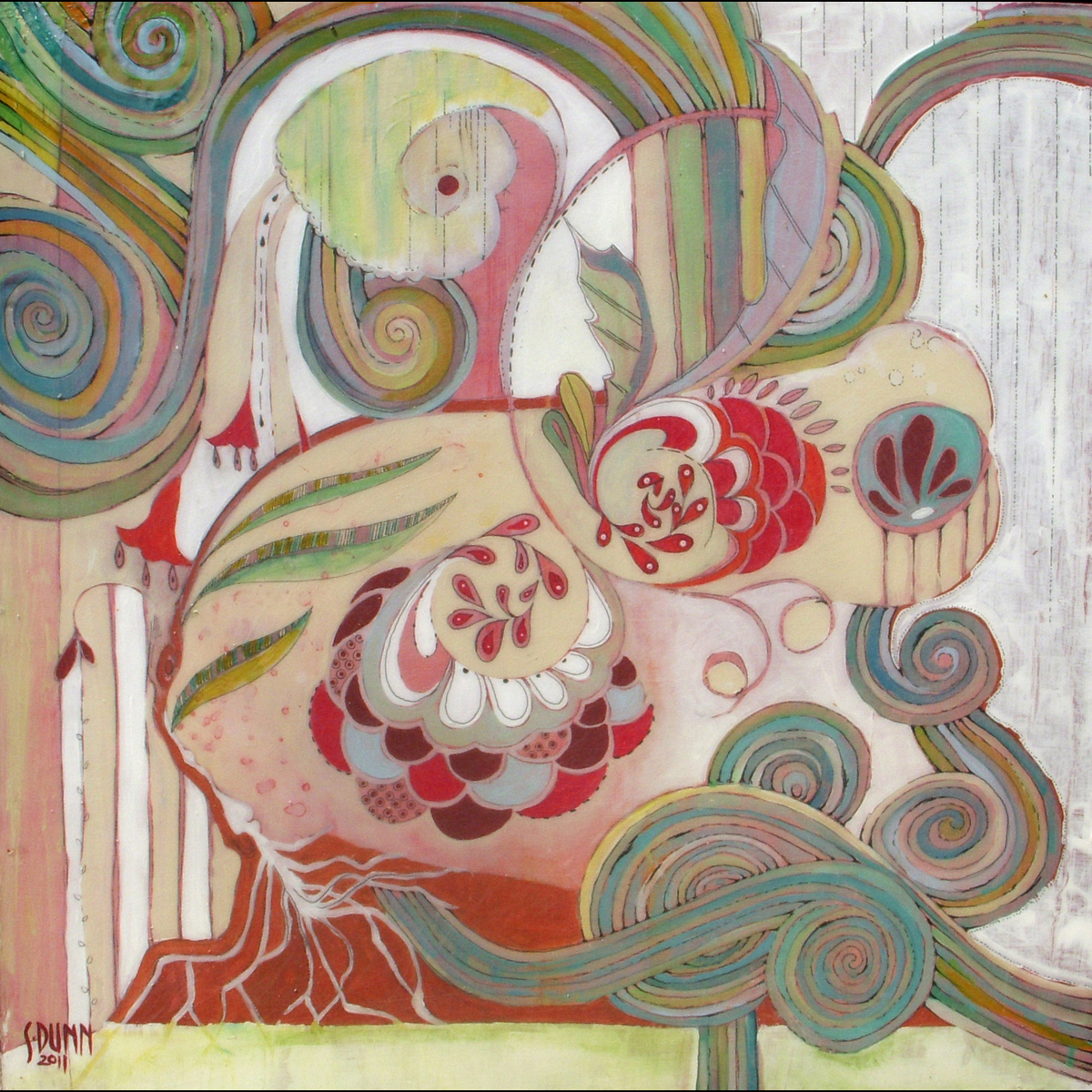
A very different kind of gallery will open this weekend in Covington, Louisiana. Actually, it’s not a gallery but a “live art home store” whose focus is to provide opportunities to “view living space as art and art as a natural part of daily life”.

Artists Meghan Garcia and Sarah Dunn will open Garcia.Dunn, a multi-functional space where they will showcase their artwork and hand-made objects and host a variety of fine art and craft classes. Garcia.Dunn will also serve as the headquarters for their community outreach activities through which they will donate art supplies to a local art program. Well-established in their community and local art scene, Garcia and Dunn will begin collecting new and used art supplies at their new space this weekend.

The opening exhibition Botanize, will feature a collection of paintings by Garcia and Dunn, as well as handcrafted lighting, home furnishings, fabrics, and flora. Botanize is inspired by the scientific discoveries of botany in the 18th century, a time when observing and recording local flora was a popular pastime. The objects produced for the show reflect an “aesthetic homage for natural and hand crafted living-design with modern sensibility”.

© Sarah Dunn. All Rights Reserved

Sarah Dunn, owner/creator of Sarah Dunn Arts and the new organic fashion line, Sweet Olivier, has been successful in the art business since opening her first gallery in 2007. Meghan Garcia is a painter and an elementary art teacher in the public school system. She has been a leader in local arts organizations and other cultural non-profits since 2006.

For more information about Garcia.Dunn, its classes and community outreach program, visit www.garciadunn.com.

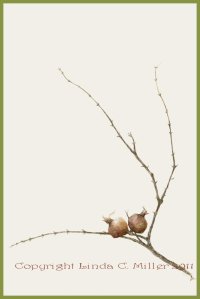
Holding On, © 2011 by Linda C. Miller. All Rights Reserved

33rd Virginia Watercolor Society Juried Exhibition
Hampton, VA
April 15 – May 27, 2012

Botanical artist Linda C. Miller, is one of the artists participating in the 33rd annual juried exhibition of the Virginia Watercolor Society (VWS) now on view at The Charles H. Taylor Arts Center in Hampton, Virginia. This premier exhibition of watercolor painters from the state of Virginia, was juried by Dan Smith. Linda’s painting, Holding On, was one of the paintings selected for the current exhibition. The 105 paintings in this year’s show were selected from 494 entries submitted by 175 artists. The exhibition encompasses a range of subjects and styles. Entries were created using transparent watercolor, gouache, acrylic and mixed media, with an emphasis on water media.

This exhibition closes on May 27, 2012. Admission is Free.

Gallery Hours are Tuesday-Friday 10:00 AM – 6:00 PM and weekends 1-5 PM.

Visit the Charles H. Taylor Arts Center for more information.

Personalized event pages are now available at ArtPlantae Books!

Why create a page for your next event?

Creating a custom page for your next class, event, book club meeting or training workshop at ArtPlantae Books can benefit you or your organization in many ways. A custom event page will allow you to…

  • Distribute an event-specific link to your participants.
  • Make it easy for registered attendees to prepare for your event or class.
  • Connect registered attendees with not only required texts, but with suggested texts as well.
  • Take advantage of the millions of titles in all subject areas available at ArtPlantae Books.
  • Offer participants a coupon code specific to your event, so they can save money PLUS get free shipping on orders over $40!
  • Take advantage of special offers ArtPlantae can share as an affiliate in various programs.

Custom event pages are a great way to prepare participants for your next event or meeting.

If a personalized event page isn’t necessary for your situation, but you still want to direct others to relevant titles in your field, consider joining ArtPlantae’s affiliate program. As a program participant, you will be able to create links to specific titles, add these links to your website and earn a commission for each sale. Find out more on the ArtPlantae Affiliate Program webpage.

For more information, please contact ArtPlantae Books.


Related

Need books? Create a wish list at ArtPlantae Books.

Georgius Everhardus Rumphius was born in 1627 in Hesse, Germany during the Thirty Years’ War (1618-1648), a conflict between the Holy Roman Empire and the Protestants. He was born at a time when formally recognized countries did not exist. There were only regions, towns and villages and one’s loyalty was to a specific village or region. If an individual strayed too far outside of their area, they were considered to be a foreigner. Plague and war almost destroyed the region of Wolfersheim, where Rumphius was born. The plague hit this region in 1628 and again in 1635. As Rumphis scholar E.M. Beekman explains, the hardships experienced by this region “reduced a population of about 5,000 down to thirty-eight adults, ten girls and six schoolboys” by 1648 (Beekman, 2011).

In 1652 Rumphus left Germany for the second, and last, time in his life. The first time, a young Rumphius was tricked into going to Brazil to fight for the Dutch (he thought he was going to Venice). This second time, though, he left on a five-year contract to work as a soldier for the Dutch East Indies Company to protect their interests in the “Spice Islands”, specifically their control over the trade of cloves, nutmeg, mace and cinnamon, “the four most lucrative spices in the world” (Beekman, 2011). During the six-month journey to the East Indies, Rumphius spent ten days at the Cape of Good Hope while his ship was being restocked after having spent 3.5 months out at sea. Rumphius’ writings suggest he began to take notice of plants during this brief visit to the Cape. Once his ship was filled with fresh food and supplies, Rumphius returned to sea. Three months later, he arrived in Batavia (now Jakarta) on the island of Java. The city of Batavia served as the headquarters of the Dutch East Indies Company. Rumphius arrived in July 1653. By early 1654, he was living on the island of Ambon, an island on which he would spend the rest of his life.

While he may have left Germany to escape war and poverty, Rumphius’ new home was also a place where much fighting occurred. From 1654-1657, Rumphius fought as a soldier in the Great Ambonese War, a war between militants and local government impacting the clove trade (Beekman, 2011). Rumphius’ military contract with the Dutch East Indies Company ended in 1657. At this time, he transferred into the company’s civil service branch.


The Naturalist

Rumphius’ life as a naturalist began when he transitioned into the civil service branch of the Dutch East Indies Company. Records show he began writing about the flora and fauna of Ambon in 1657. It appears Rumphius’ interest was rooted in simply wanting to learn more about the world around him. There appears to have been no grand plan at this time. Rumphius was merely observing, writing and illustrating. Beekman (2011) states Rumphius wrote about the specimens collected by those who worked for him, as well as the specimens brought to him by the local people. It is speculated that Rumphius paid the locals for the specimens they collected. Rumphius, who became fluent in Malay, was respected by the local people and he got along with them very well.

The tropical setting in which Rumphius would spend the rest of his life was filled with wonderful curiosities.

Next week we will learn more about Rumphius, the naturalist.


George Everhardus Rumphius is the Feature Botanist for April. The accounts of Rumphius’ life featured in this column this month are from the books by E. M. Beekman. A scholar of Dutch colonial history, Beekman dedicated many years of his life bringing Rumphius’ story to a general audience. Beekman’s thorough documentation of Rumphius’ life and his contribution to botany are being reviewed in this column specifically because Rumphius, one of the greatest naturalists of the 17th century, continues to teach through his herbal to this day.


Literature Cited

Rumphius, Georgius Everhardus. 2011. The Ambonese Herbal. Translated, annotated, and with an introduction by E.M. Beekman. New Haven, CT: Yale University Press.

All six volumes of The Ambonese Herbal are available at ArtPlantae Books.
Find out how you can view all six volumes this month.


Continue Rumphius’ story with…

Rumphius: A Naturalist for the People
Edible Plants Illustrated
Florida Society of
Botanical Artists
Venice Art Center
Venice, Florida
April 9 – May 3, 2012

The Florida Society of Botanical Artists invite you to their new exhibition!

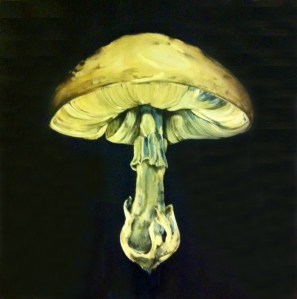
Botanical art is enjoying a renaissance and, although it often depicts far-flung marvels of the botanical world, this juried exhibition of fifteen contemporary practitioners illustrates some common and uncommon plants people have used for food both in the past and the present.

The role of botanical art is to blend the scientific study of plants with artistic presentation. The 38 works in Edible Plants Illustrated were created using watercolor, colored pencil, graphite and silverpoint, and show the wide range of media employed by today’s botanical artists.

Founded in 2005, the Florida Society of Botanical Artists (FSBA) is a chapter of the American Society of Botanical Artists.

Meet the artists this Friday at the opening reception. A reception will be held on April 13, 2012 from 5-7 PM at the Venice Art Center.

Venice Art Center
390 South Nokomis Avenue
Venice, Florida 34285
April 9 – May 3, 2012
View map


Also See…

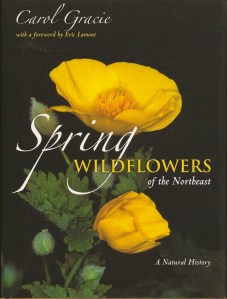
A few weeks ago, Carol Gracie wrote about how she has introduced people to the wonderful world of plants through her work at the New York Botanical Garden, as a guide of ecological tours and through her books.

Today Carol has a new way to teach people about plants! Together with her publisher, Princeton University Press, Carol has launched Wildflower Wednesdays. In this series, Carol brings attention to wildflowers growing in the northeastern United States. Carol will write about a different plant every Wednesday and share images from her wonderful collection of field photographs.

Learn more and read the first chapter of Carol’s new book for free on the Wildflower Wednesday website.

By Bonnie S. Driggers


Botanical Artists for Education and the Environment (BAEE)
, a group of botanical artists primarily in the Mid-Atlantic area of the US, have undertaken a project to publish a book of paintings about native plants. Because the destruction of native plants continues at an alarming rate, we hope our book will increase the public’s knowledge and encourage use and conservation of this vital part of our natural heritage.

The working title of the book is American Botanicals: Plants Native to the Mid-Atlantic. The book will reproduce original works of art and include text focused on the importance of each plant as a native. A jury will select artwork from digital images. The book is scheduled to be published in the fall of 2013; an exhibition will follow at the U.S. Botanic Garden in Washington, DC, in the spring of 2014. Artists will donate use of their work but retain the copyright; BAEE will retain the copyright to the book. See contact information below for more details.

Countess Clarissa Bonde, one of our Board Members and Honorary Chairman of Fund Raising, has arranged with the U.S. Botanic Garden to exhibit our paintings beginning in late spring or summer of 2014. Among the judges are Holly Shimizu, Executive Director of the USBG; Bill McLaughlin, Curator of Plants at the USBG; and Dick Rauh, Immediate Past President of the ASBA. One additional judge may be added. We are fortunate to have the support and guidance of Anne-Marie Evans of England.

Call for Entries:

    Eligibility: We are inviting all artists in the Mid-Atlantic region who are members of American Society of Botanical Artists or other botanical art organizations to participate.

    Subject: Plants native to the Mid-Atlantic defined for this project as including the states of Delaware, Maryland, New Jersey, New York, North Carolina, Pennsylvania, District of Columbia, Virginia, and West Virginia.

    Media Accepted: watercolor, graphite, pen & ink, egg tempera, colored pencil

    Submission: January 1, 2013. Entry fee: $25 for up to 5 paintings (only 3 will be selected for the book). Digital files only: 360 dpi, 8″ high, TIFF files only. Portrait orientation preferred.

    Presentation: Paintings selected should not be matted or framed; BAEE will arrange to have this done for purposes of conformity. Artwork should be created 100% life-size. Very small plants may be enlarged provided a scale is given. For the book, we hope to reduce paintings by no more than 50%. Page size in the book will be 8.5″ x 11″.

    Contact: If you are interested or would like more information, such as a list of desirable native plants, more detailed project specifications, or a brochure that gives more information about the project, please contact Bonnie Driggers, BAEE President, or Esther Carpi.