Feeds:
Posts
Comments

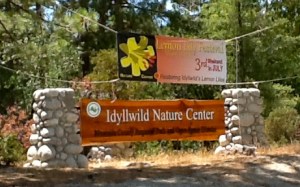
The 3rd Annual Lemon Lily Festival will be held in the mountain community of Idyllwild, CA this weekend. The festival brings attention to the small populations of the rare and uncommon Lemon Lily growing in moist areas of the San Jacinto and Santa Rosa mountains in southern California.

Education and restoration are the focus of the festival this year. Local botanists will lead nature walks on the hour from 10 AM to 4 PM on Saturday, July 21 and Sunday, July 22. There will be garden club tours, events occurring throughout the town of Idyllwild, and educational activities at the Idyllwild Nature Center.

ArtPlantae will be at the Idyllwild Nature Center this weekend from
9 AM – 4 PM on Saturday and Sunday.

Spend a lovely summer weekend in the mountains.

Join us at the Lemon Lily Festival!


Visit the Lemon Lily Festival

Become an artist/explorer in 2013!

Natural science illustrator, Mindy Lighthipe and photographer Nancy Richmond have announced their 2013 Artistic Adventure Tour to Costa Rica.

Learn about the plants and animals of Costa Rica while learning how to draw, paint and photograph the lush environment that surrounds you.

To view the complete itinerary and to view images from previous trips, click here:

Art & Photography Tour – Costa Rica

NEW!
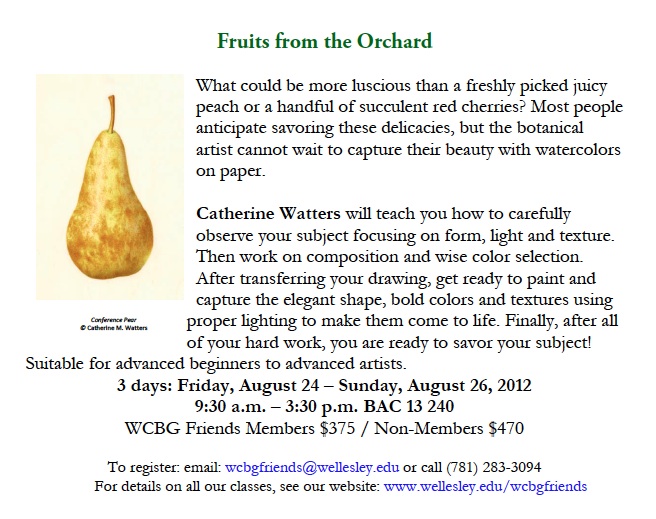
Fruits from the Orchard
August 24-26, 2012

In this three-day class, Catherine Watters will teach you how to capture the the elegant shapes, fine textures and bold colors of fresh fruit. For advanced beginners to advanced artists. Cost: $375 WCBG Friends Members, $470 non-members. Download Details

Here is what else you’ll find at Wellesley College Botanic Gardens:


Friends of Wellesley College Botanic Gardens
Certificate Program in Botanical Art and Illustration

www.wellesley.edu/wcbgfriends
This program offers several weekly and two- or three-day classes on botanical art and scientific illustration with Sarah Roche and Jeanne Kunze and seminars with visiting instructors including Susan Fisher, D. L. Friedman, Kathie Miranda, Carol Ann Morley, Kate Nessler, Elaine Searle, Catherine Watters and more. The courses offered through this program cover all aspects of botanical art. The following is only a glimpse of what this program offers:

  • Foundations of Botanical Drawing and Painting
  • Techniques of Botanical Drawing and Painting
  • Plant Drawing for the Petrified
  • On Location: Daylilies with Sarah Roche
  • Fruit from the Orchard
  • Botanical Painting on Vellum
  • Flowers as They Grow
  • Playing with Transparency: Colored Pencil on Mylar
  • View current schedule & instructor bios


Additional Learning Opportunities

Daylilies at Collamore Field Gardens – July 17-19, 2012; 9:30 AM – 3:30 PM. Learn about daylilies at Collamore Field Gardens, an American Hemerocallis Society Display Garden featuring over 650 varieties of daylilies. Sketch lilies in the garden during peak bloom and learn how to transform your sketch into a watercolor painting in the studio. Botanical artist and instructor, Sarah Roche, will show you how! Cost: WCFG Friends Members $225, Non-members, $275. To register, contact wcbgfriends@wellesley.edu or call (781) 283-3094.

Introduction to Botanical Art – Mondays, August 13-17, 2012; 9:30 AM – 2:30 PM. Explore the world of botanical art in this course designed especially for beginners. Sarah Roche guides your experience through structured exercises, projects, and demonstrations. She exposes you to the basic techniques and methods of botanical drawing and watercolor painting. If you have an interest in plants and botany and a yearning to record what you see on paper, then this class is for you. Sarah Roche is a botanical artist and teacher and the Education Chair of the American Society of Botanical Artists. Cost: $250 WCBG Friends Members, $300 Nonmembers. Download Details

NEW! Fruits from the Orchard – August 24-26, 2012; 9:30 AM – 3:30 PM. In this three-day class, Catherine Watters will teach you how to capture the elegant shapes, fine textures and bold colors of fresh fruit. For advanced beginners to advanced artists. Cost: $375 WCBG Friends Members, $470 non-members. Download Details

This information has also been posted at Classes Near You > Massachusetts.

The disciplines of science and art are intertwined in more ways than you can imagine. The benefits of using art to communicate science is articulated beautifully in Communicating Science Concepts Through Art: 21st-Century Skills in Practice by Sandy Buczynski, Kathleen Ireland, Sherri Reed, and Evelyn Lacanienta.

In an article published two weeks ago, Buczynski et al. (2012) explain how it is necessary for the next generation of scientists to communicate using more than words. They explain that the scientists of the future will need to use artistic means of communication that include “illustrating, animating, videography, cartooning, and model building” (Buczynski et al., 2012).

To show how art can be used to reinforce learning in science, they cite the results of their work with students at a college prep academy. Students were taught how to use fundamental art techniques as tools to aid their comprehension of science content.

Buczynski et al. (2012) explain how they and the academy’s art teacher put into practice the five conceptual art strategies identified by Julia Marshall (2010). The academy’s art teacher taught students how to draw, how to observe angles, how to observe positive and negative spaces, and how to observe patterns and textures (Buczynski et al., 2012). Students were also taught how to shade, how to create form and how to apply highlights using colored pencils, graphite pencils, charcoal and ink pens (Buczynski et al., 2012).

The authors then incorporated Marshall’s art strategies into lessons about the human body, the scientific process, science communication through popular culture, and botanical exploration.

Briefly, here are the conceptual art strategies Buczynski et al. (2012) used and how they used them:

  • Depiction – Seventh-grade students were asked to apply their new knowledge about “scale, shadow and proportion” (Buczynski et al., 2012) to observe and draw the human body. This strategy was employed to move students away from the usual “stick figure”-type of thinking often observed in science lab notebooks.
  • Projection – Students were asked to predict the outcome of a scientific event using hand-drawn images instead of words.
  • Reformatting – Utilizing art forms from popular culture, students were asked to reformat scientific content into “a comic book, magazine, advertisement or film” (Buczynski et al., 2012).
  • Mimicry – Students were assigned the task of becoming botanists by mimicking how botanists collect information in the field.
  • Metaphor/Analogy – Students were asked to create a visual metaphor to describe how the digestive system works.

Buczynski et al. (2012) explain how they evaluated student work and what they learned from implementing each of these strategies. To learn more about their study, visit your local college library to get a copy of their new article or buy this article online for 99¢ from the National Science Teachers Association.


Real-life Science Communicators

This week I had the opportunity to attend the annual conference of the Guild of Natural Science Illustrators (GNSI). As expected, my appreciation for what scientific illustrators do has increased yet again. Scientific illustrators are a significant force in the field of science communication and their contribution to this field knows no bounds. From children’s books, to outdoor sculpture, to magazines, to cultural exchange (take the virtual tour), they make science and the natural world easier to understand through everything they do.

This year the conference theme was Scientific Illustration: Frontiers Past and Future. Featured were presentations about explorers and natural history artists from the past and presentations about how scientific illustration is used and created today in the 21st century.

Learn more about the Guild of Natural Science Illustrators at www.gnsi.org.

Looking for a scientific illustrator to work on a project? Visit Science-Art.com, a resource connecting artists and art buyers in the nature, science and medical community.

The host of the GNSI conference this year was the Savannah College of Art & Design (SCAD). The Illustration Department at SCAD offers a minor in scientific illustration and is doing their part to create the next generation of science communicators. Learn more about this wonderful school and their students at www.scad.edu.


Literature Cited

    Buczynski, Sandy and Kathleen Ireland, Sherri Reed and Evelyn Lacanienta. 2012. Communicating science concepts through art: 21st-century skills in practice. Science Scope. 35(9): 30-35.

    Marshall, Julia. 2010. Five ways to integrate: Using strategies from contemporary art. Art Education. 63(3): 13-19.
One of the things I admire about the paintings of featured guest, Heeyoung Kim, is their fullness and how three-dimensional they look. I asked Heeyoung how she teaches her students to see in three dimensions.

Here is her reply…

Today, featured artist Heeyoung Kim talks about her work in progress.


Heeyoung, since it is not always possible to document a plant’s life cycle in one season, I assume you must have paintings on hold. How many drawings or paintings do you have in-progress at any given time?


Heeyoung
:

Right now, 58 drawings and paintings are in progress.

Early spring flowers are very difficult to finish up as a serious painting. They bloom very early when the weather is still too severe for me to sit hours in the woods. Quite often we have snow which damages the fragile spring flowers, or shorten their blooming time. And too many flowers bloom all together, which makes me feel just hurried, but not doing a lot. So I have a lot of drawings started, but never have enough time to color them.

Mid-summer plants are also challenges. I have to stop going to the woods when it is too hot and too buggy and ticks are all around. When you find 7 ticks from your hair, you say, “Oh My God! Let’s stop!”

I am thrilled, though, thinking of the day when I finish all of them.


Do you have field projects in progress? Tell us what you’re working on!

Here is the latest at Classes Near You > England :


Highgate Literary & Scientific Institute

www.hlsi.net
Cultural arts center and library in London founded in 1839. In addition to their courses in botanical drawing and painting, the Highgate Literary & Scientific Institute offers courses in art, art history, ancient and modern languages, music appreciation and the history of London.

    Botanical Drawing & Painting with Sandra Wall Armitage
    Mondays, September 24 – December 3, 2012; 2:30 – 4:30 PM. Study shape, color, texture and the structure of plants in this introductory course taught by Sandra Wall Armitage. Cost: £80, members, £90 non-members.
    View Details/Register