Feeds:
Posts
Comments

Writer, producer, photographer, and educator, Anna Laurent, connects people with plants through her writing, research, and design work.

A native of New England and Harvard graduate, Anna moved to Los Angeles four years ago. Soon after, she became
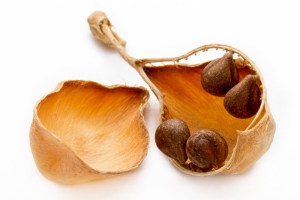
Isomeris arborea (Bladderpod). © Anna Laurent. All rights reserved

fascinated with the diversity of plants that could be found in California. Anna says it took moving to L.A. for her to notice plants.

And notice plants she has!

In 2008, Anna launched a personal project in which she began to collect seed pods (seeds and fruits) in her Hollywood neighborhood. Curious observers would occasionally ask her what she was doing. As Anna explained the seed pods she was collecting, she developed an interest in their diverse forms and universal functions. Her audience always appreciated the information she shared with them. That same year, Anna was approached by Print magazine to write a column. She chose to write a column about the form and function of seed pods and the role they play in a plant’s life cycle. She named the column Botany Blueprint and published articles about seed pods from September 2010 through June 2012. Her seed pod articles are now published on her website. Anna’s goal is to tell the stories of 100 seed pods and then publish this information, plus much more, in her new book, The Form and Function of Seed Pods (expected in 2013). The project’s geographic range has grown as she’s been partnering with botanic gardens and arboretums across the country, including Harvard’s Arnold Arboretum, Genna Walska’s Lotusland, the Hawaii Tropical Botanic Garden, and Queens Botanical Garden.

Increasing public knowledge about plants is at the heart of everything Anna does. In addition to collecting seed pods and writing for Botany Blueprint, Anna writes two weekly columns for Garden Design magazine. Her Art + Botany column focuses on plant-related art themes and her Botanic Notables column brings attention to a wide range of interesting stories about plants. Other projects she’s pursuing include a digital field guide to botanical gardens that gardens can use to teach visitors about plants and their respective collections.

I recently had the opportunity to speak with Anna about how she educates the public about plants through her creative projects.


ARTPLANTAE
: How did you come to realize that botanical literacy was something you wanted to dedicate yourself to?

ANNA LAURENT: My projects now are a culmination of my previous work. I studied literature and biological anthropology in college, in particular, evolutionary mechanisms and behaviors. I spent the next years photographing, writing, and working on documentary media projects. Finally, when I moved to L.A., my interest in the natural world returned.
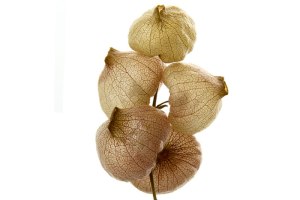
Salazaria mexicana (Paperbag Bush). © Anna Laurent. All rights reserved

The diversity of plant life in southern California — species native to tropical, desert, temperate, and riparian (water) regions – blew my mind. I realized how little I knew about the plants around me, and that didn’t seem right. So I began taking lots of walks and hikes and just looking at plants. I was fascinated by the diversity of structures — flowers and seed pods — that work in different ways to accomplish the same ends; namely, attracting pollinators, repelling predators, and dispersing seeds. I also observed the way they interact with our built environment, and with each other. One of my favorite relationships was in front of my apartment – a wisteria vine embedded around a fig tree. They were battling it out through a gap in the pavement; neither had been planted by human hand. Both plants are really strong, which was fascinating, and appropriate. It was a tableau of botanic heavyweights. Plants are quiet and slow, so finding the drama requires a bit of patience, but it’s there. Botanic gardens are a fantastic place to learn about plants, of course, and I also love observing plants in the wild – observing species that make their way through sidewalk cracks, that populate disturbed areas, that crawl over fences in abandoned spaces. It’s so thrilling when you begin to notice it all.


AP
: In what ways do you hope to promote botanical literacy?

AL: Every plant has a story, and I hope to encourage people to ask questions that begin to unravel that story. How did this individual plant happen to germinate at this particular location (e.g. Did the seed float by on a breeze?, Was it carried by an unwitting animal?)? When were the seeds of the species introduced into the region? What behaviors and structures has the plant evolved in its native habitat? What are the plant’s ethnobotanical uses? How has the plant been culturally referenced — have authors employed it as a metaphor, have countries adopted it as a national symbol?

Learning about plants offers a unifying perspective on history and space.
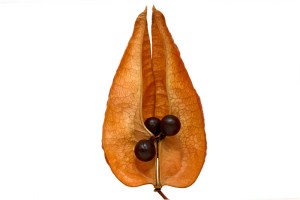
Koelreuteria paniculata (Golden Rain Tree). @Anna Laurent. All rights reserved

By following the historical arc of a plant’s evolution, and its cultural associations, we build unity between the modern era and our past. And plants also unify our disparate geographies. When I traveled to Iraqi Kurdistan last year, it was fascinating to see hollyhocks and oleander — plants I associate with southern California gardens — growing wild in the mountains and to learn about how people perceive them. Kurdistan is a pastoral region, which means that human settlements have evolved closely with plants. Knowledge is passed through generations, and plants are deeply embedded in the culture. I was told that the First Lady of Iraq was named for the hollyhock, and I heard a folk story about an early village that wielded oleander poison to defend against invasion. The oleander is still highly regarded today.

In the United States, there is a luxurious buffer between people and plants. We generally live amidst cultivated plants that don’t pose a significant threat, and we have pharmacies and markets that have packaged our plant-derived plants, so botanical literacy isn’t all that necessary for survival. At the same time, plants are nonetheless embedded in our lives, and it’s so important to understand how they behave, and what stories they carry with them.

Acacia podalyriifolia (Pearl-Wattle). @Anna Laurent. All rights reserved

In my seed pod project, I examine seeds and fruits, asking questions such as: Why is this seed red? (Often because birds are the plant’s preferred dispersal agent), Why does the seed pod stay attached to the parent plant for so long? (This often occurs in vines and plants that tend to grow on sloping areas, so when the seeds mature, they have a little momentum when they hit the ground, and will travel farther). After I collect the specimens, I photograph them and write about their form and function. I am thrilled to have partnered with botanic gardens, receiving permission to collect at their gardens. I then put together an exhibit of the photographs to promote the garden’s collection and educational mission.


AP
: Your mobile field guide app project is very interesting. Can you describe briefly what you would like to accomplish with your guide?

AL: I wanted people to have access to the stories behind each plant. When you visit a botanical garden, you see a plant in a single cycle of its life,
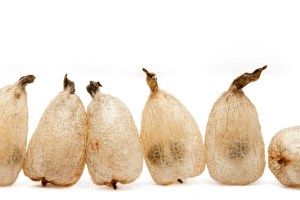
Astragalus fasciculifolius (Milkvetch). © Anna Laurent. All rights reserved

and there is rarely room for more than a name label. The digital field guide will enable visitors to view all aspects of a plant’s life cycle and to learn more about the plant. Plants can be identified through a map of the garden, but the app can also be used off-site to browse plant profiles. I find botanic field guides to be lovely bedtime reading.


AP
: How did you get started in journalism?

AL: I’ve always been a writer, and writing has been a significant component of everything I’ve worked on — companion content for photojournalism essays, grants for documentary films, typeface reviews for Print magazine. My writing now is really no different, I am just doing a lot more of it, and I am able to focus on one broad topic that I love. I’m really enjoying figuring out how to describe plants in new ways, and the process of writing about them inevitably gives me a greater appreciation of the species in particular and the plant world in general.


AP
: What have you been working on lately?

AL: For the past year, I’ve been working on a documentary media project, The Iraqi Seed Project. Looking at the agricultural landscape in modern-day Iraq and Kurdistan, it asks why farming is disappearing in the land where it was born. We bring into focus the region’s botanic legacies and current efforts to restore the Fertile Crescent. We just launched a website with clips from three years of filming. The video player is poised over a farm with seeds of the region’s historically major crops. We call the site a collective garden; every time a video is watched, a plant grows a little bit. The idea is that by learning about Iraq’s farmers and plants, we are helping their crops grow anew. It’s a nice metaphor.

Aristolochia fimbriata (White-Veined-Dutchman’s-Pipevine). © Anna Laurent. All rights reserved


Links updated 8/22/19

In Memoriam – Anna Laurent (1979 – 2024)

https://www.instagram.com/anna__laurent/

Landscape architect, native plant enthusiast and artist, Lynne Cunningham, teaches people how to see patterns found in nature. This September, she will lead a class about seeing patterns and recording them with acrylic paint.

Here is what’s new at Classes Near You > Northern California:


Lynne Cunningham

Lynne has shown in 40 solo and group exhibits including 3 museum shows. Trained as a design professional (BSLA, College of Architecture and Environmental Design, Cal Poly SLO), she has painted for 8 years. Painting is her passion. Awards include first place for landscape paintings and two artist residencies for painting (2007 and Summer 2012). Her workshops are known for opening windows to individual development and big inspiration. Lynne paints in different styles and can respond to the different backgrounds of her students. She is represented in galleries in northern and southern California.

    Nature in the Abstract – September 15-16, 2012; 9:30 AM- 4:30 PM. Immerse yourself in Nature’s patterns! Experiment with acrylics and abstracts based on life forms. Explore abstracting the patterns in nature by beginning with composition, then progress to the contrast of form and light in woodlands and the patterns found in waterscapes and gardens. Techniques are demonstrated to achieve painterly effects of texture, drama, spontaneity and the key to acrylics — blending edges. Visual concepts, demonstrations and small paintings fill the first day. Then a full day of painting and one-on-one teaching on the second day. Open to artists of all levels. Participants will paint flat on a support board, on gessoed watercolor paper. Prerequisite: Knowledge of mixing colors and the color wheel. An optional Friday evening get-together with visual presentation begins at 5:30 PM in the Nichols Gallery at Mendocino Art Center.
    View Details/Register

Do you use an electric sharpener?

A wall sharpener?

A pocket knife?

I know of one person who believes strongly that wooden pencils should only be sharpened by hand. For this reason, and because I like pencils myself, I could not resist reading the book How to Sharpen Pencils by David Rees.

Part humor and part reference,
How to Sharpen Pencils is an informative little book about the #2 pencil. Rees reviews the anatomy of a pencil, discusses different types of pencil sharpeners, and shows how to carve four different pencil points with a pocket knife. For the pencil enthusiast, Rees lists various pencil-related resources in the appendix of his book. One resource is his website, www.artisanalpencilsharpening.com. The other resources are about vintage pencils, antique pencils, pencil industry news and blogs written by pencil enthusiasts.

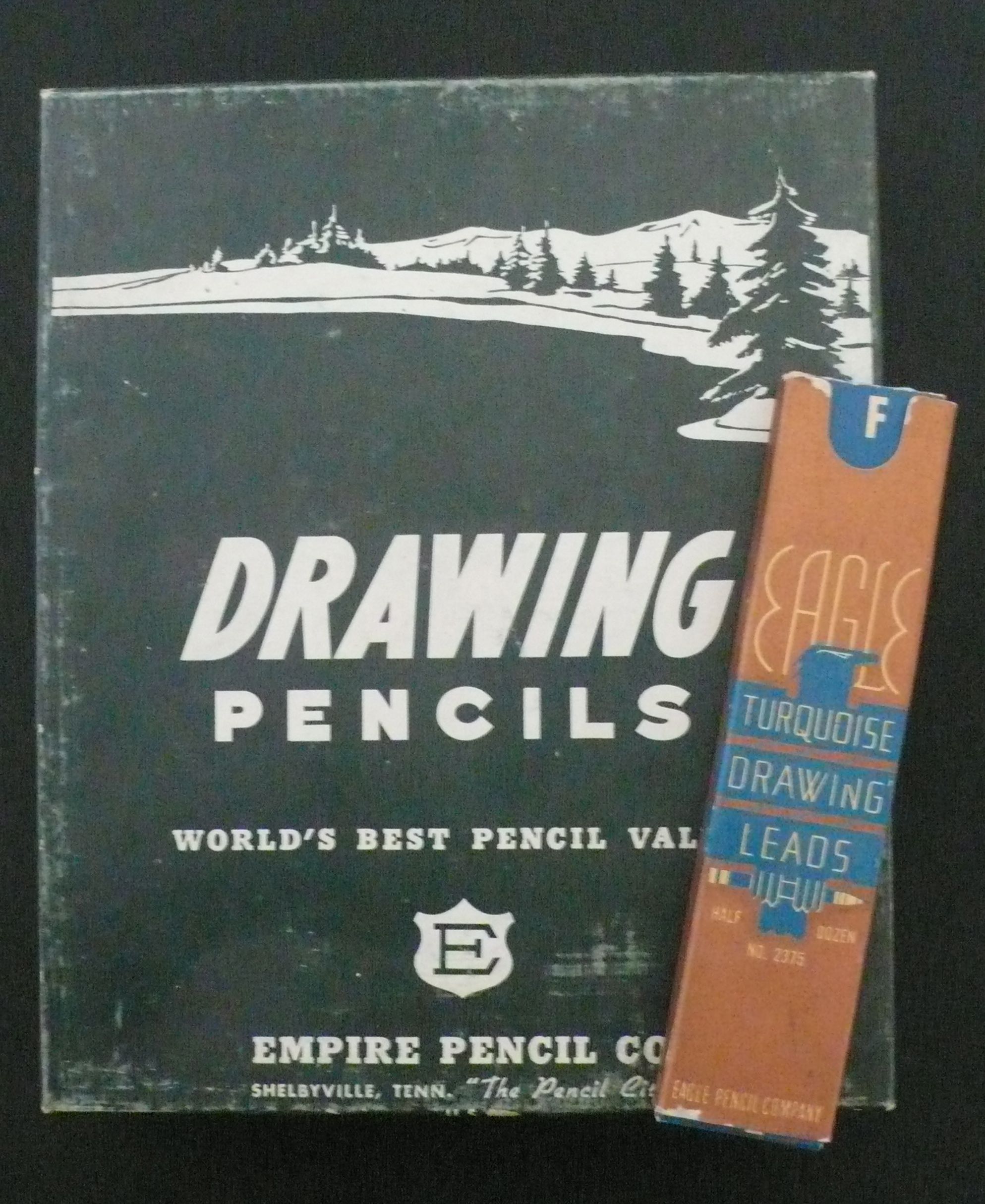
Because I have a thing for pencils (yes, those are my pencil boxes), I did not hesitate to ask David to sharpen an ArtPlantae pencil. I sent David one of my beautiful natural wood, unpainted pencils and a check for $15 so that my pencil could be sharpened with his pocket knife and so that I could include a photo with this post (David takes orders online).

Not too long afterwards, I received…

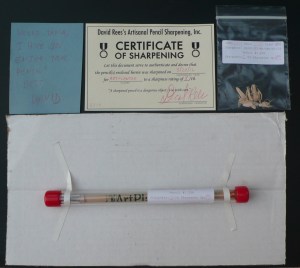
Pencil sharpened by David Rees.

… a note, a Certificate of Sharpening, the shavings from my pencil and a very sharp ArtPlantae pencil encased in a tube.

All now have a special place in my library.

Do you need your pencil sharpened?


How to Sharpen Pencils is available at ArtPlantae Books. Save 20% ($3.99)

Botanical artist and teacher, Margaret Best announces a new series of evening and weekend classes in drawing and botanical art. Here’s the latest at
Classes Near You > Canada:


Margaret Best

www.bestbotanical.com
Margaret Best is an award-winning artist and respected teacher. Her artwork has been shown in many exhibitions about contemporary botanical art and is featured in the book, Today’s Botanical Artists, by Cora Marcus and Libby Kyer. Margaret teaches in Canada, England, Bermuda, Italy, Morocco and the United States. Her work is held in both public and private collections, including The Hunt Institute for Botanical Documentation at Carnegie Mellon University in Pittsburgh, PA. Visit Traditional Botanicals to buy prints and cards of Margaret’s paintings.


    Evening Botanical Drawing Classes

    August 1, August 8, August 22, 2012
    Peartree Studio, Calgary
    Drawing classes for a variety of botanical subjects. Suited to beginners as a place to start. Excellent regular drawing practice for intermediates and advanced artists. Will be ongoing until the end of November. Further dates to be announced. Cost: $48 Cdn each class. View Details/Register


    Saturday Studio Sessions

    August 11 and 26, 2012
    Peartree Studio, Calgary
    Full day sessions for participants to start or continue with a botanical study in medium of choice. Will be ongoing after 1 October, dates to be announced. Cost: $89 Cdn each session. View Details/Register


    3-day Weekend Workshop

    August 17-19, 2012
    Ralph Klein Park, Calgary
    The topic is Putting a Light on your Subject. This workshop will focus on the impact of a direct light source on a botanical subject in terms of highlights, reflected light and shadow. Open to both coloured pencil and watercolour mediums. The participants will be enjoying the benefits of a remarkable art studio at the new Ralph Klein Park, a location dedicated to the preservation of wetlands and clean water systems. The RKP Center is co-sponsoring the event for the members of the newly-formed Botanical Artists of Southern Alberta. The event is open to members and non-members. Cost: $ 285 Cdn. View Details/Register


    Mixing Natural Green and Painting Leaves
    (SOLD OUT!)
    September 26-28, 2012. Filoli, San Francisco.


    The Colors and Fruits of Fall
    – October 12-14, 2012
    Cross Conservation Center (CCC), Calgary
    This 3-day weekend workshop will focus on earth color pigments in watercolors and all the rich colors that we see in nature in fall. Subject matter will be the berries, rose hips, pods and seeds, curling leaves and grasses. CCC is kindly cosponsoring this event for the members of BASA. The event is open to both members and non-members. Cost: $ 285 Cdn. View Details/Register


    Fabulous Foliage – Watercolor

    November 2-5, 2012
    Bermuda Society of Arts, Hamilton, Bermuda
    A 4-day intensive workshop using the incredible variety of shapes and colors of tropical and subtropical leaves of Bermuda. The focus will be on how to capture natural green color and how to achieve surface texture, vein structure, curling, foreshortening. If you have always wanted to master the art of painting leaves, this is a class not to be missed. Bermuda is only a 2.5 hour flight from Toronto. For more information, contact the Bermuda Society of the Arts


    Painting in Morocco (w/Talks by Ethnobotanist Gary Martin)

    April 22-30, 2013. This incredible botanical art experience has been arranged in conjunction with Quench Travel. Included is instruction by Gary Martin, renowned ethnobotanist and the author of Ethnobotany: A Methods Manual. Enjoy five nights in luxury accommodations, three nights in a mountain retreat, meals prepared by gourmet chefs and highly personalized instruction from Margaret Best. Intrigued by this new adventure in botanical art? Download the itinerary to learn more.

There was much interest in last week’s article about the art strategies that can be used to enhance science communication, so I thought we’d take a few moments looking at the strategies that were used by Buczynski et al. (2012). The strategies they used came from Julia Marshall’s paper, Five Ways to Integrate: Using Strategies from Contemporary Art.

In her article, Marshall (2010) cites studies explaining how integrating art with other disciplines is worthwhile. She also provides teachers with specific ideas on how to integrate art into all subject areas.

The strategies defined by Marshall (2010) have one thing in common — they are strategies artists use “to manipulate ideas and imagery to make meaning” (Marshall 2010). Through the manipulation of ideas, artists re-frame information in direct or creative ways. Here is a quick look at these strategies and how they enhance learning.

    Depiction:
    A straightforward approach that involves drawing or creating from observation. Scientific illustration and botanical illustration fall into this category. According to Marshall (2010), this strategy is appropriate to use with all ages (preschool to adult) and aids in learning because it requires a learner to observe a subject, reproduce a subject and reflect upon the subject’s construction.


    Extension/Projection
    :
    This strategy calls upon artists to make predictions — to reflect on how a situation will change or to reflect on what might be possible. The implementation of this strategy aids learning because it requires learners of all ages to study an idea before they can think about how it could change (Marshall, 2010).


    Reformatting
    :
    This strategy requires learners to see things in a new context. Doing so is beneficial to learning because seeing a subject or a concept in a different way results in a new understanding of the subject or concept (Marshall, 2010). This strategy can be used in middle school and high school classrooms (Marshall, 2010).


    Mimicry
    :
    Mimicking the methods of others is simply doing what others do. Mimicking is beneficial because it provides an opportunity for experiential learning; this strategy can be implemented in grades K-12 (Marshall, 2010).


    Metaphor
    :
    The creation of metaphors requires identifying differences between similar entities. Creating metaphors aids learning because it requires analytical thinking and provides a way to identify connections between disciplines (Marshall, 2010). Marshall states this strategy is best used with high school students.

To learn more about each of these strategies, read suggestions about how they can be used in the classroom, and to view examples of art created through the use of these strategies, download a copy of Marshall (2010). A link to her paper is available on the website of the College of Performing and Visual Arts at the University of Northern Colorado.


Literature Cited

Marshall, Julie. 2010. Five ways to integrate: Using strategies from contemporary art. Art Education. 63(3): 13-19. Web.
http://www.arts.unco.edu/ciae/institute/documents/Articles/Marshall-Five%20Ways%20to%20Integrate.pdf
[accessed 19 July 2012]


You May Also Enjoy…

See what’s new at Classes Near You > Ireland!


Lismore Castle Arts

www.lismorecastlearts.ie
Located at Lismore Castle in Ireland, Lismore Castle Arts hosts exhibitions year-round in a state-of-the-art-gallery that was once the neglected west wing of the Castle. The gallery now showcases contemporary visual art, while paying respect to the castle’s long history.

    Botanical Illustration with Patrick O’Hara
    Tuesday, August 7, 2012
    10 AM – 4:30 PM
    Patrick O’Hara is a botanical artist who works with watercolor and porcelain structures. When creating his art, he takes special note of how plants grow and the relationships plants have with insects and other animals. In this one-day class, Patrick will lead participants on a walk through the garden to demonstrate how he documents plants in the field. Back in the classroom, Patrick will guide students as they work on individual projects. Cost: €50, Light lunch included. View Details/Register

    Patrick is currently painting California wildflowers on a commission through the Santa Barbara Botanic Garden. Readers in Europe can view and purchase Patrick’s wildflower paintings on his website. Readers in the U.S. can view and purchase Patrick’s paintings through the online store at the Santa Barbara Botanic Garden.

Here is only a hint of the botany and botanical art classes one can take at the North Carolina Botanical Garden.

See what’s new at Classes Near You > North Carolina:


North Carolina Botanical Garden

www.ncbg.unc.edu
Through the Garden’s courses in botany and botanical art, anyone interested in plants and how to draw and paint them will receive a well-rounded education enhancing their scientific understanding of plants, their knowledge of visual arts theory, and how to approach drawing and painting plant portraits. Upcoming botany and botanical art classes include:

  • Botany
    Saturday, August 4, 11, 18, 25, 2012; 9:15 AM – 1:15 PM.
  • Drawing for People Who Think They Can’t Draw
    Saturday, August 18, 2012; 1:00 – 4:30 PM.
  • Intro to Botanical Illustration
    Saturdays, August 25, 2012; 1:00 – 4:30 PM.
  • Beginning Drawing
    Mondays, August 27 and September 10, 17, 24, 2012; 1:00 – 4:30 PM.
  • Beginning Watercolor
    Tuesdays, September 4, 11, 18, 25, 2012; 1:00 – 4:30 PM.
  • Plant Ecology
    Wednesdays, September 5, 12, 19, 26, 2012; 9:30 AM – 12:30 PM.
  • Fall Leaves in Colored Pencil
    Saturday, September 8, 2012; 1:00 – 4:30 PM.
  • Field Sketching
    Mondays, October 1, 8, 15, 22, 2012; 1:00 – 4:30 PM.
  • Introduction to Mushrooms
    Wednesday, October 3 and Saturday, October 6, 2012.
  • Lichens
    Saturday, October 13, 2012; 9 AM – 3 PM.
  • Dendrology
    Wednesdays, October 31 and Nov. 7, 14, 28, 2012; 9:30 AM – 3:30 PM.
  • Flowering Plant Families
    Sundays, November 4, 11, 18 and December 2, 2012; 1:30 – 4:30 PM

View course schedule at North Carolina Botanical Garden