Feeds:
Posts
Comments

Archive for the ‘Teaching & Learning’ Category

© 2005 ArtPlantae Artist's Herbarium, Hippeastrum flower

© 2005 ArtPlantae Artist’s Herbarium, Hippeastrum flower

Here is a wonderful idea that can be used at schools that do not have the room or the funds to create a garden.

In 2004, undergraduate student Stefanie Lawniczak and professors D. Timothy Gerber and Judy Beck pilot tested a program enabling teachers and students to have direct access to plants at their schools. This program was created around three of the twelve principles of plant biology established by the American Society of Plant Biologists (#4, #7, #12) (learn more, get bookmarks).

Lawniczak et al. applied the National Science Education Standards to these principles and created five themed plant displays. The themes they chose to address were: Environment, Plant Families, Plant Organs, Growth & Reproduction and Plant Origins. Displays were placed in the media centers at three elementary schools and were left in place for 10 weeks. The theme of each display changed every two weeks. Teachers were invited to use display plants as subjects for their classroom studies and students were invited to drop questions in an “Ask a Botanist” box. At the end of the 10-week program, teachers received surveys and were asked to share their thoughts and experiences. Lawniczak et al. received positive feedback from teachers, as well as helpful recommendations about how to improve their displays.

Learn how each themed display was created and get a list of the easy-to-find plants (e.g., orchids, geranium, Hippeastrum) used in each theme.

Order a copy of Plants on Display at the NSTA Store for 99¢.


Literature Cited

Lawniczak, Stefanie and D. Timothy Gerber, Judy Beck. 2004. Plants on Display. Science and Children. 41(9): 24-29
Read Full Post »

Lightbulbs. Cereal. Sandwiches.

This is what some kindergarten students cited as factors necessary for plant growth.

This and other interesting insights into what young students think about plants are revealed in Understanding Early Elementary Children’s Conceptual Knowledge of Plant Structure and Function through Drawings by Janice L. Anderson, Jane P. Ellis and Alan M. Jones.

Anderson et al. (2014) chose to investigate the conceptual knowledge of plants of K-1 students because, at this age, children are busily constructing explanations about what they see. The authors chose to analyze students’ drawings of plants for three reasons: 1) drawings enable young children to express what they cannot articulate verbally, 2) drawings offer insight into what children think, and
3) drawings offer insight into children’s stage of development with respect to conceptual thinking (Anderson et al., 2014).

The research team investigated student knowledge of plant structure and function specifically. They did this by creating a three-stage investigation. The data-collecting tools they used were a Draw-A-Plant instrument (based on the Draw-A-Scientist instrument), a plant survey, and interviews (Anderson et al., 2014). Study participants were K-1 students (n=182) from an elementary school in the southeastern United States.

Anderson et al. (2014) explain their research methods in detail, including how they coded student drawings. You can read about these methods in their paper. Today I provide only general insight into their findings.

Anderson et al. (2014) observed that:

  • Young students have some basic understanding of plant structure and function.
  • Young students have misconceptions about plants.
  • Some teachers spend more time discussing plants with students than others.
  • Some students learn about plants outside of the classroom.
  • Flowers and flowering plants are drawn most often.
  • Young students can identify the simple needs of plants.
  • Young students often exclude soil from their drawings.
  • Students sometimes demonstrate more plant knowledge in conversation than through drawing.
  • There is a lack of advanced conceptual knowledge about plant structure and function in young students.
  • Student interviews help researchers interpret their findings.
  • Students drawings provide insight into students’ life experiences.
  • There is a need to involve students in more inquiry-based activities about plant structure and function.

The paper by Anderson et al. (2014) is available for free through an Attribution-Noncommercial-Share Alike 3.0 Unported Creative Commons License. Click on the link below to download a PDF copy of the article that includes supplementary materials used in this project.


Literature Cited

Anderson, Janice L. and Jane P. Ellis, Alan M. Jones. 2014. Understanding Early Elementary Children’s Conceptual Knowledge of Plant Structure and Function through Drawings. CBE – Life Sciences Education. 13(3): 375-386. Retrieved from http://www.lifescied.org/content/13/3/375.full.pdf+html?with-ds=yes

Read Full Post »

Picturing Science

The infographics we all enjoyed last week from Compound Interest are wonderful examples of how science concepts and processes can be presented visually.

If you would like to introduce infographics into your classroom or program, you will want to read Using Infographics in the Science Classroom by chemistry teacher Rosemary Davidson.

Davidson (2014) explains how she guides students through the creation of infographics in her environmental chemistry class. She shares the spec sheet she and her students use to evaluate their work, explains how the creation of infographics develops science literacy skills, and provides 22 Web and print resources that will help educators create infographics in their own programs.

Rosemary Davidson’s article can be purchased online at the NSTA store for 99¢.


Literature Cited

Davidson, Rosemary. 2014. Using Infographics in the Science Classroom. The Science Teacher. 81(3): 34-39


You May Also Like

Read Full Post »

© 2014 by Andy Brunning. All rights reserved.

© 2014 by Andy Brunning. All rights reserved.

We spend a lot of time talking about plants in response to the way they appear. We draw them and try to match their colors.

But what makes them appear they way they do? Smell the way they do? Behave the way they do?

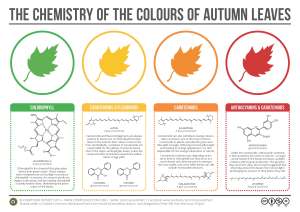
Answers to these questions can be found at Compound Interest, a blog by chemistry teacher Andy Brunning dedicated to the chemistry of everyday life.

Brunning’s explanations of chemical properties and processes are extremely clear and easy to understand. He accomplishes this through the use of infographics he designs himself. His informative graphics have been featured by several media outlets and are organized into the following categories:

  • Elements
  • Food Chemistry
  • Alcohol Chemistry
  • Organic Chemistry
  • Everyday Chemistry
  • Colourful Chemistry
  • Aroma Chemistry
  • Medicinal Chemistry
  • Underserved Reputations
  • Cosmetic Chemistry
  • Other Graphics

Of particular interest to our community of artists, naturalists and educators involved in plant-based and environmental education are the infographics about chilli, onion, coffee, tea, asparagus, chocolate, coriander, lemon, grapefruit, beet root, nutmeg, cloves, garlic, avocado, inorganic paint pigments, cut grass, the scent of the sea, the chemistry of catnip, the compounds of herbs and spices, and this week’s post about the chemicals behind the colors of autumn leaves.

Brunning’s infographics are available for educators to use for free. Packaged collections are available for purchase at the Compound Interest store, as are posters and Chemistry Spice Labels.

Add Compound Interest to your teaching toolbox!

Visit CompoundChem.com


Literature Cited

      A Brunning. (2014, September 11). The Chemicals Behind the Colours of Autumn Leaves. Retrieved from

http://www.compoundchem.com/2014/09/11/autumnleaves/#more-1759


Related

Read Full Post »

I love history and am especially interested in people who take it upon themselves to teach others about plants. The self-initiated projects launched by these individuals are inspiring. They also are good stories to share with students.

Today I would like to introduce you to the herbarium by Hendrik Elingsz van Rijgersma (1835-1877), a Dutch physician who worked for the Dutch government on St. Martin in the Netherlands Antilles.

Dr. van Rijgersma was one of six physicians who cared for freed slaves after slavery ended in the Dutch colonies (Ehn & Zanoni, 2002). He was also an amateur naturalist and documented the flora and fauna of St. Martin.
Van Rijgersma’s life has been documented in the book Flowers of St. Martin, the 19th Century Watercolours of Westindian Plants Painted by Hendrik van Rijgersma (1988).

I first learned about Dr. van Rijgersma in The Herbarium and Botanical Art of Hendrik Elingsz van Rijgersma, an article by Mia Ehn and Thomas A. Zanoni published in the journal Taxon. They write about the discovery of van Rijgersma’s herbarium at the Swedish Museum of Natural History in Stockholm and write about the locations where parts of his collection have been found. Of the 127 specimens they located, 73 include artwork by van Rijgersma (Ehn & Zanoni, 2002). These herbarium sheets have pencil sketches, ink drawings or small paintings that included below the pressed specimen. Ehn and Zanoni include in their paper a list of specimens discovered in Stockholm, as well as written documentation of the type of artwork found on the herbarium sheets.

It must be noted that the links in Ehn and Zanoni’s article are no longer valid. Fortunately for us, van Rijgersma’s collection is still online. The current URL to van Rijgersma’s herbarium is extremely long. To view his collection of herbarium specimens and drawings, click on the link below.

The article by Ehn and Zanoni can be purchased online for $17.95. You can also search for the article at your local college library.


View Herbarium and Botanical Art of Hendrik Elingsz van Rijgersma


Literature Cited

Ehn, Mia and Thomas A. Zanoni. 2002. The Herbarium and Botanical Art of Hendrik Elingsz van Rijgersma. Taxon. 51(3): 513-520


Related

BioCommunication

I recently read a keynote address delivered at the 2010 conference of the BioCommunications Association. It was given by Domenic Screnci, Executive Director for Educational Media & Technology at Boston University. In his address he reflected on the field of biocommunication and how biocommunicators each rely upon a unique set of skills that took them years to acquire.

Everyone reading this is involved in biocommunication in one way or another and we all have an interest in using visual forms of communication. In his presentation, Screnci (2010) reflects upon the many jobs he had that contributed to his becoming a medical photographer. This made me wonder… How did we all get here? How did we become biocommunicators with a keen interest in plants and imagery?

I thought I would pose this question in this week’s teaching and learning column.

Let’s talk. I’ll start…

    In hindsight, I can now see that my experiences as a biocommunicator began 30 years ago when I worked in a college zoology lab. I used to travel to classrooms with the animals and give naturalist talks. This was followed by teaching experiences in K-8 classrooms and in college classrooms. My graduate research made me more aware of how people learn and how they make meaning. Wrap these experiences up with explorations into authentic interests such as cartography, children’s literature, books, plants, history, botanical illustration, journalism, informal education and other life experiences and you get AP.


How did you become a biocommunicator?

Briefly share your story. Please provide at least your first name so we know how to address you. You don’t have to post your last name.


Literature Cited

Screnci, Domenic. 2010. Darwin and the Survival of the BioCommunicator. Journal of BioCommunication. 36(2): E57-E63

Read Full Post »

There is a new resource for educators introducing students to coastal ecosystems, wetlands and watersheds. This new resource is CA Outdoor EDU and it was created by Ian Bernstein, an Environmental Studies graduate from UC Santa Cruz whose passion is education and environmental stewardship.

The CA Outdoor EDU website is brand new and resources will be added on a continuing basis. Visit CA Outdoor EDU and you’ll discover activities about the following topics: ocean tides, intertidal zonation, tide pool ecology, plant ecology and nature studies. You may be especially interested in the handouts for the plant ecology and nature study activities because both involve observation, drawing and writing.

Today we have the opportunity to learn more about this website and its creator.

Please join me in welcoming Ian Bernstein!


Ian, why did you choose to major in Environmental Studies?

I always knew I wanted to get into something involving the environment and didn’t know what I wanted to do at first. I started taking environmental studies classes on ecology and the environment and environmental literacy and fell in love.


You have lead environmental programs for California State Parks, Ballona Wetlands and are now at the Los Angeles Natural History Museum. What have you learned about creating programs for the public?

Creating programs for the public you have to know your target audience and also be aware of how you approach any subject so that you can speak not only to your target but also anyone that happens to wander in and want to take part.


Sometimes parents, grandparents or guardians find themselves in the position of having to lead a group of young naturalists in an activity at summer camp or scout camp. What advice do you have for individuals who suddenly find themselves in the position of being a front-line interpreter?

Open ended questions are the best way to encourage scientific discovery and fuel creative exploration of the outdoors. Simply asking questions that ask them how and why will make all the difference.


I see you are also a photographer and an avid traveler. How have your photography and travel experiences informed your environmental education programs?

I have been all over the world and seen so many sights — but the most stunning thing I have found isn’t the number of places, but the quality of time I have spent in those places enjoying what was around me instead of trying to make sense of it. This has definitely helped me develop my nature experience and in turn my approach to how to best facilitate this in formal and non-formal school situations.


What are your plans for CA Outdoor EDU? What kind of a resource do you want to create?

I hope to create a resource that helps people to have a nature experience. This can happen anywhere from seeing an ant on the sidewalk in downtown Los Angeles to walking through the redwood forests of northern California in Santa Cruz.


Readers,

Do you have questions for Ian about CA Outdoor EDU and how you can use it in your classroom or program?

You are invited to ask Ian questions.
Please type your questions or comments in the Comment box below.


Read Full Post »

« Newer Posts - Older Posts »