Feeds:
Posts
Comments

Archive for the ‘teaching and learning’ Category

This month we’re looking at how our hands are involved in how we create, teach and communicate. Today we continue to explore this topic by considering what scientists draw and create with their hands.

In Envisioning Explanations – The Art in Science, professor David C. Gooding discusses how scientists tell visual stories. He distinguishes between static visualizations (i.e., printed images), multimedia images and the types of images visual artists and scientists create in their respective disciplines.

Regarding the latter, Gooding (2004) compares images in the visual arts to images in the sciences. He describes images in the visual arts as being “self-sufficient…carriers of meaning” (Gooding, 2004) and describes images in the sciences as having more than one purpose. He explains that scientific images have many functions. They first serve to convey “a tentative understanding” of an event and then serve as an aid to communicate this event to others (Gooding, 2004).

In his article, which is part of a collection of articles about science illustration, Gooding provides examples of how scientists have translated observations and large amounts of information into hand-drawn images and hand-built models — forms of visualization, he explains, science demands because “science is mostly about processes we cannot experience” (Gooding, 2004).

The examples of visualization he refers to include:

  • Michael Faraday’s sketch describing the relationship between electricity, magnetism and motion.
  • Re-animating extinct organisms by reconstructing fossils using drawings and the transformed mental imagery of the scientist and artist.
  • Constructing visualizations of vascular structures.
  • Stacking images to create 3-D models.
  • Plotting patterns to build molecules.
  • Using diagrams to explain an invisible process.

Through these examples and others, Gooding (2004) brings attention to the art (i.e., patterns, dots, sketches, datasets, etc.) in science while showing how scientists, as science communicators, try to deliver “intellectual understanding” (Gooding, 2004) of an experience through visualization.

While Gooding’s focus is science illustration in general, what he writes about applies also to the study of plants.

If you are interested specifically in how botanists and artists have historically described plants and presented plants to a general audience, consider books about the history of botanical art, such as Martyn Rix’s The Golden Age of Botanical Art and Karin Nickelsen’s superb book about the creation of 18th-century botanical illustrations.

Dr. Gooding’s Envisioning Explanations was published in a special issue of the journal of Interdisciplinary Science Reviews dedicated to the topic of science illustration.

Also included in this issue of Interdisciplinary Science Reviews is
When the Botanist Can’t Draw, an article about how Linnaeus described plants.


Literature Cited

Gooding, David C. 2004. Envisioning explanations – the art in science. Interdisciplinary Science Reviews. 29(3): 278-294. https://doi.org/10.1179/030801804225018792

(Link updated June 2024)


Also See

Imagery in Scientific Communication

Read Full Post »

BotanyForAllAges Botany for All Ages is a collection of sensory-based environmental education activities created by volunteers and educators at Garden in the Woods in Framingham, MA. This book was written for parents, classroom teachers and informal science educators.

Written as a collaborative effort between Jorie Hunken and the New England Wild Flower Society,
Botany for All Ages begins with 26 short chapters offering instruction about how to lead environmental education activities. In their introduction to teaching with plants, Hunken and the Society address topics such as how to structure outdoor activities, how to enhance observational skills and how to develop a vocabulary that can be used to identify plants. Included in this section are study sheets to activities that call upon students to observe, listen, experiment, explain, draw, write or teach about the plant topic at hand.

Most of the remaining 101 short chapters are comprised of activities through which botanists of all ages can learn about plant morphology, plant physiology, pollination, seed dispersal, plant growth, plant succession, plant/insect interactions and soil science. There is even an activity involving transects encouraging thoughtful observation and the use of drawing to record changes in plant species.

This book has so many activities and tips that it is impossible to explain them all here. Also included is a glossary of terms and a bibliography of resources about environmental education, flowers, seeds, plant function, ​and ethnobotany.

This title is still available as a used book. Search for copies of Botany for All Ages at your favorite online used book provider.


Literature Cited

Hunken, Jorie. 1993. Botany for All Ages: Discovering Nature through Activities for Children and Adults. Second edition. Old Saybrook, CT: The Globe Pequot Press.


Also See

Go Botany: New England Wild Flower Society

Read Full Post »

WhyWouldAnyoneCutATreeDown We walk past trees all the time. They line sidewalks, grow in the backyard and are celebrated during seasonal activities like apple picking.

The tree on the sidewalk or in your yard probably doesn’t demand too much of your time. However trees, like annual flowers, require proper care and sometimes they need to be cut down. Why cut down a tree?

Author Roberta Burzynski explains the reasons why in Why Would Anyone Cut a Tree Down?. Published by the USDA Forest Service’s Northeastern Area State and Private Forestry in Newton Square, Pennsylvania earlier this year, Burzynski wrote her book in response to what students were telling her during classroom visits. While students were aware of the benefits of trees and the products they provide, they repeatedly told her that trees could never be cut down. As she explains in the preface of her book, she wrote her book to address their “gap in knowledge and understanding” about this subject.

Burzynski wrote Why Would Anyone Cut a Tree Down? for children, adults and families. It is an informative book illustrated with the peaceful, thoughtful and moving watercolor paintings of scientific illustrator, Juliette Watts. Burzynski discusses the ecological benefits of trees and the products derived from trees (e.g., pencils and paint brushes) in the first part of her book and then eases into the reasons why trees might need to be cut down in the second part. She closes her book with instructions about how to care for trees and supplies readers with resources about the following topics:

  • How to recognize hazardous defects in trees.
  • How to prune trees.
  • How to get help identifying tree pests.
  • How to use fire-resistant plants in the landscape.
  • How to buy trees and plant them in appropriate locations.
  • How to find wood markets in addition to commercial sawmills.

Burzynski’s text and Watts’ illustrations provide many talking points and learning opportunities for both children and adults. This wonderful book is available for purchase from the U.S. Government Printing Office for $10 (US) and $14 (International). It is also available as a free PDF from the USDA Forest Service. My personal recommendation is to purchase a print copy. This is a resource you will want on your shelf.

A sixteen-page curriculum guide is available for teachers and parents. This resource-rich guide includes 17 activities that can be completed in 15-60 minutes. Links to Web-based resources and books are also included.


Literature Cited

Burzynski, Roberta. 2013. Why Would Anyone Cut a Tree Down?. Newtown Square, PA: USDA Forest Service, Northeastern Area State and Private Forestry.


Also See

Updated October 29, 2014

Read Full Post »

While at a science education conference, I learned about a resource that may interest you as you build that “big picture” about plants for students.

The Nutrients for Life Foundation is a nonprofit organization educating students and the public about the role fertilizers play in feeding the world. They created lesson plans for elementary, middle and high school students that can be used by classroom teachers and homeschool teachers. The foundation was created in 2004 by leaders in the fertilizer industry. According to the information in the Fall 2013 issue of Nutrients for Life, the Foundation’s magazine, representatives from the following companies serve as board members or as members on the advisory board: PotashCorp, Transammonia, The Fertilizer Institute, Intrepid Potash, Simplot, Koch Fertilizer LLC, Yara North America, Inc., The Mosaic Company, International Plant Nutrition Institute, Agium Inc., CF Industries, Inc., Florida Fertilzer & Agrichemical Association. The Foundation has regional representatives in Colorado, Louisiana, Nebraska, Iowa, Florida, Illinois and the Northwest. 

The Nutrients for Life Foundation’s campaign to educate the public about fertilizer is extensive. They have placed ads on trains, created recipe cards and have taken their message to the radio. They also sponsored a traveling exhibition about soil science that began its run at the Smithsonian’s Natural History Museum (July 19, 2008 – January 10, 2010).

The Foundation’s curriculum, Nourishing the Planet in the 21st Century, is aligned to state standards and is available for free online. When downloading the lessons for your grade level, select your state to download the proper curriculum. Downloadable materials include lesson plans, pre- and post-tests and supply lists. Posters, bookmarks and other materials can also be ordered at no charge.

Visit the Nutrients for Life website to learn more about their soil science curriculum. You can view videos complementing their curriculum on YouTube. Here is a link to a video about a seed sorting activity for elementary school students. When you visit YouTube directly, search for videos by “Nutrients4Life”.


Related

Read Full Post »

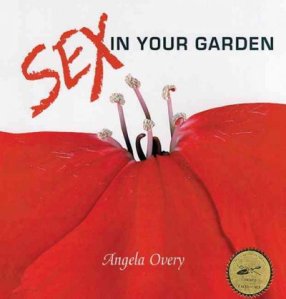
SexInYourGarden Plant reproduction can be as sensitive a topic as human reproduction.

This was made clear to me years ago at the, then, L.A. Garden Show when a gentleman disapproved of me displaying the book, Sex in Your Garden. He shook his head, made the “tisk, tisk, tisk” sounds and told me I shouldn’t have this book out on display. It was the word “sex” in the title that prompted his reaction. If you are unfamiliar with this book, it is a light-hearted and very anthropomorphic look at how plants attract pollinators. It contains text and images drawing similarities between how plants and humans call attention to themselves.

Even though it has been years, I always think of this gentleman when talking about flowers, fruit and reproduction. It is easy to talk about sperm, eggs, ovules and seeds when speaking with adults (although I usually have to give them a few moments to digest the fact that there are ovaries in their fruit bowl).

It is talking about plant reproduction with young audiences that always gets me thinking. What is saying too much?

If you’ve ever felt compelled to launch into an explanation of double fertilization while dissecting flowers with kids (even though you know you shouldn’t), here are some resources that may stop you from going over the cliff.

In How Do Apples Grow?, author Betsy Maestro and illustrator Guilio Maestro provide a comprehensive look at how buds on an apple tree develop, how the buds bloom and how flowers attract bees. They discuss flower anatomy, fruit development and explain what we’re eating when we eat an apple. They explain how apple trees make their own food and close their story where they began it — with flower buds on a bare apple tree. This life cycle book for botanists ages 5-9 addresses some big topics. Here is a list of vocabulary terms and concepts explained in this book:

  • leaf buds
  • flower buds
  • sepals
  • petals
  • stamen
  • pollen grains with male cells
  • pistil
  • ovary with female cells
  • pollination
  • fertilization
  • pollen tube germination
  • fruit development
  • seeds as fertilized female cells
  • photosynthesis
  • apple varieties

Maestro also touches upon seed dispersal and decomposition. The supporting watercolor illustrations by Guilio Maestro are colorful, labeled clearly and are easy to understand. Together Maestro and Maestro do a nice job of making flower development, pollination and fruit development very observable processes.

Just as Maestro makes fruit development observable, Helene J. Jordan brings seed germination and development out into the open in How a Seed Grows. The seed growing activity in her book enables students to see how seeds change beneath the soil and how seedlings grow above ground without investing in those growing chambers with the glass sides. Jordan’s clear instructions are supported by the informative gouache and colored pencil paintings by illustrator Loretta Krupinski. While Jordan’s book was written for children ages 4-8, the seed-growing exercise is appropriate for older children. It helps explain how seeds become plants and brings the life cycle of plants full circle. Plus it really lends itself to exercises related to botanical illustration.

Here is a list of vocabulary terms and concepts introduced in
How a Seed Grows:

  • seed
  • plant
  • tree
  • soil
  • watering for growth
  • writing numbers for identification
  • seed germination
  • roots
  • counting
  • leaves
  • soil
  • water
  • sun
  • photosynthesis

Jordan also includes directions to an experiment children can do to investigate the resources plants need to grow.

We can’t talk about seeds, flowers, pollinators and fruit development without showing how all these things are related. A great book that ties up all the loose ends is The Reason for a Flower by Ruth Heller. She introduces young readers to pollinators they might not normally consider and introduces them to wind pollination too. In her colorful 48-page book, she also introduces readers to seed pods, seed dispersal, herbivores, carnivorous plants, parasitic plants, angiosperms and familiar products derived from plants.

If you ever find yourself wondering “how much is too much?” when preparing an activity for young audiences, browse through children’s books about plants to get ideas about how to teach less, better.


Resources Cited

    • Heller, Ruth. 1999.

The Reason for a Flower

    • . New York: Penguin Putnam.

Jordan, Helen J. 1992. How a Seed Grows. New York: HarperCollins.

Maestro, Betsy. 1992. How Do Apples Grow?. New York: HarperCollins.


Also See

Botanical Illustration & Plant Morphology for Preschoolers

Read Full Post »

Paula Panich is an essayist, journalist, fiction writer, and writing instructor. She has been writing about plants, gardens and other subjects for 30 years.

In 2005, she published Cultivating Words: The Guide to Writing about the Plants and Gardens You Love, the first-ever comprehensive book about garden writing.

Coming soon is The Cook, the Landlord, the Countess, and Her Lover, a book of essays on food, place, memory, and history.

Gardeners, horticulturists and anyone wanting to write about plants or gardens will find Cultivating Words invaluable. In her book, Panich teaches garden writers:

  • How to write “how-to” stories.
  • How to write service stories.
  • How to construct sentences.
  • How to write garden-related travel stories.
  • How to write clearly.
  • How to edit.
  • How to look for publications in which to publish articles.

I have read Paula’s book twice and have taken a class with her at the Los Angeles County Arboretum and Botanic Garden.

We have the wonderful opportunity to learn from Paula today.

Please welcome Paula Panich!


Paula, how did your writing career begin? Have you always written about plants and gardens?

I grew up in a house without books. But I loved them. I think there were a few of those Little Golden Books for young children in the house, but the first “real” books to arrive came from my visits to a bookmobile in a shopping center in Dallas, Texas. Yet my grandparents had a bookshelf in a glass-fronted built-in; one of their sons went to college for a couple of years, and the books were his. I still remember the smell of those books. The bookmobile had that same delicious smell of bindings and glue and paper. Intoxicating!

My first “real” book was Treasure Island, by Robert Louis Stevenson, by the way. I remember in vivid detail what it felt like to close its back cover. I had finished! I was just thrilled.

My paternal grandparents were from Serbia. They were my primary influences when it came to plants and gardening as I watched them work in their yard. Their lives were unthinkable without these tasks, as mine is today. My grandmother quilted, cooked, baked, sewed, and canned; she was always doing something. Her work was precise, and her precision was imprinted on me. When I began to work on a word processor decades later, the image I had in my mind was my grandmother at her treadle sewing machine.

I think writing often comes to writers because they feel an inner need to rearrange the world. My god! The architecture of sentences! They can change the landscape of perception. But writing also comes to people because they know a great deal about something, and want to share it — like gardens and plants.


What did you want to rearrange?

There was a childhood trauma when I was five. It set up many things in my life. I desperately needed to make sense of the world; but that understanding only came much later. Writers are often people who were set aside in some way, or set out on their own either physically or emotionally.

My first professional gig as a writer came in my 30s when I was pregnant with my daughter. I began writing for Phoenix Home & Garden magazine. (I had been writing publicity stuff for paying clients previously.) But writing journalism was a completely new step and I was exhilarated with the freedom to write about subjects while dipping into my personal cultural capital. I wrote about plants, gardens, and historic preservation. The editor couldn’t throw any thing at me I wasn’t interested in — like crown moulding. I had been a history major, and I had, and still have, insatiable curiosity.

I am always interested in what is beyond, behind under, and over the topic. Back when there was a real publishing industry (wherein people could make a living) and there were categories for writers (e.g., garden, food, etc.). I was placed in the “garden writer” category. But I write about food, history, plants, gardens, landscape, literature, science, and travel — especially travel, where all of these topics come into play.


What topics haven’t you written about that you would like to write about?

I am interested in the interrelationship of things. I am very interested in place and in perception. It occurred to me that both have been the spoken or unspoken platform of my work. Now all of my teaching of writing seems to be about seeing. We can learn to craft a decent sentence — but it is the quality of mind of the writer that counts most.

My interest in seeing — or at least the most concrete example I can give — springs from my interest in contemporary artist Robert Irwin. I began to understand experiential seeing during a six-month experiment that involved weekly visits to his Central Garden at The Getty Center in Los Angeles. I intentionally didn’t take written notes when I sat in this garden, but eventually I began to “take” notes with a disposable camera. Irwin has spoken about seeing and perception for decades. I decided, through these numerous visits over time, to try to understand what he means.

I have written about the experience in a couple of ways. One in an interview with Irwin for the L.A. Times, and another quite different article for Pacific Horticulture. I also taught a class at the Getty Center on writing about the garden in which I used photographs to reveal what I saw and to reveal what was revealed to me. So I learned a lot about seeing. Seeing has a lot to do with the grounding of the person who is doing the seeing. It doesn’t matter if the focus is a garden or a plant or a landscape or a rock.

Irwin is grounded in the philosophy of phenomenology (the study of phenomena and perception), but the act of seeing has been described in philosophy, art, science and medicine. Sixty percent of what we see, according to some researchers, is a mix of our experience and thought. If you and I look at the same plant, we will be able to agree on 40% of what we’re seeing. Everything else depends upon our past experiences.

If we were to describe the same sweet potato, we would describe it differently. I would describe the complicated color, and the texture. But also for me, the sweet potato comes with a story. It is part of my cultural experience because of my grandmother’s experience with it. She told my sister and me that sweet potatoes were her candy in Serbia. So her experience and narrative affects how I see every sweet potato.

You asked how we teachers can encourage people to write about plants in an affective, meaningful feeling, way. I would turn the question around and ask — how is it possible not to do it?

We spend our entire lives constructing our visual world, a mix of our thoughts, feelings, and experiences.

I am not a plant geek. I am interested in stories behind the plants. I think a good way to encourage students to tell stories about plants is to send them out with paper notebooks to describe a plant, but provide them a prompt. For example, This plant makes me feel… . There are hundreds of prompts. The last time I saw a plant like this . . .

Stories shape our brains and are the basis of human culture. There is incredible overlap between the scientific world and the narrative. Don’t forget about young children: stories make their world. Ours too.


People tend to relate to animals better than they relate to plants. The term plant blindness has been coined by researchers to describe the condition that people don’t notice plants as much as they do animals. Drawing helps to encourage one way of seeing. Writing is another. How can artists, naturalists and educators help people “see” with words?

If there is plant blindness, then there is also “writing fear” because of the way writing and reading are taught. I think it’s especially important that the atmosphere in a writing class be supportive, and that fear is dispatched one way or another.

I had what I realize was an important moment in my own “plant blindness.” For two or three years I looked out a window in a tiny shack in the San Jacinto Mountains as I wrote. I actually looked at a certain tree in the midst of a pine forest. I finally realized — after all that time! — I was actually looking at a California live oak. And this tree was only a few yards from the window! Yes — I had “blindness” but in every way that tree conferred its blessing and shelter on me. I drank from that tree. The tree sustained me. Finally — I realized its proper category in the world human beings have made. But it did not wait for me to call it by name to confer its intrinsic goodness.

But back to writing.

Natalie Goldberg wrote Wild Mind: Living the Writer’s Life, and I use some of her writing strategies in classes with kids as well as adults. I ask adult students to get the cheapest notebook they can get — wide rule, 70 pages — to do timed writings. I tell them to move the pen across the page and to not lift it. This helps to take the sting out of putting down words as most people have their high school English teachers, red pencil sharpened, sitting on their left shoulders.

My classes now are more about experience. I started teaching at 21; later, I wanted to focus on urging people to become professional writers. I don’t do this anymore.

I like to bring the rich adult literature about landscape and plants and human response into the mix, even it is just a paragraph. A Sand County Almanac by Aldo Leopold; the books of John Muir; the books of John McPhee. Another book that has captivated me is Keith Basso’s Wisdom Sits in Places. He writes about the Western Apache in Arizona and how their language, psychology, and medicine are rooted in places in the natural world around them.

For teenagers, who always think about sex, the Botany of Desire would be a good book to use. Who could resist the story about how roses got their names? Or the coevolution of the marijuana plant and us?

Sometimes a paragraph or two is enough to open up students’ minds: Here are these wonderful writers, and here are their inventive, wide-ranging minds and concerns. What are yours?

Also, you have to work on yourself as a teacher and as a “person who sees”; that way, you can gently lead students to get out of their own way. Children are already there. They teach you how to move out of your own way.

Addressing plant blindness will require an act of will to interrupt the habitual way of seeing. Harvard professor John Stilgoe wrote a great book called Outside Lies Magic: Regaining History and Awareness in Everyday Places. He tells his students to hop onto bicycles and figure out how the world is put together. It’s a wonderful book. I wish we could spread it around the country, like Johnny’s appleseeds.


Cultivating Words

Paula’s book, Cultivating Words: The Guide to Writing about the Plants and Gardens You Love, can be purchased from Paula through her website for $21.95. 
Order


Take a Class with Paula

Paula will teach a two-day class dedicated to writing about plants and place in January/February 2014 at the Los Angeles County Arboretum and Botanic Garden. Cost: $70 for two sessions (nonmembers); $60 members
Learn More


Plan Ahead to Join Paula in New Mexico in 2014

You are invited to join Paula Panich for WALKING SANTA FE: Place, Plants, Spirit, Food ~ A Writing Workshop based on the sights, smells, taste, and spirit of Santa Fe, New Mexico. Founded in 1610, the city sits amid the natural beauty of Northern New Mexico; it has a deep and rich history braided by the traditions and beliefs of the three cultures now at home here. November 13-15, 2014.
Cost: $300

Paula’s classes have been added to Classes Near You > Southern California.

Read Full Post »
If you have taken drawing classes or browsed through books about drawing, you have no doubt seen or experienced the drawing exercise requiring you to copy an inverted line drawing. This technique is practiced because it is thought that inverting a subject while drawing it enhances drawing accuracy (Edwards, 1999).

Researchers Dale J. Cohen and Holly Earls (2010) designed an experiment to investigate if drawing inverted images leads to improved accuracy or if it leads to drawing errors. They hypothesized that interfering with an artist’s spatial perception would not result in more accurate drawings. They based their hypothesis on the research of Cohen and Bennett (1997) who determined that the foundation of drawing errors is rooted in an artists’ perception of a stimulus. Cohen and Earls (2010) hypothesized that, if an artist’s perception of a stimulus is distorted, then this would be evident in their drawing of this stimulus.

In their study, Cohen and Earls (2010) used human faces as the drawing stimulus because of the extensive drawing research involving human faces. The investigators assigned a drawing task to 121 students. Their sample population was composed of non-artists and artists. Half were assigned the task of drawing inverted faces and half were assigned the task of drawing faces in their normal upright orientation. Participants’ drawings were evaluated for the accurate representation of spatial relationships between facial features, the accurate representation of selected facial features, and the accuracy of whole-face drawings. Four critics rated the drawings. Two of the critics were art history professors and two were studio art professors.

The independent ratings of each critic were analyzed statistically. Data revealed that drawing inverted subjects had a significant negative effect on the drawing of spatial relationships. Rating data also indicated that orientation had no significant effect on the drawings of specific facial features or on the accuracy of whole-face drawings (Cohen and Earls, 2010). Because orientation had a negative effect on the drawing of spatial details, Cohen and Earls (2010) concluded that drawing an inverted stimulus does not improve drawing accuracy.

That is to say, drawing accuracy when one is drawing faces.

Can the same be said about the drawings of inverted images of plants?

For more information about Cohen and Earls’ investigation of this popular art technique, see Inverting an Image Does Not Improve Drawing Accuracy.


Literature Cited

    Cohen, Dale J. and Susan Bennett. 1997. why can’t most people draw what they see? Journal of Experimental Psychology: Human Perception and Performance. 23(3): 609-621. Read Review

    Cohen, Dale J. and Holly Earls. 2010. Inverting an image does not improve drawing accuracy. Psychology of Aesthetics, Creativity and the Arts. 4(3): 168-172. Web. http://people.uncw.edu/cohend/research/papers/cohen%20and%20earls%202010.pdf [accessed 11 October 2013]

    Edwards, Betty. 1999. Drawing on the Right Side of the Brain. See eBook

Read Full Post »

« Newer Posts - Older Posts »