Feeds:
Posts
Comments

Archive for the ‘general botany’ Category

New Weekend Workshop at
Classes Near You > Florida!

Florida Society of Botanical Artists
Center for the Arts & Humanity, Sarasota

Plant Morphology with Dick Rauh

Ferns: Friday, January 28, 2011
Flowers: Saturday, January 29, 2011
Leaves: Sunday, January 30, 2011

Fee
: $75 per day or $200 for all three days (members); $85 per day or $225 for all three days (non-members).
Time: 10 AM – 4 PM, daily
Other: Bring lunch and a microscope.
Register: Contact Charlotte Thomas

Read Full Post »

Now at Classes Near You > California:


University of California, Riverside
UCR Extension

Read Full Post »

The University of California Botanical Garden at Berkeley announces an updated course schedule at Classes Near You > California.


University of California Botanical Garden at Berkeley

http://botanicalgarden.berkeley.edu/
This 34-acre garden was established in 1890 and is now a non-profit research garden and museum. The botanical art classes below are taught by Lee McCaffree and Catherine Watters . Download a detailed schedule for October 2010 – January 2011 here.

  • Garden Strollers: Tours for Parents with Young Children
    Wednesday, December 8, 2010; 2:30 pm – 3:15 pm. A 45-minute tour of the garden for adults with young children (3 and under). Tour will end on the lawn for play and snacks (bring your own). Children must be in a stroller or carrier during the tour. FREE with garden admission. Meet in front of the Garden Shop. For more information, call (510) 642-7082 or email garden@berkeley.edu.
  • Winter Botanicals as Paintings – Friday and Saturday,
    December 10 & 11, 2010; 10 am-4 pm each day. We invite you to participate in our Fall series of classes in botanical illustration with the talented instructor Lee McCaffree. Take a break from the busyness of the holidays to explore the colors of winter through the painting of botanical subjects. Berries, evergreens, cones and dried plants are exciting subjects from the Garden. Use paint or colored pencils to capture the beauty in a painting of your own. Each student will work at his/her own level. A materials list will be posted on the website. Cost: $160 non-members, $150 members. Register for two or more classes and receive $10 off each.
  • Conifers and Caryota, A Few of My Favorite Things – Thursday, December 16, 2010; 1:00 pm – 2:30 pm. See plants you’ve never noticed before! Chris Carmichael, the Garden’s Associate Director of Collections and Horticulture, will lead a unique tour through the Garden. Get an insider’s look at the Garden’s often unnoticed treasures.
    Cost: $10 (free for members)
  • 2nd Annual Plants Illustrated Exhibition – Saturday, January 8, 2011- Thursday, January 27, 2011. Display of botanical artwork sponsored by the Northern California Association of Botanical Artists. Free with garden admission.
  • Botanical Garden Docent Training – January 10 – April 18, 2011; Mondays & Thursdays from 1 – 4 pm. Teach school children and the general public about plants and the natural environment. Training is provided by horticultural staff, experienced docents, plant specialists at UC Berkeley and plant specialists from the surrounding community. There are 24 training sessions. Cost: $250. For more information and to apply, contact the Volunteer Coordinator at (510) 643-1924 or email perry@berkeley.edu.
  • Botanical Art Through the Ages – Thursday, January 20, 2011;
    2:00 pm – 3:30 pm. Botanical artist Catherine Watters will present a collection of prints, slides, and other media highlighting the work of Pierre-Joseph Redouté and Maria Sibylla Merian. Her presentation about the history of botanical art will also touch on Tulipmania and the Age of Exploration. FREE with garden admission.
  • Introduction to Botanical Art – Saturday and Sunday, February 12 & 13, 2011; 10 am – 4 pm each day. We invite you to participate in our Fall series of classes in botanical illustration with the talented instructor Catherine Watters. This two-day class will teach you to observe, measure and draw plants in great detail with botanical accuracy. Work with graphite, colored pencils and watercolor. A materials list will be posted on the website.Cost: $160 non-members, $150 members. Register for two or more classes and receive $10 off each.

Read Full Post »

What is a gymnosperm?

The word gymnosperm literally means “naked seed” (gymno=naked, sperm=seed). Gymnosperms have their seeds exposed unlike flowering plants, the angiosperms, which have their seeds enclosed in an ovary (i.e., fruit). The word angiosperm derives its meaning from angio=vessel, sperm=seed.

Pine trees are the most often cited example of a gymnosperm. But what about the other gymnosperms? How do we know when we see one? Do all gymnosperms have cones?

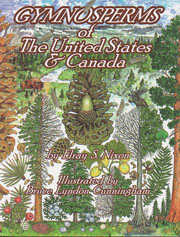
These questions and many others are answered in Gymnosperms of the United States & Canada. This user-friendly reference was written by Dr. Elray S. Nixon and illustrated by Bruce Lyndon Cunningham.
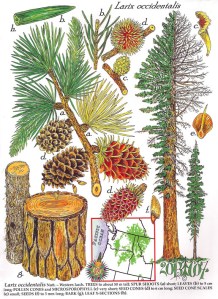
Lavishly illustrated, this guide is a welcome balance of botanical terminology and descriptive illustrations. Dr. Nixon’s jargon-free text is supported by Bruce’s informative illustrations. Dr. Nixon begins his book explaining what gymnosperms are and where they can be found. He then provides clear instruction on how to use identification keys and teaches readers how to begin thinking about cones, leaves, and bark — the three characteristics which are the focus of this book. Dr. Nixon focuses on these characters because they are observable throughout the year.

If you have used identification keys before, you are all too familiar with how easy it is to make a wrong turn while working through a dichotomous key. Fortunately in Gymnosperms of the United States & Canada, the likelihood of you going astray has been minimized by Bruce’s illustrations. If you ever doubt your progress working through any of the keys, all you need to do is refer to one of the 115 botanical plates Bruce created. Each plate includes a sketch of a mature plant and illustrations of leaves, cones, arils, seeds, and bark. A range map showing the distribution of each species is also included.

Dr. Nixon and Bruce describe 115 species of gymnosperms growing in coniferous gymnosperm forests, gymnosperm foothill (pinyon-juniper) forests, and gymnosperm (Ephedra) shrubland. The divisions, families and genera featured in this book are:

DIVISION: Cycadophyta
Family: Zamiazeae (Sago Palm Family)
    Genus: Zamia

DIVISION: Ginkophyta
Family: Ginkoaceae (Maidenhair Tree or Ginkgo Family)
    Genus: Ginkgo

DIVISION: Gnetophyta
Family: Ephedraceae (Ephedra Family)
    Genus: Ephedra

DIVISION: Pinophyta
Family: Taxaceae (Yew Family)
    Genus: Taxus
    Genus: Torreya

Family: Pinaceae (Pine Family)
    Genus: Pinus
    Genus: Larix
    Genus: Picea
    Genus: Tsuga
    Genus: Abies
    Genus: Pseudotsuga
Family: Cupressaceae (Redwood or Cypress Family)
    Genus: Taxodium
    Genus: Sequoia
    Genus: Sequoiadendron
    Genus: Juniperus
    Genus: Callistris
    Genus: Cupressus
    Genus: Chamaecyparis
    Genus: Thuja
    Genus: Calocedrus

Abundant illustrations, easy-to-follow keys, and clear descriptive text make this guide a great resource to use when learning about the gymnosperms in your area. This guide also serves as a gentle introduction to dichotomous keys. If you have avoided plant keys because of the botanical terminology they contain, you might want to try the keys in this book. Dr. Nixon provides concise definitions to the botanical terms you need to know and Bruce provides an illustration for each term. This all-inclusive resource is sure to be a welcome companion on your next trip to your local forest or national park.


Learn How Bruce Creates Illustrations for Field Guides

Join us for Ask The Artist with Bruce Lyndon Cunningham on Monday December 13, 2010 from 12:00 PM – 1:00 PM (PST). Bruce has illustrated many field guides and during this live online event, he will discuss how he worked with Dr. Nixon to create the illustrations for this new book. This event is FREE. To join in on this conversation, register here. Event Closed


Gymnosperms of the United States & Canada
can be purchased at www.forester-artist.com.

Read Full Post »

Now at Classes Near You > California:


The Gardens at Heather Farm

Walnut Creek
www.gardenshf.org
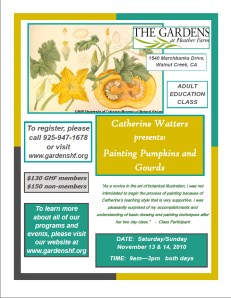
The Gardens at Heather Farm are comprised of twenty demonstration gardens. This six-acre garden is also an outdoor classroom. The garden offers many classes and has its own florilegium. The florilegium project is managed by botanical artist, Catherine Watters.

    Painting Pumpkins and Gourds
    Saturday & Sunday
    Nov. 13-14, 2010 (9 AM – 3 PM)
    Capture the colors, shapes and textures of pumpkins and gourds. Instructor: Catherine Watters. Cost: $130 members/$150 non-members. For complete details and to register, click here.

    The Botany and Ecology of How Plants Grow

    Saturday November 20, 2010
    9 AM – 12:00 PM
    Have you ever wondered how plants grow? Why some are trees, others bulbs, and even annuals? Why pH is so important for plants and how roots work? How do plants “know” to make roots when you cut off pieces to root them or the tops regrow after they have been pruned? In this interactive discussion using live plants and images of plants, you will learn how and why plants live or die, flourish, or flounder
 in your garden. In this class, you will be able to ask a lot of questions and ponder the inner and outer workings of plants in a comfortable non-technical learning environment. Instructor: Ernesto Sandoval, Director of Botanical Conservatory, UC Davis. Cost: $20 members/$25 non-members. For complete details and to register, click here

Read Full Post »

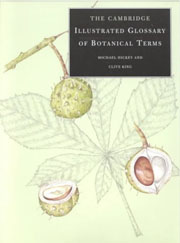
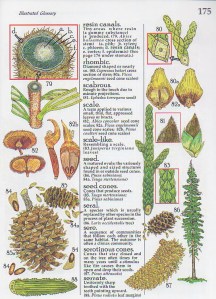
The Cambridge Illustrated Glossary of Botanical Terms
Hickey, Michael and Clive King. 2002. Cambridge University Press. ISBN: 9780521794015

We know that being able to draw plant subjects as accurately as possible is critical. Most of us have at least one glossary of plant terminology in our libraries (e.g., Plant Identification Terminology – An Illustrated Glossary by James G. Harris & Melinda Woolf Harris). Harris & Harris’ book is invaluable when trying to decipher detailed information about a plant specimen. When we reach for this book, it is because we are presented with terminology we do not understand. The illustrations accompanying each term in Harris & Harris help us see what we have never before noticed. But what do you do if you have only your plant specimen in front of you, lack the words to describe what you see, and therefore cannot look anything up?

You turn to Hickey & King’s illustrated glossary. Descriptive illustrations get top billing in this book. Most of this book is dedicated to labeled illustrations. A glossary of botanical terminology is provided for you to decipher unfamiliar terms. The illustrations in this book are very helpful, as is the way they are organized. Illustrations are organized in the following way: Roots, Storage Organs and Vegetative Reproduction; Seeds and Seedlings; Growth and Life Forms; General Features of Flowering Plants; Plant Features and Responses; Leaf-like Structures & Other Vegetative Features; Leaves; Hairs and Scales; Floral Features; Flower Structures; Features of Certain Plant Families; Fruits; Conifers and Conifer Allies; Ferns and Fern Allies.

The authors of this book express their hope “that readers at all levels of understanding, both amateur and professional, will find (this book) helpful in their chosen area of study, especially plant science, horticulture, field studies and botanical illustration.”
Plant Identification Terminology
Buy this book and Harris & Harris (2001) from your local independent bookstore.

Read Full Post »

Now at Classes Near You > California:

Around the World in 127 Acres: Meet the Arboretum’s Plant Collections
Saturday Walking Tours
10 – 11:30 am

The Arboretum’s collection of over 18,000 accessioned plants is roughly divided into five geographic sections, two greenhouses, and several other specialty collections and exhibits. Botanical information consultant Frank McDonough will take you out onto the grounds to learn more about these fascinating & extensive collections. Be sure to wear comfortable, rugged shoes, a hat and clothes you don’t mind getting dirty – and bring drinking water.


October 23
– World Wide Weavers: An introduction to the uses, history and anthropology of the fabric producing plants that grow at the Arboretum.

November 13
– Pyromaniac Plants: A look at fire ecology and what plants do to survive and thrive in areas that are prone to frequent conflagrations.

November 20
– World Wide Wood: Discover the many timber-producing trees from around the world that are in the Arboretum’s collection.

December 4
– How low can they go? A look at plants at the Arboretum that use the least amount of water.

December 18
– ‘Frankenplants’: Manipulating the genetics of plants hasn’t always been as sophisticated as it is today, but the consequences of making a mistake have always been great. We’ll look at the history and consequences of mankind’s genetic manipulation of the plants around him as represented by specimens at the Arboretum, and examine the history of agriculture as it relates to you, the food you eat, and the plants you put in your garden.

To register, call (626) 821-4623 to register or you may pay at the class.
Cost: $5 member/$7 non-member per class

These classes are held in the garden and require some walking throughout the collections. Classes meet rain or shine. Meet in the Arboretum Library.

Visit the L.A. Arboretum website to learn more about this wonderful resource.

Read Full Post »

« Newer Posts - Older Posts »