Feeds:
Posts
Comments

Archive for the ‘general botany’ Category

High school teachers, Brian C. Dempsey and B.J. Betz, describe how they use drawing as a learning tool in Biological Drawing: A Scientific Tool for Learning. They observed that while a lot of time is spent drawing during a typical biology lab, biology instructors do not take the time to teach students how to draw. In response to this observation, they incorporated structured drawing activities into a biology class and successfully taught students how to observe, describe, and draw.


Overview

Dempsey and Betz taught introductory drawing techniques to students in a 9th-grade biology class to enhance their observation skills and to make them better learners. The drawing activities and homework exercises they created were administered over a five-day period. During this time, students participated in exercises addressing observation, drawing from memory, the recording of texture, contour drawing, and the drawing of negative space. Most exercises were completed as homework, while class time was spent conducting directed activities.

Detailed descriptions of each activity and illustrated examples are included in Dempsey & Betz (2001). Here is a quick look at the exercises students completed.

    Exercise 1: Observing & Describing
    Students were instructed to sit with their backs towards each other. Each student took turns describing an object from nature to their partner, who could not see the object being described. Students were required to incorporate art-related terms into their descriptions (e.g., form, value, and color). Prior to this activity, students received instruction about terms used by artists during the drawing process.

    Exercise 2: Drawing from Memory
    In this exercise, students studied an object given to them by their teacher. After studying the object for a while, they put the object away and drew it from memory.

    Exercise 3: Textures & Surfaces
    Students collected as many textured items as they could find in their natural environment. Their recorded observations and texture rubbings were used to create a master list of textures and to launch a discussion about observation skills.

    Exercise 4: Contour Drawing
    After observing a classroom demonstration, students were instructed to create a contour drawing of an object at home. The construction of a contour drawing required students to observe carefully and to draw slowly while drawing what they observed.

    Exercise 5: Negative Space Drawing
    Students learned what negative space was and how to observe it. They then practiced their negative drawing skills.

    Exercise 6: Color Blending & Shading Techniques
    This lesson was taught in the classroom. Students learned different shading techniques and learned how to mix and blend colors. The student handout for this exercise is included in Dempsey & Betz (2001).

To assess if students knew how to use contour drawing, negative space, shading, and color in a biological drawing, Dempsey & Betz created a two-part project requiring students to apply their new skills. The first project was a take-home project requiring students to complete a drawing of a plant growing around their house. Students were graded on their use of contour drawing and negative space, their use of color blending and shading, their attention to detail, and the correct identification of their plant specimen. Dempsey & Betz established grading criteria by which student drawings were assessed. Their rubric and a copy of the handout students received are included in their article.

The second part of the assessment project was conducted in the laboratory and required students to apply their drawing skills while observing and comparing insect-pollinated flowers to wind-pollinated flowers during two 50-minute class periods. A detailed description of this activity is included in Dempsy & Betz (2001).

Since this initial program was conducted, Dempsy & Betz have revised their technique as necessary. They have also incorporated drawing lessons into a unit about human anatomy. In this unit, students apply their drawing skills while learning about bones and the origin and insertion of muscles.

Getting Started
Dempsey & Betz (2001) recommend teachers read Drawing on the Right Side of the Brain by Betty Edwards, take introductory drawing classes, and collaborate with the art teacher at their school. I would like to add the following resources to their recommendation:

  • The Art of Botanical Drawing: An Introductory Guide ($19.95) by Agathe Ravet-Haevermans, scientific illustrator at the Museum of Natural History in Paris. Read about this informative sketchbook-style guide for beginners.
  • Botanical Drawing in Color: A Basic Guide to Mastering Realistic Form and Naturalistic Color ($24.99) by Wendy Hollender, botanical artist, author, and teacher. Read the review about this comprehensive guide.


Literature Cited

Dempsey, Brian C. and B.J. Betz. 2001. Biological drawing: a scientific tool for learning. American Biology Teacher 63(4): 271-279.

Search for The American Biology Teacher at a library near you (enter your location in the appropriate field).


Also See

Drawing with Graphite Eyes


How do you use drawing as a learning tool in your classroom?


Read Full Post »

The Brenton Arboretum and the state of Iowa has been added to the site.
Here is what’s new at Classes Near You > Iowa!


Brenton Arboretum, Dallas Center

www.thebrentonarboretum.org
The Brenton Arboretum is a 140-acre arboretum established in 1997 featuring 2,600 trees and shrubs. Most of the more than 175 species of trees and shrubs are organized by species to facilitate learning and to emphasize the importance of trees in our world. The event schedule for 2011 includes:

  • Winter Tree Identification Workshop and Walk – Saturday, January 22, 2011; 10:00 AM – 12:00 PM. (Snow Date: Saturday, February 5)
  • Start a Monthly Nature Club – Saturday, February 29, 2011
  • Nature Journaling – March 5, 2011. Use Facebook and Twitter to track seasonal changes throughout the growing season.
  • Tree Anatomy – Friday, April 23, 2011; 5:00 – 6:30 PM.
  • Spring Bird Migration – Saturday, April 23, 2011; 7:30 – 10:30 AM.
  • Basic Botany & Why You Should Use Scientific Names – May 2011
  • Watershed Walk – Saturday, June 2011
  • How Scientists Catch Bugs in Trees – Saturday, July 9, 2011
  • Seeds, Fruits and Nuts – Saturday, September 24, 2011
  • Bird Migration South – October 2011
  • Leaf Collection Show – Sunday, October 22, 2011; 1 – 3 PM
  • Looking for Trees to Plant in 2012 – November 2011
  • Recognizing Evergreens – December 2011. Learn how to identify conifers.
NOTE: Schedule subject to change

Read Full Post »

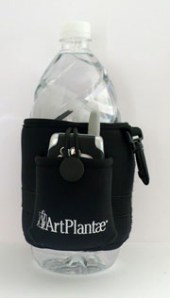
Head outdoors with a field companion that will carry your water bottle, your keys, your cell phone, your driver’s license, and your money too!

The Joey Jam Pack, the convenient compact water bottle holder is now free with each purchase of Gymnosperms of the United States & Canada by Bruce L. Cunningham. This neoprene wrap will fit around water bottles up to 1 liter in size. The exterior pouch can accommodate a cell phone or a MP3 player, not to mention tissues or your favorite energy bar. Keys attach easily to the adjoining key fob and the exterior strap gives you the option of carrying the Joey Jam Pack in your hand or carrying it on your belt strap. If you don’t have a water bottle to carry and only need to have money, ID, and your phone with you, this practical wrap fits comfortably around your wrist. Two hidden slots line the interior and can accommodate money, ID cards, credit cards, business cards, and other essentials. All items are sealed securely within each slot, so there is no reason to worry about losing them.

This special offer makes a great gift and is available for a limited time only. While supplies last.


You May Also Like…

Forest Connections: Gymnosperms of the United States & Canada

Read Full Post »

A team of artists, authors, and experts at the Royal Botanic Garden Edinburgh (RBGE) are working on Plants from the Woods and Forests of Chile, a book about the threatened plants of Chile and the issues surrounding their threatened status and conservation. When completed, this historic reference will include 80 watercolor paintings.

Turkish artists Guinur Eksi, Hulya Korkmaz, and Isik Guner come to this project with impressive resumés. Each artist studied with Christabel King and each is now a full-time award-winning botanical artist. Gulnur Eksi received a Gold Medal from the Royal Horticultural Society (RHS) in 2010, as did Isik Funer who also earned Best Botanical Painting. Hulya Korkmaz received a RHS Silver Gilt medal in 2010. All three artists have also earned medals at BISCOT.

More impressive than their awards, however, is how these young artists work to enhance our knowledge of plants. When they are not traveling to Edinburgh to work on the book about Chilean plants, Eksi and Korkmaz work on projects bringing attention to Turkish bulbs and the plants of Turkey. While Funer works as an artist providing field experiences in art.

Collaborating on this project are authors Martin Gardner (Coordinator, International Conifer Conservation Program), Pauline Hechenleitner (Author, Threatened Plants of Central and South Chile), and Josefina Hepp (Author/Researcher). Serving as project advisors are: Jacqui Pestell (Curriculum Development, RBGE), Clare Morter (Senior Horticulturist, RBGE), Sabina Knees (Botanist, Centre for Middle Eastern Plants), and Henry Noltie (RBGE Botanist & Author).

Visit the official website of Plants from the Woods and Forests of Chile to learn more about this project, the artists, and to view nine paintings from this book.

Plants from the Woods and Forests of Chile will be published Fall 2013.

Read Full Post »

Learn about the plants of Chile and The Huntington’s camellia collection. The following information has been added to Classes Near You > California:


Huntington Library, Art Collection and Botanical Gardens

http://huntington.org
Located in San Marino, CA, the Huntington Library, Art Collection and Botanical Gardens is a true gem. In addition to housing extensive collections of art and hosting scholars from all over the world, The Huntington is home to 120 acres of gardens. Host to many special events, lectures, and workshops, The Huntington inspires both plant lovers and botanical artists. To register, call (626) 405-2128.

  • Botanical Illustration Series: Camellias
    Saturdays, Jan. 8, 15, 22, 2011; 9 AM – 3 PM. Study camellias while fine-tuning your drawing and painting skills with botanical illustrator, Lisa Pompelli. Open to beginning and experienced watercolorists. Prior drawing experience recommended. Members, $275/ Non-members $295. To register, call 626-405-2128.
  • Plants of Chile: Garden Talk & Plant Sale
    Thursday, January 13, 2011; 2:30 PM. Learn about Chile’s native flora from Kathy Musial, curator of living collections at The Huntington. Plant sale follows. FREE. No reservations required.


You May Also Like…

Chilean Flora: A Historic Work in Progress

Read Full Post »

Now at Classes Near You > California:


California State University, Chico
Chico State Herbarium

www.csuchico.edu/biol/Herb
The following classes are sponsored by the Friends of the Chico State Herbarium. All proceeds benefit the herbarium at CSU Chico. Obtain course details and registration forms here.

  • Care of Trees in the Landscape – January 15, 2011
  • Plant Photography – March 5, 2011
  • Introduction to Lichen Identification – March 26, 2011
  • Botanical Illustration – April 16, 2011
  • Introduction to Keying the Fabacaeae – April 30, 2011
  • Intro. to Identifying Northern California Grasses – May 14, 2011
  • Fire Ecology – June 11, 2011
  • Introduction to the Willows of California – June 18, 2011
  • Introduction to the Serpentine Ecosystem – June 25, 2011

Read Full Post »

During Monday’s Ask The Artist with Bruce Lyndon Cunningham, Bruce introduced us to his user-friendly guide to North American gymnosperms. While the guide created by Dr. Elray S. Nixon and Bruce can be used by beginning and experienced naturalists, what about the very youngest of naturalists? Are there books just for them? A teacher in the audience asked these questions on Monday.

Three books were shared with webinar participants.
Here are quick reviews of each…

Trees, Leaves, and Bark (Take-Along Guide)
Author: Diane L. Burns
Illustrator: Linda Garrow

An introduction to some of the trees growing in prairies, woodlands, swamps, and mountains. Each tree profile has information about how to find a tree, background into the tree’s lifespan and uses, and information about a tree’s leaves, bark, and seeds. The following activities are included in this book: Make a Leaf Mobile, Make a Pinecone Snackbar, Grow Your Own Tree, Make a Bark Rubbing.
Grade: 4-6, Age: 9-11

The Tree Book: For Kids and Their Grown-ups
Author: Gina Ingoglia
Illustrator: Gina Ingoglia

What goes on inside cones? Where does fruit come from? How do trees eat and drink? The answers to these questions can be found in this comprehensive resource created by Gina Ingoglia, the author of 80 childrens books, a landscape designer, and the vice president of the Brooklyn Botanic Garden Florilegium Society. After introducing young naturalists (and their grown-ups) to tree biology and tree identification, Ingoglia profiles 33 trees that are easily observed in neighborhoods, botanical gardens, or the local arboretum. Each tree profile is composed of background information about a tree, its growth, and the proper pronunciation of its scientific name. Like the plant names in our pocket dictionary, each species name is written out phonetically. Tree profiles also include a whole plant illustration and illustrations of leaves, flowers, fruit, leaf buds, needles, bark, and branches. If a characteristic is important to a tree’s identification, Ingoglia includes an illustration of this characteristic.
Grade: 3-4, Age: 8-9

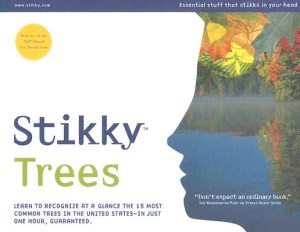
Stikky Trees
Laurency Holt Books
This clever introduction to trees lives up to the philosophy of “teach less, better.” Authors propose a four-step approach to becoming familiar with 15 trees commonly found in the United States. Actually, the “steps” are learning sequences, each dedicated to a specific topic and each building upon what was learned in the previous sequence. This book is fun for both children and adults. View an interactive demo on the publisher’s website.


Do you have a favorite book about trees?

Teachers, tell us what you use in your classroom.
Parents, tell us how you have introduced your children to trees.
Fellow Plant Enthusiasts, which helpful books about trees do you have in your library?

Read Full Post »

« Newer Posts - Older Posts »