Feeds:
Posts
Comments

Archive for the ‘general botany’ Category

Now at Classes Near You > Iowa:


Brenton Arboretum, Dallas Center

www.thebrentonarboretum.org
The Brenton Arboretum is a 140-acre arboretum established in 1997 featuring 2,600 trees and shrubs. Most of the more than 175 species of trees and shrubs are organized by species to ease learning and to emphasize the importance of trees in our world. The event schedule for 2011 includes:

  • Those Amazing Plants – Saturday, July 23, 2011; 9 AM – 12 PM. Learn about the amazing lives of plants during this Botany 101 workshop with Tom Rosberg, botany professor at Drake University. Students will learn how to decipher plant names, how plants reproduce and other exciting topics! Pre-registration required. Cost: $5 members, $10 non-members. Fee can be paid on day of class. For more information, contact the Arboretum by email or call (515) 992-4211.
  • Leaf Collection Identification Workshop – Wednesday, September 21, 2011. Drop-in between 2:00- 4:30 PM
  • Make A Leaf Collection Book
    Saturday, September 21, 2011; 9-11 AM.
  • Second Annual Leaf Collection Exhibition
    Sunday, November 6, 2011; 1-3 PM.


You May Also Like:

    Botany for Gardeners

Read Full Post »

Learn botanical art and plant identification among Edwardian and medieval landscapes at the University of Leicester Botanic Garden.

University of Leicester Botanic Garden
http://www2.le.ac.uk/projects/botanic-gardens
Sixteen acres of landscaped grounds and greenhouses centered around an Edwardian garden. The Attenborough Arboretum is a satellite facility of the Garden. The Arboretum features an example of a medieval ridge-and-furrow field.

  • Introduction to Botanical Painting Summer School Course – Monday August 8 to Wednesday, August 10, 2011; 10 AM – 4 PM. Open to beginners and experienced students at Attenborough Arboretum. Instructor: Colin Swinton. Cost: £75 per person. To register, call 01423 331390.
  • Plant Identification Course module – Every Tuesday evening, 4th October 2011 6:30-9:30 PM, 8 weeks plus 3 Saturdays at the Botanic Garden. This class is for the advanced certificate in Plant Identification. See details in the Garden’s brochure.

This information can also be viewed at Classes Near You > England.

Read Full Post »

Jeanne Baret was born in 1740 to very poor parents living in an agricultural community in France. Earning money only when their labor was needed, Baret’s parents often did not have food for their small family. Young Jeanne was destined for a life of poverty and near starvation. However one day, she crossed paths with botanist Philibert Commerson.

Commerson was a young, over-confident botanist who became interested in the medicinal value of plants after he was bit by a rapid dog and monks nursed him back to health with their herbal remedies. When Baret and Commerson crossed paths that fateful day in the field, Jeanne was in her 20s and was a knowledgeable herb woman. She answered Commerson’s questions about medicinal plants and taught him what he wanted to know. Over time, a relationship developed and this relationship set the stage for an adventure neither could have ever imagined.

In 1765, Commerson was chosen to travel with Commander Louis-Antoine de Bougainville on an expedition that was to last three years. Jeanne joined the expedition not as Jeanne, but as “Jean”, Commerson’s young male assistant. Baret went to great lengths to hide her identity and to pull her share of the workload on the Etoile, a storeship measuring 102 feet long and 33 feet wide occupied by 116 men. She collected plants, animals, and documented specimens the way a field assistant should, in spite of growing curiosity about young Jean’s less than male-like male features.

Author Glynis Ridley tells the story of Commerson, Baret, and the famous philosophers and naturalists of the Enlightenment Period in a well-researched and captivating saga based on the handwritten journals of people who traveled with the expedition and on the published accounts of 18th-century naval officers. Ridley transports readers back to the 1700’s and through engaging storytelling, provides readers with insight into the harsh living conditions of the 18th-century and the unfortunate laws defining women and their roles in society. Through her well-documented tale about Bougainville’s expedition, Ridley is able to recreate the tension generated by the spice trade and competing European countries as they raced to establish colonies across the globe.

The Discovery of Jeanne Baret is a lesson in world history, geography, oceanography, anthropology, and botany that is not to be missed.


Author Event with Glynis Ridley

We owe much of our understanding about biodiversity to early explorers. Learn more about botanist and herb woman, Jeanne Baret, in a live conversation with author Glynis Ridley on Saturday April 16, 2011. This live one-hour event will occur in the Discussion forum on ArtPlantae’s Facebook page at 11 am PST / 2 pm EST. You’re all invited!

UPDATE (4/21/11): Read interview with Glynis Ridley

Read Full Post »

Artist and teacher Wendy Hollender recently co-wrote a Op-Art piece for The New York Times with Mariellé Anzelone, an urban conservation biologist and the executive director of N.Y.C. Wildflower Week. Together they bring attention to the rapid disappearance of plants in New York City. Some of these plants vanished very recently.

Do you remember seeing them?

Read When New York City Bloomed


Also See

NYC Wildflower Week (May 6-15, 2011)
Botanical Drawing in Color

Read Full Post »

There is so much going on at UC Berkeley’s Botanical Garden!

Here is what has been added to Classes Near You > California:


University of California Botanical Garden at Berkeley

http://botanicalgarden.berkeley.edu/
This 34-acre garden was established in 1890 and is now a non-profit research garden and museum. The botanical art classes below are taught by Lee McCaffree and Catherine Watters. View a detailed schedule and register on the Garden’s website.

  • Horticultural Walk: Southern Africa – Thursday, March 17, 2011;
    1 PM – 2:30 PM. Learn about the early annuals and spring flowering bulbs that fill the Southern Africa section with color. Join horticulturist, Meghan Ray, on a walking tour celebrating this annual show of color. Reservations required. Cost: $10 nonmembers, Free members
  • Fiber & Dye Exhibit – Saturday March 19 – Sunday April 3, 2011;
    9 AM – 12:00 PM. Plants are the origin of most of the fibers we use in our daily lives, and of the dyes that provide us with colors. Feel fabrics, see and smell dyes while learning about the many uses of plant fibers & dyes from around the world. Free with garden admission.
  • Garden Garments: Opening Reception, Workshop and Book Release with Sasha Duerr – Saturday, March 19, 2011; 1 PM – 4 PM. Learn to dye with creative alternative sources of natural plant dyes from your very own garden, or even urban sidewalk, with Sasha Duerr, textile designer and founder of Permacouture Institute. Create a surprising array of colors for a garden dyers sample book and artistically dye a plant colored and patterned textile to take home with you! Sasha will be speaking from her new book The Handbook Of Natural Plant Dyes: Personalize Your Craft With Organic Colors From Acorns, Blackberries, Coffee, And Other Everyday Ingredients. Reservations required. Cost: $25 nonmembers, $20 members. Books available for purchase.
  • Felting with Plant Dyed Wool For Kids – Sunday, March 27, 2011;
    1 PM – 2 PM. Learn how to make a beautiful felted textile using plant dyed wools from Thirteen Mile Lamb and Wool, using a wet-felting technique. For ages 6 and up. Reservations required. Cost: $20 nonmembers, $15 members. Price includes one adult and one child. $10 each additional child or adult per family.
  • Extreme Plants: Desert Gardens for Kids – Saturday, April 9, 2011; 1:00 – 2:30 PM. Children and their accompanying parent/guardian will learn about succulents, tour the Arid House and Desert Collections, eat refreshments made from edible succulents, and take home a garden project. Cost: $20 nonmembers, $17 members (one child w/one potted garden). Additional child/parent/garden, $12 each.
  • NEW! Botanical Latin: It’s a dead language but it’s still aliiiive!
    Tuesday, April 12; 1:00 – 4:30 PM. You’re invited to join us for a brief introduction to botanical Latin. Learn the names for plants and the way the names are constructed. We’ll look at some common Latin and Greek roots for plant names and botanical terms, and use some simple rules of thumb to pronounce plant names with confidence. Al Luongo originally developed this course for the New York Botanical Garden and now he’s bringing to Berkeley! The workshop will include a copy of the full course notes including a list of useful books and Web sites. Refreshments too! Registration required. Cost: $30 nonmembers, $25 members.
  • NEW! The California Collection – Tuesday, April 14, 2011; 1:00 – 2:30 PM. Join horticulturist Ken Bates for a tour through the California Area, the Garden’s largest collection. See native flora from diverse regions of the state. Representing close to one-quarter of the state’s native species, the U.C. Botanical Garden showcases one of the largest species collections of native California plants anywhere. Free; members only; registration required.
  • NEW! Cal Day – Saturday, April 16, 2011.
    Join Garden docents for free tours of Plants of the World throughout the day as a part of this campus-wide event. Visitors will enjoy hands-on activities, demonstrations and special discounts. Stroll through the Garden, visit the Garden Shop, relax with your family and friends, and maybe even pick up a new passion for horticulture! Tours at 11 AM, 12 PM, 1 PM, 2 PM. Free.
  • Naturally Dyed Easter Eggs – Sunday, April 24, 2011;
    1:00 – 2:30 PM. Children will learn about plant-based dyes as they color eggs. $20 nonmembers / $15 members. Price includes one adult, one child, and 6 eggs. Each additional child and adult, $6.
  • Spring Plant Sale – April 29-30, 2011. Members’ Sale (Friday April 29; 5:00 PM – 7:30 PM). Public Sale (Saturday April 30; 10 AM – 2 PM).
  • National Public Gardens Day – Friday, May 6, 2011; 9 AM – 5 PM. National Public Gardens Day is a celebration of America’s public gardens and their
    important role in promoting environmental stewardship and awareness, plant and water conservation and education. Better Homes and Gardens Magazine offers BHG readers a free admission coupon for two to visit participating APGA member gardens on National Public Gardens Day (visit website at www.bhg.com for coupon). To show our gratitude for your support we’ll be featuring special tours and activities throughout the day. Get out there and enjoy your local green spaces – for free! There will be a docent-led tour at 11am and 1pm leaving from the Garden shop. Free admission with BHG coupon.
  • NEW! Unselt Birding Walk and Breakfast – Saturday, May 7, 2011;
    9:00 AM – 11:30 PM. Join the flock of bird enthusiasts to enjoy the Garden’s bird life with Phila Rogers, expert birder and Chris Carmichael, Associate Director of Collections and Horticulture. Event includes light breakfast. Free. Members only. Registration required.
  • Botanical Illustration: The Rose – Monday & Tuesday, May 9-10, 2011; 10 AM – 4 PM. Paint roses from the Garden! Learn about morphology of roses as you create your colored pencil or watercolor painting. Cost: $160 nonmembers / $150 members
  • A Walk Through the Garden of Old Roses – Saturday, May 14, 2011; 10 AM – 12 PM. Horticulturist Peter Klement will lead a walk through the garden and tell fascinating stories about the history of roses. Cost: $20 nonmembers / $15 members.
  • Animals of the Garden Children’s Walk – Sunday, May 15, 2011;
    1:00 – 2:30 PM. Learn about newts, butterflies, birds, frogs, lizards, snakes, and more! $10 each adult and child.
  • NEW! An Illustrated Guide to Fauna of the East Bay Hills – Friday,
    May 20, 2011; 10 AM – 3 PM. The UC Botanical Garden is proud to present, An Illustrated Guide to Fauna of the East Bay Hills. This fold-up guide offers an extensive introduction to the incredible array of animals that can be found in the Garden and surrounding hills. The original art used in the field guide will be on view in a special public exhibition on Friday, May 20 in the Garden Conference Center. Guides will be available for purchase at the exhibition. Come celebrate the arrival of this highly anticipated field guide! Free with Garden admission.
  • NEW! The Mediterranean Collection – Thursday, May 26, 2011;
    1:00 – 2:30 PM. Colin Baxter, Horticulturist for the Mediterranean collections will take you on a delightful tour of this diverse collection. Come explore the diverse flora from regions around the Mediterranean Sea! Free. Members only. Registration required.
  • NEW! The South American Collection – Thursday, June 16, 2011;
    1:00 – 2:30 PM. Join Horticulturist Peter Klement for a lovely summer tour through the Garden’s South American Collection. Plants in this collection represent the floras of temperate and mediterranean climate areas of South America, featuring plants from the matorral of coastal Chile. Free. Members only. Registration required.
  • Introduction to Botanical Art – Wednesday & Thursday, July 6-7, 2011; 10 AM – 4 PM. Participants will learn how to measure and draw plants in detail as they work in graphite, colored pencils, and watercolor. Instructor, Catherine Watters, welcomes artists at all levels. $160 nonmembers / $150 members.
  • Sick Plant Clinic – First Saturday of Each Month, 9 AM – 12 PM. Free. No reservations required.
  • Monthly Butterfly Walks – Fourth Tuesday of each month (March – October); 3 – 4 PM. Garden volunteer, docent, and caterpillar lady, Sally Levinson, will lead walks through the garden in search of butterflies. Space is limited. Children welcome. Free with admission.
  • Garden Strollers – Second Wednesday of Each Month, 11 AM – 11:45 PM. A 45-minute tour of the garden for adults with young children (3 and under). Tour will end on the lawn for play and snacks (bring your own). Children must be in a stroller or carrier during the tour. FREE with garden admission. Meet in front of the Garden Ship. For more information, call (510) 642-7082 or email garden@berkeley.edu.

Read Full Post »

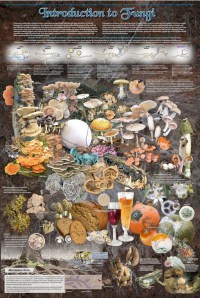
Readers posted great questions during the first week of Ask the Artist with Kandis Elliot. The current conversation is about drawing and digital technology, working with eye health challenges, and incorporating the award-winning poster, Introduction to Fungi, into a class about fermented foods.

Where do you want to take the conversation this week?

Post your comments and questions to Kandis today, then watch for Kandis’ replies during her office hours on Friday.

Read Full Post »

Visit The Botany Studio

Kandis Elliot is the Senior Artist at the Botany Studio at the University of Wisconsin, Madison (UW). Kandis creates the stimulating educational posters The Studio publishes and distributes to educators all over the world. The poster Introduction to Fungi by Kandis and colleague Dr. Mo Fayyaz was recently awarded First Place for Informational Graphics in the eighth annual International Science & Engineering Visualization Challenge 2010 sponsored by the journal Science and the National Science Foundation.

Prior to her current position as Senior Artist, Kandis earned her BA (1970) and MS (1980) degrees at the UW, and worked as a faculty assistant in the Biology Core Curriculum, prepping labs and helping to teach courses in zoology, botany, physiology and other biological subjects. During those years, Kandis (one of those “artsy” kids in grade school) was often called on to illustrate lab manuals — thus giving her experience in, and a taste for, scientific illustration.

In 1988 Kandis earned an Associate Degree of Applied Arts at Madison’s tech school, where she developed skills in preparing graphics and text for publication. When Botany’s illustrator position opened, Kandis applied for the job at once, knowing that the computer age was dawning for scientific illustration, even though she did not yet use a computer for graphics. When she was hired as the new Senior Artist, Kandis marched into the Macintosh lab at UW-computing, held up a $100 bill and yelled, “who wants to teach me this stuff?” Four hours later she had the basics of Adobe Illustrator and the rest is history.

Kandis now specializes in scientific illustration, typesetting and design. She uses her computer savvy to create educational posters, brochures, books, journal figures and information graphics for professors, students, and the occasional private client.

Please welcome March Feature Artist, Kandis Elliot!


ARTPLANTAE: When was the Botany Studio established?

KANDIS ELLIOT: I gave the studio its name when I began working here in 1988. The UW was founded in 1848, when all “natural history” departments in higher-education institutions had artists on staff. Back then, illustrations were done in pen and ink. Now illustrations are done on a Mac using a Wacom tablet and photography is done with a digital camera.


AP: Are the posters created for a specific class on campus or are they always created for a broader audience?

KE: They are created primarily for our departmental use, but work for a general audience as well. When Dr. Mo Fayyaz, the UW-Botany Greenhouses and Garden Director, wanted signage he could use with school groups and that could also be used in the college classroom, we were off and running with colorful visual posters that had a bit of botany tucked in.

We only produce about one or two posters per year because we work on these projects on our free time. The posters are printed in the studio when ordered via our website. They are printed on heavy semigloss 260-lb. paper using archival pigmented inks. Since earning First Place for Informational Graphics, we have been swamped with orders. The Botany Studio is now setting up a credit-card webstore to get past the snailmail bottleneck.


AP: The Botany Studio posts an hourly rate for non-departmental projects. Does this mean instructors from outside the University of Wisconsin can work with the Botany Studio?

KE: Yes. We have done work for our Department of Natural Resources — our “fish and game” environmental agency. We’ve also done work for wildlife groups, prairie enthusiasts, and parents of Girl Scouts. All of these projects are done on our own time or the rare free time.


AP: How many hours of free time do you set aside for the posters?

KE: About one day per week. I work four days (I’m a part-time employee) and then spend one day working on outreach projects.


AP: How long does it take to take a poster from concept to finished product?

KE: The easy ones only take a month. “Fungi” took nearly 6 months, including my crash course in fungology.


AP: How do you make a scientific illustration?

KE: When dealing with living or preserved material, we start with digital photos and/or scans. These are either retouched for clarity or completely “repainted” in Photoshop to create a more stylized figure. Often I need to make a diagram or “cartoon” with copious labels to accompany the image so that parts of, say, a micrograph, can be identified. If I don’t have excellent reference material, I take some mind-reading pills and go the science fiction route. Of course, this sort of mojo has to be fussed up to; scientific journals will not accept photos adulterated in any way unless they are send as an “illustrative concept figure.”


AP: You compose books in the Botany Lab. What types of books do you create?

KE: Textbooks, field guides and more. For example, we created a field guide for the spring woodland wildflowers for the UW-Arboretum, going out and digitizing all the flowers as they came into bloom (what a way to make a living!). We went on to make a much larger guide to prairie plants. These books are sprinkled with nifty extra tidbits about various species and esoteric but cool stories known by our faculty and staff that are normally shared only with botany students.


AP: Which software programs do you use to create the posters?

KE: I use all Adobe products–industry standard, and required by the publishers with whom we work.


AP: Do you paint or draw in your spare time?

KE: What’s “spare time?” No, seriously, I used to paint portraits of folk’s pets in the 1960’s and charge $25 per painting. It helped pay my tuition back in those knee-jerk reactionary hippy days. Over the years my vision slowly circled the drain (I was stabbed in the eye with a busted bottle when I was a kid) and could do less and less handwork. However, a giant monitor and the Wacom tablet let me keep illustrating.


AP: Do you have any advice for botanical artists who want to learn how to draw on the computer?

KE: Learn the same way I did. Glom on to someone who does it and get a couple hours of basics. Then play with Photoshop — press all the buttons, see how long it takes to crash the computer, that sort of fun. When you get a little experience, a one-day class is useful for filling in the gaps.


AP: How does working on a tablet differ from working on pen and paper? What are botanical artists most likely to notice during the first two hours of working on a tablet?

KE:

  • You don’t need to apply nearly as much pressure with a stylus.
  • Lots of gee-whiz feedback. The look and color of a digital drawing are the same or better, given the millions of colors available, and the multitude of effects you can do.
  • You don’t experience the texture of a paper or canvas surface. You are able to draw on a tablet with your pen floating above the surface of the tablet.
  • You have to get used to working without turning your tablet like you may be accustomed to turning your paper.
  • Digital painting creates flat prints. The image may look great, but the physical texture of paper, canvas, paint gobs, etc., are absent. On the other hand, if you wish you had stopped painting 25 strokes ago, you can undo these 25 strokes in your History Palette. And let’s sing the praises of that “forgiveness of sins” button (CMD-Z or CTRL-Z)!
  • You have more options with a digitizing tablet. You are not stuck with a static drawing. Working with a digitizing tablet is much more satisfying for artists who want to work quickly, not inhale fumes, and like to try several variations without losing any of the stages.
  • And keep buying those lottery tickets so you can afford the loaded computer, tablet, camera and quality printer you’ll need for the perfect digital graphics experience.


Get Your Posters!

The Botany Studio has created ten beautiful and informative posters. Enlarged images of each poster can be viewed on the Studio’s website.


Ask The Artist with Kandis Elliot

Kandis will hold office hours this month. She will respond to readers’ questions and comments on March 4, 11, and 25. You are invited to post your questions in the comment box below and to follow the conversation as it progresses.

As always, you do not need to leave your full name. Your first name or a username will do.


What would you like to learn from Kandis?


Read Full Post »

« Newer Posts - Older Posts »