Feeds:
Posts
Comments

Archive for the ‘general botany’ Category

This month the National Tropical Botanical Garden offers two opportunities to learn about plant exploration.

At their garden campus in Miami, The Kampong, the National Tropical Botanical Garden is offering guided tours of the private home and garden of botanist and explorer, David Fairchild. Tours are given on Wednesdays and Saturdays through January. Tours begin at 10:30 AM. Reservations are required.
View Details/Register

Meanwhile, at their main garden in Kaua’i, the National Tropical Botanical Garden will host a viewing of Pearl of the Pacfic: Exploratory Botanist Steve Perlman on January 19 (5:30 – 7:00 PM). View Details/Register

To get a sense of what plant explorers do in the field to gain a better understanding of the plant world, watch this video of botanist Steve Perlman at work on the Hawaiian island of Moloka’i.

Read Full Post »

Learn about botany and botanical art this Spring at UC Riverside. The following information has been added to Classes Near You > Southern California.


University of California, Riverside

www.extension.ucr.edu
The following courses are offered through UCR Extension.

  • Desert Flora – March 2-4, 2012 at UCR Palm Desert. Learn plant identification techniques while enjoying the springtime bloom in California’s Coachella Valley. Info / Register
  • Native Plants: Preserving the Harvest – March 16-17, 2012 at the Dorothy Ramon Learning Center in Banning, CA. Learn how indigenous peoples of southern California use native plants in health and nutrition. Info / Register
  • Botanical Illustration of Desert Flora
    Friday March 30, 2012 (8-10 PM); Saturday March 31 (8 AM – 5 PM) and Sunday April 1 (8 AM – 4 PM). A field study course at the Desert Studies Center (Zzyzx), three hours north of Riverside near Baker, CA. Learn about desert flora while learning techniques used by botanical illustrators. Students will work in the field using pencil, pen and watercolor. Course fee includes two nights lodging (dormitory style) and meals. Registrants will receive information about the Center and what they should bring with them. Visitors not permitted. Cost: $325 credit; $245 non-credit.
    Info / Register

Read Full Post »

The coloring book, Colorful Edibles, was the brainstorm idea of botanical artist and organic farm owner, Wendy Hollender. Grounded in a desire to promote the work of the American Society of Botanical Artists (ASBA), a small committee was formed to raise awareness about the ASBA through the development and sale of products created by its members. It took about one year for the first idea, a coloring book, to take shape. Botanical illustrator Bobbi Angell signed on as Co-Project Coordinator and Editor. Graphic artist and book designer, Charlotte Staub Thomas, also joined the project. Together they created a coloring book highlighting the contemporary botanical art of 26 ASBA members.

Editor, Bobbi Angell, says it was easy to get artists involved in this project. The project team made a specific request for pen-and-ink illustrations so that they could include as many ASBA artists as possible. They received 85 submissions from 38 artists. Because they wanted to keep the book inexpensive, only 36 illustrations were selected. The illustrations in Colorful Edibles showcase the strong and diverse line work of ASBA members, and includes work from new artists along side work by more established artists, things Angell said the project team was hoping to accomplish.

Most pages of the coloring book feature a full-page illustration. Informative passages about each fruit and vegetable are included on each page. Angell wrote the passages with young readers in mind. Through her writing, Angell makes reference to the origin and domestication of each fruit and vegetable so that readers learn about the history of their food. She also includes comments from contributing artists.

Colorful Edibles is truly a coloring book for all ages. Garden teachers will find this activity book to be a helpful teaching tool because it not only explains where familiar fruit and vegetables come from, it touches upon the subjects of botany, history, agriculture and nutrition.

The project team hopes to expand the coloring book format to other books about native plants and wildflowers.

Colorful Edibles can be purchased on the ASBA website.

Read Full Post »

Save 25% until October 7, 2011

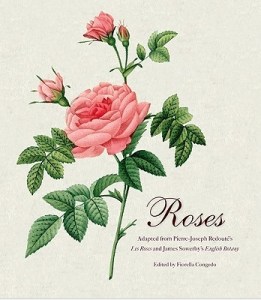
Roses
Pierre-Joseph Redouté
James Sowerby
$22.99

The paintings and drawings of botanical artist Pierre-Joseph Redouté (1759-1840) and naturalist/illustrator, James Sowerby (1757-1822), fill the pages of Roses, a collection of botanical art packaged neatly in a softcover book. One hundred fifty-nine of Redouté’s rose paintings and eighty-eight of Sowerby’s paintings/line drawings of plants in the Rosaceae (Rose Family) are featured. The plates are shown exactly as they were created. Descriptions of each rose can be found in the book’s index.

A DVD containing images from the book is included. Image files are in .jpg and .png format and can be viewed directly from the disc and in programs such as Adobe FreeHand, Photoshop, and Illustrator.

This new title is available at ArtPlantae Books for $17.24, 25% off the list price of $22.99. This special offer expires Friday, October 7, 2011.

Go to ArtPlantae Books to read more about this title.

Read Full Post »

Make note of the following updated information at Classes Near You > Iowa:

Brenton Arboretum, Dallas Center

www.thebrentonarboretum.org
The Brenton Arboretum is a 140-acre arboretum established in 1997 featuring 2,600 trees and shrubs. Most of the more than 175 species of trees and shrubs are organized by species to ease learning and to emphasize the importance of trees in our world. The event schedule for 2011 includes:

  • Founder’s Tour of Trees – Saturday, September 10, 2011; 10:00 AM – 11:30 AM. Discover the beauty of trees and shrubs with founder, Buz Brenton. This walking tour is free for children and members. View a list of trees and shrubs in Brenton Arboretum’s collection online. Non-members, $5 per adult. Please contact the Education/Outreach Director to register or call (515) 992-4211.
  • Leaf Collection Identification Workshop – Wednesday, September 21, 2011. Drop-in between 2:00- 4:30 PM
  • Make A Leaf Collection Book
    Saturday, September 24, 2011; 9-12 AM.
  • Second Annual Leaf Collection Exhibition
    Sunday, November 6, 2011; 1-4 PM.

Read Full Post »

Stephen Joseph, Herbarium Print. California Polypod, Polypodium californicum. Polypodiaceae. Hab. Sierra Nevada, California. Collected by John Muir. 1875

The Oakland Museum of California (OMCA) presents A Walk in the Wild: Continuing John Muir’s Journey, on view August 6, 2011, through January 22, 2012, in the Museum’s Great Hall. In this provocative new exhibition, OMCA celebrates the legendary naturalist’s life, work, and legacy in California and beyond. Told through OMCA’s collections of art, history, and natural science, as well as interactive digital technology and extensive loans―Muir’s journals, manuscripts, original drawings and plant collections―the exhibition pays tribute to the “Father of the National Parks,” whose legacy continues to inspire environmental stewardship in California today.

Through interactive, multisensory displays, A Walk in the Wild invites visitors to explore the vast natural environment of California and experience the sights, sounds, and smells that Muir encountered during his explorations. Through video and interactive technology, visitors will be able to meet “Modern Day Muirs” and learn about their work and motivations. The featured Modern Day Muirs include: Shelton Johnson, Yosemite National Park ranger; John Wehausen, wildlife biologist; Dune Lankard, Alaskan environmental activist/fisherman; Rick Deutsch, Half Dome hiker/author; Jean Krejca, cave explorer; Greg Stock, Yosemite National Park geologist; Steve Sillett, redwood canopy researcher; Tori Seher, Yosemite National Park bear biologist and Alcatraz bird biologist; and Kemba Shakur, tree planter for Oakland Relief.

“This exhibition is filled with wonder and discovery,” says guest curator Dorris Welch. “We all have many things to learn from John Muir’s legacy. To be able to honor and bring John Muir’s legacy into a modern-day light is an extremely important thing,” Welch says of the OMCA-exclusive show.

A Walk in the Wild: Continuing John Muir’s Journey is made possible by generous support from the Oakland Museum Women’s Board, The Bernard Osher Foundation, the J.M. Long Foundation and the University of the Pacific Library, John Muir Papers, Holt Atherton Collections/Muir-Hanna Trust.

The museum is located one block from the Lake Merritt BART station on the corner of 10th Street and Oak Street. The accessibility ramp is located at the new 1000 Oak Street main entrance. Daily hours and admission information are available online at the OMCA website.
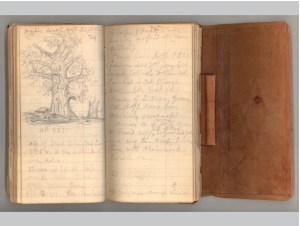
Journal. Yosemite Journal, 1872. John Muir Papers, Holt-Anderson Special Collections, University of the Pacific Library. ©1984, Muir-Hanna Trust.

Read Full Post »

Why are plants important?

A teenager asked me this question one day at an environmental education fair. I explained how plants are important because they are our source of food, medicine and clothing and picked examples that might strike a chord with her. I don’t think it worked. All I received in return was a blank stare and a polite nod.

This experience made me realize that I need to prepare a better answer, especially for this age group. It left me feeling compelled to record every encounter with a plant and plant by-product for the rest of my life. Fortunately, I found a wonderful resource that will help me articulate the value of plants to both young audiences and adult audiences alike.

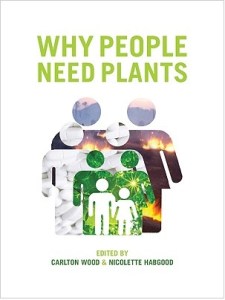
Why People Need Plants by Carlton Wood and Nicolette Habgood (2010) is a thorough reference that is sure to resonate with any audience. Here is what I like about this book:

  • It is written for a general audience and not loaded with statistics and scientific terminology.
  • Instead of saying, “We need plants for food”, Wood & Habgood (2010) provide a historical backdrop beginning with how our dependence upon agriculture began 11,000 years ago. They combine data from research studies with historical accounts to describe the botanical sources of food crops, nutrients and popular drinks such as tea, coffee, cocoa and cola. In their discussion about plants and health, they provide a great visual of “The Eatwell Plate”, the UK’s version of the USDA Food Pyramid that, quite frankly, does a better job at showing how two-thirds of the human diet should come from plants. They also make the excellent point that the dairy products we so enjoy are derived from animals dependent upon plants, reinforcing the role plants play at all levels of the food chain.
  • Instead of saying, “We need plants for wood to build homes”, the authors explain the properties plants possess that make them valuable sources of wood and many other products. For example, they explain how the cellular structure of wood makes it a good insulator, why cork’s properties makes it a good source for flooring and engine gaskets and not just plugs for wine bottles. Wood and Habgood (2010) describe the four sources of fiber found in plants and how fiber has been used to make everything from rope for sailing ships to fishing line to flexible paper for money and tea bags. They even explain how plants are used by Mercedes Benz to make automobile parts.
  • Instead of saying, “We need to save plants just in case they have medicinal value,” Wood & Habgood (2010) confirm the world’s reliance on plants for medicine by beginning their chapter about medicinal plants with a statistic from the World Health Organization indicating that “80% of the world’s population still rely on plants for their primary source of medicines” (Wood & Habgood, 2010). They go on to discuss the history of medicinal plants, the globalization of Chinese medicine, the discovery of aspirin, the discovery of the cancer drug taxol, and take a look at ethnopharmacology — the study of medicinal plants and the ethnic groups who use them — and the implementation of revenue-sharing agreements between drug companies and the communities where source plants are found.
  • Instead of saying, “We need plants for fuel,” Wood and Habgood (2010) describe the types of fuel that can be derived from plants. They explain why grass is a good source for biofuel and explain the differences between biodiesel and bioethanol using easy-to-follow graphics showing how both fuels are produced and used.
  • Wood and Habgood (2010) discuss how plants help forensic botanists solve crimes. Given the apparent popularity of crime shows, the inclusion of this information gives plants a modern edgy look even though the field of forensic botany has existed for 76 years. Pollen profiles, spore profiles and the growth habits of plants can provide valuable information when solving crimes. Broken branches and their “corrective growth” (Wood and Habgood, 2010) can reveal the route taken by criminals, pollen and spores can provide unique snapshots of an area, and plant DNA can be traced to crime scenes.
  • Wood and Habgood (2010) look at the big picture. Interesting and informative chapters about micropropagation, genetically modified plants, methods of natural plant protection, human impacts on the planet, plant conservation, and what the future of plants looks like given the need to feed a growing human population, provide a firm foundation from which to explore each of these topics in greater detail.

Citing stories taken from current news headlines, Why People Need Plants is an invaluable resource providing a succinct and comprehensive look at the relationship humans have with plants.

Why People Need Plants is available at your local independent bookstore.


Related Articles

Read Full Post »

« Newer Posts - Older Posts »