Feeds:
Posts
Comments

Archive for the ‘general botany’ Category

See what’s new at Brenton Arboretum at Classes Near You > Iowa:


Brenton Arboretum, Dallas Center

www.thebrentonarboretum.org
The Brenton Arboretum is a 140-acre arboretum established in 1997 featuring 2,600 trees and shrubs. Most of the more than 175 species of trees and shrubs are organized by species to ease learning and to emphasize the importance of trees in our world.

  • Winter Tree Anatomy & Identification – Saturday, January 28, 2012; 10 AM – 12 PM. Learn about neighborhood trees in this introductory course. Participants are invited to bring in their own specimens. Specimens should include twigs with buds, leaves, flowers and fruit/nuts when possible. Cost: Free for members, $5 non-members. To register, contact Lee Goldsmith or call (515) 992-4211.
  • Wednesday Wanderers – Every third Wednesday of the month; 4-6 PM. Discover your relationship to the natural world in these monthly gatherings that will explore many plant-related topics. Free for members, $5 non-members. To register, contact Lee Goldsmith or call (515) 992-4211.

Read Full Post »

First, learn about mushrooms…

Mushroom Identification
Saturday, February 4, 2012
10 AM – 12 PM

Learn how to identify mushrooms and which mushrooms are safe to eat with mycologist and plant pathologist, Dr. Jerrold Turney. Participants will also look for mushrooms on the grounds of the Arboretum. Cost: $25 members, $30 non-members. View Details/Register

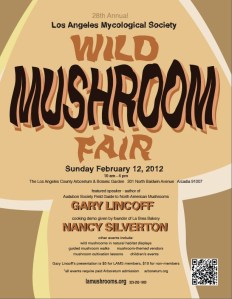
Then, go to the Wild Mushroom Fair!

Wild Mushroom Fair
Sunday, February 12, 2012
10 AM – 4 PM
Cooking demonstrations, mushroom growing demonstrations, books, art, activities and more at the annual mushroom fair hosted by the Los Angeles Mycological Society. The fair will be held in Ayres Hall. Click on the poster to learn about keynote speaker, mycologist and author, Gary Lincoff and how to purchase tickets for his presentation.

Read Full Post »

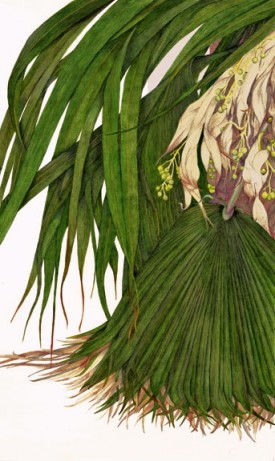
Pritchardia schauttaueri © 2011 Arillyn Moran Lawrence. All Rights Reserved.


Arillyn Moran Lawrence
is a southern California artist working in mixed media, watercolor and oil. Her paintings are both traditional and contemporary and have been featured in exhibitions across the US almost every year for the past 22 years.

Arillyn is also a botanical artist and a member of the American Society of Botanical Artists and the Botanical Artists Guild of Southern California. Five years ago, Arillyn began to document and illustrate endangered Hawaiian plants. Today we sit down with Arillyn to discuss how she preserves the plants of Hawaii for future generations through research and art.

ARTPLANTAE: You have traveled to Hawaii every year for the past 50 years. Not too many people can say they have done this. What is it about Hawaii that keeps you coming back?

ARILLYN MORAN-LAWRENCE: I fell in love with Hawaii when I first landed there as a Pan American stewardess. I loved the smell of the plumeria in the air. Driving down Nimitz Highway, I thought back to Pearl Harbor, to the history, and to the war in the Pacific. I read the book Hawaii by James Michner numerous times. I began working for Pan Am because I was not finding a use for my Bachelor’s degree in art and advertising. I did find jobs at NBC and ABC in advertising, but I was lacking the skills needed to produce art for television. I also investigated medical illustration as an option, but found that it was a male-dominated field. Pan American offered a way to see the world and to study art and other job opportunities. I flew to the Caribbean and South America. I then transferred to the Pacific Division and flew to Hawaii, Fiji, New Zealand and Australia. Trips to Asia presented Tokyo, Hong Kong, Manila, Saigon, Singapore and Bangkok. Pan Am’s Pacific Division also flew to Paris and London on the Polar Route from the west coast. When I left Pan Am, I married, had 2 sons, returned to college for a teaching credential and then …..returned to Hawaii as often as possible.


AP
: When did you begin to document and paint Hawaiian endangered plants?

AML: I believe it was 2005 when I first read in the ASBA journal that they were planning to have an exhibition titled “Losing Paradise”. As Hawaii has many of the most endangered species on earth, I felt that I wanted to complete some paintings and try for entry to the show. I began studying Hawaiian plant species on the Internet. I bought the book Remains of a Rainbow by David Liittschwager and Susan Middleton and studied it until I had a plan as to what to investigate. I then booked tickets for Honolulu.

I contacted Ho’omaluhia Botanical Gardens, near Kaneohe, and discussed any endangered species that they might have in their collection. Then, I was directed to Foster Gardens and Lyon Arboretum on the Honolulu side of the island and Waimea Arboretum on the north shore. I was provided names of botanists who would assist me. I made reservations with all the botanists before I arrived and they have all been very helpful with information and their time.


AP
: Explain how you work with a botanist. Is the botanist’s role only to answer questions about plant morphology or does he/she select the specimens for you?

AML: I usually arrive in Hawaii with plants that I want to study with the botanist at their arboretum. It is important to know when the plants are blooming as Hawaii is tropical, but not all plants are blooming all the time. However, on my first trip, I also wanted to see what they had to offer so I let them introduce me to the plants and their histories. Now that I have been doing this for about 6 years, I ask the botanists to show me plants that are of interest to me and my collection.

An exceptional botanist, Karen Shigimatsu, at Lyon Arboretum has helped me over the years. She has walked miles with me and provided me with much valuable and wonderful information. Also, David Orr at the Waimea Arboretum has assisted me in numerous ways by driving me around in a golf cart, going long distances so I can see everything, propping me up while I photograph on slanted hillsides and answering all of my questions. He is full of great information and the ultimate teacher.

It is a lot of work to digest everything the botanists know very well. I have my camera ready to photograph the plant label and then the plant. We work rapidly and move through a lot of specimens and information. Afterward, it is hard to sort out all of the information. But if you return to the specimens that you have seen, make notes and draw the plant, you will have good accurate information to use as a reference. Good shoes are a necessity in the gardens as volcanic ground can be difficult. The ground can be dusty, wet, slippery and rough. The deep red earth sticks to your shoes, you, and stains both. Long pants and tee shirts with long sleeves and bug spray is essential as the mosquitoes seem to know that you are new and have nice blood. With these problems solved you should be able to pay attention to the wonderful plants and get as much information as possible.


AP
: How many plants do you plan to illustrate?

AML: So far, I have completed Hibiscus clayi twice — one H. clayi from the sunny Waimea Arboretum on the north shore and one H.clayi from the Lyon Arboretum in the rain forest. Hibiscus arnottianus, Gardenia brighamii, Pritchardia schattaueri, a deep-red ancient sugar cane, and a beautiful black taro plant. I am currently working on Abutilon eremitopetalum. So eight plants so far. I plan to complete another 10-12 paintings.

During my last trip to Hawaii in October 2011, I studied all of the Hawaiian Pritchardia palms in the Waimea Arboretum and the Lyon Arboretum. I spent days doing color test strips for the palms. In the beginning I used colored pencils but found that the colors were not easily translated into watercolors. So, I use a small light palette with all the necessary colors. I painted fronds, bracts, seeds, trunks and flowers and noted all the formulas I will use to recreate each part of the palm (e.g., Pth Bl+WYel+PRo, Pthalo Blue, Winsor Yellow, Permanent Rose).

My field sketchbook/journal is made by the Bee Paper Co. and is 6″ x 6″. The scan included in this article is from my book of color
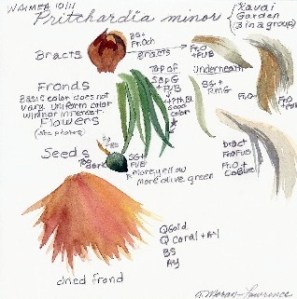
Pritchardia sketch © 2011 Arillyn Moran Lawrence. All Rights Reserved

swatches with notes from my most recent trip. Keeping things small, I used a 6″ X 6″ book of hot press Italian paper by Cartiera Magnani. It is 140 lbs., acid-free and pH neutral. I normally use Fabriano Artistico cut into long strips, but I had to keep this simple and small so I could easily move around from palm to palm and store my notes easily. I had a carry-on bag with wheels and I used that in Waimea because of the distance I had to travel. I also had my light plein air collapsible chair with me, as I was working with the plants for hours. At the Lyon Arboretum, I had my husband drop me off with my backpack. It is nice to have a patient person there to help you out.


AP
: Do you work on your endangered plant project at home or do you only work on it while in Hawaii?

AML: I always work at home on all of my paintings because most of my paintings are large. You need to have clean work and that would not be possible in the tropics working plein air. I do the color test strips when on-site as I feel that leads to accuracy and knowledge.

Painting on-site is not easy as every plant I have painted requires lots of walking. The rain forest can be really wet and slippery. The earth can also be dry and it can be very hot as in Koko Head, where all the Hawaiian plants are located at the farthest point, so you don’t want to carry much. Also, volcanic earth on a steep hillside can give way and you can end up down at the bottom of the hill. It is soft so you aren’t hurt but now you need to climb back up to your specimen again. Or, it can be dry one minute and raining the next so an umbrella is a necessity. It is hard to manage a sketchbook, a water bucket, one or two brushes and some paper towels while you are moving around getting test strips for color. I travel light and know what I want to capture.


AP
: When this project is completed, what’s next?

AML:It is never going to be completed. Susan Frei Nathan suggested to me that I should continue with my passion for Hawaiian endangered species and then donate all of my paintings to a museum in Hawaii for future generations.


AP
: What advice do you have for botanical illustrators interested in studying and documenting local native plants?

AML: Know what your passion is. Study and paint and your passion will emerge.


Related Resources
:


View Arillyn’s Work

  • Catharine Lorillard Wolfe Annual Members Show at the Salmagundi Art Club at 47 Fifth Avenue, New York, NY (March 18-30, 2012)
  • Grow! A Garden Festival, Los Angeles Arboretum & Botanic Garden, Arcadia, CA (May 5-6, 2012)


Recent Awards

First Place, The Old Boat Yard, watercolor. Southern California Plein Air Painters Association Gallery, Newport Beach, CA. November 6, 2011 – January 2, 2012.
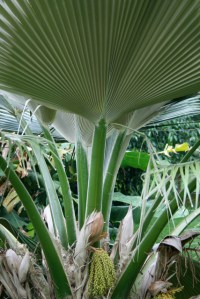
One of Arillyn's painting subjects. ©2011 Arillyn Moran Lawrrence. All Rights Reserved
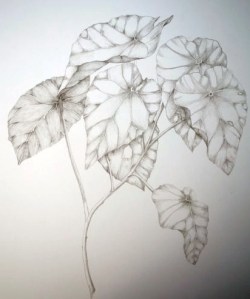
Abutilon eremitopetalum, endangered; work-in-progress to become watercolor over graphite. © 2011 Arillyn Moran Lawrence. All Rights Reserved

Read Full Post »
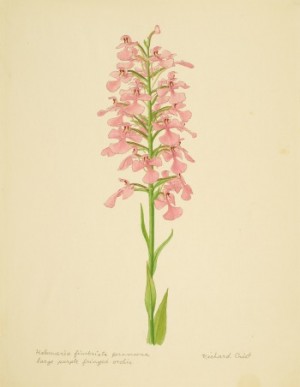
Habenaria fimbriata peramoena, Large purple fringed sic orchis Platanthera peramoena (A. Gray) A. Gray, purple fringeless orchid, Orchidaceae (orchid family), watercolor on paper by Richard Crist (1909–1985), HI Art accession no. 6615.309. © 2012 Richard Crist Estate. All Rights Reserved


Native Pennsylvania,
A Wildflower Walk

Hunt Institute
Carnegie Mellon University
March 2 – June 29, 2012

The Hunt Institute for Botanical Documentation and the Botany department at Carnegie Museum of Natural History will celebrate the native wildflowers of Pennsylvania in a collaborative exhibition opening in March.

Native Pennsylvania, A Wildflower Walk allows visitors to take a virtual walk through a southwestern Pennsylvania growing season and become more familiar with some of the native wildflowers that are integral to so many relationships. Information about Pennyslvania’s many parks, woodlands and wetlands is provided throughout the exhibition. Visitors are encouraged to follow their visual walk with a physical one in many of the state’s wildflower habitats.

Thirty-six wildflower watercolors by Richard Crist (1909–1985) from the Institute’s collection illustrating the simplicity and beauty of Pennsylvania’s native species will be on view. Coupled with Carnegie’s significant herbarium specimens, these pieces combine to create a visual wildflower walk through Pennsylvania’s blooming seasons with a focus on endangered, rare and threatened species within Pennsylvania. Additional watercolors by artists Lyn Hayden and Andrey Avinoff (1884–1949) also underscore the exhibition’s emphasis on the importance of herbaria and their contributions toward research, education and conservation.

Thoughout spring and early summer, visitors can learn more about Pennsylvania’s native plants through a series of public talks that will occur at the Hunt Institute on Sunday afternoons. All talks are free and begin at 2 PM. Plan ahead to attend the presentations below:

  • Why Do Plants Bloom When They Do? Spring Ephemerals and Other Seasonal Flowering Patterns – March 18; Steve Grund, botanist
  • Pressing and Mounting Specimens for a Personal Herbarium – March 25; Jeanne Poremski, landscape designer/botanist
  • Wildflowers of Pennsylvania – April 15; Dr. Mary Joy Haywood, botanist and plant pathologist
  • Wildflowers in the Home Garden – April 22 (Earth Day); John Totten, landscape architect
  • Gallery tour of Native Pennsylvania, A Wildflower Walk (in conjunction with Carnegie Mellon commencement ceremonies), May 20
  • Rare Plants of Pennsylvania – June 24; Bonnie Issac, collections manager at Carnegie Museum of Natural History and exhibition co-curator. This presentation will be held in conjunction with the Hunt Institute’s Open House.
  • Early Pennsylvania in Writing and Images – June 25; Angela Todd, Hunt Institute Archivist. This presentation will be held in conjunction with the Hunt Institute’s Open House.

The exhibition will be on display on the 5th floor of the Hunt Library building at Carnegie Mellon University and will be open to the public free of charge.

Hours: Monday–Friday, 9 a.m.–noon and 1–5 p.m.; Sunday, 1–4 p.m. (except 11 March, 6–8 April, 6 and 27–28 May). The library’s hours of operation are occasionally subject to change, please call or email before your visit to confirm their hours. For further information, contact the Hunt Institute at 412-268-2434.


About the Hunt Institute

The Hunt Institute for Botanical Documentation, a research division of Carnegie Mellon University, specializes in the history of botany and all aspects of plant science and serves the international scientific community through research and documentation. To this end, the Institute acquires and maintains authoritative collections of books, plant images, manuscripts, portraits and data files, and provides publications and other modes of information service. The Institute meets the reference needs of botanists, biologists, historians, conservationists, librarians, bibliographers and the public at large, especially those concerned with any aspect of the North American flora.

Read Full Post »

Never mind winter. Beginning this weekend, you can surround yourself with plants in the Greenhouse Classroom at Cylburn Arboretum!

Here’s the latest at Classes Near You > Maryland:


Cylburn Arboretum

http://cylburnassociation.org
The Cylburn Arboretum is the home of a post-Civil War estate built as a summer home for the President of Baltimore Chrome Works and his mother. Now a center for environmental education and horticulture, the Cylburn Arboretum hosts tours, events and activities for children and adults. The botanical art classes at Cylburn are taught by botanical artist, Molly O. Hoopes. Learn more about Molly in the ASBA Members’ Gallery.

    Winter Botanical Art and Illustration
    Saturdays, January 14, 21, 28, 2012. 10 AM – 2 PM. Botanical art and illustration is a centuries-old traditional art form combining art and science to communicate information about plants through beautiful and scientifically accurate renderings. This art form is becoming an increasing popular method for teaching about plants, as habitat degradation and climate change so drastically affect native species. Learn how to draw plants in scientific detail and practice the artistic techniques needed to create beautiful and lasting plant portraits. Beginners will acquire new knowledge and skills and experienced artists will refine techniques and find fresh directions for their work. Learn in a positive and encouraging environment from instructor Molly Hoopes who studied botanical illustration at Gage Academy and at the Brookside Gardens School of Botanical Art and Illustration. Molly is a member of the American Society of Botanical Artists. Cost of 12 hours of instruction: $180 members, $215 non-members. Fee due at time of registration. Call (410) 367-2217 to register. Location: Greenhouse Classroom.

Read Full Post »

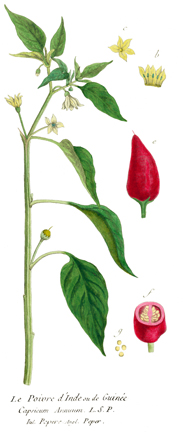
Image courtesy of the Lloyd Library and Museum


Peppers in Image and Word

Lloyd Library and Museum
January 14 – April 13, 2012

The Lloyd Library and Museum in Cinncinnati, OH celebrates Capsicum annuum (the chili pepper) in an exhibition that will feature books from the 16th through 21st centuries, the photography of Eduardo Fuss and the work of Jean Andrews, David Carangilo, Amal Naj, Jeff Schickowski and W. Hardy Eshbaugh.

An opening reception will be held this Saturday, January 14, from 4-7 PM.

Arrive early to learn from pepper expert, W. Hardy Eshbaugh, who will discuss the chili pepper in a special presentation titled,
Some Like It Hot: The Little Known World of Chili Peppers.

Eshbaugh’s lecture begins at 4:30 PM.

Map to Lloyd Library and Museum

Read Full Post »

Wild Green Things: The Art of Anne Ophelia Dowden
Andersen Horticultural Library
Minnesota Landscape Arboretum
January 18 – May 2, 2012

Anne Ophelia Todd was born in Denver and grew up in Boulder, Colorado spending her early years roaming the foothills of the Rockies. Dowden says, “I collected and drew any living thing that came my way, especially insects and flowers, and the study of nature was my absorbing hobby.”

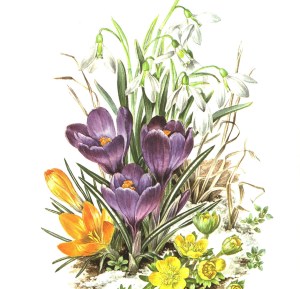
© 2008 Hunt Institute for Botanical Documentation. All Rights Reserved.

After graduated with an art degree from Carnegie Institute of Technology, the artist moved to New York City in 1930, and taught drawing for more than 15 years. During that time, she married fellow artist Ray Dowden. Dowden began her botanical illustration work in the early 1950s, when magazines began to use her artwork on their covers and in their articles. She was in her 50s when she wrote, designed and illustrated her first book, Look at a Flower.

After 60 years in New York City, Dowden moved back to Boulder in the early 1990s to be near family and her beloved mountains. She set up her studio and published her last book, Poisons in Our Path: Plants That Harm and Heal, in 1994, when she was 87 years old. Dowden died in 2007 at the age of 99.

Anne Ophelia Todd Dowden’s artwork will be on view in the Andersen library, the Snyder Building lobby and the skyway ramp between the Visitor Center and Snyder Building. There also will be works in an Oswald Visitor Center display case.

A special insiders look at the art of Anne Ophelia Todd Dowden by exhibit curator, Lucie Taylor, will occur when Wild Green Things opens next week. Visitors will have the opportunity to view Dowden’s books, original sketches and original paintings during a one-hour presentation scheduled for Wednesday January 18 from Noon – 1 PM in the Snyder Building. Limit: 30. Cost: $7.50 members, $10 non-members. Register Online

The Minnesota Landscape Arboretum is located in Chanhassen, Minnesota on State Hwy 5, nine miles west of the intersection with I-494. The largest public garden in the Upper Midwest, the Arboretum is part of the University of Minnesota College of Food, Agricultural and Natural Resource Sciences. Open 363 days a year, admission is $9 adults; free for members and ages 15 & under.

Read Full Post »

« Newer Posts - Older Posts »