Mairi Gillies is a sculptor, a horticulturist, an artist and an exhibition curator. She has traveled the world looking for plants, learning about plants and teaching others about plants. Combining her extensive knowledge of sculpture and horticulture, she created a unique way of preserving plants. She even created a new professional title — hortisculpturist.
This month, we get to learn about hortisculpture, plant preservation and more.
Please welcome Mairi Gillies, the Feature Artist for March!
ARTPLANTAE: Define the term “hortisculpturist”.
MAIRI GILLIES: I am an artist who handles horticultural concepts and materials in a sculptural way.
AP: How did you come up with such a clever and fitting professional title? What inspired you to become a hortisculpturist?
MG: My mother is a writer and poet and coined the term as a kind of family joke but as the saying goes ‘many a true word spoken in jest’, the term has become a truism of exactly what I do.
At the time when the term came into play with my work, I had already developed a passion for using plant materials but was at a transitional point in my career having completed a degree in Sculpture and was going on to study Horticulture with plantsmanship.
My inspiration to become a hortiscultpurist? That’s easy to answer; Nature.
AP: Your sculptures say much more than, “This is a _________ plant.” They provide information about a plant’s habit, its movements and, in some instances, where it grows. This is the case whether the sculpture is presented under glass, in a case or in a box frame. When designing a piece, do you think about the botany you want to teach through a piece? Have you ever created a list of the botanical topics or concepts presented in your sculptures?
MG: I see my work as breaking down into two distinct areas.
The first is educational interpretation, mainly in the form of plant preservation for semi-permanent exhibition displays. In this work I try to capture a moment in time. I wish the viewer to appreciate the intrinsic beauty of the plant simply as it exists. More often than not, I do very little to the specimens other than present them to the viewer exactly as they have been in the wild but often without the other visual clutter that distracts us from appreciating them. I find this works well with simple framing that shows off the three-dimensional qualities of the specimens.
A good example of this type of work would be the plant preservation project I undertook whilst working at the Royal Botanic Garden Edinburgh. This is a display of nearly 100 plant specimens under bell jars showing the taxonomic diversity of the plant kingdom and I tried to let nature do the talking. I have also produced dioramas (for example in Glenmore Visitor Centre) which display a wild, natural habitat and in some cases show the diversity of plant life one can find in a small, sometimes surprising space. Again when doing this, I let nature do the hard interpretational work and simply converge the specimens in a way that shows them off to the viewer.
My second area of hortisculpture is the art I produce. This will often use or contain plant specimens but I have the freedom to play with them first. I may alter the colour, cast them, warp their form, guild them or simply present them living, dying or preserved as part of a larger installation. I often find this is a liberating experience that offers me the giddy delights of playing with my muse after the relative control of trying to capture or mimic Mother Nature for the exhibition plant preservation work.
Although I find it simple to differentiate between these two areas of work and keep them quite separate in my own mind, I undoubtedly find my artwork is heavily influenced by the plant preservation work. More obvious inspiration can be taken from the research undertaken when working on interpretational projects, but equally, I can find myself inspired by the specimens themselves. For example, I can take a specimen out of preservation and reveal its mysterious veining that has become more distinct through drying out, or take a casting out of its mould and discover it’s form has been highlighted by being all one colour because of the resin it has been cast in. It is in these discoveries and observations that I then allow myself to revel when making my own artwork.
I am constantly in awe of plants and nature. I used to feel quite overwhelmed by the concept of trying to exist as a creative person when surrounded by all this creation. I use my own responses as a concept and emotion within my artwork, often tying them together with other observations on life and using plants as a medium and material within my artworks.
AP: Years ago I attended a presentation by a scientific illustrator who discussed how he creates 3-D plant models for exhibit pieces. His process was incredibly detailed, time-consuming, and all around fascinating. Do you create models for habitat dioramas or is your focus on presenting individual plants?
MG: I’ve worked on both dioramas and individual specimens and like the challenges that they present. The dioramas in the main have to look “realistic” so one can’t overfill them, but often they are trying to tell the story of many co-habiting species and frequently in a relatively small exhibiting space. One needs to capture the essence of a habitat, tell the story in short whilst keeping it looking natural. I love ‘old school’ museum dioramas. I remember as a child studying one with thin red cords coming from each specimen of interest that tied to the text information at the side making a wonderful red cobweb of information that seemed to spring from a slice of life.
I far prefer any ‘real’ three-dimensional exhibit to the modern technological exhibitions that have been in vogue as the touch screen generation has evolved. I have seen some wonderful exhibits where curators and exhibition designers have combined the two extremely successfully but I tend to be quite ‘old school’ in my taste when it comes to museum curation. I find musing over dioramas and old wooden exhibition cases stuffed with artifacts beautifully presented, far more alluring than being presented with yet another screen of information or text panel where the visitor and viewer is told what to think. I believe objects, whether of beauty or interest, cross cultural, language and age barriers.
By the same token, sometimes the quantity of specimens in habitat dioramas can allow the viewer to overlook the less ‘showy’ specimens that bulk out the rest of the display. If I wanted to make a visual interpretation of a specimen that may get lost within a diorama it may be best to highlight it in its own space, to allow it to stand-alone and speak for itself. A weed growing on the corner of a street may be a thing of great interest, beauty and significance that is passed by daily by the same audience that we may wish to highlight it too. If it was to be treated with reverence perhaps by elevating it to eye height and framing it alone in its own space, it would be viewed differently. In these cases I find single individual displays of plant specimens work best.
It has been my job to showcase some pretty unusual specimens from sooty moulds to giant Gunnera leaves within the same exhibit or to tell the story of high-altitude dwarfed trees that would need the context of other plants to show scale and I love these types of display challenges.
AP: I have seen a photo of the dehydrated Killarney fern you created for the John Hope Gateway at the Royal Botanic Garden Edinburgh and I have seen a photo of you working with clay. Are your sculptures made with clay? Dehydrated plant material? Can you provide some insight into your process?
MG: Absolutely! I use any means required to try and keep each specimen as true to the moment they were collected as possible. In the main part I collect my own specimens and will start work on them immediately and this is key to capturing the three dimensional qualities.
I cast using plaster, cold rubber, and alginate as moulds and pour with resins or plaster.
I dry using a silicone-based desiccation process that involves covering and filling the specimens so that they may dry out whilst being supported so that they are not structurally compromised.
I model freehand in air-drying clays.
I finish any three-dimensional, structure work of most specimens before painting them using non-waterbased paints (which would re-hydrate any dried specimens).
Some specimens are composites, made up using different techniques, for example a dried flower on the body of a cast tuberous stem with modeled fruiting bodies.
Within my artwork I love to vary and experiment with traditional botanical methods found in the herbarium and mix them up with old and new sculptural mediums. I have used specimens in spirits (Copenhagen solution), injected living flowers with food dye, gilded dried specimens using gold leaf, baked, sugared and microwaved plant specimens. I’ve also experimented with mounting the finished specimens in vacuum formed plastic, welded steel, light boxes and even clad the outside of a septic tank!
AP: Have you ever introduced other elements (like pollinators) in your pieces?
MG: Within the artwork I produce I have no boundaries whatsoever! I have dipped into concepts concerning life, religion, psychology, society and sometimes less beefy elements. It’s worth mentioning at this point that I do not make work that tries to convey these personal thought processes across to the viewer, but simply that these elements have often been a starting point or a viewpoint within which I find myself as a human within my own habitat.
I enjoy using other materials alongside plants from feathers, gold, wood, paint, graphite and I frequently use colour. I have also made work that is site-specific, or that may change through the course of an exhibition (e.g. from living to dying or from wet to dry, from colourless to coloured). I don’t ever constrain myself to only working with certain materials or elements.
In the plant preservation work, form follows function. It all depends on what I am trying to highlight, what story I am telling, what is the real star of the show. I have made pieces for exhibitions that are interactive for the viewer to respond to, I have worked with pollinators (although I was provided with the physical specimens by professional taxidermists) and made other exhibits that show biomimetic relationships. In each case I revert back to form following function because I believe each form I preserve from nature to be a thing of beauty.
AP: I admire all of your work. I have to say, though, that I am especially taken with Natura sensus. In this exhibition, you paired line drawings of plants with plant sculptures. Why?
MG: Thank you! Natura sensus was an exhibition that was shown as part of the Edinburgh Art Festival. It was made as an installation that was hung around the entire perimeter of the gallery. This meant that it could never be viewed as a whole but meant to take in the full colour spectrum the viewer had to turn around to try and take in an overview but would then miss the detail of the individual pieces. Each individual component was a box with a preserved plant specimen, line drawing and hidden guilded secret.
I wanted the whole exhibition to be greater than the sum total of its parts. Much like an individual plant within a landscape – you can see how I’ve been influenced by the diorama and exhibition work, but this work also stemmed from visiting two very different habitats on plant collecting expeditions. Firstly a visit to the virgin rainforests of Borneo where I was met by an explosion of greenery, a visual feast of lush tropical plant diversity which was epic in scale and profusion. The second expedition was to the deserts of Oman where you had to get down on your knees to see and appreciate the gem like flora that was hidden in high walled Wadi’s. I wanted to convey the elements of scale and perception of an overall view made up from many smaller, more detailed components to the viewer.
AP: Do you have plans to exhibit in the US?
MG: Not yet. I’d love an invitation to exhibit in the US and leap at a chance to do so. Even more than that, I’d love to make some site-specific work in response to a residency in the United States… there are so many different habitats, climates and diverse species to respond to.
Ask the Artist with Mairi Gillies
After being wowed by Mairi’s sculptures, share with her the thoughts and questions you have about her work. Send your comments and questions to education@artplantae.com by March 16, 2012. Mairi’s replies to your questions will be posted on Monday, March 26, 2012.
Please share this article and learning opportunity with friends, colleagues, fans and followers!
Related:
Read Full Post »
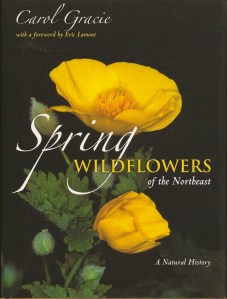 Last week we learned how to conduct and record observations of plants in the field. Today we are treated to a reference serving as a fine example of how the life histories of plants can be written and, more importantly, introduced to a general audience.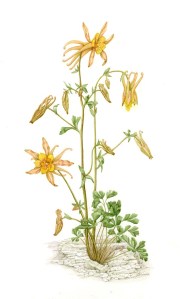


 ArtPlantae Today