Feeds:
Posts
Comments

Archive for the ‘gardening’ Category

The Rancho Santa Ana Botanic Garden is more than a research facility for academics. It is an outdoor classroom for the general public. Look beyond the garden’s beautiful 86 acres of California native plants, and you will find a research library and a calendar full of learning opportunities for the public to enjoy.


RSA Library

The research library is located in the main building and possesses about 50,000 bound volumes. The collection’s strengths are its books about systematic botany, evolutionary botany, and the botany, taxonomy, and ethnobotany of California plants. The library’s horticultural collection is specific to California and features extensive information about gardening in this western state. The RSA library is actively cataloging gray literature and has a special interest in documents about California.

Illustrated botanical books are also included in the collection, however these are very fragile. Most of the illustrated books were published before 1923 and are therefore in the public domain. Harvey Brenneise, Head Librarian, says individuals interested in botanical books should view the holdings of the Biodiversity Heritage Library and the Digital Library of the Real Jardin Botanico of Madrid. The Biodiversity Heritage Library is a consortium of twelve natural history libraries, botanical libraries, and research institutions who are digitizing books in order to preserve documented records describing the planet’s biodiversity. The Digital Library of the Real Jardin Botanico of Madrid is a collection of antiquarian books from the Royal Botanic Garden.

While the RSA library is open to the public, it is open by appointment only. Most of the library’s visitors are researchers and grad students who benefit greatly from the wealth of information at Brenneise’s fingertips. It used to be that requests for information would take days to process. Now thanks to email and the Internet, Brenneise says librarians are able to share information with each other in record time. He says all he does is send a request out to his network of fellow librarians and a librarian from another part of the world will respond and provide exactly what he needs. What makes this quick response time even more impressive is that the information retrieved is often several decades old. In fact, the botanical information researchers need usually is quite old. According to Brenneise, “In botany, there is nothing too old or too obscure. In other disciplines, if it wasn’t published within the past five years, [researchers] don’t want to look at it.” The botanists at RSA are lucky to have Brenneise in their corner. One doesn’t need to speak with him for too long to figure out there isn’t anything he and his deep pool of resources can not track down.


So Much to Learn, So Little Time

Rancho Santa Ana Botanic Garden hosts many special events, garden activities, and workshops throughout the year. Year-round attractions include docent-led activities at one of the garden’s Discovery Carts. From October through May, weekend visitors can learn about native plants through special hands-on activities. Discovery Carts are located in the Container Garden and the Horticultural Garden and are available on Saturdays from 11 AM – 1 PM and Sundays from 1-3 PM. Another year-round event is the FREE Native Plant Clinic conducted on the first Saturday of each month from 10 AM – 1 PM. Gardeners can ask RSA experts their most pressing questions about native plant gardening. Garden admission is not required to attend a Native Plant Clinic.

Annual events include a wildflower show, art events, garden tours, a Mother’s Day Brunch, a Father’s Day BBQ, special autumn events, and plant sales at the garden’s Grow Native Nursery. For instance, tomorrow (April 16th) is the kickoff of the Meadow Gardens sale of plants suitable to create your own meadow garden. If you’re a fan of California’s native succulent plants, then be sure to put the Cacti and Agaves and Succulents! Oh My! plant sale on your calendar. This sale will be held April 30 – May 2 from 10 AM – 5 PM.

The garden also offers a variety of special workshops that includes topics in beginning botany, advanced plant identification, basketry, book arts, gardening, photography, and botanical illustration. Bookmark this page to keep up with the garden’s extensive course offerings.


Visitor Information:

Adults, $8; Students w/valid ID $6; Seniors (+65), $6; Children (3-12), $4; Free admission for members and children under 3. Rancho Santa Ana Botanic Garden is located in Claremont, CA (map)


Related
:

Reginald Durant is the undeniable force behind Back To Natives Restoration, a 501(c)3 service learning organization dedicated to the teaching of ecological concepts through hands-on learning. He is seriously passionate about his work and has created an impressive organization demonstrating the value of native plant communities, hands-on learning, and community involvement. Durant stresses, however, that “without Lori Whalen, our volunteer Director of Education, writing all of our curriculum, promoting and marketing BTN, and coordinating our volunteers we may have been another Orange County secret!”

Starting in 2003, Durant worked as a docent for Crystal Cove and as an honorary docent for the Nature Conservancy. As a docent, he put his really good memory to work and developed a knack for learning plant names. Later as the Grounds Administrator at the Environmental Nature Center in Newport Beach, he had to learn how to name and identify 5,000 species of plants. It was at this time he observed the need for a native revegetation firm dedicated solely to the restoration of native habitat. He had a vision to create a pool of volunteers who would learn how to plant natives, collect seeds, understand the intricacies of habitat restoration and apply their knowledge to another site. Durant formed Back to Natives in 2005 and actively pursued Board members to convince them to join. Back To Natives became a non-profit corporation in February 2007.

Today Back to Natives (BTN) works in partnership with the National Forest Service to conduct the USFS/Back to Natives Restoration Training Program specializing in the restoration and conservation of wildlands in Orange County. The first graduating class of the Forest Service/BTN training program graduated in June 2008. All graduates have to donate one year of service (two hours per month). In 2008, 1,000 BTN volunteers put in 3,500 volunteer hours on public lands and non-profit properties.

Back to Natives also offers many environmental education programs for children in grades K-6. Outdoor workshops for boy scouts and girl scouts enable scouts to earn badges, pins, and become smart caring naturalists. The BTN Traveling Naturalist program visits classrooms and engages students in learning activities based upon the California State Content Standards for Science. These programs can be paired with the BTN Schoolyard Habitat Garden program to provide students with a truly unique hands-on learning experience ensuring a comprehensive understanding of the value of native plants and how they can be incorporated into the suburban concrete landscape.

In order to cover their operating expenses, BTN provides professional native landscape design services. When homeowners decide to trade their lawn for a native landscape consistent with local wildlands, BTN provides all of the specialized services one would expect from a landscape design company. And then they do one more thing…they turn a homeowner’s renovation project into a community service learning project. Back To Natives conducts a workshop on-site in the homeowner’s yard and teaches participants the value of native plants and how to incorporate them into a residential setting. This workshop is not a lecture-only learning opportunity for participants. The lecture part only lasts an hour. The rest of the time is spent planting the homeowner’s yard and learning how to plant and care for natives, be they small plugs or one-gallon plants.


An Illustrator’s Garden

Southern California illustrator, Deborah Shaw, decided to transform her front yard into a native landscape after attending a BTN workshop hosted at a private residence. She took a few moments to tell us about the transformation.

    How long did planning take?
    When we moved in, the front yard was “leftover landscaping” from the previous owners, consisting of a mixture of various grasses that made up an uneven lawn, some sickly-looking birch trees and some tortured begonias in the planters by the house. The grass was mostly overgrown thatch and impossible to mow with our small hand-push mower. The birch trees required a lot of water, and, even if well-watered, always look spindly and anemic when grown in this area.

    We spent a few years fantasizing about getting rid of the grass, and haphazardly researching any best method that didn’t involve massive doses of “Round Up” or other chemicals, especially since everything in our area goes directly to the ocean. An additional challenge was that we had too much dirt on the property. Coupled with the ankle-deep thatch below the grass, any water, including rainwater, would run directly to the gutters instead of staying on the property to water the plants and percolate down to replenish the groundwater. In the end, we simply got out the shovels in June 2009 and started digging up the lawn. Each shovelful contained lawn, thatch and about six inches of the dirt. We piled each scoop onto boards to dry out.

    It took months of shoveling and drying grass piles — from June 2009 through September. We rented and filled two “sod” dumpsters that were then picked up, taking away 16 tons of sod for mulching. We left the existing sprinkler system in place, then watered the dirt occasionally so we could pull up weeds and grass that were trying to make a comeback. Family members helped cut down the trees over the holidays and dig and form mounds for the planned landscaping.

    We met with Reginald Durant from Back to Natives in October 2009 to start planning the garden; did a lot of digging and shaping in November and December; and put the plants in the ground in January 2010. We then adapted the existing sprinkler system to a water-efficient system that would give the natives the small amount of water they needed in order to get established.

    How did you choose the plants for the plant palette?
    We met the Back to Natives crew at a workshop at a Costa Mesa home (which has since earned a LEEDs Platinum designation). Although I was familiar with natives from the deserts, mountains and foothills (and had my favorites), I was surprised to discover during the lecture the local Orange County natives I didn’t know about. We had looked at all kinds of natives at the Tree of Life nursery and the Theodore Payne Foundation, but liked the idea of growing what belonged in this area.

    Our plant preferences were based on the following:
    After soil, exposure, etc., were taken into account, we wanted to grow natives that were: edible, endangered, had wonderful scents, flowered throughout the year, had interesting botanical features, provided native butterfly and bee habitat, and provided native bird and hummingbird habitat.

    We also had a few “favorites” that we wanted to be sure to have in the garden, although there are a couple of favorites we had to give up on for a variety of reasons.

    How did you choose the plants for your illustration garden?
    I have always been enamored of natives, including the various California native habitats and the Sonoran desert (where I grew up). By growing natives, I would be able to live with the plants I love to paint. I had done some studies for paintings for “Losing Paradise,” the American Society of Botanical Artists’ exhibition on endangered species, but then didn’t have time to complete the paintings before the deadlines. I like the idea of growing locally endangered species, and being able to view the entire life cycle of the plant. Hopefully, we’ll be able to grow a variety of plants and then harvest the seed so that Back to Natives can then use them to restore habitat in other areas. If possible, we can be a small version of a native and endangered seed farm.

    There are genera and families of plants that I’ve always been attracted to: Dudleyas being one (we have five local species growing, including Dudley pulverulenta, Chalk Dudleya, one of my favorites). Also on the “must have” list was Trichostema lanatum, Wooly Blue Curls (smell just like Bazooka Bubble Gum—really); Mimulus aurantiacus, Monkey Flower; Lotus scoparius, Deerweed; and Sisyrinchium bellum, Blue-eyed Grass. Truthfully, all of the plants in our garden are on my “must draw” list.

    What plans do you have for the illustrations you will produce? Exhibit? Personal enjoyment?
    First on the list is personal fulfillment. I would like to continuously illustrate a species through its life cycle, throughout the year. By growing the plants, I’m also hoping to have a continuous supply to dissect and compare, so I can see how the species looks, as opposed to painting a portrait of one particular plant. I would also like to explore illustrating the same plant in a variety of mediums (including digital). If there are paintings that I feel are exhibit worthy, I’ll certainly submit them, but it’s not my overriding goal. The native garden feels like an extension of painting.

Would you like to help Back To Natives restore habitat?

Back To Natives is currently looking for interns for both the office and the field. Field assistants will participate in monitoring activities and help biologists who need assistance. Back To Natives also needs Corporate Sponsorships, memberships, and donations. Landscape design funds only part of their costs associated with habitat restoration and education (most of which is mainly insurance and staff). Back To Natives is a California Non-Profit Public Benefit Corporation and is a Non Profit Public Charity under section 501(c)3 of the Internal Revenue Code. Contributions to Back To Natives are deductible under section 170 of the IR Code as of February 13, 2007. They are qualified to receive tax deductible bequests, devises, transfers or gifts under section 2055, 2106 or 2522 of the IR Code.

To request more information, please contact the BTN office. Or attend Reginald Durant’s presentation at the LA Garden Show on Sunday May 2, 2010 at 3:00 PM. Download 2010 Garden Chat Schedule

Question for EE Week Readers:
How many of the 125 species of butterflies listed as native to Orange County have you seen lately? (Hint: native butterflies need native plant species to lay their eggs on!)


Additional Information
:

Are you wondering which native plants are included in Deborah’s plant palette? Here’s a list:

    Trees

    • Arctostaphylos glauca, Big Berry Manzanita [beautiful red bark, delicate urn-shaped flowers]
    • Platanus racemosa, California Sycamore
    • Sambucus mexicanus, Blue Elderberry [edible berries, also loved by songbirds, which, in turn, are loved by Cooper’s Hawks]

    Shrubs

    • Eriogonum fasciculatum, California Buckwheat
    • Ribes speciosum, Fuchsia Flowered Gooseberry [edible berries, beautiful fuchsia flowers and bright red spines; flowers adored by hummingbirds]
    • Salvia apiana, White Sage
    • Salvia leucophylla, Purple Sage
    • Salvia mellifera, Black Sage
    • Symphoricarpus mollis, Creeping Snowberry
    • Trichostema lanatum, Woolly Blue Curls

    Sub Shrubs & Perennials

    • Achillea millefolium, Yarrow
    • Epilobium canum, California Fuchsia [blooms with a red so vibrant it hurts to look at; will be an interesting color to try to mix]
    • Eriophyllum confertiflorum, Golden Yarrow [the yellow looks wonderful mixed with the blue from the Blue-eyed Grass]
    • Heuchera maxima, Jill of the Rocks
    • Lotus scoparius, Deerweed
    • Mimulus aurantiacus, Monkey Flower [one of the bright yellow varieties]
    • Satureja chandleri, Yerba Buena/San Miguel Savory
    • Sisyrinchium bellum, Blue-eyed Grass
    • Stachys bullata, Hedge Nettle
    • Lupinus succulentus, Arroyo Lupine
    • Brodiaea filifolia, Thread Leafed Brodiaea

    Vines

    • Clematis lasiantha, Pipestem Clematis
    • Calystegia macrostegia, Island False Bindweed, Island Morning Glory
    • Vitis girdiana, Southern California Wild Grape, Desert Wild Grape [small edible grapes, with big seeds]

    Ground Cover

    • Fragaria chiloensis [edible strawberries that were one of the original species that were hybridized into the strawberries we buy in the grocery store]
    • Aster chilensis, California Aster

    Grasses

    • Aristida purpurea, Purple Three Awn
    • Carex praegracilis, Field Sedge
    • Juncus mexicanus, Mexican Rush
    • Melica imperfecta, Coast Range Melic

    Succulents

    • Dudleya edulis, San Diego Dudleya
    • Dudleya hassei, Hasse’s Dudleya
    • Dudleya lanceolata, Lance Leaf Dudleya
    • Dudleya pulverulenta, Chalk Dudleya
    • Dudleya viscida, Sticky Dudleya

    Read Full Post »
If your school has a schoolyard garden, you need to know about TheMulch.com.

TheMulch.com is more than a website with a list of links to other websites. It is an online community of horticulturists, landscape architects, garden writers, radio talk show hosts, garden-related businesses, and gardeners who willingly share years of gardening experience with each other. You barely have to lift a finger to find information you need and if you become a member (it’s free) you will receive monthly Plant Care Reminders.

The community at TheMulch.com is centered around member profiles through which members share garden-related activities and interests. Before you start thinking Facebook, MySpace, and all the rest…..stop. Member profiles are not comprised of streams of rambling comments. Profiles at TheMulch.com are maintained by dedicated gardeners. A member’s profile is a comprehensive platform through which a member can share interesting articles, pose plant care questions, research plant care topics, list the plants they grow and even list plants in a Plant Cemetery so others can learn from their mistakes. When a Mulch member uploads a plant list, they are able to connect with other members who grow the same types of plants. Through the large discussion platform, members can discuss a wide range of gardening topics. Do you have questions about growing fruits, nuts and vegetables? There is a forum just for you. Do you need help with planning your waterwise landscape? Direct your questions to the Waterwise forum. Need help identifying a plant? Just say, hey what’s this? Is horticultural travel your passion? There’s a forum for this too. The horticulture professionals and avid gardeners at The Mulch are a wealth of information.


The Mulch Team Needs Your Help

As you harvest invaluable information from TheMulch.com, consider giving back to this knowledgeable gardening community. The Mulch needs your help with a very special project.

The Mulch Team would like to connect with a schoolyard garden in each region of the U.S. so it can enter plant care information relevant to each region. The Mulch team would like to apply the tools and information already in place to support learning activities in schoolyard gardens across the country. The only way they can accomplish this is by communicating with garden teachers directly. The Mulch Team would like to invite garden teachers to contact them with information about what they grow in their schoolyard garden. The founder of TheMulch.com, Mitch Shirts, has promised to work alongside garden teachers to implement a resource that will benefit garden-based learning programs.


Question for EE Week Readers

Are you involved in a garden-based program at your school or in your homeschool program? If so, tell us about your current project.


Fun Gardening Project
:

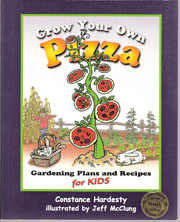
GrowYourOwnPizza_sm Contains plans to grow 26 themed gardens. Grow yourself “Your Personal Pizza Garden” or a “Stir Fry Garden.” Garden plans range from easy to advanced. Recipes included.
Buy

Read Full Post »

ArtPlantae is excited to participate as a national partner in National Environmental Education Week (EE Week). Blending the theme for EE Week (Be Water and Energy Wise) with botany and botanical art education has been a rewarding experience. So many people have given their time to participate in the event. There will be so much to learn!

Here is a hint of what is to come during EE Week at ArtPlantae:

  • Learn how one city involves its residents in water conservation activities and how both the city and residents teach others about the importance of water conservation.
  • Learn how an illustrator partnered with habitat restoration experts to restore habitat and create an illustration garden.
  • Does your school have a schoolyard garden? You’ll want to know about this practical tool.
  • Learn how a rain garden benefits the ocean and connects people with plants and their food.
  • Read how a natural science educator created a series of books about ecosystems.
  • Teachers, have you been looking for a way to incorporate nature drawing into your lesson plans? There are workbooks you’ll want to see!
  • Learn how an illustrator has created a venue to teach botany and botanical art from the ground, up.

EE Week is just around the corner!
To receive daily updates during EE Week, sign-up to receive news by email.

Read Full Post »

New at CLASSES NEAR YOU > CALIFORNIA:


Los Angeles County Arboretum & Botanic Gardens

www.arboretum.org

What Julie and Julia Have To Do With You: A One-Day Writing Workshop

January 23, 2010
10 AM – 2:30 PM
Cost: $60 members / $65 non-members (includes a copy of Paula Panich’s book, Cultivating Words: The Guide to Writing about the Plants and Gardens You Love)


Journalist and writing coach, Paula Panich, will teach a one-day writing workshop that promises to energize writers and help them write about their passion, be it gardening, plants, food, etc. Paula Panich has taught writing at the New York Botanical Garden, the Massachusetts Horticulture Society and Boston University to the Getty Center, the Huntington Library, and the Japanese American National Museum. She has contributed to the New York Times, the Washington Post, the Los Angeles Times, Gastronomica, and to other publications. She is coauthor of The Desert Southwest and Desert Southwest Gardens (Bantam Books), and is the author of a book about writing.

Can’t make it to Paula’s class? Buy her book at www.paulapanich.com. Read a review of Panich’s book that was written by botanical illustrator, Bobbi Angell, for the December 2005 newsletter of the American Society of Botanical Artists.

Read Full Post »

The following plant identification course at the Los Angeles County Arboretum & Botanic Garden begins soon. Participants will learn 10 plants each month. Register today!

      Plant Identification

      Dates: First Saturday of the month; August 1 (no class on Sept. 5-Labor Day weekend), October 3, November 7, December 5
      Time: 8:30 AM – 10:30 AM
      Instructor: Jill Morganelli
      Meeting Location: The main entrance to the L.A. Arboretum & Botanic Garden
      Fee: $5 members/$7 non-members

      Walk to interesting Arboretum areas where Jill will discuss each plant, including care, watering, placement and culture, and provide you with handouts. Bring your camera so you can catalog and remember each plant. Jill is the curator of the Kallam Garden, adjunct faculty at Cuyamaca College and the owner of Panorganic. To register, contact the Education Manager at (626) 821-4623.

Read Full Post »

The Gateway Science Museum and the Friends of the Chico State Herbarium sponsor many wonderful classes throughout the year. Below is a list of what’s coming up next on the calendar. To view a full listing of classes and to obtain registration information, go here.

  • Introduction to the Willows of California (SALICACEAE) – June 13
    This workshop is in danger of being canceled because of low enrollment. This class will be canceled by the close of business next Monday if enrollment remains low. Please send in your registration right away, and let the Gateway museum office know that it is in the mail so we can count you at COB Monday if your registration hasn’t arrived yet (gateway@csuchico.edu or (530) 898-3511). Only paid registrations can count towards the minimum enrollment. 
  • Flora of the Western Great Basin – June 21-28
  • Home Composting: From Basic to Advanced – June 27
  • Introduction to the Sunflowers (ASTERACEAE) – Sept. 12
  • Oak Woodland Ecology and Management – October 10

Read Full Post »

« Newer Posts - Older Posts »