Feeds:
Posts
Comments

Archive for the ‘Education’ Category

If you have taken drawing classes or browsed through books about drawing, you have no doubt seen or experienced the drawing exercise requiring you to copy an inverted line drawing. This technique is practiced because it is thought that inverting a subject while drawing it enhances drawing accuracy (Edwards, 1999).

Researchers Dale J. Cohen and Holly Earls (2010) designed an experiment to investigate if drawing inverted images leads to improved accuracy or if it leads to drawing errors. They hypothesized that interfering with an artist’s spatial perception would not result in more accurate drawings. They based their hypothesis on the research of Cohen and Bennett (1997) who determined that the foundation of drawing errors is rooted in an artists’ perception of a stimulus. Cohen and Earls (2010) hypothesized that, if an artist’s perception of a stimulus is distorted, then this would be evident in their drawing of this stimulus.

In their study, Cohen and Earls (2010) used human faces as the drawing stimulus because of the extensive drawing research involving human faces. The investigators assigned a drawing task to 121 students. Their sample population was composed of non-artists and artists. Half were assigned the task of drawing inverted faces and half were assigned the task of drawing faces in their normal upright orientation. Participants’ drawings were evaluated for the accurate representation of spatial relationships between facial features, the accurate representation of selected facial features, and the accuracy of whole-face drawings. Four critics rated the drawings. Two of the critics were art history professors and two were studio art professors.

The independent ratings of each critic were analyzed statistically. Data revealed that drawing inverted subjects had a significant negative effect on the drawing of spatial relationships. Rating data also indicated that orientation had no significant effect on the drawings of specific facial features or on the accuracy of whole-face drawings (Cohen and Earls, 2010). Because orientation had a negative effect on the drawing of spatial details, Cohen and Earls (2010) concluded that drawing an inverted stimulus does not improve drawing accuracy.

That is to say, drawing accuracy when one is drawing faces.

Can the same be said about the drawings of inverted images of plants?

For more information about Cohen and Earls’ investigation of this popular art technique, see Inverting an Image Does Not Improve Drawing Accuracy.


Literature Cited

    Cohen, Dale J. and Susan Bennett. 1997. why can’t most people draw what they see? Journal of Experimental Psychology: Human Perception and Performance. 23(3): 609-621. Read Review

    Cohen, Dale J. and Holly Earls. 2010. Inverting an image does not improve drawing accuracy. Psychology of Aesthetics, Creativity and the Arts. 4(3): 168-172. Web. http://people.uncw.edu/cohend/research/papers/cohen%20and%20earls%202010.pdf [accessed 11 October 2013]

    Edwards, Betty. 1999. Drawing on the Right Side of the Brain. See eBook
Read Full Post »

By Bonnie Driggers


Botanical Artists for Education & The Environment
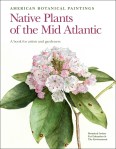
is happy to announce the completion of our book, American Botanical Paintings: Native Plants of the Mid Atlantic, which was more than three years in the making. It contains 60 reproductions of original paintings and drawings of plants and 40 original paintings of butterflies, moths, and other pollinators. For each plant, we briefly describe the plants and their habitats, provide relevant information about the plant families, and relate ways in which Native Americans or early settlers used the plants. For plants unsuitable for home gardens, we mention their environmental importance, such as food and habitat for birds and animals.

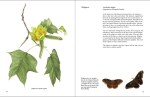
Tuliptree by Marsha Ogden. Image courtesy Starbooks.

Tuliptree by Marsha Ogden. Image courtesy Starbooks.

    Dr. Shirley Sherwood OBE, Botanical art collector
    This is a delightfully illustrated book, beautifully designed and with lots of variety in the choice of plant subjects. I admired the standard of painting and the fresh, appealing studies, which will be attractive to both naturalists and gardeners.


    Holly Shimizu, Executive Director, U.S. Botanic Garden

    The U.S. Botanic Garden was thrilled to be a part of this book as it embodies what we know to be vital — our world is better and richer with fine botanical art, and the plants in our backyards, in our woods, and along the roadsides are amazing!


    Peggy Cornett, Curator of Plants at Monticello

    Like the exquisitely illustrated floras from past centuries, this volume carries on a rich tradition of detailed and deftly created botanical artistry. Each painting portrays the abundance and diverse beauty of the natural world around us, from early spring ephemerals to the towering monarchs of our deciduous forests.


    Derek Norman, President, American Society of Botanical Artists

    Native Plants of the Mid Atlantic – a beautiful book on botanical art that speaks to the mind, the heart, and the environment.

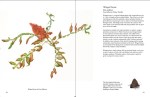
    Winged Sumac by Rose Pellicano. Image courtesy Starbooks.

    Winged Sumac by Rose Pellicano. Image courtesy Starbooks.

Botanical Artists for Education & the Environment (BAEE) created American Botanical Paintings: Native Plants of the Mid Atlantic for lovers of art and plants. We hope to foster a particular appreciation not only for the beauty of native plants and their artistic representations but also for their importance to the environment and to encourage, where practical, the use of native plants in home gardens.

Publication costs come from donations. BAEE will donate proceeds from the sale of the book to nonprofit organizations supporting native plant education, conservation, and horticulture.

Native-Plants-Mid-Atlantic-New Botanical Book-Inglett Publishing Custom American Botanical Paintings: Native Plants of the Mid Atlantic is now available to order from Starbooks ($39.95) with free shipping within the United States through December 31, 2013.

The book is expected to ship by February 1, 2014. An exhibition of the paintings will open on February 15, 2014, at the U.S. Botanic Garden in Washington, DC.


Bonnie S. Driggers, President, BAEE

www.baeecorp.org
baee.info@gmail.com


Also Available at Starbooks

Read Full Post »

The second annual Long Night of Arts & Innovation will occur this week in downtown Riverside. This is a HUGE event! There is so much to see, to do and to learn that it will be midnight before you know it. You can enjoy the festive atmosphere and encounter learning opportunities as you come across them, or you can plan your evening in advance to make sure you experience all that you can before midnight strikes.

While in downtown, be sure to visit local small businesses and explore all that local merchants have to offer. The Aurea Vista marketplace will be open regular hours (11 AM – 7 PM).

Visit ArtPlantae to browse through resources at the Teacher Trunk Show that will be in place on the lower level until October 31, 2013. ArtPlantae is pleased to be a participating organization in Connected Educator Month (CEM), a month-long celebration hosted by the US Department of Education.

Do you find ArtPlantae to be a useful resource?

If you do, please share your thoughts in the CEM Community Directory.
Thank you!


Related

Visit the Long Night of Arts & Innovation on Facebook

Read Full Post »

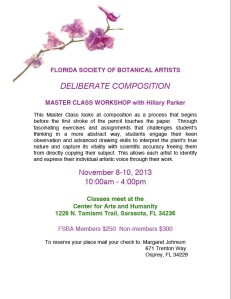
fsba_DeliberateComposition_Nov2013 The Florida Society of Botanical Artists (FSBA) will host a class with award-winning botanical watercolor artist Hillary Park in November.

Parker will teach the course, Deliberate Composition, November 8-10, 2013. In this course, she will lead botanical artists through exercises and assignments that will help them express their own voice in their work.

This master class workshop will be held at the Center for Arts and Humanity in Sarasota, Florida (map).
FSBA Members $250, Non-members $300

To register for this workshop, click on the image to download the course flyer.

This information can also be found at Classes Near You > Florida.

Read Full Post »

The oldest non-profit on the Monterey Peninsula, the Lyceum of Monterey County is expanding its botanical art program by adult and family classes to the extensive list of hands-on learning opportunities they provide for Monterey students.

If you live in the Monterey area and are interested in classes about botanical art and nature journaling, visit the Lyceum website to view their current schedule. Here is a class with Nina Antze that will be offered later this month:


Drawing Autumn Leaves in Colored Pencil

Autumn is the perfect time to explore colored pencil techniques with all the beauty of the changing leaf colors, seed pods, gourds and berries. Their unique colors provide the opportunity to practice mixing and layering color. Learn to create rich reds, browns and purples, and explore a variety of colored pencil techniques including burnishing and impressed line. Leaves and other natural materials to draw will be provided, or you may bring in your own beauties.

  • Ages: Teen – Adult
  • Dates: October 26, 2013
  • Hours: 10:00am – 3:00pm
  • Instructor: Nina Antze
  • Fee: $80 (half off additional family members)
  • Size: Limited to 8 students
  • Register Online

This information can also be found at Classes Near You > Northern California.

Read Full Post »

Visit Chris Taylor's website

Visit course details

Chris Taylor
www.cjtbotanicart.com
Horticulturist, historian, bookseller and artist, Chris Taylor has been drawing since childhood. A graduate of the distance learning diploma course by the Society of Botanical Artists, Chris now teaches botanical art in Wales.

Below is a list of Chris’ upcoming workshops:

    Harvest Fruit and Vegetables
    October 25, 2013
    Learn how to paint textures, form and home-grown produce. Cost: £55


    Seed Heads, Cones
    and Conkers

    November 22, 2013
    Papery seed heads, cones and shiny conkers! Cost: £55


    Evergreen Leaves
    and Berries

    December 13, 2013
    Paint holly, ivy and mistletoe this holiday season. Cost: £55

Click on the image at left to view course details.

This information has been added to Classes Near You > Wales.

Read Full Post »

2792 CEM Medium Rectangle-300x250 d1_lvr The US Department of Education has declared October Connected Educator Month (CEM) aimed at broadening and deepening educator participation in online communities and networks while providing opportunities for educators and education leaders to work together to move the field forward.

Connected Educator Month will be celebrated with more than four weeks of online events and activities, including forums, webinars, guided tours, open houses, showcases, launches, exhibits, contests, projects, badges, and more — dozens of national education organizations, communities and companies will take part this year, the second annual CEM.

ArtPlantae is a participating organization this year and will begin this busy month reaching out to the local community.

Visit ArtPlantae at the UC Riverside Botanic Garden this weekend as it launches a Teacher Trunk Show dedicated to botany and botanical art education. On Wednesday October 9, the trunk show moves to ArtPlantae’s retail area at the Aurea Vista marketplace in downtown Riverside where it will remain through October 31, 2013.

Also occurring this week is the Riverside ArtsWalk. Stop by the store to doodle the colorful gourds of Fall. Here is more information about this month’s Botany Craft Bar.

Connected Educator Month is an online celebration and because of this, the ArtPlantae Twitter feed will be especially busy. This is why you see it listed as the Featured Platform on your right. If you are on Twitter, follow us to receive updates as they happen. If you are not on Twitter, please visit ArtPlantae.com often to view what is being discussed.

Thank you for joining us online.

Read Full Post »

« Newer Posts - Older Posts »