Feeds:
Posts
Comments

Archive for the ‘Education’ Category

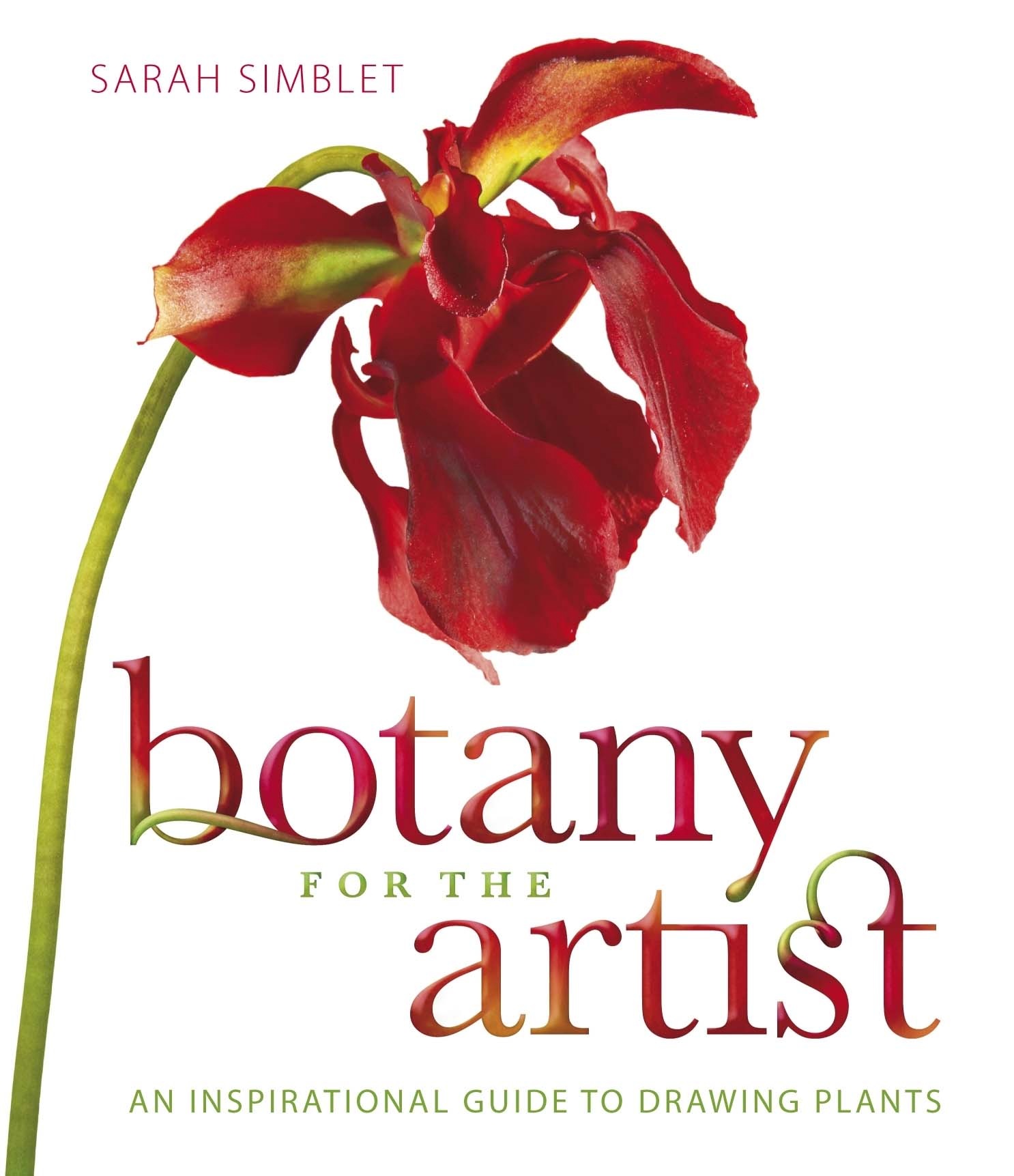
“Ask The Artist” goes live next week and this is very exciting. If you haven’t signed up yet for this event, please consider doing so. The book Botany for the Artist is a treat. Sarah’s live presentation will make the book extra special as you will be able to bundle it with memories of learning live from Sarah as she speaks to us from the UK. During her presentation, Sarah will discuss how she created the book and how materials were collected. She will also discuss her technique and share her preparatory sketches as she refers to pages in the book.

There is still time to register for this event. Sarah’s inspirational presentation will occur on Thursday May 27, 2010 at 12 pm (PST). Yes, you could just buy the book. However, with so many options to learn, why not choose the live version when you can?


UPDATE: Read a post-event review and learn how you can view a recording of this event.

Read Full Post »

Introduction to Paleobotanical Art (botanical fossil art)
Derwent Pencil Museum
July 6 & 7, 2010
10 a.m. – 4 p.m.

Stephen Caine trained as a museum natural history conservator. His duties included drawing illustrations of specimens, diorama building and the painting of backgrounds. While working for museums and universities, Stephen had the opportunity to study plant fossils, as well as 18th and 19th century botanical art. This led to Stephen specializing in paleobotanical art.

Stephen’s subjects are obtained at fossil sites and from museum storerooms. Working as the main artist for the Rhynie research group at Aberdeen University, he created illustrations and models of this unique group of Devonian plants.

Now living in northeast Scotland, he maintains strong ties with Aberdeen University and has been commissioned to design a new diorama about the extinct plants found as fossils in this area. As part of this project, Stephen will work for various museums and universities and will reconstruct extinct flora. He will also teach botanical painting and drawing to researchers and students.

During his demonstration at the Derwent Pencil Museum, Stephen will use graphite and watercolor pencils to introduce museum visitors to paleobotanical art. To learn from Stephen as he demonstrates his techniques, please obtain a ticket at the museum entrance. This ticket entitles you to one hour of free instruction.

Read Full Post »

The title of this post isn’t as over-the-top as you might think. There is a widespread lack of interest in plants and it is a real problem. Declining interest in botany leads to fewer botanists being hired and fewer course offerings in botany (Uno, 2009). This leads to less funding for research, less funding for conservation efforts and even more indifference towards plants. Botanists and science educators have spent many years studying why people know more about furry animals with big brown eyes than they know about plants. Some claim instructor bias or the predominant use of animal examples to teach biological concepts (Allen, 2003). James Wandersee at Louisiana State University and his research team at 15° Lab believe people are not as tuned-in to plants because plants do not fall into their field of view. Wandersee and Elizabeth Schussler coined the phrase “plant blindness” which refers to one’s inability to notice the plants in one’s environment and therefore not recognize their value (Allen, 2003; Wandersee & Schussler, 2001). Simply put, plants are background noise.

How do educators rise above the noise and bring plants to the forefront? Gordon E. Uno (2009) tackled this very question. In his article, Uno provides a thorough explanation of factors contributing to botanical illiteracy. The challenges facing botanists are:

  • Students do not find plants interesting.
  • Students are unaware of the plants around them (plant blindness).
  • Plant biology is taught less often in school. Uno reports that of the six best-selling biology textbooks, only 14% of these texts address plant biology.

So what are botanists to do? Uno recommends that instructors introduce students to plants through popular literature, that they try to influence the content of standardized exams (if the plant sciences were represented on exams, teachers would teach more about plants), and that they incorporate into their classrooms problem-solving activities related to the plant sciences. Uno also encourages botanists to help students and pre-college teachers “think botanically” by using plant examples to teach biological concepts like cellular respiration instead of associating this process with only animals.

But is everyone suffering from plant blindness? What about all those avid gardeners lining up with their wagons chomping at the bit waiting for the gate to open at their favorite plant sale? Uno points out that the widespread problem of indifference towards plants is not consistent with the current popularity of gardening. He sees gardening’s popularity as an opportunity for botanists to place more emphasis on the applied plant sciences and to tap into the public’s interest in topics such as human nutrition, economic botany, and the environment — all topics related in one way or another to botany.

To read more about Uno’s research and his suggestions to enhance student learning in the plant sciences, read a copy of his article online or visit your local college library to obtain Volume 96 of the American Journal of Botany.


Literature Cited

Allen, William. 2003. Plant Blindness [online]. Website http://www.aibs.org/eye-on-education/eye_on_education_2003_10.html [accessed 13 May 2010].

Uno, Gordon E. 2009. Botanical literacy: What and how should students learn about plants? American Journal of Botany 96(10): 1753-1759

Wandersee, James H., and Elisabeth Schussler. 2001. Toward a Theory of Plant Blindness. Plant Science Bulletin 47 (1): 2-9.


Also See…

Eradicating Plant Blindness in the 21st Century

Read Full Post »
Botanical artist and natural science illustrator, Cynthia Padilla, will teach a sketching class in Guatemala this summer. Information about this adventure and other workshops have been added to Classes Near You > New Mexico. In case you did not know, Cynthia is the founder of the Botanical Art & Naturalist Illustration group on Yahoo!

  • Nature / Botanical Sketching in Guatemala with Cynthia Padilla – July 22-31, 2010 (10 days); Guatemala – Antigua Central America. Immerse yourself in the beauty of the tropical flora and fauna of Guatemala. Spend unhurried time, workingmen plein air, lulled by the gentle breezes of “the land of eternal spring.” Days begin with intro of materials and demo of technique (pastel, pencil, pen & ink, acrylic, colored pencil, watercolor). Participants welcome to document whatever catches your eye and imagination….ancient structures, tropical landscapes, colorful markets. We’ll base out of lovely Antigua, but spend three nights at Posada Santiago, overlooking gorgeous Lake Atitlan. Join us and begin a lifelong habit of journaling in nature and return home with a collection of sketches, tiny vignettes, notes & notations, measurements & musings, and frameable works of art in breathtaking detail. All levels. To register, contact Liza Fourré, Director, Art Workshops in Guatemala or at 612-825-0747. More details & video
  • Drawn from the Collection – Thursday & Friday, Sept 9 – 10, 2010; 9 AM – 3 PM. Learn how to draw while examining a fascinating collection of museum treasures at the New Mexico Museum of Natural History & Science, such as minerals and fossils, bones and casts, moths and butterflies, bird and small mammal study skins and mounts, etc. Gather with other enthusiasts — complete beginners to professional artists. Emerge with quick scribbles, convincing renderings, sparkling watercolors, notes and notations, measurements and musings. The workshop includes a private behind-the-scenes tour of the museum’s Geosciences Collection and specimens hand-selected from the Bioscience Collection for your artistic investigation and documentation. Contact August Wainwright, Projects Coordinator, or call (505) 841-2861. Cost: $200 nonmembers. Members receive 10% discount. Lunch provided both days. A certificate will be presented upon completion.
  • Field Sketching: Watercolor Nature Journal– Tuesday & Wednesday, Sept 21 & 22, 2010. 9 AM – 3 PM. Try your hand sketching like an early naturalist, combining a scientific eye with artistic beauty! Field sketches are simple but accurate drawings executed out-of-doors in situ to document sightings, identify specimens, or simply capture the landscape, flora and fauna of a special place. Ramble trails and fields of the Sandia Mountain Natural History Center, sketchbook journals in hand. Moving indoors, as conditions dictate, to draw from nature specimens. Along the way botanical artist/natural science illustrator Cynthia Padilla instructs and demos technique. This class will be taught at the Sandia Mountain Natural History Center for the New Mexico Museum of Natural History & Science. Contact August Wainwright, Projects Coordinator, or call (505) 841-2861. Cost: $200 nonmembers. Members receive 10% discount. Lunch provided both days. A certificate will be presented upon completion.

Read Full Post »

Now at Classes Near You > California:


The Getty Center, Los Angeles

www.getty.edu
Free to all visitors, The Getty Center in Los Angeles is home to the famed Getty research library and an expansive collection of Western art. In 2008, the Getty hosted a fantastic exhibition about natural history artist, Maria Sibylla Merian.

    Getty Drawing Hour (Botanical Illustration) – Sundays, May 16, June 6, June 20; 3:30 PM – 5:30 PM. Learn how to observe and to sketch plants in the Getty’s Central Garden. Artist Deborah Shaw will be your guide. Bring your own pad of paper and a pencil. Sign up for this free workshop at the Museum Information Desk. Workshop registration begins at 2:30 PM on the day of each workshop.

Read Full Post »

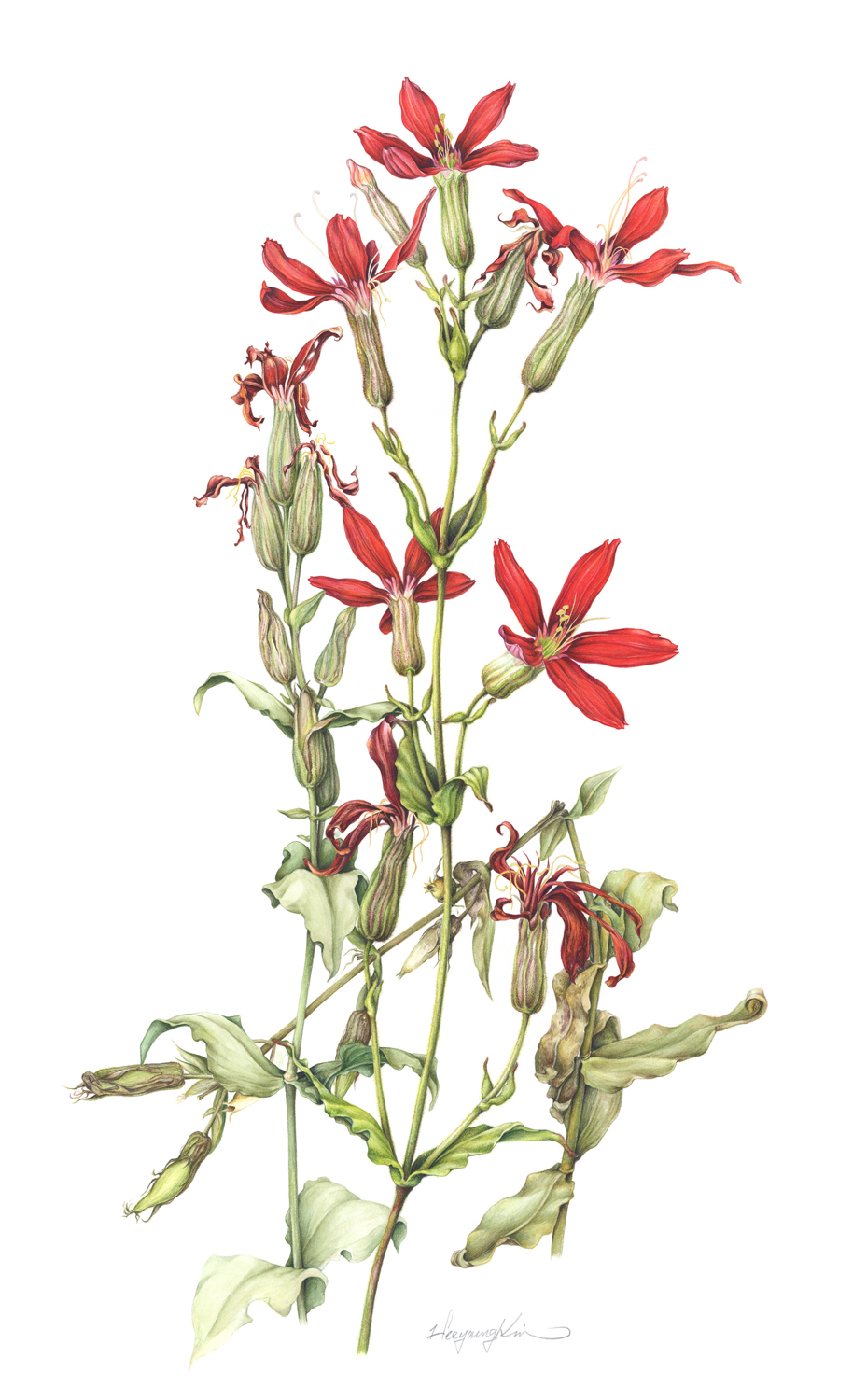
© Heeyoung Kim. All rights reserved (NYBG Media Gallery)

Botanical artists from the United States, Australia, Brazil, Israel, South Korea, South Africa, and the United Kingdom are helping scientists document at-risk plants before they are lost forever.

Losing Paradise? Endangered Plants Here and Around the World will travel to the Arthur and Janet Ross Gallery at the New York Botanical Garden (NYBG) and be on view from May 6 through July 25, 2010. This exhibition is the culmination of a three-year collaborative effort between the American Society of Botanical Artists (ASBA) and the Smithsonian’s National Museum of Natural History. Gallery hours are 10 AM – 6 PM. The exhibition is included in the price of admission to NYBG.

Five exhibiting artists will teach special workshops in conjunction with the Losing Paradise? exhibition. You will want to save these dates!

  • Master Class with John Pastoriza-Pinol: Tulips in New York – Wednesday thru Friday, May 5-7, 2010; 10:00 AM – 4:30 PM (104BIL 509). Learn the intricacies of achieving fine detail with watercolor by applying a variety of advanced techniques used by contemporary botanical artists. Location: Midtown Education Center in Manhattan
  • Master Class with Bobbi Angell: Drawing the Microscopic View – Monday thru Wednesday, June 14-16, 2010; 10:00 AM – 4:30 PM (104BIL 515). Learn how to translate your observations through a microscope into botanical illustrations in pen and ink. Work with plant material and create detailed illustrations of flowers and fruit. Location: NYBG
  • Techniques: Advanced Watercolor Painting with Rose Pellicano – Five Tuesdays, May 18 – June 15; 1 PM – 4 PM (104BIL 351, see prerequisite). Location: Midtown Education Center in Manhattan.
  • Drawing Roses in the Peggy Rockefeller Rose Garden with Carol Wooding – Saturday & Sunday, June 19-20, 2010; 10:30 AM – 4:00 PM (104BIL 352)
  • Drawing Vegetables in the Ruth Bea Howell Family Garden with Wendy Hollender – Two Saturdays, July 17 & 24, 2010; 10:00 AM – 3:30 PM (111BIL 209)

Please go to www.nybg.org/AdultEd for details and to register online.


Related

The ASBA announces a blog dedicated to the Losing Paradise? exhibition.

Read Full Post »

Go to summer school at home!

New classes at Classes Near You > New York:


Cornell University Department of Horticulture

http://hort.cals.cornell.edu/
Two six-week botanical illustration classes are taught online through this department. A course syllabus for each class is available online. Click on the links below for complete details.

  • Botanical Illustration I: Basic Drawing Techniques – June 7 – July 25, 2010. For beginning artists of all ages. Students will work in pencil and pen-and-ink. Topics include: observing nature, drawing, composition, perspective, shading. Cost: $500. Limit: 20 students. View detailed description and syllabus.
  • Botanical Illustration II: Working with Watercolors – June 7 – July 25, 2010. In this introductory course about color, students are encouraged to continue their discovery of plants. Emphasis will be on simpler subjects such as a single-stem flower, fruit, and vegetables. View detailed description and syllabus.


Related Items

Read Full Post »

« Newer Posts - Older Posts »