Feeds:
Posts
Comments

Archive for the ‘Education’ Category

New at Classes Near You > New York:


Cornell Plantations

www.cornellplantations.org
Located on the campus of Cornell University, Cornell Plantations manages 4,300 acres of natural area that includes bogs, fens, gorges, glens, meadows, woodlands and other ecosystems.

    The Joy of Botanical Illustration – Thursdays, September 8, 15, 22 29, October 6, 13; 2:00 to 5:00 PM. If you love botanical art but wonder if YOU could really do it yourself, this class is for you. An introduction to painting the flora of the Plantations’ botanical garden, students will learn how to observe plants, how to draw plants, and learn the principles of perspective, composition and color mixing. Botanical artist Camille Doucet will lead students in an exploration of black and white, pen and ink, and watercolor. A suggested materials list is available by request. Pre-registration required. Cost: $215 ($180 members and Cornell students). Location: Nevin Welcome Center. Register Online

Read Full Post »

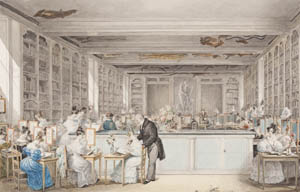
Julie Ribault (1799-c.1839) Redoute's school of botanical drawing in the Salle Buffon of the Jardin des Plantes, Paris, watercolour over graphite © The Fitzwilliam Museum

The “Raphael of flowers”, Pierre-Joseph Redouté (1759-1840), internationally famous for his prints of roses and lilies, was the finest botanical draughtsman of his age. In France he had a prestigious reputation in his own time, working for the Royal court both for Queen Marie-Antoinette and then for the Empress Joséphine following the French Revolution.


Flower Drawings: Redouté and his Pupils
is a collection of work from the Fitzwilliam Museum’s prestigious Broughton collection of flower paintings and drawings showing the legacy of Redouté as an artist and teacher through a dual display of his work and works by some of his most accomplished students. Redouté had over 80 pupils, most of them women, enrolled in his school of botanical drawing. Many of his students became professional painters of flowers. The exhibition will also celebrate the recent acquisition of a watercolour by artist Julie Ribault (see above). Painted in 1830, Redouté’s school of botanical drawing in the Salle Buffon of the Jardin des Plantes has not been exhibited since it was first shown at the Paris Salon of 1831.

Director of The Fitzwilliam Museum Dr Timothy Potts commented: “We are delighted to be showing this wonderful exhibition of flower drawings by Redouté and his pupils. Thanks to the bequests of collector and outstanding maker of gardens Major Henry Broughton in 1966 and on his death in 1973, the Fitzwilliam has one of the most splendid collections of flower paintings and drawings of any Museum in the country and the most important collection of Redouté drawings in the UK. The Fitzwilliam mounts an exhibition of the more delicate works on paper from the Broughton collection every three years, and we hope all will enjoy this charming and varied selection of flower drawings.”


Flower Drawings: Redouté and his Pupils

The Fitzwilliam Museum
Shiba Gallery
Hours: 10 AM – 5 PM (Tues – Sat); 12 – 5 PM (Sunday & Bank Holiday Mondays)
ADMISSION FREE
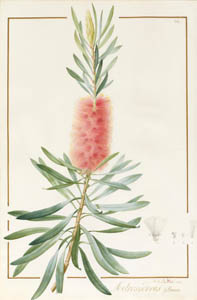
Pierre-Joseph Redoute. Metrosyderos glauca (1812). Drawing (watercolor & bodycolor over graphite on vellum, margins ruled in red and gold ink). © The Fitzwilliam Museum

Read Full Post »
Have you always wondered how to mix Nature’s colors using colored pencils? Take a look at this new class at the Los Angeles County Arboretum and Botanic Gardens!


Los Angeles County Arboretum & Botanic Gardens, Arcadia

www.arboretum.org
Courses in introductory botanical drawing, beginning and intermediate watercolor, colored pencil, sketching and Chinese brush painting are taught throughout the year. Go to the Events & Classes for more information. The Arboretum is located in Arcadia, CA. To register, contact Jill Berry or call (626) 821-4624.

    Using Colored Pencils in Botanical Art

    Session 1: Tuesdays, September 6, 13, 20, 27
    Session 2: Tuesdays, October 4, 11, 18, 25
    Hours: 10 AM – 2 PM (includes lunch break)

    Students will learn colored pencil techniques, composition and color mixing from botanical artist Cristina Baltayian. All levels of experience are welcome. Cost: $225 (members per session); $245 (non-members per session).

    Cristina Baltayian has a background in drawing (graphite, charcoal, pen and ink), two-dimensional design, watercolor, and colored pencils. Her work has been shown at Filoli, the Los Angeles Arboretum, and Chapman University.  She is a member of the American Society of Botanical Artists and The Botanical Artists Guild of Southern California. 
     
    A supply list will be provided upon registration.  You may bring your lunch or purchase it at the Peacock Café.

This information has been posted to Classes Near You > California.

Read Full Post »

Why are plants important?

A teenager asked me this question one day at an environmental education fair. I explained how plants are important because they are our source of food, medicine and clothing and picked examples that might strike a chord with her. I don’t think it worked. All I received in return was a blank stare and a polite nod.

This experience made me realize that I need to prepare a better answer, especially for this age group. It left me feeling compelled to record every encounter with a plant and plant by-product for the rest of my life. Fortunately, I found a wonderful resource that will help me articulate the value of plants to both young audiences and adult audiences alike.

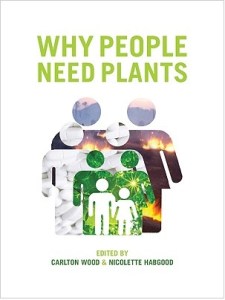
Why People Need Plants by Carlton Wood and Nicolette Habgood (2010) is a thorough reference that is sure to resonate with any audience. Here is what I like about this book:

  • It is written for a general audience and not loaded with statistics and scientific terminology.
  • Instead of saying, “We need plants for food”, Wood & Habgood (2010) provide a historical backdrop beginning with how our dependence upon agriculture began 11,000 years ago. They combine data from research studies with historical accounts to describe the botanical sources of food crops, nutrients and popular drinks such as tea, coffee, cocoa and cola. In their discussion about plants and health, they provide a great visual of “The Eatwell Plate”, the UK’s version of the USDA Food Pyramid that, quite frankly, does a better job at showing how two-thirds of the human diet should come from plants. They also make the excellent point that the dairy products we so enjoy are derived from animals dependent upon plants, reinforcing the role plants play at all levels of the food chain.
  • Instead of saying, “We need plants for wood to build homes”, the authors explain the properties plants possess that make them valuable sources of wood and many other products. For example, they explain how the cellular structure of wood makes it a good insulator, why cork’s properties makes it a good source for flooring and engine gaskets and not just plugs for wine bottles. Wood and Habgood (2010) describe the four sources of fiber found in plants and how fiber has been used to make everything from rope for sailing ships to fishing line to flexible paper for money and tea bags. They even explain how plants are used by Mercedes Benz to make automobile parts.
  • Instead of saying, “We need to save plants just in case they have medicinal value,” Wood & Habgood (2010) confirm the world’s reliance on plants for medicine by beginning their chapter about medicinal plants with a statistic from the World Health Organization indicating that “80% of the world’s population still rely on plants for their primary source of medicines” (Wood & Habgood, 2010). They go on to discuss the history of medicinal plants, the globalization of Chinese medicine, the discovery of aspirin, the discovery of the cancer drug taxol, and take a look at ethnopharmacology — the study of medicinal plants and the ethnic groups who use them — and the implementation of revenue-sharing agreements between drug companies and the communities where source plants are found.
  • Instead of saying, “We need plants for fuel,” Wood and Habgood (2010) describe the types of fuel that can be derived from plants. They explain why grass is a good source for biofuel and explain the differences between biodiesel and bioethanol using easy-to-follow graphics showing how both fuels are produced and used.
  • Wood and Habgood (2010) discuss how plants help forensic botanists solve crimes. Given the apparent popularity of crime shows, the inclusion of this information gives plants a modern edgy look even though the field of forensic botany has existed for 76 years. Pollen profiles, spore profiles and the growth habits of plants can provide valuable information when solving crimes. Broken branches and their “corrective growth” (Wood and Habgood, 2010) can reveal the route taken by criminals, pollen and spores can provide unique snapshots of an area, and plant DNA can be traced to crime scenes.
  • Wood and Habgood (2010) look at the big picture. Interesting and informative chapters about micropropagation, genetically modified plants, methods of natural plant protection, human impacts on the planet, plant conservation, and what the future of plants looks like given the need to feed a growing human population, provide a firm foundation from which to explore each of these topics in greater detail.

Citing stories taken from current news headlines, Why People Need Plants is an invaluable resource providing a succinct and comprehensive look at the relationship humans have with plants.

Why People Need Plants is available at your local independent bookstore.


Related Articles

Read Full Post »

New at Class Near You > Georgia:


Atlanta Botanical Garden

www.atlantabotanicalgarden.org
An urban garden composed of 30 acres of outdoor gardens, an award-winning Children’s Garden, a conservatory home to collections of tropical and desert plants and many community programs and events, including a Botanical Drawing Program.

  • Drawing Trees – Tuesdays, August 23 – September 20, 2011;
    10 a.m. – 1 p.m. OR 6-9 p.m. Learn to draw trees using pencil, pen, marker and charcoal. Focusing on trees native to Georgia, students will learn to draw the morphological features of trees from leaves to bark to roots, as well as the overall shapes of trees. Instructor: Carol Sutherland. Cost: $170 nonmembers, $160 members. Registration deadline: August 21, 2011. To register online and to download the supply list for this class, click here.
  • Fine Line Pen for Botanical Illustration – Tuesdays,
    September 27 – October 25, 2011; 10 a.m. – 1 p.m. OR 6-9 p.m. Learn to create botanical illustrations in pen and ink. Ink illustrations of plants are common to scientific journals and textbooks. Develop your skills in this medium through various cross hatching and stippling exercises. Learn how to apply your skills to different botanical subjects. Instructor: Carol Sutherland. Cost: $170 nonmembers, $160 members. Registration deadline: September 25, 2011. To register online and to download the supply list for this class, click here.


Need that magnifying glass on the supply list?

See the Magnifier & Dissecting Kit Combo at ArtPlantae Books ($10).


Read Full Post »

Now at Classes Near You > Iowa:


Brenton Arboretum, Dallas Center

www.thebrentonarboretum.org
The Brenton Arboretum is a 140-acre arboretum established in 1997 featuring 2,600 trees and shrubs. Most of the more than 175 species of trees and shrubs are organized by species to ease learning and to emphasize the importance of trees in our world. The event schedule for 2011 includes:

  • Those Amazing Plants – Saturday, July 23, 2011; 9 AM – 12 PM. Learn about the amazing lives of plants during this Botany 101 workshop with Tom Rosberg, botany professor at Drake University. Students will learn how to decipher plant names, how plants reproduce and other exciting topics! Pre-registration required. Cost: $5 members, $10 non-members. Fee can be paid on day of class. For more information, contact the Arboretum by email or call (515) 992-4211.
  • Leaf Collection Identification Workshop – Wednesday, September 21, 2011. Drop-in between 2:00- 4:30 PM
  • Make A Leaf Collection Book
    Saturday, September 21, 2011; 9-11 AM.
  • Second Annual Leaf Collection Exhibition
    Sunday, November 6, 2011; 1-3 PM.


You May Also Like:

    Botany for Gardeners

Read Full Post »


The Illustrated Garden, A Studio Blog

http://valwebb.wordpress.com
See Val Webb’s online tutorial, Botanical Drawing with Pencil and Watercolor. Connect with The Illustrated Garden on Facebook!

  • Creative Watercolor 101
    Tuesdays, August 2 – September 6, 2011; 2-5 PM (six weeks). 
    No drawing required! Learn how to use washes, glazing and dry brush techniques to create skies, trees and textures found in nature. Create light and shadow with transparent watercolor and learn about “reverse painting.” Also learn how everyday household items can be used as innovative painting tools. No experienced necessary. Cost: $120, a supply list will be sent upon registration. Contact Val Webb if you plan to participate. Location: Val’s studio in Fairhope, AL.
  • Old and New: The Lost Art of Hand Lettering… and a New Way to Make “Vintage” Photo Transfers – Saturday, August 6, 2011;
    10 AM – 3 PM. This is not calligraphy, but the “drawn letters” used by old-fashioned sign painters and type designers. Learn to adapt this method to label your botanical artwork or write beautifully in your sketchbook or art journal. Learn how to letter on curves, how to use perspective in your lettering, and how to design your own personal lettering style. After lunch in a nearby cafe, learn how to transfer photos. Val will show you how to transfer a vintage-looking image to paper, cloth or wood using butcher’s paper and acrylic medium. The original photo is not affected in any way, and the final product has a hauntingly ephemeral look that is quite beautiful. Plus, you will learn how to tint your transfer with watercolor for a more impressionistic result. This works especially well with old family photos and garden subjects.  Embellish a journal or family album, make truly lovely greeting cards, frame them as keepsakes or gifts — the possibilities go on and on.  Class size is limited. Early registration required. Cost: $60 includes art supplies and illustrated tutorial pages to take home. Contact Val Webb if you plan to participate. Location: Val’s studio cottage in Mobile, AL.
  • Color Mixing Workshop – Saturday,
    August 13, 2011; 10 AM – 3 PM. Learn how to identify the colors you need and how to mix them efficiently without guesswork or waste. Experiment with “bouncing color” and learn how to mix the three types of color shadows. Pigments and paint labels will also be discussed. Cost: $60, includes, art supplies. Contact Val Webb if you plan to participate. Limit: 8
  • Make-Up or Finish-Up Day for Students in Weekly Classes. Saturday, August 20, 2011; 10 AM – 4 PM. Val’s studio cottage in Mobile, AL. Students making up a missed class or finishing a project on this day must notify Val in advance so she can bring the necessary materials.
  • Printmaking Workshop: Botanical Collagraph – Saturday, September 10, 2011; 10 AM – 4 PM. Use collected botanical material (herbs, wildflowers, seed heads and more) plus textured papers to create your own unique designs on printing plates, then ink and print them using a hand-operated etching press. Finished prints can be hand colored with watercolor and colored pencil if you wish. Wear an old shirt and be prepared for a day of creative fun. All supplies provided. Cost: $75.
  • Weekly Class: Draw and Paint the Kitchen Garden – This class is offered at both studios. Draw and paint seasonal culinary plants. Cooking and gardening subjects will also be drawn. No experience necessary.
    Cost: $140, includes all supplies.

    • Draw & Paint the Kitchen Garden (Mobile, AL) – Six-week daytime class begins Thursday September 15, 2011 and continues through October 20, 2011 (2-5 PM). Eight-week evening class begins Thursday, September 15, 2011 and continues through November 3, 2011 (6:30 – 8:30 PM).
    • Draw & Paint the Kitchen Garden (Fairhope, AL) – Six-week class begins Tuesday September 20 2011 and continues through October 25, 2011 (2-5 PM).

Read Full Post »

« Newer Posts - Older Posts »