Feeds:
Posts
Comments

Archive for the ‘Learning Opportunities’ Category

Botanical illustration is about mixing science with art.

Today, as in years past, botanical illustrations relay information that contributes to our scientific knowledge about plants.

Botanical artists spend hundreds of hours studying plant specimens, drawing them and then painting them. Traditional plant portraits are painted on a white ground. This is one of the traditions of botanical art. Sometimes, though, there is an urge to ditch the white background and to be more expressive with one’s interpretation of plants. Have you ever felt this way? Ever wonder how you could break out of the box a bit?

Today I have the pleasure of introducing you to experienced guides in all forms of flower portraiture, from botanical painting to free design, from miniature works to large paintings, from china painting to silk painting, the members of the Society of Floral Painters have explored it all, each in their own way. 

We have the wonderful opportunity to learn from them today. Please welcome members of the Society of Floral Painters!

Founded in 1996, the Society of Floral Painters (SFP) consists of Full and Associate Members, amateur and professional, beginners and experienced artists from the UK and elsewhere. Both Members and Associate Members attend workshops and painting days which are held throughout the year. Today we get to learn from members of this diverse group of artists.

As always, you are invited to join the conversation and to post comments or ask questions. If you’ve always wanted to post a comment, but have been too shy to do so, please know that when posting a comment or question, only your first name is necessary. If you prefer to use a screen name, then feel free to use one. While we might not introduce ourselves in person as “tigerlily564378”, I understand being reluctant to use one’s full name. 

Please note that all comments are moderated, so there will be a delay before your comment is posted. Spam comments will be deleted.

Let’s begin!


    Welcome everyone. Thank you so much for visiting. I have many questions, but do not want to talk over readers. I want to provide ample opportunity for them to ask their own questions. So let me begin by first asking…of the more than 200 members in your group, how many have studied the traditional techniques of botanical art and illustration?

    A considerable number of our artists come from botanical art backgrounds but certainly not all, it’s difficult to put a number to really. Some remain in the botanical sphere and others explore and embrace a freer style or different medium.


    I browsed through the Gallery and many styles are represented. It is a wonderful collection of work. Who started the Society?

    The Society was founded in 1996 by artists Constance ‘Miggy’ Bath and Anne Middleton. They were very keen to establish a floral painting society that welcomed a wider range of approaches to portraying floral subjects. Siriol Sherlock was approached to be the Society’s first President and after the SFP had an extremely successful exhibition at Sofiero Castle in Sweden, Princess Lilian of Sweden was asked to be the Society’s first Patron. The Society’s current Patrons are The Lady Brabourne and Roy Lancaster OBE VMH FIHort and our President is Jenny Jowett.


    There is much interest in online learning opportunities. Do any Society members teach drawing, painting or mixed media classes online? 

    Sandrine Maugy teaches the Botanical Painting Diploma for the London Art College with many elements of the course available online. Wendy Jelbert also has online teaching videos on the Painting and Drawing Channel.

    Many of our members also have their own websites and in addition blogs, which often have links to painting and drawing videos and other useful guides on drawing and painting. Members have also had instructional books and/or DVDs published, these include Sandrine Maugy, Billy Showell, Jean Haines, Wendy Tate, Janet Whittle, Ann Blockley, Judith Milne and Ann Mortimer.


    In a recent survey, ArtPlantae readers expressed an interest in hearing artists’ opinions about materials and techniques and want to get a sense of “best practices” when it comes to all aspects of botanical art. If I may, I would like to propose a broad topic to get a conversation going. Readers, you are more than welcome to help streamline the conversation.

    My question has to do with the business of art. What do you think is the best way to bring attention to one’s artwork and professional services (e.g., teaching)?

    Having a consistent quality to your artwork is essential and belonging to a Society such as the SFP helps to ensure that quality is maintained, through initial assessment of artwork to become a full exhibiting member and then assessment before each exhibition.

    Having this quality enables a positive reputation to become established and in turn people come to recognise your work and want to learn from you, if you provide teaching opportunities.

    Teaching opportunities can be varied – teaching for an organisation such as a local college, tutoring painting holidays, running private workshops in an established venue or even teaching in your own home studio.

    All of these require some form of publicity either with the organisation concerned or independently. In today’s world the Internet is an important tool for this and provides many networking opportunities through websites, Facebook pages, blogs and forums. Networking is not just an online phenomenon, students attending an artist’s workshop or course often spread the word to other individuals and news of the artist’s work and reputation can spread further afield.


    I have a question for Kate Steele
    I love your monochrome oil paintings. I was wondering…since painting in oil is painting light over dark, how do you decide the value of your darks? Can you provide some insight into how you create these pieces?

    With all my work lighting is the most important factor and has to be just right, whether I’m working from a live subject or one of my photos…it’s what brings a painting to life.

    Rather than work from dark to light, I always start by applying a yellow ochre ground…it gives a wonderful warm medium tone on which to begin and makes it easier to see light and dark areas right from the beginning….sometimes a hint of the colour shines through the white and gives the painting a beautiful glow.

    I roughly sketch out the composition onto the yellow ochre ground, then block in the body of the subject using both black and white paint. This first layer – although usually quite flat in terms of tonal value – helps me to judge where my lightest light and darkest dark need to be…these extremes of value can often be quite small areas but vital to the depth of the painting.

    Using layers of paint in thin glazes, intensity of tone is gradually built up, often focusing on small areas, still using both colours of paint together and blending all the time. It’s only in the final few layers where the finer details, highlights and darkest areas are defined.
    People often ask me how I manage to work on a black background…but as you now know, I don’t, its yellow ochre. The final black background is blocked in only when I’m absolutely certain I’m happy with the composition and depth of tone…usually after the first few layers of paint have been applied but often not until the end.


    And now a few questions for natural science illustrator,
    Lynne Henderson.

    The demonstration files (PDF) you provide in the “Work in Progress” section on your website are very good. They are very informative and I appreciate being able to learn how you create your floral and landscape paintings. You teach many ways of “seeing” and provide many tips. Since readers are just now learning about the availability of your demos and have not had a chance to read them, I would like to ask a few questions about your techniques so they have a bit of background information when they do read your demonstrations.


    Masking – Do you use white masking fluid or colored masking fluid?

    I use Winsor and Newton Colourless Art Masking Fluid because of its consistently single cream runny texture, which for some thankful reason doesn’t thicken up into clots or need diluting once the bottle has been opened (which the coloured ones always seem to do). This means it is easy to apply with a ruling pen or a brush coated in soap, and is reliably removed without the paper surface being abraded and removing some of my carefully drawn structures with it. It works especially well on hot pressed papers. For these reasons I don’t mind that it happens to be a white or transparent tone on the paper. I would never use coloured masking fluid again.


    Who’s on First? – When you paint traditional botanical paintings such as your Rhododendron ‘Percy Wiseman’, do you typically paint your leaves first?

    Yes, generally I seem to paint them first, for two reasons I think.

    Practically speaking, there seem to be so many technical approaches to painting leaves, governed by their venation, texture and the way they catch the light. Since I usually know exactly how I am going to paint the flowers, I like to decide on my approach to the leaves first and get them started. For me painting the leaves is the more systematic part of a botanical painting, the vital beginning of the journey.

    Aesthetically speaking, it is pleasing to have the greens in place for when you paint the flowers. The established greens make the flowers come alive in front of you, where you reap the rewards and start to arrive at your destination. It’s a kind of delayed gratification, the icing on the cake.


    Habitat Scenes – What should one consider when creating a habitat scene, be it 4″x4″square or a 3’x4′ square?

    Well I use two kinds of habitat styles, realistic and atmospheric. I usually know which I am going to use before I start, however the main subject is always considered, drawn and painted in first as a priority.

    For the realistic habitats, seasonal selections of complementary grasses, wildflowers and insects are what I would concentrate on, with a softer less intrusive tinted ground.

    In the case of the atmospheric grounds, I like to create a kind of living environmental aura around the plant, where colours and wet into wet effects become vital to conveying something I feel about the plant, using a range of light and dark tones to convey depth. I usually try to incorporate some complementary colour to the main subject, to give the subject some contrasting visual enhancement here and there.


Readers, if you are visiting the UK or live there, why not go and see a selection of wonderful artwork from SFP members?

The Society of Floral Painters 2013 Exhibition takes place at the National Trust Property – The Vyne from June 1-23, 2013. Gallery hours are 12-5 PM Monday to Friday and 11 AM – 4 PM Saturday and Sunday.

The Vyne is located at Vyne Road, Sherbourne St. John, Basingstoke, Hampshire RG24 9HL.

The Society of Floral Painters also has a blog and Facebook page where you can keep up-to-date with the latest news and learn about events and workshops.


Readers, do you have questions for members of the Society of Floral Painters?
Post your questions in the comment box below.


Related

An interview with Billy Showell
Read Full Post »

A reader has asked:

Is it possible to develop a resource area for tools? For example: what kind of microscope did an artist buy and what was their experience of it, what tips for use, or if you can not afford one are there some places that allow you to use one.

Readers, how do you observe plants and their wonderful details?

Share your experiences with microscopes or other magnifying tools in the comment box below.

Read Full Post »

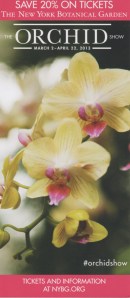
nybg_orchids_offer This weekend the country’s largest curated exhibition of orchids opened at the New York Botanical Garden. Thousands of orchids are currently on display in the Enid A. Haupt Conservatory. This much-anticipated annual event includes demonstrations, workshops, lectures, tours and elegant orchid evenings that include dinner and cocktails.

The New York Botanical Garden has graciously extended a special invitation and discount to ArtPlantae readers because of their passion for plants and the environment.

ArtPlantae readers can save 20% off an All-Garden Pass when they buy a pass online at www.nybg.org from March 2 – April 22, 2013.

To receive this discount, readers must use coupon code 9926 during checkout. This code is valid only at www.nybg.org and is valid only for visits made March 2 – April 22, 2013. This offer is subject to availability and this discount cannot be combined with any other promotional offer or previously purchased tickets. Discount may be modified or withdrawn with prior notice. Tickets are not refundable or exchangeable.

Thank you to the New York Botanical Garden for this special invitation to
The Orchid Show!

Read Full Post »

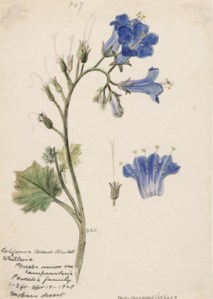
Stella Sherwood Vosburg, (1869–1943) Phacelia campanularia ssp. vasiformis, Desert Bells, Mojave Desert. 1929. Watercolor on paper. Private collection.

Stella Sherwood Vosburg, (1869–1943) Phacelia campanularia ssp. vasiformis, Desert Bells, Mojave Desert. 1929. Watercolor on paper. Private collection.

This weekend exhibitions exploring the history of California wildflowers will open at the Huntington Library, Art Collections and Botanical Gardens in San Marino and the Rancho Santa Ana Botanic Garden in Claremont. A third exhibition will open on March 15 at the Theodore Payne Foundation in Sun Valley, CA.

The exhibition When They Were Wild: Recapturing California’s Wildflower Heritage is a collaborative project between The Huntington, Rancho Santa Ana Botanic Garden and the Theodore Payne Foundation for Wild Flowers and Native Plants. Works from all three collections, along with loans from several other public and private collections, will be on view in the Huntington show, with related displays at the two other institutions and at the Santa Barbara Botanic Garden. More than a dozen public programs including lectures, workshops, plant sales, and wildflower walks will be offered at The Huntington, Rancho Santa Ana Botanic Garden, and the Theodore Payne Foundation.

When They Were Wild draws on a rich heritage of wildflower illustration to take a closer look at California’s natural and cultural history: exploring the source of the state’s floral bounty; how people have used, categorized, and depicted these flowers; and how wildflowers came to represent the state.

Below is a list of learning opportunities to be held in conjunction with this exhibition:


At The Huntington (www.huntington.org)

    Adult Workshop – Wildflowers at Home
    Saturday, March 16; 9:30 a.m.–noon
    Join award-winning floral designer Carolyn Bennett in creating works of art with fresh and dried wildflowers. Huntington Members: $70; Non-Members: $75. Registration through brownpapertickets.com.


    Lecture – California Wildflowers and Early California Nurseries

    Saturday, March 23; 2:30–3:30 p.m. Bart O’Brien, director of special projects at Rancho Santa Ana Botanic Garden, talks about the unusual journey that California wildflowers took into California gardens. A book signing follows. Free; no reservations required.


    Adult Workshop – Herbarium Tour and Pressed Flower Workshop

    Saturday, March 23; 9:00 a.m.–noon
    Learn about the Huntington’s herbarium (a reference collection of preserved plant specimens) on a tour with Paul Meyers. See some of the plants and the art that supports scientific research, then create your own herbarium specimen. Huntington Members: $40; Non-Members: $45. Registration through brownpapertickets.com.


    Preschool Series – Wild About Flowers

    Wednesdays – March 27, April 3, 10 and 17; 10 a.m.–noon
    Explore the gardens and the exhibition with instructor Laura Moede. Each class includes garden and art projects, stories, and more. Fee includes one accompanying adult. Ages 3-4. Huntington Members: $85; Non-Members: $95. Registration: 626-405-2128.


    After-School Adventures – Pressing Flowers

    Wednesday, April 10; 3:30–4:30 p.m.
    What’s so wild about wildflowers? Instructor Laura Moede leads youngsters into the garden to explore these fascinating flora. Students make their own pressed flowers to take home as cards or mini masterpieces. Ages 5–6. Fee includes one accompanying adult. Huntington Members: $15; Non-Members: $20.
    Registration: 626-405-2128.


    Second Thursday Garden Talk – California Wildflowers for the Home Garden

    Thursday, April 11; 2:30 p.m.
    Bart O’Brien of Rancho Santa Ana Botanical Garden discusses how to select, grow, and care for California native annuals in the home garden. After the program, the audience is invited to self-tour the “When They Were Wild” exhibition. Free; no reservations required.


    Lecture – Beauty Within and Beauty Without: California’s Native Peoples and Wildflower Fields

    Friday, April 19; 2:30–3:30 p.m.
    M. Kat Anderson, botanist and author of Tending the Wild, looks back at the tremendous diversity of California’s wildflower fields and how deeply intertwined wildflowers were with California Indian culture. In exchange for benefits like food, medicine, and ornamentation, indigenous people employed judicious gathering strategies and stewardship of the landscape. A book signing follows. Free; no reservations required.


    Second Thursday Garden Talk – Gene Bauer: Paper, Paint, and Postage

    Thursday, May 9; 2:30–3:30 p.m.
    Gardener, artist and author of Botanical Serigraphs: The Gene Bauer Collection, Gene Bauer tells the story behind her Golden Native serigraphs of the 1970s, some of which are included in “When They Were Wild”. A book signing follows. Free; no reservations required.


    Lecture – California’s Wildflower Artists

    Saturday, May 18; 2:30–3:30 p.m.
    For more than 100 years, artists have documented the California flora for science, education, and conservation. John Wickham, former president of the Theodore Payne Foundation, discusses the work of a wide range of artists, their stories, and their drive to record this extraordinary flora. Free; no reservations required.


At Rancho Santa Ana Botanic Garden (www.rsabg.org)

    Nature Walk – Wildflower Walks
    Saturdays and Sundays, March 23 – June 9; 11 a.m. and 1 p.m.
    Guided walking tours with RSABG nature interpreters feature beautiful California wildflowers and seasonal highlights. General admission.


    Plant Show – California Wildflower Show

    Saturday – Monday, March 30 – 31 and April 1; 10 a.m.–4 p.m.
    A special exhibition of wildflowers from across the region brought indoors for an intimate viewing. Monday, April 1, is Wildflower Show Senior Day offering free Garden admission and tram tours for visitors over 65. General admission.


    Field Trip – Blooms and Beauty of Bighorn Mountain

    Sunday, April 7; 8 a.m.–6 p.m.
    Naomi Fraga, RSABG conservation botanist and Eric Garton, RSABG director of visitor services, lead this fascinating and beautiful outing to Bighorn Mountain Wilderness in San Bernardino County. The trip highlights a rare transition zone between the mountain regions and Mojave and Sonoran deserts. Roundtrip transportation and lunch are provided. RSABG Members: $65; Non-members: $95. Limited to 10 participants. Registration: 909-625-8767 ext. 224 or registrar@rsabg.org.


    Lecture – Clara Mason Fox: Pioneer, Painter, and Poet

    Saturday, April 20; 11 a.m.
    Clara Mason Fox, one of the featured artists for the “When They Were Wild” exhibition, is the great aunt of Jon Seeman, co-author with his wife, Lorraine Passero, of Clara Mason Fox: Pioneer, Painter, and Poet of Orange County, California, a book about Clara’s life in the late 1800s and early 1900s. A book signing follows. General admission.


    Lecture – California Wildflowers and Early California Nurseries

    Sunday, April 21; 2:30–3:30 p.m.
    Rancho Santa Ana Botanic Garden’s Grow Native Nursery in the Veterans Garden. Bart O’Brien, RSABG Director of Special Projects, talks about the unusual journey that California wildflowers took into California gardens. A book signing follows. General admission.


    Lecture – California Wildflowers and Early California Nurseries

    Saturday, May 11; 1–2 p.m.
    [See listing above.]


At the Theodore Payne Foundation (www.theodorepayne.org)

    Poppy Day Plant Sale & Spring Festival
    Saturday, March 23; 8:30 a.m.–4:30 p.m.
    A seasonal celebration of California’s state flower with a large native plant sale, expert advice, vendors and more. TPF Members receive 15% off plants; Non-members 10%; Memberships available at the door. Registration: 818-768-1802.


    Garden Tour – 10th Annual Theodore Payne Native Plant Garden Tour

    Saturday and Sunday, April 6 and 7; 10 a.m.–5 p.m.
    Showcasing more than 40 gardens in the Los Angeles area, each planted with at least 50% California natives, this special ten-year anniversary tour celebrates native landscapes of the past, present, and future! TPF Members: $10 per person for both days; Non-members: $15. Available at www.theodorepayne.org or by phone: 818-768-1802.


    Field Trip – Wildflower Chase in the San Gabriel Mountains

    Saturday, April 13; 7:30 a.m. –5 p.m.
    In this all-day excursion to view spring-blooming annuals and perennials in local mountains, you meet at TPF and travel by van to the most superb flower-filled sites. Lorrae Fuentes is a botanical educator and native plant advocate and producer of the Theodore Payne Wild Flower Hotline. TPF Members: $75; Non-members: $100. Registration: 818-768-1802.


    Adult and Family Workshop – Wildflower Watercolor

    Saturday, April 20; 10 a.m.–noon
    Capture the beauty of native spring wildflowers in this hands-on class for budding artists of all ages. No experience necessary. Bring your own hat and water, all other materials provided. Instructor Laura Stickney was TPF’s 2012 Artist in Residence. Free, thanks to a generous gift from Susan & Dan Gottlieb and The G2 Gallery, Venice. Pre-registration is limited and required. Registration: 818-768-1802.


    Lecture and Nature Walk – An Introduction to California Native Bees

    Saturday, May 4; 9–11 a.m.
    Approximately 1,600 bees are native to California–and all have co-evolved with the native flora. This introduction includes an illustrated talk covering bees’ great diversity followed by a bee walk on TPF grounds. Led by Hartmut Wisch, whose fascination with insect fauna comes from working for 35 years as a naturalist guide. TPF Members: $20; Non-members: $25. Registration: 909-625-8767 ext. 224.

Read Full Post »

This month the featured resource is YOU!

During March, our focus will be on the comments and suggestions that came up during January while readers completed the Reader Survey.

Readers completing the survey provided helpful feedback. This month I want to take some time to cultivate the type of community resources readers are asking for on this site. While reading through the survey, it became clear that publishing a single announcement about what readers are asking for wouldn’t be enough to put into action the changes readers are requesting. A single announcement would have been pushed down below the fold and would’ve scrolled off the bottom of the page in only a few days. So let’s take some time with this.

Before we begin, I want to make a couple of announcements.

A quick comment about commenting. Some readers have told me they do not comment because they don’t want to use their real name. I understand this completely. Please know that when commenting, you only need to use your first name or enter a screen name. You do not need to enter your first and last name. Hopefully this makes you a little more comfortable. The community conversation readers are asking for can only happen if readers communicate with each other, so I hope you will consider participating in the conversation when you feel comfortable.

Beginning next week, I will begin to post topics in which readers have expressed an interest. If you would like to suggest a topic of your own, please suggest a topic for discussion or pose a question to peers by dropping a note in the
new Suggestion Box. I will compile a list of topics and questions and will post a new topic or question for discussion each week (or as topics/questions are submitted).

As this month progresses, I hope our conversations will establish the momentum to take us well beyond March and into a new era of learning here at ArtPlantae.

Classroom teachers, what would you like to ask artists?

Artists, what do you want to ask naturalists?

Naturalists, what do you want to ask fellow naturalists, artists and teachers?

Drop a Note in the Suggestion Box


UPDATE: Join the Conversation


Read Full Post »

Download Information

Download Information

Established in 1670, the Royal Botanic Garden Edinburgh (RBGE) is comprised of four gardens that collectively represent one of the largest plant collections in the world. The garden is also home to the RBGE Diploma in Botanical Illustration. The diploma course is a two-year program emphasizing observational drawing and the creation of artwork in pencil, pen and ink, and watercolor.

Blended Learning Begins June 2013
The RBGE Diploma in Botanical Illustration has run successfully for five years as a weekly course in Edinburgh. Beginning this summer, those involved with the program will be able to share their knowledge and expertise with a worldwide audience. The RBGE program has developed an exciting new Blended Learning option – which means there are block study weeks in Edinburgh (two in Year 1, one in Year 2) and the rest of the course is delivered online through their new online system called PropaGate.

Applications are now being accepted for the inaugural class of this new long-distance learning opportunity. This new program begins June 2013.

Get the Applicant Handbook


This information has also been posted to Classes Near You > Scotland.

Read Full Post »

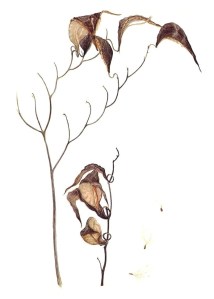
Asclepias tuberosa, © Lynne Railsback. All rights reserved.

Asclepias tuberosa, © Lynne Railsback. All rights reserved.

Drawn to Nature II
Brushwood Gallery
Ryerson Woods
Deerfield, IL
March 3 – April 30, 2013

The ASBA Reed-Turner Woodland Botanical Artists’ Circle in Long Grove, Illinois and Friends of Ryerson Woods in Deerfield, Illinois are pleased to announce Drawn to Nature II.

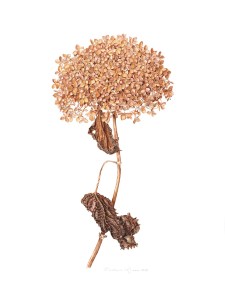
Drawn to Nature II presents recent works of the Reed-Turner Woodland Botanical Artists’ Circle, a local Chicagoland group affiliated with the American Society of Botanical Artists. With a new collection of original botanical art, members return to Brushwood with their second show. The exhibition includes drawings and paintings of plants and wild flowers common (and not so common) to the woodlands and prairies of the Midwest landscape. Here, the artists seek to further the interests of conservation science, botany and horticulture, and to represent the beauty of plants in our lives.

An opening reception will be held at Brushwood Gallery. The reception is open to the public, free of charge and will be held on Sunday, March 3rd from 1-3 PM. Eight special events will be held on Sunday afternoons during the show from 1:00-2:30 PM. For further inquiries and hours, please contact Brushwood Gallery at (847) 968-3343 or visit the Events page on the website of the Friends of Ryerson Woods.


About The Reed-Turner Woodland Botanical Artists’ Circle

The Reed-Turner Woodland Botanical Artists’ Circle consists of a dedicated and enthusiastic group of botanical artists,

Hydrangea arborescens, © Barbara Klaas. All rights reserved.

Hydrangea arborescens, © Barbara Klaas. All rights reserved.

current and former students of the Chicago Botanic Garden and is guided by the parameters and goals of the American Society of Botanical Artists (ASBA). The ASBA is one of the premier organizations promoting botanical art around the world. Consistent with the mission of the ASBA, the Reed-Turner Woodland Botanical Artists’ Circle works to further interest in botanical art, conservation science, botany, and horticulture at the local level. The group also strives to emphasize the beauty and importance plants play in our daily lives by increasing public awareness through education, promotion, and exhibition of its members’ art in collaboration with local institutions. Founded ten years ago, the group meets monthly at the Reed-Turner Woodland on the last Saturday of the month from 9:30-11:30 AM. Members of the public with an interest in botanical art are welcome to attend.

Learn more about the Reed-Turner Woodland Botanical Artists’ Circle


Related

Making Connections and Inspiring Action to Preserve America’s Prairies

Read Full Post »

« Newer Posts - Older Posts »