Feeds:
Posts
Comments

Archive for the ‘drawing’ Category

For this week’s teaching and learning column, Kellie and I contemplate how to help people see the value of drawing as a learning tool.


    In the weekly teaching and learning column I write, I occasionally bring attention to research or articles that call for drawing to be taught as a fundamental skill, much the same way reading, writing and arithmetic are taught as core life skills.

    In the 1880’s, T.R. Ablett said that public perception about drawing needed to be raised so the drawing could be accepted as one of the core fundamentals. As someone who was drawing first in a profession not affiliated with the arts (i.e., landscape design), how might we help people see the value of drawing as a learning tool and life skill in professions other than what people consider traditional art?


    Kellie
    : This is a very interesting question, as I feel that drawing and art skills are not valued enough in our society. How I feel would be a great way to help people see the value of drawing is to bring more awareness into our public schooling, from an early age. Many schools do offer art classes, but not as a requirement. In many of the art classes, they do not teach all the different careers options that the skill of drawing can be useful in, including landscape design. I had no idea that landscape design was even an option for a career in high school, and for that matter any horticulture related field. This was something I learned on my own outside of school. Art and creativity are very important for any career as I feel a creative mind brings more diversity and new thinking to any job. I hope drawing becomes more of a standard teaching practice with other life skills such as reading and writing.

Artists, naturalists and teachers…how can we help the public value drawing as a learning tool?

Join the conversation

Read Full Post »

Today let’s travel through time to learn about diagrams and the role they’ve played in communicating information and scientific knowledge.

The tour guide today is Clarissa Ai Ling Lee, a PhD candidate in the Literature Program at Duke University. This spring Lee was a guest contributor to Scientific American. In her three-part series, The Art and Science of the Diagram, Lee explains how diagrams have been used to communicate information about astrology, astronomy, geography, human anatomy, the physical sciences, the life sciences and, of course, natural history.

Lee begins her series by explaining how diagrams are used in math and physics and how they help to describe the invisible. In Part II of her series, she discusses natural history art, how diagrams of organisms transitioned from being abstract to representational during the Renaissance, and how cabinets of curiosities were their own form of diagram. And finally in Part III, Lee takes a look a volvelles, pop-up books and how a new technique called perspective changed scientific illustration during the Renaissance.

An informative series about how drawing has been used in the sciences,
Lee’s series can be read online at Scientific American. Follow these links:


You May Also Enjoy Reading…

Read Full Post »

Drawing teaches the arithmetic of space, as figuring teaches the arithmetic of numbers.

— T. R Ablett, Esq.

How do you begin to use drawing as a learning tool in a classroom with 35 students?

Here is an approach that may be worth trying in today’s busy classroom setting.

What follows is a format proposed by T.R. Ablett, Esq. as it was explained in the January 1888 issue of the journal Science. The article, The Teaching of Drawing, is about a paper Ablett presented at the College of Preceptors. In this paper, Ablett argues that drawing must become a subject every student learns, regardless of their future vocation. He argues that incorporating drawing across the curriculum has many advantages, namely:

  • It helps students think about proportion and scale.
  • It makes students better at describing what they see when they combine writing with drawing.
  • It develops students’ “graphic memory”.

In his presentation, Ablett describes a way to teach drawing to different grade levels. Here is the approach he proposes:

    Class 1: Students should learn how to observe, how to create contour drawings of simple subjects, and how to “ward off color blindness”.


    Class 2
    : Students should learn about simple forms and curves, should learn art-related terms and continue to develop their “graphic memory.”


    Class 3
    : Students should learn how to draw the outlines of common objects.


    Class 4
    : Students should learn how to draw rounded objects.


    Class 5
    : Students should learn how to shade live subjects.


    Class 6
    : Students should learn about other branches of art.

Ablett also argues that public perception about drawing needs to be raised. He says teachers need to do their part to prove that drawing is “one of the bases of education”, equal to other subjects such as arithmetic. He says that if students are going to learn arithmetic, there is no reason they shouldn’t learn drawing at the same time.

To accomplish such a formidable task, Ablett says teachers must learn how to teach drawing in a group setting. He says they can do this by using drawing subjects large enough for all students to see, by ensuring that all students have the same view of a subject, and by demonstrating the principles they are teaching with lots of enthusiasm.

The Teaching of Drawing is available online through the American Association for the Advancement of Science. One-day access to this article costs $20. Alternatively, you can search for this issue of Science at your local college library.


Literature Cited

The Teaching of Drawing. 1888. Science. 11(259): 30-31. Published by the American Association for the Advancement of Science.

Read Full Post »

Get course schedule

View course schedule

Author and illustrator, Sarah Simblet, will lead a studio course in botanical drawing July 8-12, 2013 at the Ruskin School of Drawing & Fine Art at the University of Oxford.

Inspired by her book Botany for the Artist, this special learning opportunity includes:

    Learning how Sarah researches, collects and works with plants in her studio.

    A tour of the University of Oxford Botanic Garden.

    An opportunity to draw in the Garden and learn how to work outdoors.

    A study of lines, marks and gesture.

    A study of shape, length, volume and form.

    A study of light, tone, optical illusions, linear perspective.

    A study of paper and how to create a field sketchbook.

    An opportunity to view the original work of Ferdinand Bauer.

To download the course itinerary and to register, visit the Botanical Drawing page on the Ruskin School website.

Sarah’s intensive drawing course will inspire confidence in beginners and refresh the work of more experienced artists. No previous experience needed. Basic materials are provided. Participants completing the course will leave with a portfolio of experimental and traditional drawings and skills relevant to both fine art practice and botanical illustration.

Cost: £750.00 (convert currency)


More About Sarah Simblet

This information can also be found at Classes Near You > England.

Read Full Post »

Now at Classes Near You > New York!


Gretchen Kai Halpert

www.gretchenhalpert.com
Gretchen Halpert is a scientific illustrator and biologist with many years of experience creating illustrations for the medical field, for scientific research, and for commercial clients. Gretchen also teaches classes in the book arts and leads journaling classes.

    Botanical Illustration and Drawing Workshops
    Choose one of the dates below or register for all four workshops!

    June 1, 2013
    June 2, 2013
    June 29, 2013
    June 30, 2013

    Botanical illustration and basic drawing. Each session above is a full-day workshop using botanical specimens to learn basic drawing techniques. Students will focus on tools and techniques to create realistic and accurate drawings along with observation exercises and botanical study. The first session will focus on graphite sketches, transfers and tonal drawings on white paper. Individual attention and small class size allows participants to receive help with their particular challenges and interests. This workshop is an opportunity for beginners to get your feet wet. As interest dictates, classes can meet during the week – days or evenings – as well as weekends. More advanced students may benefit by having a set time to draw with others and will be given more advanced exercises.

    Each workshop is scheduled for 10 AM – 4 PM. From 4:00-6:00 PM, students may remain to draw outdoors, hike or socialize. There are trails, fields, woods, a pond and plants specific to each ecosystem. Cost: $100. Location: Elmira, New York.

    (Note: Students may sign-up for multiple sessions, the exercises will be different each time so the workshops may progress as in a series.)

    Contact: Gretchen by email or at 607-767-6936.


    Nature and Travel Journaling in Tuscany, Siena, Italy

    June 16-23, 2013
    $2475pp double; $2750 single

    Includes 7 nights lodging in 16th-century villa, 19 meals, wine, field trips, daily classes and evening presentations. This workshop is about creating a journal, focusing on plants and nature and expanding to architecture and travel. Daily lessons in pen and ink, watercolor, composition, text, observation, and writing give participants the tools to document their time in Italy and wherever they go in the world, including home. All takes place on one of the first privately-owned wildlife sanctuaries in Italy. Flower and vegetable gardens, animals, trails and an abandoned castle offer plenty of subject material. Afternoons are set aside for field trips and working on your own, relaxing by the pool, hiking, reading, exploring and enjoying life. The weekends with a wine and cheese opening of our work.  

    For more information, go to Nature and Travel Journaling in Tuscany.

Read Full Post »

Here’s the latest at Classes Near You > Iowa.

Sign-up today. This class begins in less than 2 weeks!


Brenton Arboretum, Dallas Center

www.thebrentonarboretum.org
The Brenton Arboretum is a 140-acre arboretum established in 1997 featuring 2,600 trees and shrubs. Most of the more than 175 species of trees and shrubs are organized by species to ease learning and to emphasize the importance of trees in our world. Plant classes for children and adults are offered year ’round.

    Botanical Drawing
    Saturday, June 1, 2013
    10 AM – Noon

    Instructor Teena Case will teach participants how she creates her botanical illustrations. Participants will learn how to begin a botanical drawing and will receive individual attention. Teena is an art instructor specializing in biological illustration and watercolor.

    Cost: $30 members, $40 nonmembers
    (includes graphite pencil set and sketchbook)

Read Full Post »

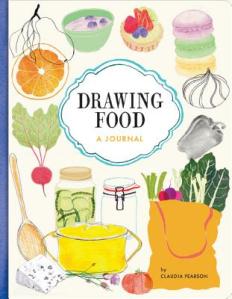
DrawingFood9781452111315 Here is a new resource that takes a fun and lighthearted approach to drawing. This resource provides more than prompts to remind you to draw everyday. It is a guided sketchbook complete with drawing techniques, instructions about how to use different media and a guidebook with plenty of room for sketching.

Drawing Food: A Journal by illustrator Claudia Pearson is composed of two key sections. The first section is titled, How to Draw Food, and contains instruction about how to draw fruit and vegetables, how to draw meat and dairy products, how to draw treats from the bakery, and how to draw household kitchen items. In this section, Pearson discusses line drawing, shading, how to work with colored pencils, and how to work with color pastels. Her instructions are clear, simple and doable.

In Part Two of her book, Pearson establishes a two-page spread for each week of the year and provides fun prompts for sketching enthusiasts. She challenges readers with thought-provoking tasks such as drawing what they find at their local farmer’s market, drawing something seasonal that isn’t produce, and challenges them to describe other culinary subjects in a visual way.

If the word “draw” makes you nervous, this book will help you begin to see your world through the eyes of an illustrator. It isn’t focused narrowly on any one culinary topic and provides plenty of room for you to take the journal in any direction you want to take it.

Interested in beginning your own illustrated food journal and discovering how plants intersect with our lives?

Join ArtPlantae next week when it launches the Botany Craft Bar, a creative place to learn about plants, during the Spring Open House at Aurea Vista on Friday,
May 17, 2013 (5-9 PM). In June, the Botany Craft Bar will become a regular feature during Riverside ArtsWalk, a monthly celebration of the arts in downtown Riverside.

If you can’t make it to the open house next week, visit ArtPlantae’s Botany Craft Bar on the first Thursday of the month during ArtsWalk. The Botany Bar will be open from 6:00 – 8:30 PM at Aurea Vista.

Read Full Post »

« Newer Posts - Older Posts »