 ARTPLANTAE TODAY (APT): How long have you been a professional graphite artist?
DIANE CARDACI (DC):
I have been working professionally as a graphite artist for about 25 years. Having attended medical school in Italy for several years, it was a natural that my first professional jobs were medical illustrations. I then developed my portfolio to include natural science subjects such as animals and plants so that I could work in the field of natural science illustration. After the birth of my daughter, I developed an interest in portraiture and began accepting portrait commissions.
APT: Why have you chosen to work in graphite pencil? Why not watercolor, colored pencil, oil or some other color medium?
DC: Over the years I have worked with various color mediums as well. Since I am allergic to turpentine, I use water-soluble oils for color portrait commissions, and I like to use pastels for landscapes. For my earlier color illustration work I used colored pencils. But I have always had a fascination for using graphite pencils and find myself consistently returning to them. I love the sensitivity of pencils – when I draw with a pencil, I often feel as if I am “touching” the subject. I also love the simplicity of graphite pencils. Since I travel quite a bit, I can always have my “studio” in my pocket or bag.
APT: When you were working primarily as a natural science illustrator, what type of work did you do? (i.e., textbook illustrations, museum work, etc.).
DC: I have never been a “niche” artist and have always enjoyed working on a variety of subjects. Because of this, while freelancing as a scientific illustrator, my work included medical, animal and botanical illustrations. I worked mainly in publishing, for textbook companies and some newspapers and magazines. I also did some illustrations for the Museum of Natural History in New York City.
APT: You have authored three books and co-authored two books through Walter Foster Publishing, Inc. How did you become an author?
DC: Walter Foster Publishing had seen my work and contacted me about authoring the book Realistic Textures. Although I had never authored a book before, I was thrilled to take on the project. It was exciting to have the opportunity to share the skills I have developed using graphite pencils with people all over the world. It was a successful collaboration, so I was happy to author additional books with this publishing company.
APT: Tell us about your next book and how it differs from your other drawing books.
DC: I’ve just finished working on another book for Walter Foster called Shortcuts and Artists’ Secrets, scheduled to be released in Spring 2011. The nature of realistic pencil drawing is that it is a “slow” medium—it takes a lot of time and patience to do a detailed drawing. In this book I focus on some of the shortcuts that artists use to “speed” things up a bit. Some of the tips that I discuss are: creating a dark background quickly, using thumbnail sketches, and choosing the right pencils and papers to “make the job easier”.
APT: When in Italy for the summer, you study the work of the Old Masters. How does one study the work of the Old Masters? What can be learned from Old Master drawings?
DC: This is a topic that is very dear to my heart. When I first began attending art classes, I had a wise teacher who advised me to make a lifelong habit of copying drawings from the Old Masters. By copying their drawings, you begin to notice details of their artwork, and really appreciate the training and knowledge that these artists had. I have also made it a habit that whenever I am doing a drawing, to take a look at some old master drawings of the same type of subject, and study how they approached the subject. When I am Italy, I particularly love to go to the small towns and search out the churches and museums. There is such an amazing artistic heritage Italy, it’s as if art is in the air you breathe. I always recommend to art students that they go to museums whenever possible. Today we are lucky because many museums have websites, so it is possible to do “virtual museum visits” if there are no museums close by.
APT: In your books, you use different forms of graphite, in addition to the traditional wooden pencil. How can botanical illustrators use graphite powder, graphite washes, and carbon pencil to enhance their illustrations?
DC: I always recommend experimenting with different techniques to see what “feels right”. The three techniques that you mentioned are fun to experiment with and can be very useful for the botanical artist. I like to use graphite powder as a quick way of creating a base tone. For example, to create a dark tone for some leaves, it is very easy to use a stump to apply graphite powder to develop quickly a dark base tone. Graphite washes are created using water-soluble graphite or watercolor pencils. These create watercolor effects and can be used as a base tone as well. Carbon pencils are great if you need to create a very deep black tone—the nature of graphite is such that you can only get a dark gray, but never a deep black tone. The important thing to remember when using carbon pencils is that carbon pencils have a matte finish, while graphite has a shinier “finish”. So if you use both types in a drawing, you must use the carbon as a first layer, you cannot draw with a carbon pencil on top of graphite. Another thing to be aware of is that when you combine these two mediums, they will reflect the light differently in your drawing.
ASK THE ARTIST WITH DIANE CARDACI
We are all fortunate to be able to learn from Diane who is currently studying the work of the Old Masters in Italy. Do you have questions about the drawing process, the different forms of graphite, or the Old Masters? Send your questions to education@artplantae.com. Your questions will be forwarded to Diane and her replies to your questions will be posted later this month. Please submit your questions no later than September 19, 2010.
Submit your question today!
Updated 9/30/10: Diane Cardaci Answers Your Questions
Read Full Post »

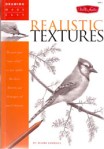 In Realistic Textures, Diane leads readers through a progression of exercises involving mark making and the creation of pencil washes using water-soluble graphite and smudging techniques. Diane’s demonstrations illustrate clearly that a pencil is more than a simple note-taking tool. While it may seem you’re playing around with pencil marks that will never be used on botanical subjects, Diane demonstrates otherwise when she shows artists how to apply tonal values and pencil marks to create form. Eight pages of Realistic Textures are dedicated to the creation of botanical textures. In this section, artists learn how Diane creates…
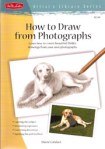 In this book, Diane provides many helpful tips, exercises, and pencil drawings to demonstrate how digital cameras can assist artists with their drawings. Diane shows artists how to recognize distortion, how to create distortion intentionally in their photographs, and how to correct for distortion in a drawing. She also demonstrates how to set up a value scale and how to identify a subject’s core value. Instruction in composition, lighting, how to work with several photo references, and how to capture details is also provided.
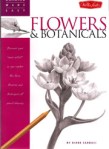 In this book about our favorite subject, Diane explains how botanical illustrators can use different techniques to create texture and values. Botanical artists will learn about graphite powder, graphite washes, and carbon pencil — tools not normally discussed in a botanical art class. Artists will also learn the value of creating a reference collection of flowers, flower heads, stems, leaves, leaf attachments, and reproductive parts for each specimen before combining these elements into a single composition. Eleven projects are presented by Diane, each one bringing attention to a different aspect of drawing. The projects and the key skills learned in each are as follows:
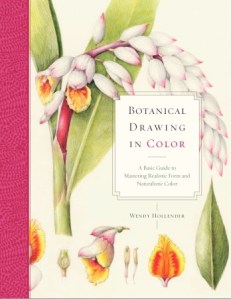 Wendy Hollender’s new book, Botanical Drawing in Color: A Basic Guide to Mastering Realistic Form and Naturalistic Color, is a book for all artists. To celebrate the release of this wonderful guide to drawing plants, ArtPlantae will host a live Ask The Artist session with Wendy on


 ArtPlantae Today
