When the botanical art program at the Como Park Zoo and Conservatory in St. Paul, MN ended late last year, it marked the end of arts programming at the conservatory. Mark Granlund began the art education program there and taught in the program for 15 years. This event could have been the end of botanical art instruction for Mark, but instead was opportunity in disguise. During the last week of class, Mark received an email from a woman in British Columbia, Canada asking if Como’s classes were taught online. Mark entertained the idea and began investigating what it would take to teach a botanical art class online. Curiosity turned into action. Mark developed an online curriculum and launched his new course this past Spring. The pilot course went well and the second class is also going well. How did he do it?
Mark drew upon the classroom experiences he had while teaching at Como. This helped him figure out the format of the class. To bring his traditional classroom curriculum online, he had to break activities down and breakdown the stages of the drawing process. By doing so, he identified the bits of information he could explain as text and the elements of his class that could only be taught through demonstration. This analytical evaluation of his classes resulted in a drawing course for beginners incorporating the combined use of video demonstrations, quizzes, critique sessions, and a class blog.
To teach online, Mark had to change his approach to teaching. Because he could no longer respond to questions in-person, he had to write everything down and deliver his information to students in advance. He spent a lot of time breaking things down into small steps — a lot of time. While incredibly time-consuming, he enjoyed the process. Mark says he likes that he can provide links and various resources to his students; resources he might not have provided to students in his classes at Como. Connecting students to a variety of resources helps to counter-balance the lack of face-to-face classroom interaction.
Mark uses Moodle to create his online classes. Moodle is a course management system designed specifically for online courses. The technical issues he has had to troubleshoot have been primarily PC vs. Mac issues. Students like the Moodle platform and find it easy to navigate.
Assessing student work is done efficiently through the Class Portfolio into which students upload their work. Mark can offer feedback on an individual basis through the class portfolio. There is also a Class Forum where students can ask questions of Mark and their classmates. The forum provides a learning environment like that of a physical classroom. Students can also participate in live chats, however neither class has taken advantage of this feature. Student schedules vary so much that chatting live has not been possible.
Student scheduling is one element of an online class that has proven to be difficult to manage. When students enroll in a traditional botanical art class, they participate according to a set schedule. In an online class, students participate when they can. The luxury of flexibility can be an issue sometimes. But as with traditional classroom learning, life happens and if a student has to miss a class or postpone participation, both Mark and his students roll with the changes. Mark tells his students he will always be available to answer their questions, even if they do not finish a class with their classmates. The nice thing about an online class is that students always have information available to them and have the resources to catch-up on their own.
When asked about the biggest difference between an online class and a traditional class, Mark cites accountability and student interaction as the biggest differences. Accountability and interaction occur at a different pace online. Everyday he struggles with these two questions: How do you get people to engage? How do you coax the people on the edge to interact?
Another difference between online and traditional botanical art classes is advertising. With an online class, Mark does not have to print flyers and drive all over town to post them onto bulletin boards. He advertises his classes on his blog and through social media channels.
Mark’s current drawing class for beginners is almost complete. During summer, he will continue writing curriculum for the intermediate drawing class he will teach in September. This class will be followed by a watercolor course for beginners in mid-Fall. Mark’s advanced drawing class will begin in 2011. Details about Mark’s classes will be posted in Classes Near You > Minnesota when they become available.
Office Hours with Mark Granlund
Do you want to learn more about Mark’s online classes? Mark will respond to your questions directly through ArtPlantae Today. Enter your questions or comments below and check the “Notify Me” box so you can follow the conversation about Mark’s classes as it develops. Mark will respond to questions every Thursday evening through the month of July. So if you don’t have a question today, you will have the opportunity to ask your question anytime during this month.
About Mark Granlund
When Mark is not working tirelessly creating his new classes, he is beautifying the city of St. Paul, MN as the Arts & Garden Program Coordinator. In this position, Mark tends to 150,000 square feet of public gardens, 60 public sculptures, and 570 hanging baskets. He also works as a liason between government agencies and community groups. Mark is currently assisting in a project that will bring healthy, locally-grown food to the residents of St. Paul. He is also involved with the Blooming St. Paul project dedicated to greening up neighborhoods and the installation of public art. One of his projects is related to a light-rail line that will connect downtown St. Paul to downtown Minneapolis. This rail line will run down a major street and its construction will be very disruptive to the area. Mark is working with other groups to turn this huge disruption into a positive experience by creating planted medians and a sustainable landscape around the finished rail line.
Mark’s most engaging project at this time is writing and illustrating The Book of Bartholomew. This book is a collection of short stories about young adults and their experiences managing careers and relationships. Mark is posting a sentence or snippet of his book daily on the his Facebook page. When the book is released, readers will be able to view the short stories in their entirety. The book has been designed to be an online experience. When the book’s website launches, a new short story will be unveiled every two weeks. The overall theme of the book is about supporting local artists and local growers. Mark is working on The Book of Bartholomew with five other artists. An exhibition about this book will be held at Homewood Studios, October 1-18, 2010.
Read Full Post »
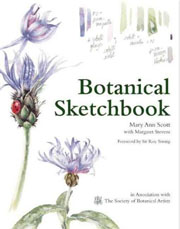 Mary Ann Scott’s Botanical Sketchbook is an open journal in which she describes her experiences as a student in the Distance Learning Diploma Course administered by the Society of Botanical Artists in the UK. Scott presents actual assignments, as well as the marks she earned for each assignment. Readers are given a front row seat to Scott’s insecurities, decisions, mistakes and successes. This book’s format is unique and provides a level of insight into the SBA diploma program that is not available anywhere else.


 ArtPlantae Today