Feeds:
Posts
Comments

Archive for the ‘botany’ Category

New Course at Classes Near You > England:


Lewis Hamart House, London

www.lewishamarthouse.co.uk
The Lewis Hamart House once served as the central library of Deptford. Designed by architect Sir Alfred Brumwell Thomas (1868-1948) and funded by Andrew Carnegie (1835-1919), this former library is now features a public gallery and studio space for professional artists. Artist studios are open to the public once per year. Exhibitions in the gallery are open to the public year-round, free of charge.

    From Plant Life…An Introduction to Botanical Illustration
    Mondays, January 24 – April 4, 2011; 1:30 PM – 3:00 PM.
    Taught by practicing artist and qualified botanist, Alison Day, this ten-week workshop provides an opportunity to learn about the art and science of plant drawing at a theoretical and practical level. The course is designed for beginners and people who would like to update existing knowledge. Participants must bring a sketchbook and basic materials. Additional course details and registration information are available here.
Read Full Post »

Now at Classes Near You > California:


The Gardens at Heather Farm

Walnut Creek
www.gardenshf.org
The Gardens at Heather Farm are comprised of twenty demonstration gardens. This six-acre garden is also an outdoor classroom. The garden offers many classes and has its own florilegium. The florilegium project is managed by botanical artist, Catherine Watters.

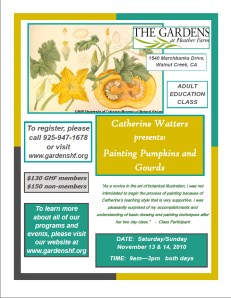
    Painting Pumpkins and Gourds
    Saturday & Sunday
    Nov. 13-14, 2010 (9 AM – 3 PM)
    Capture the colors, shapes and textures of pumpkins and gourds. Instructor: Catherine Watters. Cost: $130 members/$150 non-members. For complete details and to register, click here.

    The Botany and Ecology of How Plants Grow

    Saturday November 20, 2010
    9 AM – 12:00 PM
    Have you ever wondered how plants grow? Why some are trees, others bulbs, and even annuals? Why pH is so important for plants and how roots work? How do plants “know” to make roots when you cut off pieces to root them or the tops regrow after they have been pruned? In this interactive discussion using live plants and images of plants, you will learn how and why plants live or die, flourish, or flounder
 in your garden. In this class, you will be able to ask a lot of questions and ponder the inner and outer workings of plants in a comfortable non-technical learning environment. Instructor: Ernesto Sandoval, Director of Botanical Conservatory, UC Davis. Cost: $20 members/$25 non-members. For complete details and to register, click here

Read Full Post »

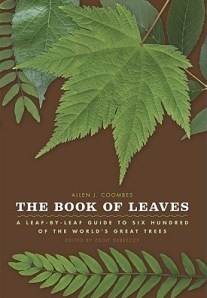
The Book of Leaves: A Leaf-by-Leaf Guide to Six Hundred of the World’s Great Trees
Coombes, Allen J. 2010. University of Chicago Press. ISBN: 9780226139739

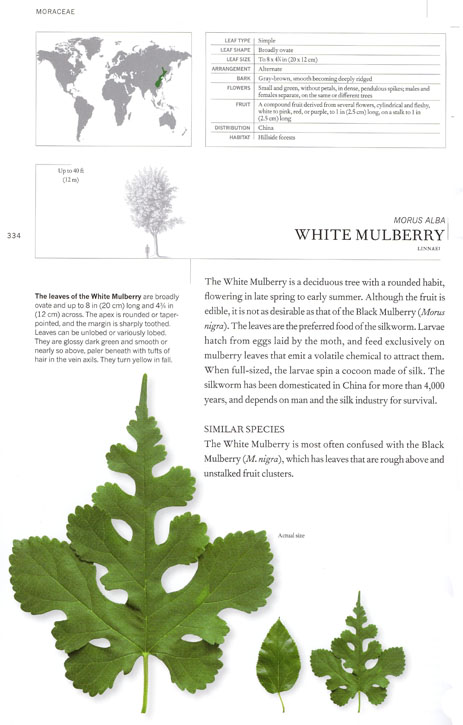
If you have a recurring daydream about having a labeled leaf collection composed of perfect leaves that never wilt, dry, and get crunchy, stop dreaming. You can now take one step closer to making your dream a reality. Author Allen J. Coombes (Coordinator of Scientific Collections at the Herbarium and Botanic Garden of the University of Puebla, Mexico) and editor Zsolt Debreczy (Research Director of the International Dendrological Research Institute in Boston) have created a glorious collection of leaves.

Each leaf is actual size. Leaves are arranged by family, genus, and then species. Coombes and Debreezy provide an overview of leaf morphology and teach readers how to look at leaves and how to arrange them systematically. Each entry is accompanied by a description of a leaf’s type, shape, size, and arrangement along a stem. A summary about each tree’s bark, flowers, fruit, distribution, and habitat is also included. Information about each tree’s growth pattern, observable changes in leaf appearance, ethnobotanical use, and similarity to other trees is provided as well. Of interest to plant enthusiasts and botanical illustrators in particular, is the section in which the authors arrange leaves by their position along a stem, their overall shape, the type of margin they have, and the status about their evergreen or deciduous nature. Categories in this section are labeled as “Alternate, Simple, Lobed, Deciduous” and “Opposite, Pinnately Compound, Entire Leaflets, Deciduous” and contain corresponding photographs of leaves.

Not only is this book an informative reference, it is a great way for botanical illustrators to study venation patterns and leaf margins. One look at this book and you’ll be reaching for your 0.2 mm mechanical pencil!


The Book of Leaves
is available at your local independent bookstore ($55).


Images used with permission from The University of Chicago Press

Read Full Post »

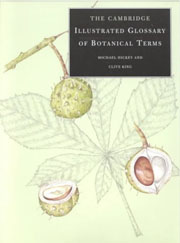
The Cambridge Illustrated Glossary of Botanical Terms
Hickey, Michael and Clive King. 2002. Cambridge University Press. ISBN: 9780521794015

We know that being able to draw plant subjects as accurately as possible is critical. Most of us have at least one glossary of plant terminology in our libraries (e.g., Plant Identification Terminology – An Illustrated Glossary by James G. Harris & Melinda Woolf Harris). Harris & Harris’ book is invaluable when trying to decipher detailed information about a plant specimen. When we reach for this book, it is because we are presented with terminology we do not understand. The illustrations accompanying each term in Harris & Harris help us see what we have never before noticed. But what do you do if you have only your plant specimen in front of you, lack the words to describe what you see, and therefore cannot look anything up?

You turn to Hickey & King’s illustrated glossary. Descriptive illustrations get top billing in this book. Most of this book is dedicated to labeled illustrations. A glossary of botanical terminology is provided for you to decipher unfamiliar terms. The illustrations in this book are very helpful, as is the way they are organized. Illustrations are organized in the following way: Roots, Storage Organs and Vegetative Reproduction; Seeds and Seedlings; Growth and Life Forms; General Features of Flowering Plants; Plant Features and Responses; Leaf-like Structures & Other Vegetative Features; Leaves; Hairs and Scales; Floral Features; Flower Structures; Features of Certain Plant Families; Fruits; Conifers and Conifer Allies; Ferns and Fern Allies.

The authors of this book express their hope “that readers at all levels of understanding, both amateur and professional, will find (this book) helpful in their chosen area of study, especially plant science, horticulture, field studies and botanical illustration.”
Plant Identification Terminology
Buy this book and Harris & Harris (2001) from your local independent bookstore.

Read Full Post »

In Herbarium Amoris, Swedish photographer Edvard Koinberg photographs plants named by Carl von Linné (Linnaeus). Inspired by Linnaeus’s poetic descriptions of plant sexuality, Koinberg designed a project to bring attention to plants and their reproductive features.
Swedish crime writer, Henning Mankell, and Swedish science professor, Tore Frangsmyr, contribute to Herbarium Amoris. In their respective essays, Mankell and Frangsmyr explain how Linnaeus recruited help from scouts and students who traveled throughout the world to send him plants. They explain that, before Linnaeus created a new way of classifying plants, plants were organized by color, size, flower type, and fruit. However during a time when plant exploration was booming, new discoveries did not fit into existing categories. This prompted Linnaeus to create a new way of organizing plants.

Frangsmyr explains how Linnaeus spent time thinking about the sexuality of plants and how his thoughts lead to his publication about classification systems in nature (Systema Naturae). In Systema Naturae, Linnaeus describes a classification system dividing plants into 24 groups according to the number and arrangement of their reproductive parts. His system was well-received and this new way of organizing plants, along with binary nomenclature (a naming convention assigning plants a 2-part name) established botany as a legitimate discipline.

In 1756, Linnaeus created a floral calendar (Calendarium Florae) in which he used flowers to reflect different time periods of a calendar year. Koinberg’s Herbarium Amoris was inspired by this calendar. Koinberg’s moving photographs are presented as one- and two-page spreads. His revealing images and enlightening plant descriptions encourage readers to reflect upon the seasons of the year and the plants with which we share our planet.

Koinberg’s photographs are arranged as follows:

  • Glacialis – Reviving Winter Month (December 13)
  • Regelations – Thawing Month (March 19)
  • Germinations – Budding Month (April 12)
  • Frondescentiae – Leafing Month (May 9)
  • Florescentiae – Flowering Month (May 25)
  • Grossificationis – Fruiting Month (June 20)
  • Maturationis – Ripening Month (July 16)
  • Messis – Reaping Month (August 4)
  • Exsolationis – Sowing Month (August 28)
  • Defoliationis – Shedding Month (September 22)
  • Congelationis – Freezing Month (October 28)
  • Brumalis – Declining Winter Months (November 5)

To view publisher’s images, click here.

Herbarium Amoris (Floral Romance) is available at ArtPlantae Books for $39.95. This title ships for free through October 31, 2010!


You may also enjoy…

Order From Chaos: Linnaeus Disposes
Lessons for a Young Botanist

Read Full Post »

The Denver Botanic Gardens is hosting a retreat for botanical illustrators at the Gateway Canyons Resort in Gateway, CO. Five days of workshops, field trips, and lectures are planned. Visit the Garden’s website to download a detailed 11-page itinerary that includes course descriptions, fees, reservation information, and travel information. Here is a quick overview…

November 8-11, 2010

    Seed Pods and Autumn Leaves in Colored Pencil with Ann Swan


Monday, November 8, 2010

    Preservation Through Conservation – Lecture, Rob Bleiberg
    Architecture of Flowers – Complex flower forms with Marjorie Leggitt
    Gathering the Canyon Lands – Landscapes in colored pencil with Renee Jorgensen
    Open Studio
    Fruits, Seeds and Hormones – Lunch Lecture, Eric Rechel
    Layering Fall Colors in Colored Pencil – Create perfect colors with Susan Rubin
    Field Trip to Uneweep and John Brown Canyons
    Dinner on your own
    Caran d’Arche Colored Pencils & Artistic Paper Demonstration – Libby Kyer & B.C. Fritzke

Tuesday, November 9, 2010

    Twigs in Watercolor – Textures and color with Constance Sayas
    Paint it Out – Plein air sketching with Karla Beatty
    Open Studio
    Mesa Verde and Gustaf Nordenskjold – Lunch Lecture, Judith Reynolds
    Pen and Ink Textures – Tiny textures with Libby Kyer
    Take it Outside! – Plein air sketching with Marjorie Leggitt
    Palisade Wine Tour
    Dinner on your own
    Portfolio Sharing

Wednesday, November 10, 2010

    Gateway Palisade Natural Area: Photo Notes – Lorraine Yeatts
    Hike to Palisade – Lorraine & Dick Yeatts
    Open Studio
    Palisade Wine Tour
    Retreat Dinner

Thursday, November 11, 2010

    Dry Brush Demo & Exercises – Dry brush techniques with Karla Beatty
    Art at 75 mph – Quick sketching with Libby Kyer
    Open Studio
    Magnificent Small Treasures of Gateway – Lunch Lecture, Barbara Hawke
    Gathering the Canyon Lands – Landscapes in colored pencil with Renee Jorgensen
    Field Trip to Uneweep and John Brown Canyons
    Celebration of Art

Friday, November 12, 2010

    Southwest Treasures: Eco-Cooking – Create “food portraits” with Maria Hodkins

Read Full Post »

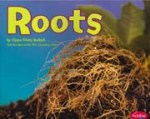
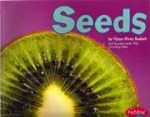
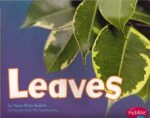
The Plant Parts series by Vijaya Khisty Bodach is a collection of six books addressing plant morphology. Each book is dedicated to a single topic. The topics Bodach writes about are roots, stems, leaves, flowers, fruit, and seeds. Each book in the series follows the same format, so a pattern emerges that unites the books and builds on the theme. Young readers learn why roots, stems, leaves, flowers, fruit, and seeds are required by plants. They also learn about the parts of plants we eat as food.

Large color photographs are paired with descriptive text that is easy to read. Word count for the books in this series ranges from 114 to 130. Each book ends with a glossary of terms and suggestions for further reading. On the last page of each book, a unique identification code is provided giving young learners access to FactHound.com, a portal to 1,600 pre-selected, age-appropriate websites about many different subjects.

The books in the Plant Parts series are available at your local independent bookstore or from the publisher ($6.95).

Read Full Post »

« Newer Posts - Older Posts »