Feeds:
Posts
Comments

Archive for the ‘botany’ Category

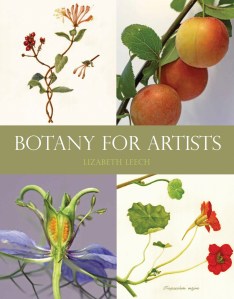
Botanist and botanical artist, Lizabeth Leech, has written a comprehensive introduction to botany for both artists and non-artists alike. In Botany for Artists, Liz does more than simply rattle off facts about plants. She teaches readers how to observe and record information about the plant specimens before them, as well as any fungi or lichen that may have taken their breath away.

Liz teaches readers how to see with “helpsheets” — worksheets designed to help artists see carefully, the morphological features of different plant groups. Blank helpsheets for flowers, winter twigs, gymnosperms, ferns, moss, and fungi are provided in the appendix and are easy to copy for personal use.

Each chapter of Liz’s book has information that will help artists navigate the plant world from an artist’s perspective. Sections of special note are:

    Liz’s Explanation of the Floral Formula. Helpsheet #2 (Recording Flower Details While Sketching and Annotating) found in Chapter 2, provides a helpful breakdown of the floral formula. This sheet will make recording data in the field easier and, most importantly, reliable! With this helpsheet completed, artists shouldn’t have too much of a problem keying out a plant back in the studio or keying out a plant at some later date.

    Labeled Line Drawings. Informative line drawings can be viewed throughout the book. Good examples are grass (Chapter 3), an orchid flower (Chapter 4), a winter twig (Chapter 8), and moss (Chapter 11).

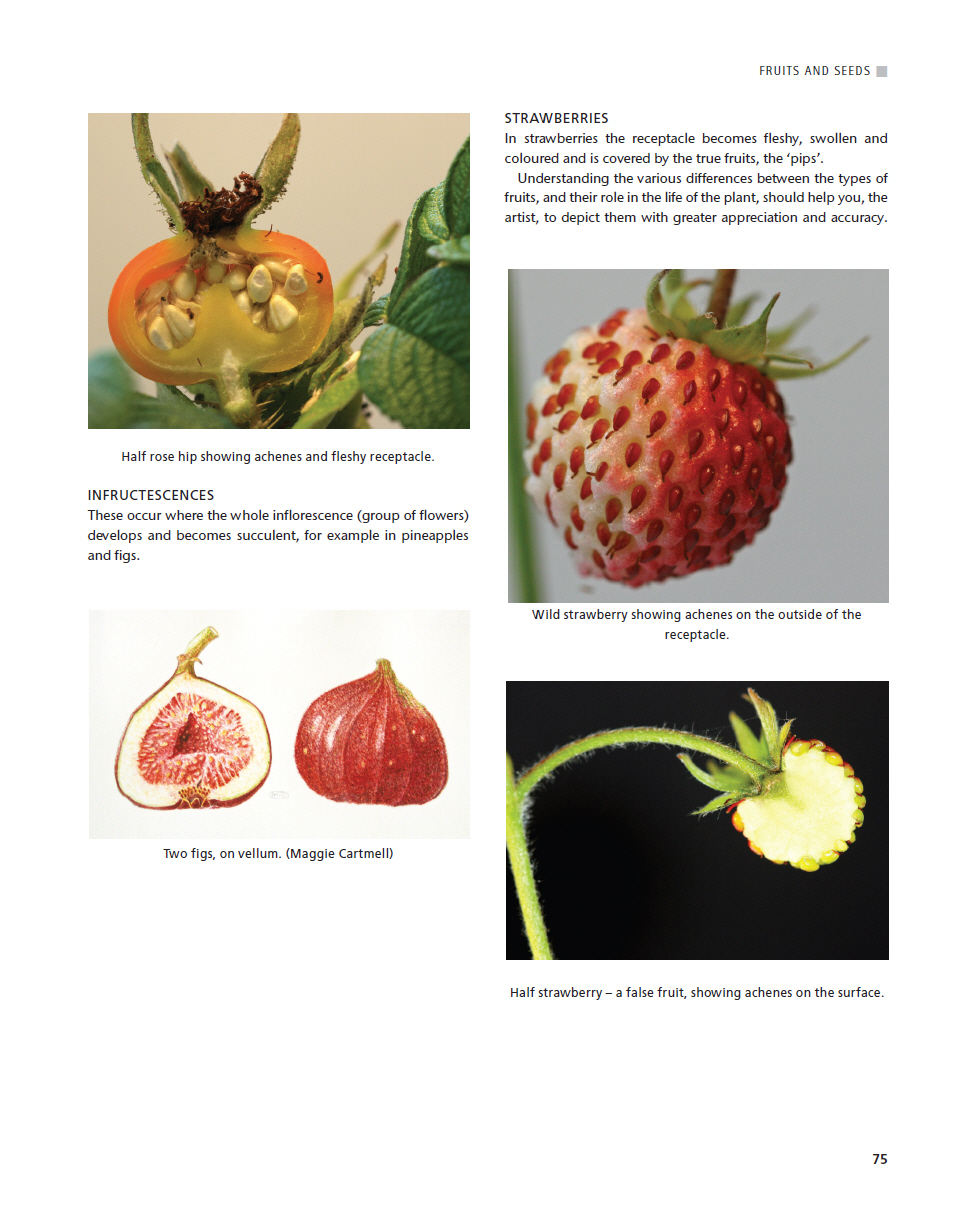
    Liz’s Thoughtful Explanations. Take, for example, Liz’s patient explanation of fruits and seeds. Liz takes her time explaining each fruit structure

    Courtesy Crowood Press. All rights reserved

    and seed dispersal mechanism. Her review is better than the usual charts and graphics encountered in a traditional botany class.

    Liz’s Review of Phyllodes, Climbing Adaptations and Roots. In Chapter 6, Liz stresses the need to observe leaves, fruit and stems carefully and for artists “to keep their wits about them to understand, and then depict and show, the links between structures and their functions.”

    Liz’s Review of Gymnosperms. In Chapter 9, artists will find descriptive photographs of different gymnosperms, a helpful table summarizing the phyla of gymnosperms and an example of how to complete Helpsheet #4 when observing gymnosperm specimens.

    Liz’s Review of Ferns, Club Mosses and Horsetails in Chapter 10, along with her illustrations and Helpsheet #5 (Ferns), ensure artists will develop a fluent understanding of these groups.

    Helpsheet #6 (Moss), in conjunction with Liz’s illustrations and photographs about the branching habits of moss and the leaf shapes of bryophytes, is sure to strengthen artists’ understanding of mosses and how they work.

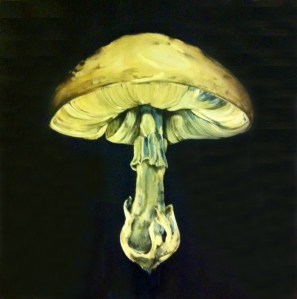
    Liz’s Introduction to Fungi & Lichens will enhance artists’ understanding of where and how fungi and lichen grow. Helpsheet #7 (Fungi) is a helpful guide to collecting and observing capped fungi.

    How to Indicate Scale on a Drawing or Painting. Instructions on how to indicate scale can be found in the last chapter of Botany for Artists, along with a review of binomial names and plant-collecting equipment.

Lathyrus japonicus by Sara Bedford. Courtesy Crowood Press. All rights reserved

An explanation of the classification of plants, an introduction to the Hampton Court Palace Florilegium Society, a 297-word glossary, and a bibliography are also included in Liz’s new book.

Botany for Artists is a wonderful resource for botanical artists, as well as anyone incorporating botanical themes into creative projects who would like to learn more about plants.


Published in the UK in 2011, Botany for Artists is now available in the US and can be purchased at ArtPlantae Books. Use the coupon code presented at checkout to deduct 15% off your purchase.

Read Full Post »

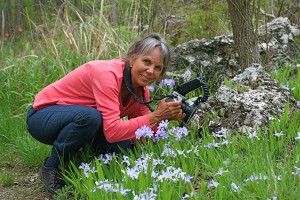
Lizabeth Leech is a botanist, botanical artist, teacher and author. Liz has worked as a botanist at the Field Studies Council, taught biology in Australia, studied the flora and fauna of Australia as a postgraduate student, taught high school for 20 years and worked as a research assistant in soft fruit breeding and in a tissue culture lab growing eucalyptus and acacia trees. In the years leading to retirement, Liz began to study botanical illustration.

Since graduating from the diploma course in botanical painting at the English Gardening School in 2002, Liz has become a founding member of the Hampton Court Palace Florilegium Society, developed short courses in botany for artists and written the new book, Botany for Artists, released in the US just this morning!

Please welcome Liz Leech, the Featured Botanist for May!


A Conversation with Liz

Instead of publishing a complete interview like I normally do on the first day of the month, Liz and I will work together to lead this month’s conversation. We are slowing down our dialogue so that you can comment and ask questions as the conversation develops.

The conversation with Liz will advance every 2-3 days when I will ask our guest a new question. To comment or to ask a question at any time, click in the Comment box below and enter your comment or question. Before you click the Post Comment button, be sure to check the box next to “Notify me of follow-up comments via email”. By checking this box, you will be able to follow the conversation from your inbox.

Let’s begin!

Read Full Post »

© Meghan Garcia. All Rights Reserved

Botanize
Garcia.Dunn
Covington, LA
Opens April 21, 2012

A very different kind of gallery will open this weekend in Covington, Louisiana. Actually, it’s not a gallery but a “live art home store” whose focus is to provide opportunities to “view living space as art and art as a natural part of daily life”.

Artists Meghan Garcia and Sarah Dunn will open Garcia.Dunn, a multi-functional space where they will showcase their artwork and hand-made objects and host a variety of fine art and craft classes. Garcia.Dunn will also serve as the headquarters for their community outreach activities through which they will donate art supplies to a local art program. Well-established in their community and local art scene, Garcia and Dunn will begin collecting new and used art supplies at their new space this weekend.

The opening exhibition Botanize, will feature a collection of paintings by Garcia and Dunn, as well as handcrafted lighting, home furnishings, fabrics, and flora. Botanize is inspired by the scientific discoveries of botany in the 18th century, a time when observing and recording local flora was a popular pastime. The objects produced for the show reflect an “aesthetic homage for natural and hand crafted living-design with modern sensibility”.

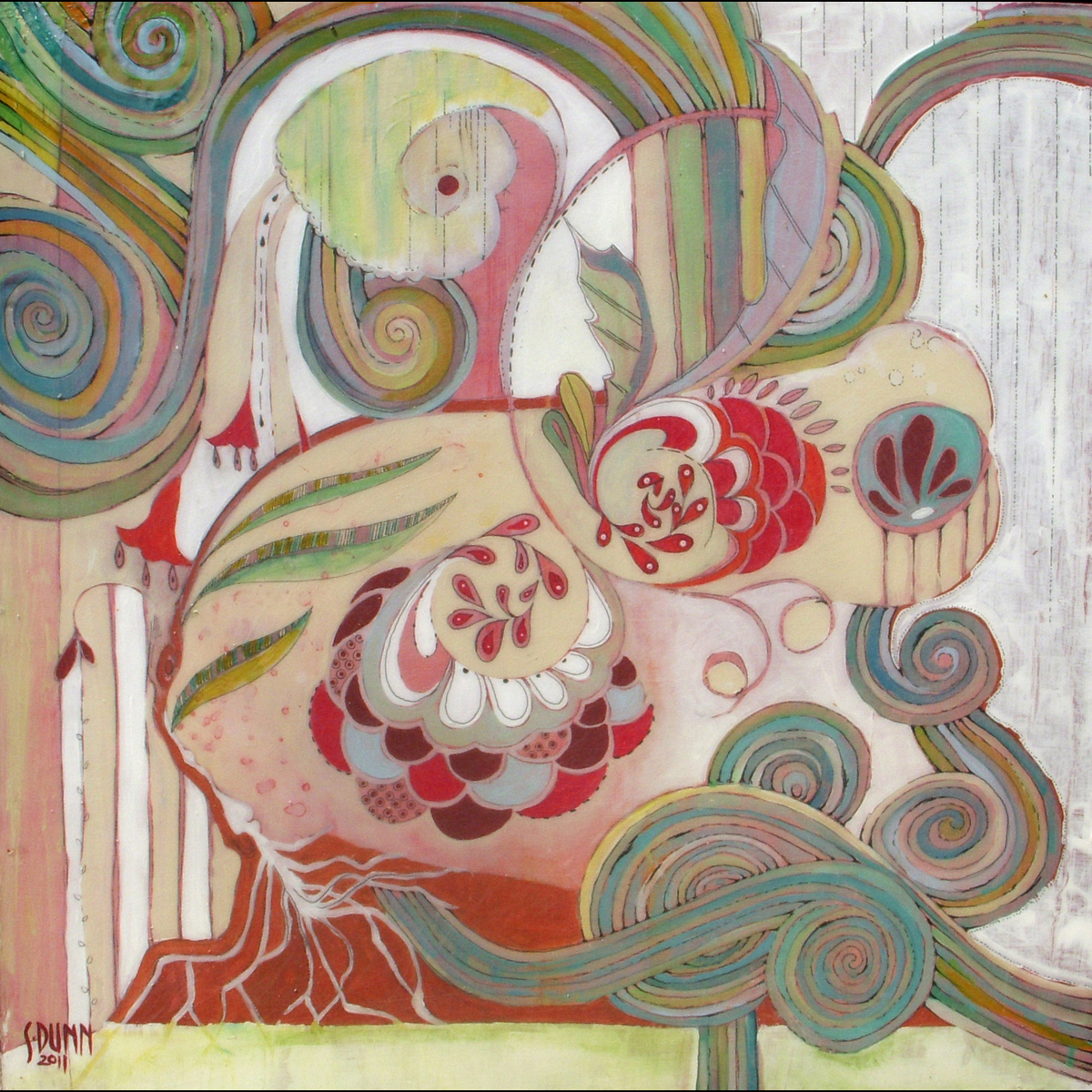
© Sarah Dunn. All Rights Reserved

Sarah Dunn, owner/creator of Sarah Dunn Arts and the new organic fashion line, Sweet Olivier, has been successful in the art business since opening her first gallery in 2007. Meghan Garcia is a painter and an elementary art teacher in the public school system. She has been a leader in local arts organizations and other cultural non-profits since 2006.

For more information about Garcia.Dunn, its classes and community outreach program, visit www.garciadunn.com.

Read Full Post »

Georg Eberhard Rumpf was born in Germany to August Rumph and Anna Elisabeth Keller in 1627. The eldest of three children, he would grow up to create the first herbal of Indonesian plants and of Wallacea, an island region in eastern Indonesia that includes the Spice Islands.

The story behind the Ambonese Herbal is a long one and includes tales of many unfortunate events. The only reason we are fortunate enough to know about it today is because of the actions a few key people took many centuries ago and because of the incredible research by E.M. Beekman (1938-2008), a scholar of Dutch colonial literature at the University of Massachusetts, Amherst who translated the Ambonese Herbal into English from its original Dutch and Latin text. It is from Beekman’s English translation and other resources that we will come to understand Rumphius’ life and contributions.

When we think about Georgius Everhardus Rumphius (1627-1702), this is the Latinized version of his name, we need to think of him as a soldier first and a naturalist second because he was really a botanist trapped in a soldier’s body. Born in a region of Germany devastated by the Thirty Years’ War, Rumphius knew war all of this life. To escape the devastation, he exercised the only option he had to get away from home — he joined the military to see the world. During his lifetime, Rumphius experienced three wars: the Thirty Years’ War, the Portuguese-Spanish War and the Ambonese War. He spent his military service fighting for Portugal and the Dutch East Indies Company. Rumphius’ military contract with the Dutch East Indies Company ended in 1657. At this time, he applied to work for the civil branch of the same company. Fluent in many languages (Dutch, German, Malay, Portuguese, the local Ambonese dialect plus a working knowledge of many other languages), Rumphius was an invaluable asset. Rumphius was assigned to the island of Ambon in 1657 and it was during this time that he began to write about the flora and fauna of this island.

Insights into Rumphius’ story will be shared this month here on this website, for he is our Feature Botanist for April. Welcome Rumphius!

For the first time, our featured guest is not living. I hope to bring him to life this month so that he becomes more than just one of those old names one encounters every so often when reading about natural history.

For an in-depth look at the Ambonese Herbal, you are invited to join me at the Southern California Spring Garden Show on April 27 (7-8 PM) where I will discuss Rumphius’ herbal and have all six volumes available for you to review.


Other Viewing Opportunities

The Ambonese Herbal can also be viewed at:

    26th Annual Avocado Festival, Fallbrook, CA
    Sunday, April 15, 2012
    Visit ArtPlantae on the “Avenue of the Arts” at the wildly popular Avocado Festival. The herbal will be available for you to view. Stop by to see this special collection, plus other resources related to plants and botanical art. And don’t forget about the unlimited supplies of guacamole and avocado ice cream! Festival Hours: 9 AM – 5 PM. Location: Alvarado Street between Main & Vine (map)

    GROW! A Garden Festival, Arcadia, CA
    May 4-6, 2012
    ArtPlantae will be in the Marketplace at this brand new venue. Stop by to say hello and to view The Ambonese Herbal in person. While at the festival, don’t miss the guest speakers, landscape designs, gardening activities for families and kids, plant sale, and many other activities planned for this fun weekend. Hours: 9:00 AM – 4:30 PM. (details)


UPDATE (5/1/12)

View All April Posts About Rumphius

Read Full Post »

The New York Botanical Garden (NYBG) has a long history of offering classes in botanical art and natural science illustration. The number of courses they offer and their faculty roster is impressive. Upcoming learning opportunities include classes unique to NYBG. Classes such as Botanical Art Through the Centuries and several courses related to an exhibition about Monet’s Garden opening May 19 and continuing through October 21, 2012.

Below is a list of open classes at NYBG. These classes can also be found at Classes Near You > New York:


New York Botanical Garden

www.nybg.org
Two certificate programs are offered through the Garden’s Continuing Education program. One certificate program emphasizes Botanical Art & Illustration and the other, Natural Science Illustration. There are several courses from which to choose. View current course schedule.

Read Full Post »

By Carol Gracie

From the time I was a child, plants have always interested me, first for their beautiful flowers, but then because I would always notice something interesting happening on or near the flowers: insects visiting them (sometimes eating them!), other insects mating on them (rather risqué for a 10-year-old), colors or shapes changing; I always wanted to know why.

As an adult, I began teaching children and other adults about plants, both informally on nature walks and then on a professional basis at The New York Botanical Garden. Many people already appreciated the beauty of plants, but few gave them more than an admiring glance and failed to get to know the stories behind their pretty faces. It was my job to introduce them to the rich lives of plants and give them a sense of their role in the environment. Like animals, each plant interacts with its environment in some way. Since plants are stationary they have had to evolve creative strategies to accomplish tasks like reproduction, dissemination of their seeds, and protection from predators that are more easily carried out by mobile animals. Plants are particularly important because they are the very basis of life for most other organisms on earth; they can manufacture their own food, and without them, life as we know it would not exist.

Most of the adults that I taught were in class because they already cared about plants and wanted to learn more about them. However, capturing the interest of kids at the Garden on a school field trip was often more of a challenge. What to do? I found that a “hands-on” approach was best. Let them touch — sometimes even pull apart — what they were studying. Ask them questions about it. Get them to look and discover. When outdoors, I gave them magnifying lenses and let them observe what the insects were doing on/in the flower. The latter idea is easier said than done. The only insect that some city kids knew was the cockroach— in their eyes a creature put on this Earth to be stepped on – and many kids (and some adults) have such a fear of bees that they instinctively flail about when approached by one. Showing them that I wasn’t afraid of 6-legged creatures, and that the insects usually paid no attention to me if I remained still, would often give them the courage to become observers. And what keen observers young plant detectives can be! Once “into it,” they spot things that most adults miss — an insect camouflaged on a tree trunk, one hiding beneath a leaf, ants cooperating to carry something too heavy for one to bring back to the nest alone, etc. Being in the field with an interested child can open one’s eyes. However, I must admit that if a snake suddenly slithered across the trail, an immediate halt to all botanical education ceased. Things that move – fly, crawl, run, and slither — are just inherently more interesting to children. Since snakes have little direct connection to plants, I would share their excitement about the snake and once it had disappeared from view, get them to think about what snakes ate — often frogs or small mammals — and then to consider what those animals ate until we got back to plants, thus following the food chain back to the miraculous plants that didn’t need to “eat” anything else but could manufacture their own food. Of course, someone would always ask about “meat eating” plants, and we were off on another discussion. Several species of carnivorous plants are on display in the greenhouses of The New York Botanical Garden, so I could show them how each traps its prey and explain that the green plants still made their own food and only absorbed certain nutrients, which were lacking in the poor soils where they grew.

Although I no longer teach in a classroom setting, I still lead occasional wildflower walks and lecture about wildflowers. I find that the same techniques are effective with adults. I’ve led or co-led over 30 ecotours with a botanical focus, mostly to places in South America, but also to more local destinations. The location is not important. It’s getting people to take the time to really look at things. Once they learn to “stop and smell the roses,” they become interested observers and can enjoy the excitement of discovering something new, even if that something is long known, and only new to them.

We have had several artists, particularly natural history artists, travel with us over the years. Because they always seemed frustrated that they didn’t have time to do proper sketches before we moved on, we decided to offer some ecotours that included a separate component for artists. We offered one of these tours to Trinidad and two to the Amazon. On the Amazon tours we had one with the artists traveling together on the same boat with us and one with artists traveling on a separate boat that traveled along with the general natural history boat but was able to take longer stops at places where the artists could complete comprehensive sketches or photos. The artists’ boat would catch up with the other boat later in the day. What we found was that the artists didn’t want to miss anything that people in the general boat were seeing, and they preferred to stay with us, clipping specimens and keeping them fresh in water along the way. We would travel from one locale to another during the heat of the day, with most people on the “regular” boat taking a siesta or reading, while most of the artists were busily working away on the morning’s specimens or attending workshops led by our friend and artist-in-residence (or rather artist-on-board), Katie Lee. In the afternoon, we would be off in the canoes again, enjoying more of the Amazon’s wonders side-by-side with the artists. Over cocktail hour and dinner together we would view what they had created that day and marvel how each chose to focus on different aspects of nature, or used different styles, media, or techniques to depict the same species. As most of us settled in for the evening, we would notice lights on until late into the night on the artists’ boat as they diligently completed their work for the day. We all learned from each other and had a great deal of fun together on those trips. The Trinidad trip was a bit easier since we were based at a lodge with more spacious facilities for the artists to spread out. Nevertheless, they generally accompanied us on all excursions, and we often enjoyed sitting in on their workshops.

I hope to reach a larger audience with my latest book, Spring Wildflowers of the Northeast: A Natural History. In it I have included details about the lives of 35 plus wildflower species that have interested me over the years. As a photographer I’ve spent long hours in the field plant watching, and in the process learning about the plants’ lives. Knowing what pollinates them, how they reproduce, what eats them, etc. gives me a better understanding of how they fit into the environment and a deeper appreciation for their importance. It’s this information — from my own observations and that of many others — which I have written about in the book. Although I am not an artist I feel that depicting some of these interactions would make drawing or painting the wildflowers more interesting, both for the artist and for the viewer of his/her artwork.


About Carol
:
Carol Gracie is retired from The New York Botanical Garden, where over her three-decade career she served as Senior Administrator of Children’s Education, Foreign Tour Director, and a Research Assistant on tropical plant collecting expeditions. Aside from her current book, she is the co-author (with Steve Clemants) of Wildflowers in the Field and Forest: A Field Guide to the Northeastern United States (2006), co-author (with her husband, Scott Mori, and others) of A Guide to the Vascular Plants of Central French Guiana (Part 1, 1997; Part 2, 2004), principal photographer for Flowering Plants of the Neotropics (2004), and editor of Guide to the Natural Areas of the Lower Hudson Chapter of The Nature Conservancy, second edition (1981). Carol has five plant species named for her (and one named jointly for her and her husband) as a result of her work in the tropics. Carol and her husband live in South Salem, NY.

Read Full Post »
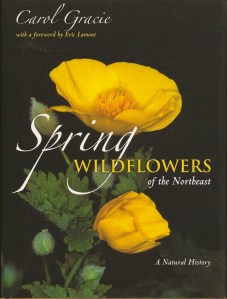
Last week we learned how to conduct and record observations of plants in the field. Today we are treated to a reference serving as a fine example of how the life histories of plants can be written and, more importantly, introduced to a general audience.

In Spring Wildflowers of the Northeast: A Natural History,
Carol Gracie shares the life histories of more than 30 spring-blooming plants growing in the northeastern United States. A seasoned writer, teacher and interpretative naturalist, Carol is able to “talk plants” to an audience whose interest may range from no interest at all to pure passion. The plant profiles Carol writes are more than a string of facts about a plant’s morphological parts and its dry taxonomic history. Each profile is a history lesson sprinkled with interesting insights into how plants work.

Using a friendly conversational tone, Carol touches upon complicated topics such as pollination ecology, species introduction, plant taxonomy, ethnobotany, horticulture, medicine and climate change without bogging readers down with the type of information that makes eyes glaze over. To maintain her easy-going storytelling approach, Carol chose not to clutter her profiles with references and footnotes. Instead, she waits until the end to cite her sources. She also went out of her way to keep her book free of the confusing technical jargon botanists speak. However, since some botanical terms cannot be translated into everyday English, Carol also provides a glossary of terms at the end of her book.

More than a guide to 30 popular plants of the northeast, this book is a guide to seeing. While reading Carol’s book, be prepared for your observation skills to improve without any effort on your part. This magical transformation occurs because of Carol’s detailed color photographs highlighting key characteristics of plants and the significant changes that occur during each plant’s life cycle. After viewing Carol’s 500+ images, you will discover you’ve developed a search image for the subtlest of details such as tiny persistent styles and the gentle arching of reflexed stamen.

I like Spring Wildflowers for several reasons. First, it doesn’t read like a textbook. It is easy to get lost in one plant profile after another. Second, it is a fascinating introduction to the plants of the northeastern US. Having lived around chaparral and coastal sage scrub all my life, there were plenty of opportunities to be surprised as I turned the pages of this book. What a treat to see the snowflake-looking flowers of the miterwort (Mitella diphylla) and its boat-shaped fruit. Not to mention the drama of an emerging skunk cabbage (Symplocarpus foetidus) and the intriguing morphology of featherfoil plants (Hottonia inflate).

What I like best about Spring Wildflowers is that it piqued my curiosity about East Coast plants. My fascination with plants and how they go about their business was greater at the bottom of page 233 than it was at the top of page 1. This is a good thing!

Published earlier this month, Spring Wildflowers is Carol’s most recent book. This book is recommended for teachers, naturalists and all plant enthusiasts in the northeastern US, armchair naturalists everywhere, and anyone striving to write interesting, easy-to-read plant profiles for a general audience.

Buy this book online from your local independent bookstore.


Literature Cited

Gracie, Carol. 2012. Spring Wildflowers of the Northeast: A Natural History. Princeton, NJ: Princeton University Press.


Related

Read Full Post »

« Newer Posts - Older Posts »