Feeds:
Posts
Comments

Archive for the ‘botanical art’ Category

Mark Granlund opens Jack-in-the-Pulpit Studio and offers a holiday special with every gift card purchased.

Buy a gift card good for classes at Jack-in-the-Pulpit Studio before
January 2, 2014 and receive a 10% bonus. Gift cards purchased during the holiday season are worth their face value plus 10%. So if you purchase a $50 gift card, it will be good for $55 worth of classes at Mark’s new studio.

Here is the latest news at Classes Near You > Minnesota:


Jack-in-the-Pulpit Studio

www.jackinthepulpitstudio.com
This is the private studio of Mark Granlund. Classes in botanical and fine art are taught by Mark and guest instructors. Mark also teaches an online class. Find out how Mark developed his online botanical art class in this 2010 interview.

    Drawing: The Basic Elements
    Wednesdays, January 8 – February 12, 2014
    6:30 – 9:00 PM
    Learn the basic elements of drawing in this six-week course. View all details online. Cost: $165


    Drawing: The Basic Elements – for the Very Busy (online)

    January 10 – February 14, 2014
    This is the online edition of Drawing: The Basic Elements. Participants will attend two studio sessions for critique and to share work. These sessions will occur on January 31, 2014 and February 14, 2014. Cost: $95


    Introduction to Botanical Watercolor

    Tuesdays, January 7 – February 11, 2014
    6:30 – 9:00 PM
    Learn the basics of creating botanical images in watercolor. Students will learn how to approach a plant to illustrate, how to apply paint to paper to create a simple but precise image, and how to plot out color relationships for a successful painting. The instructor will also cover the basics of brushes, papers and paints. Cost: $165


    Trees in Ink: Pen and Brush

    Friday, February 28, 2014 (6:30 – 9:00 PM)
    Saturday, March 1, 2014 (12-3 PM)
    Learn how to capture the beauty and structure of winter trees in ink. Cost: $60

    View additional information for each class, get material lists and register for all classes online at Jack-in-the-Pulpit Studio.

Read Full Post »

Pre-order today. Free shipping through December 31, 2013.

Pre-order today. Free shipping through December 31, 2013.

American Botanical Paintings: Native Plants of the Mid Atlantic
Botanical Artists for Education
& the Environment
February 2014

Members and supporters of
Botanical Artists for Education and & the Environment (BAEE) eagerly await the publication of American Botanical Paintings: Native Plants of the Mid Atlantic. Featuring 60 reproductions of original paintings and drawings of plants and 40 original paintings of butterflies, moths, and other pollinators, this book represents more than three years of work by BAEE members. Illustrations complement information about each plant and their respective habitats, as well as how the plants were used by Native Americans or early settlers.

Botanist and collector, Dr. Shirley Sherwood OBE, says American Botanical Paintings is “a delightfully illustrated book, beautifully designed and with lots of variety in the choice of plant subjects. I admired the standard of painting and the fresh, appealing studies, which will be attractive to both naturalists and gardeners.”

Botanical Artists for Education & the Environment (BAEE) created
American Botanical Paintings: Native Plants of the Mid Atlantic for lovers of art and plants. Bonnie Driggers, BAEE President, says the group hopes to “foster a particular appreciation not only for the beauty of native plants and their artistic representations but also for their importance to the environment and to encourage, where practical, the use of native plants in home gardens.”

American Botanical Paintings: Native Plants of the Mid Atlantic is now available to order from Starbooks ($39.95). Pre-orders placed before
December 31, 2013 will be shipped for free when the book is released in
February 2014. The book is expected to ship by February 1, 2014. An exhibition of the paintings will open on February 15, 2014, at the U.S. Botanic Garden in Washington, DC.

BAEE will give proceeds from the sale of the book to nonprofit organizations supporting native plant education, conservation, and horticulture.


Order American Botanical Paintings at Starbooks

Read Full Post »

Lisa Coddington invites you to join her on an adventure to draw and paint tropical plants on Grenada, one of the Spice Islands of the Caribbean.

See what’s new in the Classes Near You sections for New Mexico and the
West Indies!


Lisa Coddington

www.lisacoddington.com
Lisa Coddington is an artist, instructor and the owner of True Gesso Panels, archival gesso panels for painting and silver point. Lisa invites you to join her on an adventure drawing and painting tropical plants on Grenada, one of the Spice Islands of the Caribbean.

    Tropical Botanical Art Workshop, Grenada, West Indies
    Beach Front Hotel
    Grenada, West Indies
    March 16-20, 2014

    Now is the perfect time to reserve your space for a special five-day class in Grenada, West Indies Island. Draw and paint where tropical plants flourish and where they consistently win awards at the Chelsea Flower Show in England. Whether you are a beginner or an experienced artist you are invited to learn step-by-step drawing and watercolor techniques at this unique location. This botanical art session supports participants’ individual artistic goals with personal attention and demonstrations. The Grenada Horticulture Society will share their award-winning Chelsea Flower Show experience. Free time is scheduled to enjoy island tours and relax on island beaches.
    An extra day includes other tours of the island.

    Cost: $550 USD, excludes airfare, hotel and meals.

    For more information and to register, contact Lisa Coddington via email or call 315-256-8639.

    Registration Deadline: January 20, 2014

Read Full Post »

Made by Hand

Made by Hand is the topic for December.

What do we create with our hands? What do they do for us?

We’ll begin this month by taking a look at the illustrations and documents created by centuries of botanists and artists. Plus we’ll revisit an ongoing project that is transforming a historic text into an illuminated manuscript.

And before I go…
Last month I announced that the publishing schedule for November and December would be light. I wanted to include this reminder, in case you’re wondering where I went. Hope you’ve enjoyed the Thanksgiving weekend.

Read Full Post »

TheGoldenAgeOfBotanicalArt Drawing
Painting
Engraving
Coloring
Observing
Stippling

These are some of the techniques botanists and artists use to document plants. Each executed with a keen eye for observation and a steady hand. What we know about plants today would not be possible if it weren’t for the botanists, explorers, doctors, artists and observers who came before us. Many centuries before us.

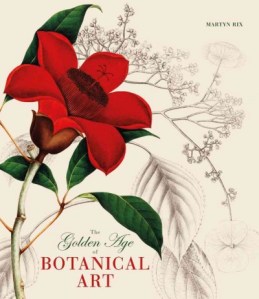
A new book about the contributions made by these passionate educators was finally released in the United States. The stories of these brave, creative and hard-working souls are shared in The Golden Age of Botanical Art, a wonderful history book by Martyn Rix that is sure to be enjoyed by anyone with an interest in natural history art.

This book is filled with fascinating history and stories about famous and not-so-famous people, many of whom I learned about for the first time. Rix cross-references people, places and events throughout his book and while this helps readers form a big picture of history, it makes summarizing a challenge.
Allow me to give you a quick tour of each section.

The Origins of Botanical Art

Learn why botanical illustrations were created. Also learn about ancient herbals, flower painting during the Renaissance, Leonardo di Vinci, Albrecht Durer, woodcuts, the Turkish Empire, English herbals and why the paintings of Jacopo Ligozzi (1547-1626) were better than anyone who came before him.


Seventeenth-Century Florilegia

Learn about the plants brought to Europe by travelers and naturalists and how the work of botanical illustrators contributed to the development of botany.


North American Plants

Learn about the introduction of North American plants into English gardens and learn about the work of artists and botanists such as John Tradescant the Younger, Mark Catesby, John and William Bartram, Andre & Francois Michaux, Georg Dionysius Ehret and Carl Linnaeus.


Travelers to the Levant

European interest in Asia and the Ottoman Empire is the focus of this section. Botanists and painters receiving special attention are Joseph Pitton de Tournefort, Claude Aubriet, John Sibthorp, and Maria Sibylla Merian.


The Exploration of Russia & Japan

Learn about botanical expeditions into Russia and Japan. View images from Flora Rossica, Flora Japonica and learn about a collection of paintings on vellum started by botanist and naturalist, Gaston d’Orleans.


Botany Bay & Beyond

Learn about expeditions into Australia, the work of artists Sydney Parkinson and Ferdinand Bauer and the scientific contributions of Sir Joseph Banks.


The Golden Age in England

Learn how the Royal Gardens at Kew began and view beautiful plant studies such as the study of Pinus larix by Ferdinand Bauer and the graceful Galeandra devoniana, an orchid by Miss Sarah Anne Drake who was John Lindley’s chief artist.


South American Adventures

Expeditions into Spain and the amazing collections of work produced from these expeditions are the focus of this section.


The Golden Age in France

Learn about Gerard van Spaendonck (Pierre-Joseph Redouté’s teacher), Redouté and Empress Josephine in this section.


Botanical and Horticultural Illustrated Journals

Learn about the history surrounding illustrated journals such as Curtis’s Botanical Magazine, The Botanical Register and others.


Early Chinese Plant Drawings

Learn about the type of botanical art created in China before the Europeans arrived.


The Company School in India

Learn about the work of Indian artists, English artists and the publications produced during the time when the East India Company controlled trade in the East Indies.


A New Era at Kew

More history about Kew and how this world-famous garden was established.


Victorian Travelers

An introduction to the botanical contributions made by artists Janet Hutton, Lt. General John Eyre, Charlotte Lugard, Charlotte Williams, Marianne North and Henry John Elwes.


Bringing China to Europe

This section is about the introduction of Chinese plants into European gardens.


The Flowers of War and Beyond

Rix discusses the history of botanical illustration during World War II. Learn what botanist Geoffrey Herklots did while in a Japanese prisoner-of-war camp and what Marianne North’s great nephew did after retiring as an Admiral from the Navy in 1960. Artists Margaret Mee, Barbara Everhard, Graham Stuart Thomas, Rory McEwen and Raymond Booth are also mentioned.

Rix closes his book discussing the work of contemporary botanical artists and by bringing attention to those making key contributions to the current renaissance of botanical art, namely instructor Anne Marie Evans and, of course, botanist and art collector Shirley Sherwood.

In the introduction to his book, Rix thinks aloud and wonders if what we are observing now in the world of botanical art is a new golden age. He explains that the period between 1750-1850 was considered a golden age because the demand for scientific information collided with the enthusiasm of wealthy patrons and with the availability of skilled artists capable of documenting new discoveries.

Today he wonders if the need to preserve disappearing habitat, combined with an abundance of botanical artists and the technological means to create botanical works faster and at a lower cost will create a new golden age even though there is a growing shortage of botanists.


What do you think?


Related

Darwin’s “The Origin of Species” to Become Illuminated Manuscript

Read Full Post »

See Val Webb’s online workshop about herbs. It’s art, history and folklore!

Here is what’s new at Classes Near You > Alabama:


The Illustrated Garden, A Studio Blog

http://valwebb.wordpress.com
Val Webb is the 2013 Artist-in-Residence at the Mobile Botanical Gardens. This year Val will work at the gardens and encourage others to sketch the garden’s collections to learn about plants, gardening and all that the Mobile Botanical Gardens has to offer. Visit Val’s website to view her online tutorial, Botanical Drawing with Pencil and Watercolor. Connect with The Illustrated Garden on Facebook.

    Birds in Colored Pencil – Starting January 6, 2014
    Learn how to paint colored pencil portraits of birds using Val Webb’s “gentle pencil” drawing technique. Then learn how to layer color to create detailed colored pencil images. This online course is composed of nine lessons. Work at your own pace. No experience necessary. Pre-registration required. Cost: $50
    View Details/Register


    Drawn & Decorated Watercolor Lettering
    – Starting January 13, 2014
    Create decorated letters using watercolor, Pigma Micron pens, pencils and brush. No experience necessary. Participants have four months to complete 10 projects. Work at your own pace. Pre-registration required. Cost: $50
    View Details/Register


    Draw & Paint Six Culinary Herbs
    – Starting March 3, 2014
    Not your typical botanical drawing course. Participants will create pencil studies, spirited ink-and-wash sketches, mixed media paintings and learn about the history and folklore of the six herbs that are the focus of this course. Ten lessons. Work at your own pace. Pre-registration required. Cost: $50
    View Details/Register

Also see Val’s online workshop about drawing dogs and cats in pencil and charcoal that begins on January 27, 2014.

Are miniature gardens and fairies your passion? Then don’t miss Val’s class, Draw & Paint Fairies in Nature.

View all online workshops at The Illustrated Garden

Read Full Post »

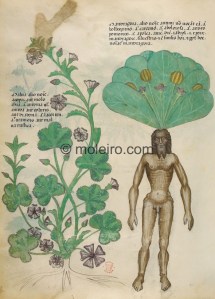
Mandrake. Image courtesy of M. Moleiro Editor, S.A., all rights reserved

Mandrake. Image courtesy of M. Moleiro Editor, S.A., all rights reserved

The historic Tractatus de Herbis, codex Sloane 4016 can now be enjoyed by anyone with an interest in the history of botany, botanical illustration or the history of medicinal plants.

The new facsimile reproduction has been published by Spanish publisher Moleiro Editorial whose specialty is the reproduction of codices, maps and works of art made on parchment, vellum, paper and papyrus between the 8th and 16th centuries.

The reproduction of Tractatus de Herbis features 218 illuminated pages and is bound in embossed dark green leather. It is an exact replica of the original and is accompanied by a volume of commentary written by Alain Touwaide, Smithsonian scholar and co-founder of the Institute for the Preservation of Medical Traditions.

Institute co-founder, Emanuela Appetiti, explains the significance of this historic work:

The manuscript Sloane 4016 is a large album of botany made sometime around 1440 in Italy. Although it is traditionally identified as a copy of the well-known Tractatus de herbis (Treatise on medicinal plants), it does not contain the text of this treatise, but only its illustrations. The major question posed by this manuscript is why it abandoned the text of the Tractatus, giving birth to the new genre of the botanical album. Significantly enough, the captions of the illustrations provide the names of the plants in the different languages used in the 15th century, all written with the Latin alphabet, however. They hint at the function of the botanical album as an international work that could be used by all the different linguistic groups, whereas the text of the Tractatus could be used only by those who understood Latin. In this view, the development of the botanical album is an unsuspected very modern phenomenon that sheds a completely new light on the history of botanical illustration and highlights a process of internationalization and, at the same time, of linguistic specialization coupled with a principle of economy that had not been uncovered so far.

Alain Touwaide explains more about the history of botanical albums in the description of the Tractatus de herbis, codex Sloan 4016 viewable on the publisher’s website.

Also available for viewing are 18 images showing the contents of this album. After reading Alain’s description, click on one of the images above his text. This will take you to a page where you can view all sample images.

Only 987 copies of this historic album are available for purchase worldwide. Alain’s commentary has been published in separate editions available in English, Spanish and French. To inquire about purchasing this limited edition reproduction at a special discounted price, contact the publisher.


You Might Also Like

Read Full Post »

« Newer Posts - Older Posts »