Feeds:
Posts
Comments

Archive for the ‘botanical art’ Category

© Kari Malen. All rights reserved

© Lori Makarick. All rights reserved

Botanical illustrators at the Desert Botanical Garden are living a dream. They are continuing the centuries old tradition of documenting plants to create both a scientific record for biologists and educational material for the public. The botanical illustrators who have endured five years of study and many hours in the studio are about to make their work public.

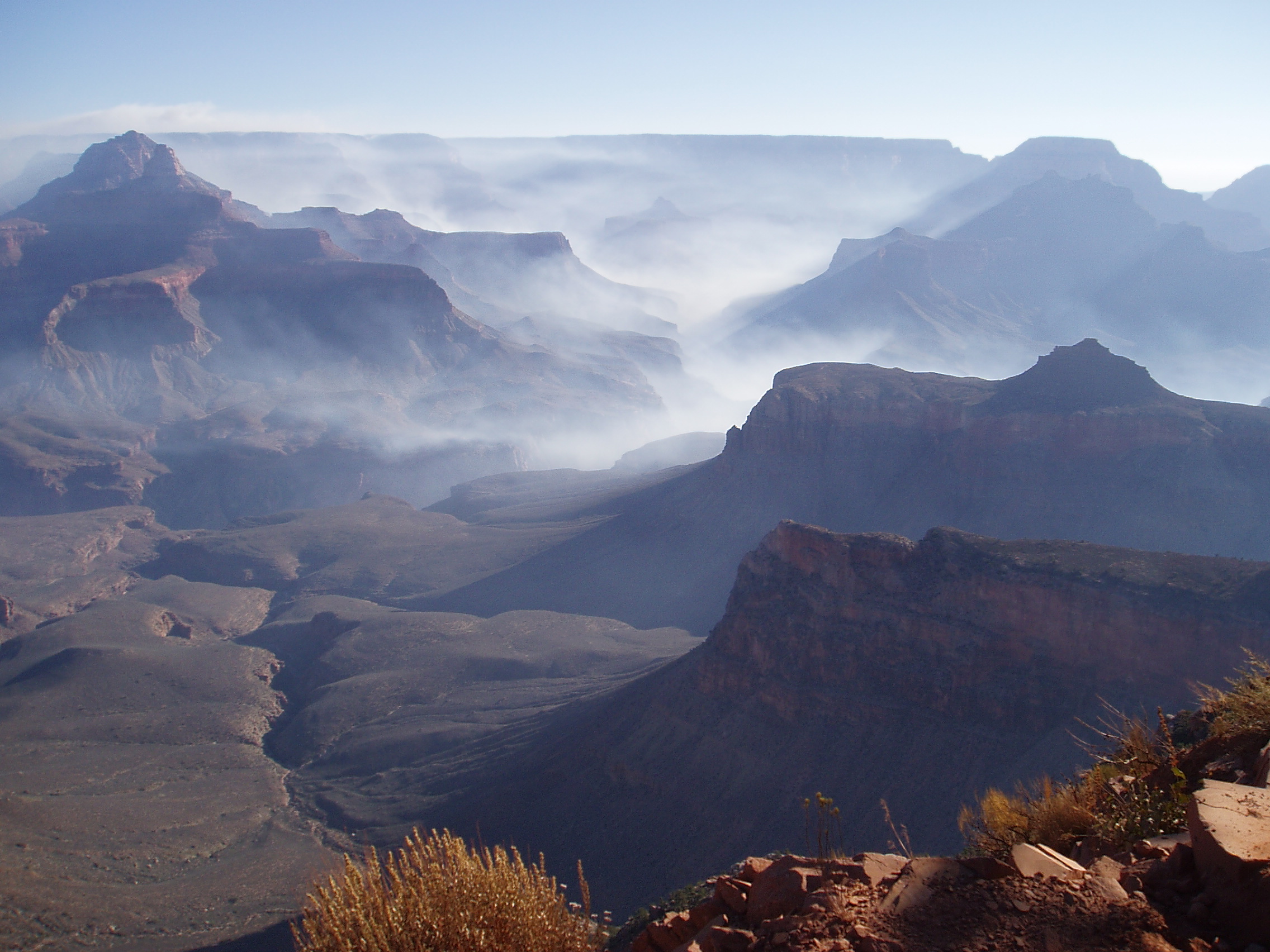
Eighteen illustrators will present 40-50 pieces of work in the Celebration of Plants exhibition to be held at Kolb Studio on the south rim of the Grand Canyon (July 2 – August 31, 2010). This exhibition is a cooperative effort between the Grand Canyon Association, Grand Canyon National Park and the Desert Botanical Garden in Phoenix, AZ.

Many lectures and activities will be presented during this exhibit. Artists and botanists will draw visitors into the world of art and science by sharing stories about early explorers and the botanists/artists who accompanied them. There will be explanations about how new species are described and discussions about why people should care about plants. Learning activities will include guided plant walks, plant identification workshops, guided plant walks into the canyon, and illustration workshops for all levels.


A Practical Idea Grows

Six years ago Wendy Hodgson, Herbarium Curator at the Desert Botanical Garden, met Lori Makarick, the Vegetation Manager at the Grand Canyon who oversees the management of rare plants, invasive species and habitat restoration. At the time, Makarick was reading a field guide about the special status plants in the Grand Canyon by former botanist, Nancy Brian. Makarick noticed the guide did not contain enough key characteristics in the plant descriptions and that some plant descriptions were not accompanied by illustrations. Hodgson and Makarick discussed updating the field guide. They thought it would be good idea to include an illustration for each plant described in the guide. When they discussed this, Wendy’s thoughts went immediately to the new botanical art and illustration certificate program at the Desert Botanical Garden. Wendy asked students if they were interested in illustrating the rare plants needed for the guide. The idea was met with enthusiastic response.

Makarick asked the Grand Canyon Association to help assemble an exhibit at Kolb Studio. The small group exhibit quickly metamorphosed into a much larger project. Makarick and Hodgson are now using this event as a launchpad to bring attention to the diversity of plants in the Grand Canyon and to bring attention to plants overall. Hodgson explains that, “Nearly fifty percent of all plants growing in Arizona occur in the Grand Canyon.”

Amazing information from someone who knows the Grand Canyon very, very well. Hodgson has studied and documented the plants of the Grand Canyon for 17 years and has described two new species of plants within the canyon. Throughout the process of research and discovery, Hodgson says her research has generated more questions than answers. Her work would be much more difficult if it were not for the plant researchers who came before her. Hodgson says she feels very fortunate to be able to learn from them through their field notebooks, specimens, and publications, with hopes that her own notes, specimens and artists’ illustrations will help future botanists with their studies.


About Wendy Hodgson

Many years ago botanist and illustrator, Wendy Hodgson, landed her first job at the Desert Botanical Garden in Phoenix, AZ. Agave expert Howard Scott Gentry needed illustrations for his book, so Wendy created them. A series of Garden jobs ensued until Hodgson, whose true calling is field work and plant documentation, became Herbarium Curator in 1984. The hours Wendy dedicates to her work in the Grand Canyon, are but one part of her career as the botanist for the Desert Botanical Garden in Phoenix, AZ., where she has worked for 36 years.


About Lori Makarick

Lori Makarick is the Vegetation Program Manager at the Grand Canyon. Her work is at the heart of the everything that has to do with plants at the Grand Canyon. Lori and her 40 staff members manage rare and invasive plants, manage a native plant nursery, and oversee the collection of seeds from native plants. Lori began her career as an intern with the Student Conservation Association and now helps to manage the Grand Canyon’s 1.2 million acres.

Watch the video below as Lori takes leads a virtual tour of the plant communities in the Grand Canyon.


Artists Participating in the Celebration of Plants Exhibition

    Susan Ashton
    Marsha Bennett
    Sally Boyle
    Katherine Rink Callingham
    Lynne Davis
    Karen Gengle
    Molly Gill
    Gabriele Henn
    Wendy Hodgson
    Elaine Hultgren
    Joan LaMoure
    Jo Ann Loza
    Deborah Ravin
    Lynn Reves
    Gillian Rice
    Daniela Siroky
    Sandy Turico
    Marceline VandeWater
    GiGi Wilson


Questions for EE Week Readers
:
Have you ever studied the plants of a specific area and documented or illustrated your observations? If so, where did your project take place? If you studied the plants in your own backyard, that’s great! We’d love to hear about this too!

Read Full Post »

Updated at Classes Near You > California:


Virginia Robinson Gardens, Beverly Hills

www.robinsongardens.org
Read about the Friends of Robinson Garden Botanical Art Group and the Robinson Garden Florilegium here. Download the 2010 schedule here.

  • Watercolor Brush Techniques for Botanical Art – June 8, 9, 10, 2010.
    Basic plant elements such as petals and simple fruits will be selected for understanding the application of washes, glazes, color blending, color layering for increasing intensity. How to build form and shadow while avoiding making muddy colors and overworking the paper surface will be covered as well as wet brush, dry brush and lifting techniques. The class will also focus on brushes and papers best suited to the various techniques required in creating botanical art. Extended topic study and exercises will be provided as homework.
  • Botanical Art Composition I – August 4, 5, 6, 2010.
    How to inject strong eye appeal into a botanical art painting is often challenging from subject to subject, no matter how skilled the artist. Margaret will lead the students through exercises designed to train the eye on how to plan and create visually appealing and natural compositions. Traditional compositions and contemporary works will be studied to expand the students awareness of how to influence the viewer. The impact of color placement, areas of dark and light, positive and negative spaces will all be covered.
  • How and When to Add Details – September 2010 (Dates TBA).
    How to build washes to get the right intensity and give value to the subject. How “not to” achieve a muddy color and destroy your paper by overworking and when to add the details that give final painting its personality and more.
  • Full Flower Painting – November 2010 (Dates TBA)
    Students should have prepared a final detailed drawing for review by Margaret. This will be used for a full and detailed water color study, utilizing all technical elements learned throughout the 2010 program. A special emphasis will be placed on innovative composition and accurate use of color.

Read Full Post »

New Hampshire has been added to Classes Near You!

Now at Classes Near You > New Hampshire:


Carolyn Payzant

Carolyn writes the Color Curriculum column for the Journal of the American Society of Botanical Artist. She is also on the Board of Directors of the American Society of Botanical Artists and is Founding President of the New England Society of Botanical Artists.

    Color Curriculum – Depending on your skill level, you will learn what your instructors know intuitively: how to make a perfect wash, how to tell the differences between biases, how to mix pigments to create that perfect match, how to limit your palette, and much, much more. A materials list will be sent on upon registration. Instruction will be arranged at a time convenient for the student and instructor. Student will receive 18 hours of instruction over a three-day period in New Castle, New Hampshire. Limit: 1-3 students per three-day session. Cost: $450. Contact Carolyn Payzant for more information.


Also See
:
American Society of Botanical Artists
New England Society of Botanical Artists

Read Full Post »

What’s the value of an image?

Is a picture really worth a thousand words?

Today we value the use of illustrations to convey scientific information. But in early 19th-century Britain, the use of pictures in science education was a hot topic of debate. In her article Botany on a Plate: Pleasure and the Power of Pictures in Promoting Early Nineteenth-Century Scientific Knowledge, Anne Secord reviews the debate in detail. Secord’s research focused on botanists specifically and their use of illustrations because early botanists recognized the importance of providing pleasure (appealing imagery) to their audience while imparting scientific knowledge. Secord’s research brings attention to “the role of pleasure in intellectual pursuits.”

In the 1800s, the “Diffusers of Knowledge” (i.e., experts in any given field) networked with only one objective in mind — to encourage people with an interest in nature to begin formalized study so they can become experts. The recruiters for botany took advantage of the public’s interest in color botanical plates to establish their own following of “admirers.” Botanists knew that to be successful at turning admirers into future botanists, they needed to maintain a balance between making botany an attractive science and keeping it a serious discipline. As a naturalist in 1838 proclaimed:

I conceive that the presentation of an allurement to the study of any science, is both a justifiable and a legitimate mode of procedure.

The use of illustrations as a teaching tool was a controversial topic back then because there were two schools of thought. One school felt it was perfectly legitimate to use illustrations that appealed to their audience. They recognized the need to engage their audience in conversation and the need to form a relationship with their audience. The other school, however, disagreed with this approach. They felt that by using illustrations and paintings to appeal to amateur naturalists, botanists were not really addressing the discipline of botany. According to the botanists in this second group, botany is best learned by studying written descriptions of plants and by studying actual specimens, not by looking at pictures. They felt color plates were “harmful” and merely provided “easy access” to the discipline instead of “sound knowledge” and “rational instruction.”

Let’s revisit the 1838 debate about the use of illustrations to teach natural history. Here’s a question for you…

Do color plates encourage beginners to study botany or do color plates encourage a superficial appreciation of nature?


Literature Cited
:

    Secord, Anne. 2002. Botany on a plate: Pleasure and the power of pictures in promoting early nineteenth-century scientific knowledge. ISIS. 93:28-57


Related
:

Read Full Post »

New to Classes Near You > International > England:


Rosie Sanders

http://rosiesanders.com
Create contemporary artists books with Rosie Sanders, a botanical artist in the UK who has earned five gold medals from the Royal Horticultural Society. These handmade books combine the books arts with botanical drawing and botanical painting. This course will be taught at Front House, a bed-and-breakfast in England. Participants will arrive after 4 pm on the Wednesday preceding the course.  Courses finish after lunch on Sunday. The courses are suitable for beginners and those with some experience. The groups are small (up to six people) and the atmosphere is very friendly, relaxed and welcoming. Front House is a large Georgian house situated in the market town of Bovey Tracey in Devon, on the edge of Dartmoor National park.  All bedrooms have en-suite bath or shower. View details and materials list here.

  • Wild Flowers – Thursday June 24 – Sunday June 27. Thursday to Saturday 9.30 am – 5 pm; Sunday 9.30 am – 1 pm
  • White Flowers – Thursday July 8 – Sunday July 11. Thursday to Saturday 9.30 am – 5 pm; Sunday 9.30 am – 1 pm
  • Flowers of Late Summer – Thursday August 18 – Sunday August 22.
    Thursday to Saturday 9.30 am – 5 pm; Sunday 9.30 am – 1 pm
  • Fruits and Berries – Thursday November 18 – Sunday November 21.
    Thursday to Saturday 9.30 am – 5 pm; Sunday 9.30 am – 1 pm

Read Full Post »

ArtPlantae is excited to participate as a national partner in National Environmental Education Week (EE Week). Blending the theme for EE Week (Be Water and Energy Wise) with botany and botanical art education has been a rewarding experience. So many people have given their time to participate in the event. There will be so much to learn!

Here is a hint of what is to come during EE Week at ArtPlantae:

  • Learn how one city involves its residents in water conservation activities and how both the city and residents teach others about the importance of water conservation.
  • Learn how an illustrator partnered with habitat restoration experts to restore habitat and create an illustration garden.
  • Does your school have a schoolyard garden? You’ll want to know about this practical tool.
  • Learn how a rain garden benefits the ocean and connects people with plants and their food.
  • Read how a natural science educator created a series of books about ecosystems.
  • Teachers, have you been looking for a way to incorporate nature drawing into your lesson plans? There are workbooks you’ll want to see!
  • Learn how an illustrator has created a venue to teach botany and botanical art from the ground, up.

EE Week is just around the corner!
To receive daily updates during EE Week, sign-up to receive news by email.

Read Full Post »

Capture the colors of Spring with these new classes at Lasdon Park and Arboretum. Now at Classes Near You > New York:


Lasdon Park and Arboretum

Lasdon Park Brochure
Located in Somers, NY, the 234-acre Lasdon Arboretum is home to the botanical art program directed by botanical artist Laura Gould. Laura is a botanical artist whose primary medium is colored pencil, graphite, and watercolor. Course descriptions, registration information, and Laura’s online gallery can be viewed at Barking Dog Studio. Additional workshops will be offered throughout the year by visiting instructors. Please check back for updates.

  • Colored Pencil for Experienced Students – Wednesdays, April 7 – May 19, 2010; 9:30-12:30. Prerequisite: Graphite Drawing (The graphite class is a foundation course taught on Thursday mornings. See below.) Cost: $250
  • Graphite Drawing (All Levels) – Thursdays, April 8 – May 20; 9:30 – 12:30. For beginners and experienced students who love the beauty of graphite. This class prepares students for other courses in the program. Please join us. Cost: $250
  • Graphite and Colored Pencil – Saturdays, April 10 – May 22, 2010; 9:30-12:30. Students of all levels are welcome to join the class. Learn at your own pace while enjoying the company of fellow artists. Cost: $250

Read Full Post »

« Newer Posts - Older Posts »