Feeds:
Posts
Comments

Archive for the ‘botanical art’ Category

There is plenty to learn at UC Berkeley’s botanical garden this Fall. Learn how to draw, how to paint and how to compose a botanical drawing in classes taught by Catherine Watters and Lee McCaffree. Learn a bit about Latin, immerse yourself in economic botany and even learn how to make a bike out of bamboo.

The following has been added to Classes Near You > California:


University of California Botanical Garden at Berkeley

http://botanicalgarden.berkeley.edu/
This 34-acre garden was established in 1890 and is now a non-profit research garden and museum. The botanical art classes below are taught by Lee McCaffree and Catherine Watters. View a detailed schedule and register on the Garden’s website.

  • Sick Plant Clinic – First Saturday of Each Month, 9 AM – 12 PM. Free. No reservations required.
  • Monthly Butterfly Walks – Fourth Tuesday of each month (March – October); 3 – 4 PM. Garden volunteer, docent, and caterpillar lady, Sally Levinson, will lead walks through the garden in search of butterflies. Space is limited. Children welcome. Free with admission.
  • Garden Strollers – Second Wednesday of Each Month,
    11 AM – 11:45 PM. A 45-minute tour of the garden for adults with young children (3 and under). Tour will end on the lawn for play and snacks (bring your own). Children must be in a stroller or carrier during the tour. FREE with garden admission. Meet in front of the Garden Ship. For more information, call (510) 642-7082 or email garden@berkeley.edu.
  • Botanical Latin: It’s a dead language but it’s still aliiiiive – Tuesday, September 13, 2011; 10:30 AM – 2:00 PM. Back by popular demand! During this brief introduction to Latin, you will learn the names for plants and the way the names are constructed. You’ll also learn Latin and Greek word roots for plant names and botanical terms, and use some simple rules of thumb to pronounce plant names with confidence. Al Luongo originally developed this course for the New York Botanical Garden. Refreshments and a full copy of course notes included. Pre-registration required; $30, $25 members.
  • Botanical Art: Painting Apples, Pears, Quince – Friday, September 16, 2011; 10 AM – 4 PM. These beautiful fruits are wonderful botanical art subjects! Celebrated botanical artist Catherine Watters will teach you how to compose your painting and capture their elegant shapes and rich colors. Students will be instructed on the use of shadows, highlights and the mixing of colors. All levels are welcome and students may use graphite, colored pencils or watercolor. Pre-registration required; $80, $75 members.
  • Native Bees with Dr. Gordon Frankie – Sunday, October 2, 2011;
    11 AM – 1 PM. Dr. Frankie is a UC Berkeley professor, research entomologist and a native bee expert. His specialty is the behavioral ecology of solitary bees in wild lands and urban environments of California and Costa Rica. Dr. Frankie will discuss some of the more common species of native bees, as well as, the plants and gardening practices, that will encourage them to take up residence in your garden. He will talk about current projects and share stories from the field. Pre-registration required; $25, $20 members.
  • Foods of the Americas Exhibit Docent-led Tours – October 6 – 20, 2011, 9:30 AM & 11:30 AM. Pre-pre-registration required by September 15. Feast your eyes on the vibrant textures and colors of the fall harvest in our Foods of the Americas exhibit. Visit our marketplace filled with produce from ancient Indian cultures, from the well-known corn, tomatoes, potatoes, and chocolate to the less familiar amaranth, quinoa and oca. See them growing in our Crops of the World Garden, Tropical House, and the Mexico/ Central American and South American collections. Free with Garden admission. Schools may schedule a special 75 minute program for their classes.
  • Bamboo Workshop with Stalk Bicycles – Saturday, October 8, 2011;
    11:00 AM – 1:30 PM. Stalk Bicycles of Oakland will be on-site to show you how they hand-craft custom bicycle frames from bamboo and other sustainable materials. They will demonstrate how bamboo is a sustainable, versatile and sculptural material – perfect for bike construction and many other design projects. Join us as we learn about bamboo, sustainable manufacturing, bamboo construction, and see their one-of-a-kind, custom artisanal bikes. $15, $10 members; registration required.
  • Film Screening: Queen of the Sun – Wednesday, October 12, 2011;
    6:00 – 8:00 PM. Queen Of The Sun: What Are The Bees Telling Us? is a profound, alternative look at the global bee crisis from Taggart Siegel, director of The Real Dirt On Farmer John. Taking us on a journey through the catastrophic disappearance of bees and the mysterious world of the beehive, this engaging and ultimately uplifting film weaves an unusual and dramatic story of the heartfelt struggles of beekeepers, scientists and philosophers from around the world including Michael Pollan, Gunther Hauk and Vandana Shiva. Together they reveal both the problems and the solutions in renewing a culture in balance with nature. Pre-registration required; $12, $10 members.
  • Foods of the Americas Family Day! – Sunday, October 16, 2011;
    10:00 AM & 1:00 PM. Spanish and English Docent Led Tours of the Exhibit; 2 PM Native Food Tastings & Crafts. Free with Garden Admission.
  • Fall Bird Walk – Saturday, October 29, 2011; 9:00 – 10:30 AM. Observe resident, migrant and vagrant birds in the Garden’s many bird-friendly microhabitats with birding expert Phila Rogers and Associate Director of Collections & Horticulture Chris Carmichael. Pre-registration required; $20, $17 members.
  • Botanical Art: Autumn Leaves with Lee McCaffree – Sunday, November 13, 2011; 10 AM – 4 PM. Fall foliage offers a brilliant color palette to catch our eye, but a graphite drawing or green leaf can be just as fascinating. Expert Lee McCaffree will instruct students on the structure of leaves as students to draw and paint them. The class will consider many types of leaves from the Garden before drawing them and closely examine structure and detail. Students may use pencils or watercolor to create an original work using the colors and/or patterns of fall leaves. All levels are welcome. Pre-registration required; $80, $75 members
  • California Natives: Plants and People Tour for Kids – Saturday, November 19, 2011; 1:00 – 2:30 PM. How could people get everything they need from the natural environment without stores? Learn about the plants used by California Indians for food, shelter, clothing, tools, medicine, games, and music. Explore the varied customs and skills of California’s earliest inhabitants. Create your very own take-home project inspired by early Californian crafts. Pre-registration recommended; $15 for each adult and child, $12 members; $5 each additional person.

Read Full Post »

Artist and instructor, Katie Lee, will lead a trip to Costa Rica with master bird bander/naturalist, Judy Richardson in January 2012. Click on the image below to download the color brochure. Group size is limited to 8 people.


You May Also Like:

Fundamental Graphite Techniques

    by Katie Lee

Read Full Post »

Eye-catching detail, clean edges, delicate petals and fruit good enough to eat. These elements describe the artwork of Anna Knights. The natural gesture of her leaves, the colors of her fruit and the transparency of her water drops will captivate you. This month we have the opportunity to learn from this award-winning artist and teacher.

Please welcome Anna Knights!


ArtPlantae
: You are a self-taught artist. On your website, you write that one day you discovered your innate talent for botanical art. How did this happen?

Anna Knights: I always knew that I could draw and paint as I had loved to do so as a child – and took art up until the end of high school. But then I decided to do the sensible thing and went and did history at university. I had a brief stint painting murals in the US whilst I was doing a university exchange over there but then 5 years passed before I picked up a paintbrush again.

Then in February 2006, when I was coming up to my 26th birthday, I was working as a management trainee with local government, and I realised I really missed painting. So I started looking online for inspiration to get me back into doing some for fun. It was then that I saw botanical art for the first time. It was like a light bulb went off and I thought “I’m sure I can do that!”. I bought myself a set of artists watercolours and that was the beginning! And I was lucky enough to be able to do it straight away. In June 2006 I submitted work to the RHS picture committee and was awarded the Dawn Jolliffe Botanical Art Bursery to help with the costs of exhibiting at one of their botanical art competitions. I exhibited there a year later and won the Gold Medal.


AP
: When did you begin drawing/painting and what type of subjects did you paint before you were drawn to plants?

AK: I have always painted and drawn. When I was a child I loved illustrating holiday diaries – showing what me and my family had been up to each day. So I liked to draw everything really. I do remember doing a series of enormous dissected fruits at age 14, so that interest has been with me a long time.


AP
: Your paintings are extremely realistic. How much of your work is completed in a wet-n-washy type of painting and how much is done in dry brush?

AK: For the most part I work with very watery washes. However, I never load my brush very much, so the effect is that I use the paint quite dry. Between layers I always let them dry – so in the main it is “dry brush” except that I use the paint very thin a lot of the time. Especially where subtlety is needed – which is a lot in botanical subject matter!


AP
: Are you a full-time botanical artist or do you split your time between botanical art and another profession? Approximately how many hours do you spend on your artwork?

AK: I have been a full-time botanical artist since I first exhibited at Chelsea Flower Show in 2008.


AP
: At the recent conference of the Guild of Natural Science Illustrators, there was a panel discussion about the future of botanical art. One of the topics discussed was, Will there always be traditional botanical art or does botanical art have a digital future? What do you think?

AK: I feel I need to make a distinction between botanical art and illustration here. I don’t do botanical illustrations. I do vibrant, big, bold but accurate watercolours of botanical subjects. I stick broadly within the botanical conventions in that I have a plain paper background – making them more like “studies”. I do them purely for their aesthetics and I try to depict a subject in its best possible light. I therefore consider what I do art – in that it’s about the aesthetics.

Botanical illustration is a bit different and whilst I think it’s great, I do think that with digital cameras getting ever more impressive, there is going to be a case for being able to accurately record every aspect of a botanical subject using a camera and some clever Photoshop work. It will probably end up taking longer than an illustrator would take to paint, but I’m sure it can be done.

People have a great appreciation for the beauty of nature being depicted as accurately as possible which is why I think there will always be an interest in botanical painting.


AP
: As you know, student learning is a special interest here on this site. Particularly, how people learn about plants. How do you think people learn about plants best?

AK: I think they learn about them by growing them and living with them! The reason botanical art appealed to me so much is that I had caught the gardening bug and realised how perfectly possible it was to sit and stare at a Clematis sp. you’d grown from cutting for absolutely ages without a hint of boredom! What a joy.


AP
: Drawing upon your experiences as a teacher, what is the best way students new to botanical art learn can about composition?

AK: I encourage people to play around with their digital cameras and use a white screen to set up shots in terms of composition alone. Playing that way gives you instant feedback on what looks good.


AP
: On your website, you state you are thinking about developing a correspondence course and that you would like feedback from artists interested in this type of a course. Is there anything you would like to ask potential students that may help you create the curriculum for this course?

I have in mind a course delivered via video clips of me painting whilst describing what I’m doing – demonstrations. There are a few IT issues for me to address for this to be feasible. Ideally I’d like it delivered online but it will be a significant piece of work for me to organise this so it’s likely to take me a while. I suppose I am thinking of a course that students can take at their own pace – paying per lesson, or block of lessons. Then there would be an opportunity for feedback via email – so students can scan and email me work (or perhaps post on a private website) for me to advise them about. I would be interested to know whether your readers might be interested in this. If I feel there will be enough people signing up to make it worthwhile, then I might be able to justify employing an IT whizz to make it happen.

AP: Readers, what do you think?


Ask the Artist with Anna Knights!

You are invited to participate in a Q&A session with Anna Knights. Please submit your question(s) to education@artplantae.com by Friday August 12, 2011. Anna’s replies to your questions will be posted on Monday August 22, 2011.


Visit Anna on Facebook

If you “Like” Anna’s Facebook page you can receive offers and watch her paintings develop as she photographs them in various stages of completion.

Read Full Post »

The classes of Anna Knights have been added to Classes Near You > England.


Anna Knights

www.annaknights.co.uk
A self-taught artist, Anna’s botanical art is full of life and features captivating deter and lifelike movement.

  • One-Day Workshops in Cranleigh, Surrey – Thursdays; 10 AM – 4 PM. Learn Anna’s composition, color mixing and layering techniques. Coffee, buffet lunch and afternoon tea included. Limit: 10. Cost: £70 per day, or £65 per day if enrolled in two or more workshops. Register Online
    • October 13 OR October 20 (both workshops feature the same exercise)
    • November 3 OR November 10 (both workshops feature the same exercise)
  • Contemporary Botanical Watercolor: Painting Fruit – October 14, 2011 or October 17, 2011; 10 AM – 4 PM. Fruit will be the focus of these workshops taught at Nymans, National Trust property. Cost: £50 per session. Registration Info
  • Capturing Color, Light and Shade in Late-summer Flowers – September 9-11, 2011. West Dean College Nr Chichester. Using flowers from the West Dean cutting garden, learn to create realistic flower portraits. Learn about light and shadow, color mixing, layering, and how to take reference photographs. Register Online / Download Itinerary
  • Nature in Art – September 16-17, 2011; 9:30 AM – 4:30 PM. Create realistic and vibrant botanical watercolor paintings. Learn how to create form, mix colors in watercolor and how to layer colors to bring your subjects to life. Registration Info
  • Fruit Good Enough to Eat – October 7-9, 2011. Learn how to create shine and bloom on seasonal fruit at the 17th-century home of botanist, John Evelyn. Includes lunch, accommodations and evening meals. Cost: £449 fully residential, £219 non-residential. Additional information at
    Field Breaks.
  • Holly Leaves, Berries and Mistletoe – November 25-27, 2011. West Dean College Nr Chichester. Learn how to mix the colors you need and how to apply tints and layers to create Christmas cards featuring holly and mistletoe. Register Online / Download Itinerary

Read Full Post »

Learn the glazing techniques of the Dutch flower painters to create an elegant botanical painting!


Corcoran College of Art & Design

www.corcoran.edu
The only college of art and design in Washington, DC also offers a certificate program in botanical art and illustration. Included on the Fall 2011 schedule are:

  • Introduction to Botanical Drawing – Wednesdays,
    September 7 – December 12, 2011; 9:30 AM – 12:45 PM. Working in graphite and colored pencil, students will explore the history, issues and concepts of detailed plant drawings. They will also explore form and the use of contemporary drawing sensibilities in the tradition of botanical illustration. Audit: $720. Credit: $1440. Also, $60 lab fee.
  • Intermediate Botanical Drawing – Wednesdays,
    September 7 – December 14, 2011; 9:30 AM – 12:45 PM. A continuation of Introduction to Botanical Drawing. Audit: $720. Credit: $1440. Also, $60 lab fee.
  • Plant Portraits in Oil – Thursdays, September 8 – December 15, 2011; 6:30 – 9:45 PM. Learn how to turn botanical drawings into elegant oil paintings in the tradition of the Dutch flower painters. Pre-requisites: Introduction to Botanical Drawing or Introduction to Botanical Painting. Audit: $720. Credit: $1440. Also, $60 lab fee.

This information has also been posted to Classes Near You > New York.

Read Full Post »

New at Classes Near You > New York:


Cornell Plantations

www.cornellplantations.org
Located on the campus of Cornell University, Cornell Plantations manages 4,300 acres of natural area that includes bogs, fens, gorges, glens, meadows, woodlands and other ecosystems.

    The Joy of Botanical Illustration – Thursdays, September 8, 15, 22 29, October 6, 13; 2:00 to 5:00 PM. If you love botanical art but wonder if YOU could really do it yourself, this class is for you. An introduction to painting the flora of the Plantations’ botanical garden, students will learn how to observe plants, how to draw plants, and learn the principles of perspective, composition and color mixing. Botanical artist Camille Doucet will lead students in an exploration of black and white, pen and ink, and watercolor. A suggested materials list is available by request. Pre-registration required. Cost: $215 ($180 members and Cornell students). Location: Nevin Welcome Center. Register Online

Read Full Post »

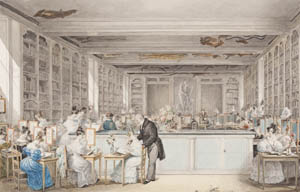
Julie Ribault (1799-c.1839) Redoute's school of botanical drawing in the Salle Buffon of the Jardin des Plantes, Paris, watercolour over graphite © The Fitzwilliam Museum

The “Raphael of flowers”, Pierre-Joseph Redouté (1759-1840), internationally famous for his prints of roses and lilies, was the finest botanical draughtsman of his age. In France he had a prestigious reputation in his own time, working for the Royal court both for Queen Marie-Antoinette and then for the Empress Joséphine following the French Revolution.


Flower Drawings: Redouté and his Pupils
is a collection of work from the Fitzwilliam Museum’s prestigious Broughton collection of flower paintings and drawings showing the legacy of Redouté as an artist and teacher through a dual display of his work and works by some of his most accomplished students. Redouté had over 80 pupils, most of them women, enrolled in his school of botanical drawing. Many of his students became professional painters of flowers. The exhibition will also celebrate the recent acquisition of a watercolour by artist Julie Ribault (see above). Painted in 1830, Redouté’s school of botanical drawing in the Salle Buffon of the Jardin des Plantes has not been exhibited since it was first shown at the Paris Salon of 1831.

Director of The Fitzwilliam Museum Dr Timothy Potts commented: “We are delighted to be showing this wonderful exhibition of flower drawings by Redouté and his pupils. Thanks to the bequests of collector and outstanding maker of gardens Major Henry Broughton in 1966 and on his death in 1973, the Fitzwilliam has one of the most splendid collections of flower paintings and drawings of any Museum in the country and the most important collection of Redouté drawings in the UK. The Fitzwilliam mounts an exhibition of the more delicate works on paper from the Broughton collection every three years, and we hope all will enjoy this charming and varied selection of flower drawings.”


Flower Drawings: Redouté and his Pupils

The Fitzwilliam Museum
Shiba Gallery
Hours: 10 AM – 5 PM (Tues – Sat); 12 – 5 PM (Sunday & Bank Holiday Mondays)
ADMISSION FREE

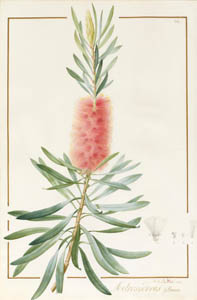
Pierre-Joseph Redoute. Metrosyderos glauca (1812). Drawing (watercolor & bodycolor over graphite on vellum, margins ruled in red and gold ink). © The Fitzwilliam Museum

Read Full Post »

« Newer Posts - Older Posts »