Feeds:
Posts
Comments

Archive for the ‘book review’ Category

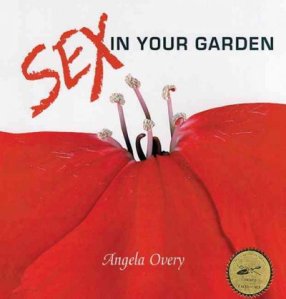
SexInYourGarden Plant reproduction can be as sensitive a topic as human reproduction.

This was made clear to me years ago at the, then, L.A. Garden Show when a gentleman disapproved of me displaying the book, Sex in Your Garden. He shook his head, made the “tisk, tisk, tisk” sounds and told me I shouldn’t have this book out on display. It was the word “sex” in the title that prompted his reaction. If you are unfamiliar with this book, it is a light-hearted and very anthropomorphic look at how plants attract pollinators. It contains text and images drawing similarities between how plants and humans call attention to themselves.

Even though it has been years, I always think of this gentleman when talking about flowers, fruit and reproduction. It is easy to talk about sperm, eggs, ovules and seeds when speaking with adults (although I usually have to give them a few moments to digest the fact that there are ovaries in their fruit bowl).

It is talking about plant reproduction with young audiences that always gets me thinking. What is saying too much?

If you’ve ever felt compelled to launch into an explanation of double fertilization while dissecting flowers with kids (even though you know you shouldn’t), here are some resources that may stop you from going over the cliff.

In How Do Apples Grow?, author Betsy Maestro and illustrator Guilio Maestro provide a comprehensive look at how buds on an apple tree develop, how the buds bloom and how flowers attract bees. They discuss flower anatomy, fruit development and explain what we’re eating when we eat an apple. They explain how apple trees make their own food and close their story where they began it — with flower buds on a bare apple tree. This life cycle book for botanists ages 5-9 addresses some big topics. Here is a list of vocabulary terms and concepts explained in this book:

  • leaf buds
  • flower buds
  • sepals
  • petals
  • stamen
  • pollen grains with male cells
  • pistil
  • ovary with female cells
  • pollination
  • fertilization
  • pollen tube germination
  • fruit development
  • seeds as fertilized female cells
  • photosynthesis
  • apple varieties

Maestro also touches upon seed dispersal and decomposition. The supporting watercolor illustrations by Guilio Maestro are colorful, labeled clearly and are easy to understand. Together Maestro and Maestro do a nice job of making flower development, pollination and fruit development very observable processes.

Just as Maestro makes fruit development observable, Helene J. Jordan brings seed germination and development out into the open in How a Seed Grows. The seed growing activity in her book enables students to see how seeds change beneath the soil and how seedlings grow above ground without investing in those growing chambers with the glass sides. Jordan’s clear instructions are supported by the informative gouache and colored pencil paintings by illustrator Loretta Krupinski. While Jordan’s book was written for children ages 4-8, the seed-growing exercise is appropriate for older children. It helps explain how seeds become plants and brings the life cycle of plants full circle. Plus it really lends itself to exercises related to botanical illustration.

Here is a list of vocabulary terms and concepts introduced in
How a Seed Grows:

  • seed
  • plant
  • tree
  • soil
  • watering for growth
  • writing numbers for identification
  • seed germination
  • roots
  • counting
  • leaves
  • soil
  • water
  • sun
  • photosynthesis

Jordan also includes directions to an experiment children can do to investigate the resources plants need to grow.

We can’t talk about seeds, flowers, pollinators and fruit development without showing how all these things are related. A great book that ties up all the loose ends is The Reason for a Flower by Ruth Heller. She introduces young readers to pollinators they might not normally consider and introduces them to wind pollination too. In her colorful 48-page book, she also introduces readers to seed pods, seed dispersal, herbivores, carnivorous plants, parasitic plants, angiosperms and familiar products derived from plants.

If you ever find yourself wondering “how much is too much?” when preparing an activity for young audiences, browse through children’s books about plants to get ideas about how to teach less, better.


Resources Cited

    • Heller, Ruth. 1999.

The Reason for a Flower

    • . New York: Penguin Putnam.

Jordan, Helen J. 1992. How a Seed Grows. New York: HarperCollins.

Maestro, Betsy. 1992. How Do Apples Grow?. New York: HarperCollins.


Also See

Botanical Illustration & Plant Morphology for Preschoolers
Read Full Post »

TheAlphabetOfTheTrees9780915924639 The problem most students seem to have is that they see nature as “Other.” Nature is a tourist destination, a place on a map, something saved by buying and selling crunchy candy. They rarely understand that they themselves might actually be part of it.

— Christian McEwen & Mark Statman


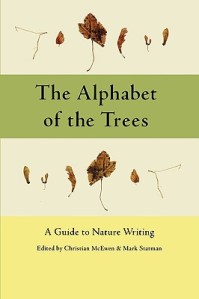
The Alphabet of the Trees: A Guide to Nature Writing
is a collection of twenty-nine essays by nature writers, poets, fiction writers and educators. More than simply a collection of essays about nature, The Alphabet of the Trees is a wonderful collection of ideas for the classroom and the field.

In their respective essays, contributors share their experiences teaching students how to write about nature. Contributors provide clear instruction, examples of student work and plenty of inspiration to last an entire school year.

McEwen & Statman (2000) published this book for teachers because they wanted to change how the subject of nature is approached in the classroom. They explain that they want nature to be more than a collection of facts. Their book has so many wonderful ideas and so many different ideas, it is impossible to summarize them. Instead of attempting a blanket summary, I would like to offer a glimpse into the type of nature writing activities contributors share with teachers. Listed below is the name of each contributor and the lessons and inspiration they invite teachers to bring into their classrooms.


Nature Writing Activities
:

  • Gary Snyder – The power of language and observation.
  • Matthew Sharpe – Ideas about how to lead a conversation about nature in an urban classroom.
  • Susan Karwoska – Using children’s literature to explore nature in the city.
  • Joseph Bruchac – Teaching the value of listening to connect with, and write about, nature.
  • Sam Swope – How to write about common objects in many different ways.
  • Eleanor J. Bader – How to write an advocacy essay.
  • Kim Stafford – Recording the thoughts and words of children.
  • John Tallmadge – Looking for wildness in the city.
  • Mary Oliver – How to keep a notebook of felt experiences.
  • Barbara Bash – Field sketchbooks in the city.
  • Sarah Juniper Rabkin – Seeing through the eyes of a scientific illustrator.
  • Clare Walker Leslie and Charles E. Roth – Nature journaling with school groups.
  • Christian McEwen – Using the five senses to write about nature. Also, how to set up an ode to nature or any topic.
  • Suzanne Rogier Marshall – How to transition from looking to writing.
  • Holly Masturzo – How to encourage observation through discovery.
  • Ann H. Zwinger – How to write a natural history essay.
  • Carolyn Duckworth – Tools for exploring an animal and an issue.
  • Mary Edwards Wertsch – How to write nature poems (specifically question poems).
  • Michael Morse – Writing about nature using the senses and observing transformations in nature.
  • Penny Harter – Lessons that address how to write about animals (grades 4-12).
  • William J. Higginson – How to write haiku and linked poems (includes renku topics and guidelines for teachers)
  • Cynde Gregory – A garden writing exercise that is a good lead-in to a unit about plants.
  • Jordan Clary – Using nature imagery in poetry.
  • Jack Collom – A wonderful collection of writing ideas for poetry.
  • Terry Hermsen – An exercise in creative memory (poems to help humans recall what they have forgotten about Earth, Wind, Air and Fire.
  • Margot Fortunator Galt – Nature as teacher and guide (circle poems, writing about landscapes, seasons).
  • Janine Pommy Vega – How to help students speak for something in nature (persona poems).
  • Barry Gilmore – Exercises in naming things, observing and describing.
  • Carol F. Peck – An idea to incorporate writing with social studies curricula.

Contributors each include a list of resources at the close of their essays. Editors McEwen & Statman reorganize these resources and provide teachers with a rich bibliography of nonfiction books, fiction books, books about poetry and books for children. They also provide a list of resource organizations and a short biography of each contributor.

The ideas in this collection can be used in many ways beyond the traditional classroom. Outdoor educators, naturalists and interpreters will also enjoy this book.

The Alphabet of the Trees: A Guide to Nature Writing is available at www.christianmcewen.com.


Reminder

Read Full Post »

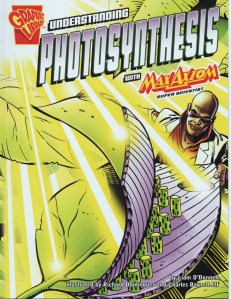
UnderstandingPhotosynthesisMaxAxiom A graphic novel about photosynthesis?

You bet.

And a good one too, thanks to the thorough explanation by super-intelligent Max Axiom Super Scientist and the illustrations by Richard Dominguez and Charles Barnett III.

In Understanding Photosynthesis with Max Axiom, Super Scientist by Liam O’Donnell, Max Axiom introduces young botanists to the word photosynthesis, explains how molecules are mixed and formed in the chloroplasts​ of plant cells, explains the role photosynthesis plays in the water cycle, and explains why plants cannot keep the air clean and the Earth healthy all by themselves. Max Axiom accomplishes all this in a conversational tone and without smothering readers with technical terms.

Includes a glossary, a list of recommended books and information about related Internet sites.

Target Age Group: 8-14
Reading Level: 3-4


Related

Plants & Comic Books

Read Full Post »

Were you into comic books when you were a kid?

I was not. I couldn’t get into the “Zoom”, “Pow”, “Boom” nature of the comic books I did encounter back then. The genre is much more than this, however, and today we take a look at comic books and comic strips with a “plant awareness” theme.

In Children’s Comics: An Opportunity for Education to Know and to Care for Nature? Joachim Woldschke-Bulmahn & Gert Groning present examples of how some garden topics are portrayed in comic books. Their review of American and German comic books is very interesting. They include excerpts from these books that address themes about gardening and the environment. The examples they include in their 10-page paper support the points they make and are best viewed within the context of their paper (it would be impossible to explain these scenes in words). The best I can do here is offer a summary of some of the points they make while discussing each comic strip.

During their survey of comic books, Woldschke-Bulmahn & Groning (1994) observed the following:

  • Comic books treat gardening as a social activity. The independent pursuits of the lone gardener are not interesting to comic book readers.
  • Yard work is a common topic and is often presented as an unpleasant chore.
  • The act of gardening is presented as a variety of activities in comic books (i.e., some enjoyable and some not so enjoyable).
  • Generational approaches to gardening are often portrayed (e.g., Dad’s opinion about topiaries versus his son’s opinion about topiaries).
  • Gardening competitions are a recurring topic.
  • Environmental protection is also a recurring topic.

Joachim Woldschke-Bulmahn and Gert Groning argue this genre has much to teach children about the environment and that comics should be read not only by students, but by their teachers too. You can read their paper online for free or look for a copy at your local college library.


Literature Cited

Wolschke-Bulmahn, Joachim and Gert Groning. 1994. Children’s comics: An opportunity for education to know and to care for nature? Children’s Environments. 11(3): 232-242


Related

Read Full Post »

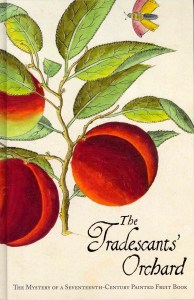
TheTradescantsOrchard There is a book about fruit that is surrounded by mystery and intrigue.
Is it a book?
Is it a catalog?
Is it a teaching tool about fruit trees?

The Tradescants’ Orchard is more catalog than book and, according to evidence of how often each painting has been handled, was also a teaching tool, according to authors Barrie Juniper and Hanneke Grootenboer.

Juniper and Grootenboer, together with the Bodleian Library, have published The Tradescants’ Orchard: The Mystery of a Seventeenth-Century Painted Fruit Book — a fascinating look at plantsman John Tradescant the elder, his son John Tradescant and their contributions to horticulture and the development of fruit orchards in 17th century Europe.

Originally called A Book of Fruit Trees with their Fruits (Juniper & Grootenboer, 2013), a photograph of this 400-year old manuscript is included in their book.

You are most likely already familiar with the Tradescants. The Spiderwort plants bear their family name (Tradescantia). Does this houseplant look familiar?

The Tradescant father and son team were responsible for introducing and raising many familiar garden plants (Juniper & Grootenboer, 2013). John Tradescant the elder was a sought-after plantsman in elite circles, operated a large nursery and, because of his extensive traveling, built an impressive cabinet of curiosities (Juniper & Grootenboer, 2013). When he died in 1638, John Tradescant the younger took over the family business and eventually became acquainted with Elias Ashmole.

This is where the story of the colorful manuscript containing 66 paintings of fruit and imaginary arthropods, frogs, birds, snails, a lizard and a squirrel gets very interesting.

Thought to be created somewhere around the 1620s or 1630s, The Tradescants’ Orchard was published when interest in growing fruit and when creating horticultural information for the public became popular (Juniper & Grootenboer, 2013).

Who commissioned the manuscript?

How did it end up at the Ashmole Museum?

What is unique about the paintings?

Much is explained in the forty-one pages of text leading up to Juniper & Grootenboer’s reproduction of The Tradescants’ Orchard. Their book is yet another wonderful chapter about the history of botanical art.


Literature Cited

Juniper, Barrie and Hanneke Grootenboer. 2013. The Tradescants’ Orchard: The Mystery of a Seventeenth-Century Painted Fruit Book. Oxford: Bodleian Library.

Available at independent bookstores. ($65)

Read Full Post »

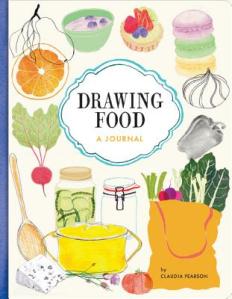
DrawingFood9781452111315 Here is a new resource that takes a fun and lighthearted approach to drawing. This resource provides more than prompts to remind you to draw everyday. It is a guided sketchbook complete with drawing techniques, instructions about how to use different media and a guidebook with plenty of room for sketching.

Drawing Food: A Journal by illustrator Claudia Pearson is composed of two key sections. The first section is titled, How to Draw Food, and contains instruction about how to draw fruit and vegetables, how to draw meat and dairy products, how to draw treats from the bakery, and how to draw household kitchen items. In this section, Pearson discusses line drawing, shading, how to work with colored pencils, and how to work with color pastels. Her instructions are clear, simple and doable.

In Part Two of her book, Pearson establishes a two-page spread for each week of the year and provides fun prompts for sketching enthusiasts. She challenges readers with thought-provoking tasks such as drawing what they find at their local farmer’s market, drawing something seasonal that isn’t produce, and challenges them to describe other culinary subjects in a visual way.

If the word “draw” makes you nervous, this book will help you begin to see your world through the eyes of an illustrator. It isn’t focused narrowly on any one culinary topic and provides plenty of room for you to take the journal in any direction you want to take it.

Interested in beginning your own illustrated food journal and discovering how plants intersect with our lives?

Join ArtPlantae next week when it launches the Botany Craft Bar, a creative place to learn about plants, during the Spring Open House at Aurea Vista on Friday,
May 17, 2013 (5-9 PM). In June, the Botany Craft Bar will become a regular feature during Riverside ArtsWalk, a monthly celebration of the arts in downtown Riverside.

If you can’t make it to the open house next week, visit ArtPlantae’s Botany Craft Bar on the first Thursday of the month during ArtsWalk. The Botany Bar will be open from 6:00 – 8:30 PM at Aurea Vista.

Read Full Post »

If we all approached drawing as a means of fixing a memory as opposed to creating a work of art, we’d do more of it and see more as a result.

— Nancy Ross Hugo

If you want to spend time getting to know trees, begin your journey with
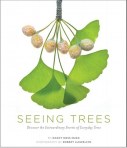
Seeing Trees: Discover the Extraordinary Secrets of Everyday Trees by author and educator, Nancy Ross Hugo, and photographer Robert Llewellyn. Together they lure readers out of their reading chairs and take them outside to look at trees in a new way.

Hugo and Llewellyn accomplish this through their discussion of thirteen viewing strategies and by teaching readers how to look at leaves, flowers, cones, fruit, buds, leaf scars, bark and twigs. Llewellyn’s informative and beautiful photographs support Hugo’s text and helps readers zero in on the details they need to see.

This same attention to detail is applied to the tree profiles featured in the book. You don’t have to get too far with even the first tree profile to realize you’ve looked at trees all wrong and that you’ve taken them for granted.

As you know, we’re focusing on technology this month and how technology can be taken outdoors. Seeing Trees is a great example of how technology can be used to enhance our understanding of plants. Hugo and Llewellyn’s book is more than a print book. It is available in ebook format and as an interactive book. It is the interactive format I will focus on today.

The interactive version of Seeing Trees is available through Inkling, a Web-based service that is transforming how readers interact with books. They have eliminated the “book” part and focus on how users view and consume content on iPads, iPhones, MACs and PCs.

When visiting Inkling’s website, the first thing you’ll notice is that you can buy the individual chapters of a book for as little as $1.99. The second thing you’ll notice is that the books are interactive and much more than simply a print book in a digital format. The types of interactive components vary among books. In the case of Seeing Trees, readers will find images they can enlarge, words they can highlight and define, and will enjoy the ability to conduct an in-depth search around a specific word. In the introduction section of the Inkling version, there is also a video about how the book was made and how Llewellyn’s approach to photographing this book was inspired by the botanical illustrators of long ago.

Other interactive features of Seeing Trees include:

  • A slideshow of Japanese maple leaves (Acer palmatum and A. japonicum)
  • A slideshow of sweetgum leaves (Liquidambar styraciflua)
  • A slideshow of twigs from 14 species of trees.
  • Links to resources about plants and trees
  • A feature enabling readers to watch fruit development in Liquidambar styraciflua.

While the trees in this book are common to the East Coast, this does not take away from its effectiveness as a tool for seeing. The viewing strategies Hugo and Llewellyn recommend can be applied to any tree (and any plant) regardless of one’s geographic location.

The Inkling edition of Seeing Trees is available for $16.99. The chapter price for this title is $4.99 per chapter.

SeeingTrees
Literature Cited

Hugo, Ross Nancy. 2011. Seeing Trees: Discover the Extraordinary Secrets of Everyday Trees.
Photography by Robert Llewellyn. Portland: Timber Press.


Also See

Read Full Post »

« Newer Posts - Older Posts »