Feeds:
Posts
Comments

How to Use a Pencil

Click to download

Click to download

Sometimes the most interesting resources are right in front of you and you don’t even know it.

I had one of those “Hey, I didn’t know this was here” moments this week. Lost in the shuffle of all that zips across the computer screen is a resource I haven’t spent much time digging into.

My discovery?

Books about drawing in pencil!

The best thing about them is that they are as much about history as they are art, they’re free, and they’re available as downloadable PDFs.

The notable discovery of the week is
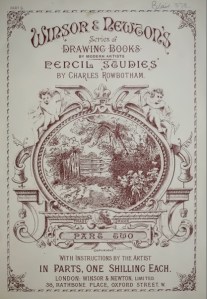
Pencil Studies by Charles Rowbotham. Published in the late 1800’s, Pencil Studies was one of the handbooks published by Winsor & Newton. This book, along with 32 others, was published as a series of drawing books written and illustrated by individual artists. Rowbotham’s handbook about pencil studies was Number 2 in the series. Other handbooks addressed topics such as landscape painting, marine painting, portrait painting, miniature painting, flower painting, figure drawing, murals, ornamental art, wood engraving, etching, perspective, illumination and even the art of botanical drawing (I haven’t found this one yet).

In his handbook, Rowbotham discusses how to create foliage using pencil strokes and explains to readers how he created the four pencil sketches in his handbook. His explanations are concise and delightfully eloquent in that 17th century way. Rowbotham explains how a broken stem can be created using a few “sharp touches” instead of through the deliberate placement of a line. He explains how dirt walking paths need only be hinted at, and how grass can come from
“a few decided and effective touches”.

He also demonstrates the power of negative space and dark values while creating tree canopies, dense foliage, foreground plants, background plants and other landscape elements for readers.

Equally interesting, and somewhat entertaining, is the Winsor & Newton ad for drawing pencils. During this time, Winsor & Newton sold six kinds of pencils, each serving a specific purpose. The penny drawing pencil was for office or school use. The twopenny drawing pencil was for “artists and professors of eminence”. The threepenny drawing pencil was for architects and draughtsmen. The fourpenny drawing pencil was “warranted perfectly free from Grit”. The fivepenny drawing pencil was of “high quality in color, smoothness, and ready erasure”, while the sixpenny drawing pencil was manufactured with the “finest Lead”, was grit-free, contained “a larger quantity of Lead than usual”, and produced a “good volume of color”.

(Note: Lead pencils don’t really have lead in them. They are graphite and clay.)

Of course my discovery of Rowbotham’s handbook changed the course of my afternoon. More searching uncovered other treasures, all free and available as PDFs. Before I leave you with a list of only a few of my discoveries, I would like to share a quote I found in the book, Pencil Sketching from Nature (1906):

The pencil is indeed a very precious instrument after you are master of the pen and the brush, for the pencil, cunningly used, is both,
and will draw a line with the precision of the one, and the gradation of the other. — Ruskin

My Discoveries:


Related


Disclosure: ArtPlantae is a partner of Kobo Books
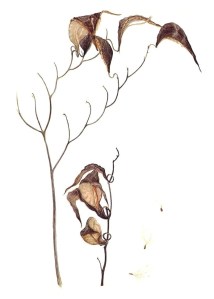
Asclepias tuberosa, © Lynne Railsback. All rights reserved.

Asclepias tuberosa, © Lynne Railsback. All rights reserved.

Drawn to Nature II
Brushwood Gallery
Ryerson Woods
Deerfield, IL
March 3 – April 30, 2013

The ASBA Reed-Turner Woodland Botanical Artists’ Circle in Long Grove, Illinois and Friends of Ryerson Woods in Deerfield, Illinois are pleased to announce Drawn to Nature II.

Drawn to Nature II presents recent works of the Reed-Turner Woodland Botanical Artists’ Circle, a local Chicagoland group affiliated with the American Society of Botanical Artists. With a new collection of original botanical art, members return to Brushwood with their second show. The exhibition includes drawings and paintings of plants and wild flowers common (and not so common) to the woodlands and prairies of the Midwest landscape. Here, the artists seek to further the interests of conservation science, botany and horticulture, and to represent the beauty of plants in our lives.

An opening reception will be held at Brushwood Gallery. The reception is open to the public, free of charge and will be held on Sunday, March 3rd from 1-3 PM. Eight special events will be held on Sunday afternoons during the show from 1:00-2:30 PM. For further inquiries and hours, please contact Brushwood Gallery at (847) 968-3343 or visit the Events page on the website of the Friends of Ryerson Woods.


About The Reed-Turner Woodland Botanical Artists’ Circle

The Reed-Turner Woodland Botanical Artists’ Circle consists of a dedicated and enthusiastic group of botanical artists,

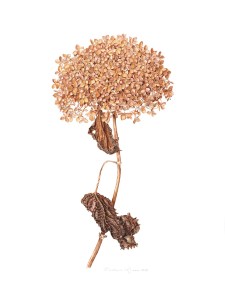
Hydrangea arborescens, © Barbara Klaas. All rights reserved.

Hydrangea arborescens, © Barbara Klaas. All rights reserved.

current and former students of the Chicago Botanic Garden and is guided by the parameters and goals of the American Society of Botanical Artists (ASBA). The ASBA is one of the premier organizations promoting botanical art around the world. Consistent with the mission of the ASBA, the Reed-Turner Woodland Botanical Artists’ Circle works to further interest in botanical art, conservation science, botany, and horticulture at the local level. The group also strives to emphasize the beauty and importance plants play in our daily lives by increasing public awareness through education, promotion, and exhibition of its members’ art in collaboration with local institutions. Founded ten years ago, the group meets monthly at the Reed-Turner Woodland on the last Saturday of the month from 9:30-11:30 AM. Members of the public with an interest in botanical art are welcome to attend.

Learn more about the Reed-Turner Woodland Botanical Artists’ Circle


Related

Making Connections and Inspiring Action to Preserve America’s Prairies

See the new tools for naturalists and artists.

See the new tools for naturalists and artists.

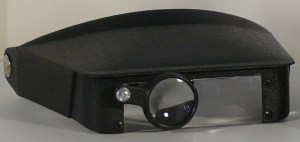
Natural science illustrators use many tools to create their informative drawings and paintings. One of the most important tools they use are magnifiers. ArtPlantae Books now carries a selection of magnifying devices often used by illustrators. These magnifiers will help you study plants in the field and in the studio.

These new tools can be purchased individually or in bulk quantities for classrooms, summer camps or nature center programs.

See what’s new at ArtPlantae Books!

Ruth Ava Lyons’ process of painting is very spontaneous. Are the paintings she creates during a residency similar to the paintings she creates in the comfort and privacy of her own studio? Does she feel pressured to paint all that she sees in her new environment when working as an artist-in-residence?

Ruth says…

When I had a residency at the Bemis Project in Omaha, Nebraska, I was given a studio with 15-foot high walls. I purchased huge rolls of canvas and stretched them across the walls. Before that, my paintings were much smaller. This opportunity to work on another scale showed me a whole new way to see my work. I proceeded to adjust my imagery to the scale. Sometimes these changes in working style call for a new approach and you find the work looking like something you have never done.

Artists are like plants!…

How are artists like plants?

Read More

flyerWeb_CoachellaWldflFest_Mar2013 It’s almost springtime.

This means it’s time to hit the road and get outside! Hope to see you out there.

Here is where ArtPlantae will be through April. More to come during summer.

    Coachella Valley
    Wildflower Festival

    Santa Rosa & San Jacinto Mountains National Monument
    Shuttle service from Hwy. 74
    Palm Desert, CA
    March 2, 2013
    9 AM – 4 PM
    More Info


    34th Annual Los Angeles Environmental Education Fair

    Los Angeles County Arboretum
    Arcadia,CA
    Ayres Hall
    March 9, 2013
    9 AM – 4 PM
    More Info


    WaterMiser Workshop

    Native Plants and Our Watershed
    Newport Beach Central Library
    Newport Beach, CA
    March 14, 2013
    6-8 PM
    More Info


    Banning Centennial Earth Day Celebration

    Free Native Plants Available
    Gilman Springs Historic Ranch & Wagon Museum
    Banning, CA
    April 13, 2013
    9 AM – 5 PM
    Watch for more information!


    6th Annual Earth Day Celebration

    Chino Creek Wetlands and Educational Park
    Chino, CA
    April 18, 2013
    4-7 PM
    Watch for more information!


    Wood Streets Green Team How-to-Garden Tour
    Riverside Community College EcoFestival

    Riverside, CA
    April 21, 2013
    EcoFestival (11 am – 2 pm)
    Garden Tour (11 am – 4 pm)
    Watch for more information!


    Earth Night in the Garden

    Western Municipal Water District
    Landscapes Southern California Style
    Riverside, CA
    April 22, 2013
    3-7 PM
    More Info

Do you live in southern California, specifically the Inland Empire?

You’re invited to join the mailing list or to follow this site by clicking on the “Follow” tab in your browser’s window. You can also follow ArtPlantae on Twitter and Facebook.

Yesterday was Valentine’s Day, the event for which February is probably best known. Today I propose that there is a bigger and better event in February. This event is Digital Learning Day. A new national movement, the second annual Digital Learning Day was celebrated just last week. This national campaign celebrates “education champions who seek to engage students, celebrate and empower teachers, and create a healthy learning environment, personalized for every child.”

Allow me to stray just a bit from the usual drawing-specific topics covered in this column. I am not straying too far, really, as today’s featured activity can be implemented as a clever way of encouraging the collection of quality reference photographs — resources valued highly by all botanical artists and natural science illustrators.

Meet Wendy Walker-Livingston. Drawing upon her fond memories of scavenger hunts at summer camp, science teacher Wendy Walker-Livingston created a scavenger hunt about plants in which learning is reinforced through field work and technology. She describes her 21st-century scavenger hunt in the article, Botanical Scavenger Hunt.

Walker-Livingston’s field adventure is exactly what you’d expect a scavenger hunt to be — a mad dash with list in-hand and a sprint to the finish line.

What is different about Walker-Livingston’s scavenger hunt is that participants are not collecting objects. Instead, what they are collecting are images. In this case, images of 16 key plant characteristics used in plant identification (Walker-Livingston, 2009) that were collected using digital cameras and cell phones. Today, of course, you can add iPods and tablets to this list of image-capturing devices.

When conducting this activity, Walker-Livingston (2009) prepares students for their scavenger hunt by first introducing them to botanical terminology, plant morphology, plant classification and dichotomous keys. When distributing the list for the scavenger hunt, she tells students they have 50 minutes to collect photographs of the characteristics on their list and 10 minutes to download their images.

The day (or two) after the scavenger hunt, each student team is given 60 minutes to create a 3-minute multimedia presentation that includes a narrated description of the images they collected.

Walker-Livingston (2009) says her activity has been successful on many levels. Students love the activity, the multimedia project helps students verbalize their new knowledge and the project successfully addresses the various ways learners interact with the world, ways Howard Gardner describes in his theory of multiple intelligences.

Walker-Livingston’s Botanical Scavenger Hunt is easy to add to your teaching toolbox. This article can be purchased online for 99¢ from the NSTA store.


Literature Cited

Walker-Livingston, Wendy. 2009. Botanical scavenger hunt. Science Scope. 32(6): 31-34.


Related

You’re in an exciting new location and an official “artist-in-residence”. Congratulations!

Now what?

I asked Ruth what she does on the first day of a residency. She replied:

I wander around and get my bearings. I do not dive into my work because I like to get comfortable with and tune-in to the environment. I get my head in another space where I am determined to be open and not have qualitative expectations. That way, the pressure to create great work does not get in the way of what I am absorbing. I am planning on doing a residency program in the Brazilian rain forest…

Read More