Feeds:
Posts
Comments

See the new tools for naturalists and artists.

See the new tools for naturalists and artists.

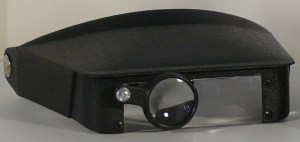
Natural science illustrators use many tools to create their informative drawings and paintings. One of the most important tools they use are magnifiers. ArtPlantae Books now carries a selection of magnifying devices often used by illustrators. These magnifiers will help you study plants in the field and in the studio.

These new tools can be purchased individually or in bulk quantities for classrooms, summer camps or nature center programs.

See what’s new at ArtPlantae Books!

Ruth Ava Lyons’ process of painting is very spontaneous. Are the paintings she creates during a residency similar to the paintings she creates in the comfort and privacy of her own studio? Does she feel pressured to paint all that she sees in her new environment when working as an artist-in-residence?

Ruth says…

When I had a residency at the Bemis Project in Omaha, Nebraska, I was given a studio with 15-foot high walls. I purchased huge rolls of canvas and stretched them across the walls. Before that, my paintings were much smaller. This opportunity to work on another scale showed me a whole new way to see my work. I proceeded to adjust my imagery to the scale. Sometimes these changes in working style call for a new approach and you find the work looking like something you have never done.

Artists are like plants!…

How are artists like plants?

Read More

flyerWeb_CoachellaWldflFest_Mar2013 It’s almost springtime.

This means it’s time to hit the road and get outside! Hope to see you out there.

Here is where ArtPlantae will be through April. More to come during summer.

    Coachella Valley
    Wildflower Festival

    Santa Rosa & San Jacinto Mountains National Monument
    Shuttle service from Hwy. 74
    Palm Desert, CA
    March 2, 2013
    9 AM – 4 PM
    More Info


    34th Annual Los Angeles Environmental Education Fair

    Los Angeles County Arboretum
    Arcadia,CA
    Ayres Hall
    March 9, 2013
    9 AM – 4 PM
    More Info


    WaterMiser Workshop

    Native Plants and Our Watershed
    Newport Beach Central Library
    Newport Beach, CA
    March 14, 2013
    6-8 PM
    More Info


    Banning Centennial Earth Day Celebration

    Free Native Plants Available
    Gilman Springs Historic Ranch & Wagon Museum
    Banning, CA
    April 13, 2013
    9 AM – 5 PM
    Watch for more information!


    6th Annual Earth Day Celebration

    Chino Creek Wetlands and Educational Park
    Chino, CA
    April 18, 2013
    4-7 PM
    Watch for more information!


    Wood Streets Green Team How-to-Garden Tour
    Riverside Community College EcoFestival

    Riverside, CA
    April 21, 2013
    EcoFestival (11 am – 2 pm)
    Garden Tour (11 am – 4 pm)
    Watch for more information!


    Earth Night in the Garden

    Western Municipal Water District
    Landscapes Southern California Style
    Riverside, CA
    April 22, 2013
    3-7 PM
    More Info

Do you live in southern California, specifically the Inland Empire?

You’re invited to join the mailing list or to follow this site by clicking on the “Follow” tab in your browser’s window. You can also follow ArtPlantae on Twitter and Facebook.

Yesterday was Valentine’s Day, the event for which February is probably best known. Today I propose that there is a bigger and better event in February. This event is Digital Learning Day. A new national movement, the second annual Digital Learning Day was celebrated just last week. This national campaign celebrates “education champions who seek to engage students, celebrate and empower teachers, and create a healthy learning environment, personalized for every child.”

Allow me to stray just a bit from the usual drawing-specific topics covered in this column. I am not straying too far, really, as today’s featured activity can be implemented as a clever way of encouraging the collection of quality reference photographs — resources valued highly by all botanical artists and natural science illustrators.

Meet Wendy Walker-Livingston. Drawing upon her fond memories of scavenger hunts at summer camp, science teacher Wendy Walker-Livingston created a scavenger hunt about plants in which learning is reinforced through field work and technology. She describes her 21st-century scavenger hunt in the article, Botanical Scavenger Hunt.

Walker-Livingston’s field adventure is exactly what you’d expect a scavenger hunt to be — a mad dash with list in-hand and a sprint to the finish line.

What is different about Walker-Livingston’s scavenger hunt is that participants are not collecting objects. Instead, what they are collecting are images. In this case, images of 16 key plant characteristics used in plant identification (Walker-Livingston, 2009) that were collected using digital cameras and cell phones. Today, of course, you can add iPods and tablets to this list of image-capturing devices.

When conducting this activity, Walker-Livingston (2009) prepares students for their scavenger hunt by first introducing them to botanical terminology, plant morphology, plant classification and dichotomous keys. When distributing the list for the scavenger hunt, she tells students they have 50 minutes to collect photographs of the characteristics on their list and 10 minutes to download their images.

The day (or two) after the scavenger hunt, each student team is given 60 minutes to create a 3-minute multimedia presentation that includes a narrated description of the images they collected.

Walker-Livingston (2009) says her activity has been successful on many levels. Students love the activity, the multimedia project helps students verbalize their new knowledge and the project successfully addresses the various ways learners interact with the world, ways Howard Gardner describes in his theory of multiple intelligences.

Walker-Livingston’s Botanical Scavenger Hunt is easy to add to your teaching toolbox. This article can be purchased online for 99¢ from the NSTA store.


Literature Cited

Walker-Livingston, Wendy. 2009. Botanical scavenger hunt. Science Scope. 32(6): 31-34.


Related

You’re in an exciting new location and an official “artist-in-residence”. Congratulations!

Now what?

I asked Ruth what she does on the first day of a residency. She replied:

I wander around and get my bearings. I do not dive into my work because I like to get comfortable with and tune-in to the environment. I get my head in another space where I am determined to be open and not have qualitative expectations. That way, the pressure to create great work does not get in the way of what I am absorbing. I am planning on doing a residency program in the Brazilian rain forest…

Read More

Download Call for Entries

Download Call for Entries

This just in from the Association of Illustrators!

The Association of Illustrators (AOI) is delighted to let you know about our annual illustration competition which has expanded its categories to include illustration commissioned for Research & Knowledge Communication.

Entries are welcome from illustrators working across all areas in which illustration is used to communicate information, ideas and knowledge or contribute to research. This includes natural history illustration, wildlife, scientific illustration, forensic imagery, architectural imagery, illustration supporting academic research (for example in archaeology, geology, palaeontology, natural sciences, biological sciences), visual informatics, data-visualisation and graphic facilitation.

Other award categories include Advertising, Books, Children’s Books, Design, Editorial & Social Comment, Public Realm and Self Initiated.

Further details about the AOI Illustration Awards 2013 can be found on their website and in the short video below.

Call for Entries open until February 28, 2013

postcard_Heaton

Tomorrow graphic designer and botanical artist,
Erin S. Heaton, will unveil watercolor, an exhibition showcasing a collection of her botanical paintings.

Meet the artist tomorrow at Central Oregon Locavore, Bend’s new grocery store from 4-5 pm.