Feeds:
Posts
Comments

Kellie Cox-Brady has merged her knowledge and experiences in horticulture, landscape design and botanical illustration to create a lifestyle many would envy. 

Kellie is a natural science illustrator, though she prefers to call herself a “natural scientific artist”. Nature is truly Kellie’s inspiration. In addition to the technical illustrations you see in her online gallery, you will find botanical illustrations in pen and ink, striking silhouettes of Nature’s forms, and plants painted in bold colors.

Kellie also paints vibrant murals and designs curriculum. In fact, she helped create the advanced botanical illustration class for Cornell University’s online certification course offered through the Department of Horticulture and the Office of Continuing Education. This month she will talk about her work and answer your questions too.

Please welcome Kellie Cox-Brady, the featured guest for July!

If you are looking for ways to engage with your audience about plants instead of talking at them about plants, make note of the 5E Learning Model. Whether you teach children or adults, the 5E Learning Model provides a framework with which you can create experiences to introduce plants to new audiences.

The 5E Learning Model, created by the Biological Sciences Curriculum Study (BSCS 1989), helps teachers plan learning opportunities for their students so they can Engage, Explore, Explain, Elaborate and Evaluate a topic. An example of how to apply this learning model to teach students about plants is presented in Discovering Flowers in a New Light by professors Rebecca L. McNall and Randy L. Bell.

In the unit created by McNall and Bell (2004), students learn how to explore flowers, learn how to use a digital microscope, learn how to draw and record their observations, and gain experience presenting their findings to classmates.

McNall and Bell (2004) created a methodical and thoughtful series of investigations into flower anatomy, flower form and flower function. Students are engaged from beginning to end, illustrating observations, writing hypotheses, and contemplating the function of flowers and their parts. Students also become immersed in technology through their use of a digital microscope. Students use the digital microscope to look at flowers and to photograph what they see through the scope. Students then insert their images into an electronic worksheet where they label flower parts and describe the function of each structure.

To help teachers prepare for this multifaceted activity, McNall and Bell (2004) share sources for digital microscopes and resources about microscopy and hands-on activities for children.

A copy of McNall and Bell (2004) can be purchased online from the National Science Teachers Association for 99¢.


Literature Cited

    Biological Sciences Curriculum Study (BSCS). 1989. New designs for elementary school science and health: A cooperative project of Biological Sciences Curriculum Study (BSCS) and International Business Machines (IBM). Dubuque, Iowa: Kendall/Hunt. Search your local college library

    McNall, Rebecca L. and Randy L. Bell. 2004. Discovering flowers in a new light. Science and Children. 41(4): 36-39


Also See

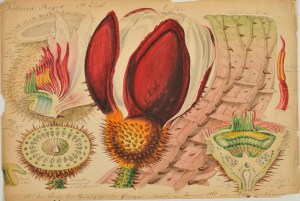
Victoria regia by Carl Ulke. Image courtesy of Crispian Riley-Smith Fine Arts Ltd. All rights reserved.

Victoria regia by Carl Ulke. Image courtesy of Crispian Riley-Smith Fine Arts Ltd. All rights reserved.

The Art of Botanical Pictures: Still Lifes and Plants

This exhibition will be presented by Crispian Riley-Smith Fine Arts Ltd during Master Drawings and Sculpture Week, part of London Art Week (June 28 – July 5, 2013).

This exhibition of botanical art features the work of father and son artists, Carl and Henry Ulke. The art in this collection has been kept within the family for many years and is coming out onto the market for the first time.

Henry Ulke in his studio. Image courtesy Crispian Riley-Smith Fine Arts Ltd. All rights reserved.

Henry Ulke in his studio. Image courtesy Crispian Riley-Smith Fine Arts Ltd. All rights reserved.

Carl Ulke (1791-1882) was a typesetter and publisher in Germany. His son Henry Ulke (1821-1910) was a writer, a photographer and a portrait painter. Born in Germany, Henry emigrated to the United States in 1852. He is best known for his portrait painting. Henry’s painting of President Ulysses S. Grant hangs in the White House and more than 300 of his portraits are in US government and private collections. Henry was well-connected to the presidents and was one of the few eyewitnesses to the death of President Lincoln. Henry painted botanical subjects on the side and he was also an avid collector of beetles. His beetle collection was purchased by the Carnegie Museum in Pittsburgh, PA in 1900.

The Art of Botanical Pictures: Still Lifes and Plants includes 20 pieces by Carl and Henry Ulke. Also included in this exhibition are works by female Dutch artists, including Cornelia Maria Haakman and
Maria Margaretha Van Os.

All of this wonderful work and fascinating history will be on view for only one week. If you live near London or will be traveling in London during London Art Week (June 28 – July 5, 2013), stop by The Illustration Cupboard to see this exhibition.


Related

The Botanical Artists Guild of Southern California (BAGSC) will lead educational activities and conduct botanical art demonstrations at the J. Paul Getty Museum in conjunction with the exhibition Gardens of the Renaissance, now on view in the North Pavilion.

Visitors will learn about plants and have the opportunity to try botanical art techniques themselves. Look for the interactive BAGSC tables in the Getty’s Central Garden between 12:30 – 2:30 PM on the following dates:

  • Sunday, July 7, 2013
  • Sunday, July 21, 2013
  • Sunday, August 4, 2013
  • Sunday, August 11, 2013

See what else is happening at The Getty on these days and through the rest of the year. Check out the Getty Event Calendar.

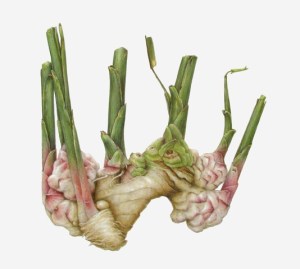
Zingiber officinale (Ginger).© Ingrid Finnan. Collection of Shirley Sherwood. All rights reserved.

Zingiber officinale (Ginger)
Oil on paper, © Ingrid Finnan
Collection of Shirley Sherwood. All rights reserved.

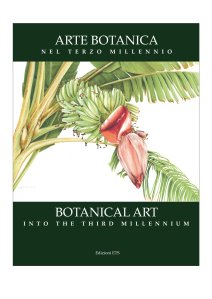
The exhibition catalog Botanical Art into the Third Millenium has arrived from Italy!

This catalog was published in conjunction with the exhibition of the same name now on view at Museo della Grafica in Pisa, Italy. This exhibition features botanical art from all over the world and will be on view through July 15, 2013.

In an announcement about the exhibition, curators Lucia Tongiorgi Tomasi and Alessandro Tosi write:

At the dawn of the third millennium, botanical painting constitutes a realm of expression of astonishing variety and vitality. In a tradition that has continued without interruption since the Renaissance, when artists such as Leonardo da Vinci and Albrecht Dürer inaugurated a new vision and a new manner of interpreting the natural world, down through the centuries with the work of such great European artists as Jacopo Ligozzi, Maria Sibylla Merian, Nicolas Robert and Pierre-Joseph Redouté, the universe of Flora has provided art with some of its most enduring and fascinating motifs.

The aim of Botanical Art into the Third Millennium is to provide an overview of the latest and most original work being produced in this genre, in a geographic dimension without limits and reflecting the unique diversity and specificity of local environments.

This unique exhibition catalog is now shipping from ArtPlantae Books.
Pre-orders are being processed and shipped. New orders will be processed in a timely manner.

Here is more information about this wonderful piece of botanical art history:

  • Paperback, 244 pages and illustrations
  • Features over 150 pieces of art
  • Each two-page spread has one page in Italian and one page in English
  • Includes the work of Margaret Stones, Rory McEwen, Margaret Mee
  • Includes contemporary botanical art from the Shirley Sherwood Collection, such as the painting of Zingiber officinale (Ginger) by Ingrid Finnan above.

7c4d2e1f4ced43b38be5553328ec3e3b
Botanical Art into the Third Millenium is available for purchase at ArtPlantae Books. Order now to save on international shipping fees. While supplies last.

When students arrive in your classroom, what is their attitude towards plants?
How did these attitudes form?

If you teach a traditional botanical art class, you most likely have enthusiastic students with vast amounts of plant-based experiences and knowledge. If you lead nature walks and work with the public, you may find that your audience does not have a particular interest in plants.

Do you ever wonder what people’s experiences with plants have been prior to meeting them?

I do. While I don’t have an answer to the question above, I can share a study that might serve as a first step to answering this question.

In the late 1980s, then-graduate student Margarete R. Harvey, conducted a study of how children experience plants and how their experiences contribute to their interest in the environment. She describes her research project and findings in Children’s Experiences with Vegetation.

Harvey (1989) conducted a study in which she evaluated children’s experiences with vegetation as play objects, as food, as tasks, as obstacles, as ornament and as adventure. She created subcategories for each experience. Because knowing these subcategories is important to understanding even this very brief look at Harvey’s research, I need to create a quick list of each experience and their respective subcategories. Here they are as presented in Harvey (1989):

    Vegetation as Play Object
    (tree climbing; playing in tall grass; playing hide-and-seek in bushes)

    Vegetation as Food
    (picking fruit and vegetables; tasting leaves, flowers or berries;
    planting seeds)

    Vegetation as a Task
    (mowing the lawn; watering plants; pulling weeds)

    Vegetation as an Obstacle
    (being stung by nettles; allergic reactions; plants interfering with
    an activity)

    Vegetation as Ornament
    (growing houseplants; putting flowers in a vase; pressing leaves
    or flowers)

    Vegetation as Adventure
    (playing in a park; walking in a forest; camping)

Harvey (1989) created a questionnaire that was distributed to 995 children, ages 8-11, at 21 schools in England. Her analysis is based on the 845 completed questionnaires she received. Harvey analyzed how often students engaged in the 18 activities described above, their level of enjoyment with these experiences, children’s attitudes towards vegetation and their attitudes towards trees, bushes and flowers on school grounds.

Large amounts of data were analyzed. Here are some interesting points from Harvey (1989):

  • Boys enjoy contact with vegetation as play objects and as adventure.
  • Girls enjoy contact with vegetation more as food and ornament.
  • Girls’ attitudes towards vegetation is more positive overall.
  • Both boys and girls liked bushes the least. Boys liked trees best, girls liked flowers the most.
  • Older children had fewer positive reactions to plants, than younger children.
  • Children of higher socio-economic status had more experiences with vegetation, more contact with vegetation and expressed more appreciation towards plants.
  • Experiences with vegetation had a positive influence on children’s attitudes towards plants.

These points only hint at what is contained in Harvey’s interesting paper. Pick up a copy of her paper to learn about the tools she used to measure degrees of enjoyment, student interest in vegetation, and how children’s past experiences with vegetation influenced their attitudes towards plants.

Get a copy of Children’s Experiences with Vegetation at your local college library.


Literature Cited

Harvey, Margarete R. 1989. Children’s experiences with vegetation. Children’s Environments Quarterly. 6(1): 36-43.


Related

flier_AnnSwan_LA Arbortuem Botanical artist Ann Swan will lead a four-day colored pencil class at the Los Angeles County Arboretum and Botanic Garden September 25-28, 2013.

Known for her elegant colored pencil work, Ann will discuss and demonstrate the colored pencil techniques used in botanical illustration. This class is almost full, so reserve a spot today if you would like to attend.

Ann Swan has received many awards for her colored botanical illustrations, has shown her colored pencil paintings in many exhibitions and has work in the Shirley Sherwood Collection.

Ann is also the author of Botanical Portraits in Colored Pencil.

Limit: 16 students
Cost: $440

Download flier and registration form


UPDATE 7/1/13
:
This workshop is now full. Download registration form to add your name to the waiting list.