Feeds:
Posts
Comments

Jane LaFazio
janeville.blogspot.com
Jane is a mixed media artist and a member of the San Diego Sketchcrawl group. Jane teaches at conferences across the U.S. and leads classes in Italy and Greece too. In addition to sketching classes, Jane teaches workshops in collage, mixed media, and quilting. There are always many, many opportunities to learn from Jane in-person. Below is a short list of classes that may be of interest to you. To view all of Jane’s upcoming classes, see her teaching schedule online.

Also see this interview with Jane and her Ask The Artist Q&A with readers.

    Collage 101
    J & J Ranch
    Descanso, CA
    Saturday, November 9, 2013
    10 AM – 4 PM
    Need some inspiration for your sketchbook? Consider this introduction to collage. Get creative and learn how to play with scraps of paper, gesso, rosin paper and more. Cost: $100, includes materials
    View Details/Register


    Sketching and Watercolor in a Mixed Media Journal (Online)

    This class begin October 31, 2013. Add new dimensions to your illustrated journal by learning a new technique each week for the next six weeks. You’ll have a brand new journal and loads of inspiration to take you into the new year. This class is for students who have had some experience with drawing and watercolor. Sign up today. This class begins next week!
    Cost: $90 View Details/Register


    Sketching & Watercolor: Journal Style

    Six-week online class.
    Learn how to record your life, your summer vacation and other adventures using a loose and quick style of journaling. Participants in this online class will learn a new technique or subject each week and will receive links to supporting material. Communicate with fellow participants and see each others’ projects progress. Designed for beginners. This class will be offered again in January 2014. Cost: $85
    View Details


Plan Ahead to Learn from Jane in 2014

View teaching schedule for more information.

  • ArtWalk: San Diego – January 13-19, 2014
  • ArtWalk: Italy – May 24-30, 2014
  • ArtWalk: The French Riviera – June 1-7, 2014
  • Nature Journaling in Massachusetts – September 12-14, 2014

This information has also been posted to Classes Near You > Southern California.

New at Classes Near You > Minnesota!


Jack-in-the-Pulpit Studio

www.jackinthepulpit.com
This is the private studio of Mark Granlund. Classes in botanical and fine art are taught by Mark and guest instructors. Mark also teaches an online class. Find out how Mark developed his online botanical art class in this 2010 interview.

    Drawing: The Basic Elements (Online)
    Wednesdays, January 8-February 19, 2014
    6:30 – 9:00 PM
    Learn the basic elements of drawing in this six-week course. View details and register online. Cost: $165


    Drawing: The Basic Elements – for the Very Busy (online)

    This is the online edition of Drawing: The Basic Elements. This course begins on Friday, January 10, 2014. Participants will attend two studio sessions for critique and to share work. These sessions will occur on January 31, 2014 and February 21, 2014.


    Introduction to Botanical Watercolor

    Tuesdays, January 7 – February 18, 2014
    6:30 – 9:00 PM
    Participants will learn how to draw and paint botanical specimens. Discussion topics include color mixing, brushes, paper and paint. Cost: $165


    Trees in Ink: Pen and Brush

    Friday, February 28, 2014 (6:30 – 9:00 PM)
    Saturday, March 1, 2014 (12-3 PM)
    Learn how to capture the beauty and structure of winter trees in ink. Cost: $60

    View additional information, get materials list and register online at Jack-in-the-Pulpit Studio.

Encelia Train. © Mary-Austin Klein. All rights reserved.

Encelia Train. © Mary-Austin Klein. All rights reserved.

Mary-Austin Klein is known for her exquisite small-scale paintings of the California desert that capture the light conditions unique to California. In her current exhibition at the Theodore Payne Foundation, she brings attention to human encroachment on native plant environments and desert landscapes.

Mary-Austin Klein is the Theodore Payne Foundation’s fourth Aritst-in-Residence. During her residency, she traveled to locations in Central and Southern California to gather material for a series of oil paintings interpreting the infringement of man on the California landscape. Klein explains what motivates her to bring attention to this topic:

The ability to contain vast and deep landscapes into small, flat paintings makes me feel like a wrangler of space. The power to capture the magic of the California

Chuparosa Anza,© Mary-Austin Klein. All rights reserved.

Chuparosa Anza,© Mary-Austin Klein. All rights reserved.

desert and contain it within a frame is enthralling. It lets me transport the desert to others, sharing the beauty and promoting preservation of these vistas for future generations. Desert flora especially inspires me because of their toughness, resiliency and resourcefulness, when it comes to surviving the extreme conditions they call home.

The native Los Angeles artist has exhibited her work in galleries in Los Angeles, Pasadena, Laguna Beach, Santa Barbara and Joshua Tree. Her artwork and her advocacy efforts have been featured in The Guide to the Wild Mojave, a publication sponsored by the California Wilderness Coalition, as well as in The Desert Trail and LA Architect magazines.

Klein’s current exhibition, The Native Edge: Human Encroachment on Native Plant Environments, will be on view in the gallery at Theodore Payne through December 28, 2013.

Directions to Theodore Payne Foundation

MAKportraitforposter Oil Pastel Painting Workshop with Mary-Austin Klein
Theodore Payne Foundation
November 2, 2013
1:30 pm – 3:30 pm

Experience the technique of oil pastel painting and create an 11″ x 14″ still life of native flora on a gessoed panel. Play with color, brushwork and composition in this casual art workshop. No experience necessary!

Mary-Austin Klein is a Los Angeles-based painter whose small-scaled paintings document the natural landscapes and unique light of Southern California. She is the Theodore Payne Foundation’s 2013 Artist-in-Residence. An exhibition of her work is now on view in the gallery at the Theodore Payne Foundation in Sun Valley, CA.

Cost: $30 members, $40 non-members (includes materials fee)

For more information or to sign up, please contact Lili at 818-768-1802.
Online registration


About the Theodore Payne Foundation

The Theodore Payne Foundation for Wild Flowers and Native Plants, Inc., is a non-profit organization dedicated to helping others discover the beauty of California native plants. It is located north of Los Angeles in Sun Valley, CA.
www.theodorepayne.org

Paula Panich is an essayist, journalist, fiction writer, and writing instructor. She has been writing about plants, gardens and other subjects for 30 years.

In 2005, she published Cultivating Words: The Guide to Writing about the Plants and Gardens You Love, the first-ever comprehensive book about garden writing.

Coming soon is The Cook, the Landlord, the Countess, and Her Lover, a book of essays on food, place, memory, and history.

Gardeners, horticulturists and anyone wanting to write about plants or gardens will find Cultivating Words invaluable. In her book, Panich teaches garden writers:

  • How to write “how-to” stories.
  • How to write service stories.
  • How to construct sentences.
  • How to write garden-related travel stories.
  • How to write clearly.
  • How to edit.
  • How to look for publications in which to publish articles.

I have read Paula’s book twice and have taken a class with her at the Los Angeles County Arboretum and Botanic Garden.

We have the wonderful opportunity to learn from Paula today.

Please welcome Paula Panich!


Paula, how did your writing career begin? Have you always written about plants and gardens?

I grew up in a house without books. But I loved them. I think there were a few of those Little Golden Books for young children in the house, but the first “real” books to arrive came from my visits to a bookmobile in a shopping center in Dallas, Texas. Yet my grandparents had a bookshelf in a glass-fronted built-in; one of their sons went to college for a couple of years, and the books were his. I still remember the smell of those books. The bookmobile had that same delicious smell of bindings and glue and paper. Intoxicating!

My first “real” book was Treasure Island, by Robert Louis Stevenson, by the way. I remember in vivid detail what it felt like to close its back cover. I had finished! I was just thrilled.

My paternal grandparents were from Serbia. They were my primary influences when it came to plants and gardening as I watched them work in their yard. Their lives were unthinkable without these tasks, as mine is today. My grandmother quilted, cooked, baked, sewed, and canned; she was always doing something. Her work was precise, and her precision was imprinted on me. When I began to work on a word processor decades later, the image I had in my mind was my grandmother at her treadle sewing machine.

I think writing often comes to writers because they feel an inner need to rearrange the world. My god! The architecture of sentences! They can change the landscape of perception. But writing also comes to people because they know a great deal about something, and want to share it — like gardens and plants.


What did you want to rearrange?

There was a childhood trauma when I was five. It set up many things in my life. I desperately needed to make sense of the world; but that understanding only came much later. Writers are often people who were set aside in some way, or set out on their own either physically or emotionally.

My first professional gig as a writer came in my 30s when I was pregnant with my daughter. I began writing for Phoenix Home & Garden magazine. (I had been writing publicity stuff for paying clients previously.) But writing journalism was a completely new step and I was exhilarated with the freedom to write about subjects while dipping into my personal cultural capital. I wrote about plants, gardens, and historic preservation. The editor couldn’t throw any thing at me I wasn’t interested in — like crown moulding. I had been a history major, and I had, and still have, insatiable curiosity.

I am always interested in what is beyond, behind under, and over the topic. Back when there was a real publishing industry (wherein people could make a living) and there were categories for writers (e.g., garden, food, etc.). I was placed in the “garden writer” category. But I write about food, history, plants, gardens, landscape, literature, science, and travel — especially travel, where all of these topics come into play.


What topics haven’t you written about that you would like to write about?

I am interested in the interrelationship of things. I am very interested in place and in perception. It occurred to me that both have been the spoken or unspoken platform of my work. Now all of my teaching of writing seems to be about seeing. We can learn to craft a decent sentence — but it is the quality of mind of the writer that counts most.

My interest in seeing — or at least the most concrete example I can give — springs from my interest in contemporary artist Robert Irwin. I began to understand experiential seeing during a six-month experiment that involved weekly visits to his Central Garden at The Getty Center in Los Angeles. I intentionally didn’t take written notes when I sat in this garden, but eventually I began to “take” notes with a disposable camera. Irwin has spoken about seeing and perception for decades. I decided, through these numerous visits over time, to try to understand what he means.

I have written about the experience in a couple of ways. One in an interview with Irwin for the L.A. Times, and another quite different article for Pacific Horticulture. I also taught a class at the Getty Center on writing about the garden in which I used photographs to reveal what I saw and to reveal what was revealed to me. So I learned a lot about seeing. Seeing has a lot to do with the grounding of the person who is doing the seeing. It doesn’t matter if the focus is a garden or a plant or a landscape or a rock.

Irwin is grounded in the philosophy of phenomenology (the study of phenomena and perception), but the act of seeing has been described in philosophy, art, science and medicine. Sixty percent of what we see, according to some researchers, is a mix of our experience and thought. If you and I look at the same plant, we will be able to agree on 40% of what we’re seeing. Everything else depends upon our past experiences.

If we were to describe the same sweet potato, we would describe it differently. I would describe the complicated color, and the texture. But also for me, the sweet potato comes with a story. It is part of my cultural experience because of my grandmother’s experience with it. She told my sister and me that sweet potatoes were her candy in Serbia. So her experience and narrative affects how I see every sweet potato.

You asked how we teachers can encourage people to write about plants in an affective, meaningful feeling, way. I would turn the question around and ask — how is it possible not to do it?

We spend our entire lives constructing our visual world, a mix of our thoughts, feelings, and experiences.

I am not a plant geek. I am interested in stories behind the plants. I think a good way to encourage students to tell stories about plants is to send them out with paper notebooks to describe a plant, but provide them a prompt. For example, This plant makes me feel… . There are hundreds of prompts. The last time I saw a plant like this . . .

Stories shape our brains and are the basis of human culture. There is incredible overlap between the scientific world and the narrative. Don’t forget about young children: stories make their world. Ours too.


People tend to relate to animals better than they relate to plants. The term plant blindness has been coined by researchers to describe the condition that people don’t notice plants as much as they do animals. Drawing helps to encourage one way of seeing. Writing is another. How can artists, naturalists and educators help people “see” with words?

If there is plant blindness, then there is also “writing fear” because of the way writing and reading are taught. I think it’s especially important that the atmosphere in a writing class be supportive, and that fear is dispatched one way or another.

I had what I realize was an important moment in my own “plant blindness.” For two or three years I looked out a window in a tiny shack in the San Jacinto Mountains as I wrote. I actually looked at a certain tree in the midst of a pine forest. I finally realized — after all that time! — I was actually looking at a California live oak. And this tree was only a few yards from the window! Yes — I had “blindness” but in every way that tree conferred its blessing and shelter on me. I drank from that tree. The tree sustained me. Finally — I realized its proper category in the world human beings have made. But it did not wait for me to call it by name to confer its intrinsic goodness.

But back to writing.

Natalie Goldberg wrote Wild Mind: Living the Writer’s Life, and I use some of her writing strategies in classes with kids as well as adults. I ask adult students to get the cheapest notebook they can get — wide rule, 70 pages — to do timed writings. I tell them to move the pen across the page and to not lift it. This helps to take the sting out of putting down words as most people have their high school English teachers, red pencil sharpened, sitting on their left shoulders.

My classes now are more about experience. I started teaching at 21; later, I wanted to focus on urging people to become professional writers. I don’t do this anymore.

I like to bring the rich adult literature about landscape and plants and human response into the mix, even it is just a paragraph. A Sand County Almanac by Aldo Leopold; the books of John Muir; the books of John McPhee. Another book that has captivated me is Keith Basso’s Wisdom Sits in Places. He writes about the Western Apache in Arizona and how their language, psychology, and medicine are rooted in places in the natural world around them.

For teenagers, who always think about sex, the Botany of Desire would be a good book to use. Who could resist the story about how roses got their names? Or the coevolution of the marijuana plant and us?

Sometimes a paragraph or two is enough to open up students’ minds: Here are these wonderful writers, and here are their inventive, wide-ranging minds and concerns. What are yours?

Also, you have to work on yourself as a teacher and as a “person who sees”; that way, you can gently lead students to get out of their own way. Children are already there. They teach you how to move out of your own way.

Addressing plant blindness will require an act of will to interrupt the habitual way of seeing. Harvard professor John Stilgoe wrote a great book called Outside Lies Magic: Regaining History and Awareness in Everyday Places. He tells his students to hop onto bicycles and figure out how the world is put together. It’s a wonderful book. I wish we could spread it around the country, like Johnny’s appleseeds.


Cultivating Words

Paula’s book, Cultivating Words: The Guide to Writing about the Plants and Gardens You Love, can be purchased from Paula through her website for $21.95. 
Order


Take a Class with Paula

Paula will teach a two-day class dedicated to writing about plants and place in January/February 2014 at the Los Angeles County Arboretum and Botanic Garden. Cost: $70 for two sessions (nonmembers); $60 members
Learn More


Plan Ahead to Join Paula in New Mexico in 2014

You are invited to join Paula Panich for WALKING SANTA FE: Place, Plants, Spirit, Food ~ A Writing Workshop based on the sights, smells, taste, and spirit of Santa Fe, New Mexico. Founded in 1610, the city sits amid the natural beauty of Northern New Mexico; it has a deep and rich history braided by the traditions and beliefs of the three cultures now at home here. November 13-15, 2014.
Cost: $300

Paula’s classes have been added to Classes Near You > Southern California.
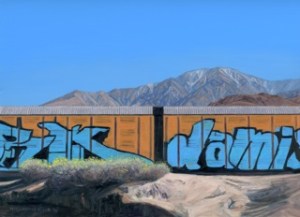
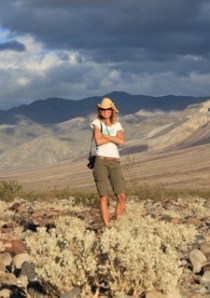
Photo: Paula Panich

Photo courtesy Paula Panich

Seeing is the Seed: Exploring the Los Angeles County Arboretum (and a place of your own!) with
Words on Paper

LA County Arboretum
& Botanic Garden
Jan. 26 and Feb. 9, 2014
9:30 am – 12:30 pm

The workshop is open to all; you don’t have to consider yourself a writer. It’s about the deep connection between storytelling and landscape (plants, too) –- essential for thinking about our own places in the world. This will be a fun and enriching activity — you will not be put on the spot to share your words on paper! But it will be a chance for you to find some surprising things within yourself. Cost: $70 for two sessions (nonmembers); $60 for Arboretum members.

For more information, write to Susan Eubank. Please put “writing workshop” in the subject box of your e-mail.


About the Los Angeles County Arboretum and Botanic Garden

The Los Angeles County Arboretum and Botanic Garden is a 127-acre botanical garden and historical site. It is located in Arcadia, CA near Santa Anita Race Track. (View Map)

52 Favorite Trees

The Riverside Art Museum invites you to experience “52”!

She was born in ’52, has 52 favorite trees, and just finished a 52-week art sabbatical.

Sue Mitchell, Co-Founder of Riverside Personnel, took her 60th year off in hopes of jump starting her long-delayed artistic career. The resulting exhibition, “52”, is a two-gallery show that reveals the fruits and process of her self-directed year of study.

Mitchell’s journey, demarcated by her 60th birthday, is both a personal story and indicative of a wider cultural phenomenon. Entering into what Mitchell refers to as her “Third Act,” she experienced a growing need for a deeper sense of fulfillment and personal exploration that many Baby Boomers now find themselves grappling for. Whether it be as a therapeutic hobby, a transition into retirement, a new artistic career, or the resurgence of an old one, roughly 10,000 people a day will be turning 65 over the next 19 years, and artistic outlets are becoming more and more important, particularly for this age group.

The Bobbie Powell gallery at the Riverside Art Museum will showcase her “senior project,” i.e., solar etchings of the 52 Montezuma Bald Cypress trees that line her favorite part of Riverside’s Fairmount Park (Sue’s “classroom” for the year). The adjoining Ross R. DeVean gallery will house an installation of Sue’s studio, where she will be “in residence” during museum hours from October 22 – November 22.

Nature walks, nature writing, discussion panels and other activities related to “52” will be held at the Riverside Art Museum and Fairmount Park during the next two months. Mark these dates on your calendar:

    Opening Reception
    October 18, 2013
    7:00 p.m. – 9:00 p.m.


    Meet Sue Mitchell: Artist in Residence

    October 22 – November 22, 2013
    During museum hours


    “Speak for Yourself” Panel w/Doug McCulloh & Meg Linton

    October 24, 2013
    5:30 p.m. – 7:30 p.m.

    Why be an artist? What does it mean to live your life as an artist? How does one live inside art? An artist and a curator will pull back the curtain on current art practice. Expect a lively evening of secrets and revelations, warnings and cautions, startling flashes and wild statements. Part talk, part free-for-all. Panel with renowned and internationally shown photographer, Doug McCulloh and Meg Linton, Director of Galleries and Exhibition/Otis College of Art and Design.

    5:30 p.m. Complimentary Happy Hour hosted by former RAM Director Bobbie Powell

    6:30 p.m. Panel Discussion Begins

    Please RSVP with Sue Mitchell.


    “52” Tree Nature Walks at Fairmount Park

    Fridays and Saturdays, October 25 – November 22, 2013
    8:30 a.m. – 9:30 a.m.

    WHERE: Meet on the circular pier between the two lakes

    WHEN: Friday and Saturday mornings Oct 25-26; Nov 1-2, 8-9, 15-16, 22

    TIME: 8:30-9:30 am

    COST: Free. You’ll receive free pass to the Riverside Art Museum.

    WALK GUIDES: Sue Mitchell and from Inlandia, Gayle Brandeis, Cindy Rinne and/or Cati Porter

    PARKING: Across the street from the pier

    SPONSORS: The Riverside Art Museum and Inlandia

    WHAT YOU WILL SEE: Sue’s 52 favorite trees, the waterfowl that migrate through the region, the wonders of Fairmount Park

    WEATHER: RAIN or SHINE (the park is magnificent in the rain)

    WHEELCHAIR/STROLLER ACCESSIBLE


    INLANDIA Nature Writing/Readings

    November 3, 2013
    12:00 noon – 2:00 p.m.


    Arts Walk w/PNET-hosted Printmaking Demo

    November 7, 2013
    6:00 p.m. – 9:00 p.m.


    “The Third Act: Creative Beginnings” Panel

    November 14, 2013
    5:30 p.m. – 7:30 p.m.


    Riverside ArtsWalk

    December 5, 2013
    6:00 p.m. – 9:00 p.m.


    Visit “52” at the Riverside Art Museum